
- Release Year: 2016
- Platforms: Nintendo Switch, PlayStation 4, PS Vita, Windows, Xbox One
- Publisher: Poppy Works, Rainy Frog LLC, TACS Games
- Developer: TACS Games
- Genre: Action
- Perspective: 1st-person
- Game Mode: Single-player
- Gameplay: Puzzle elements
- Average Score: 71/100
Description
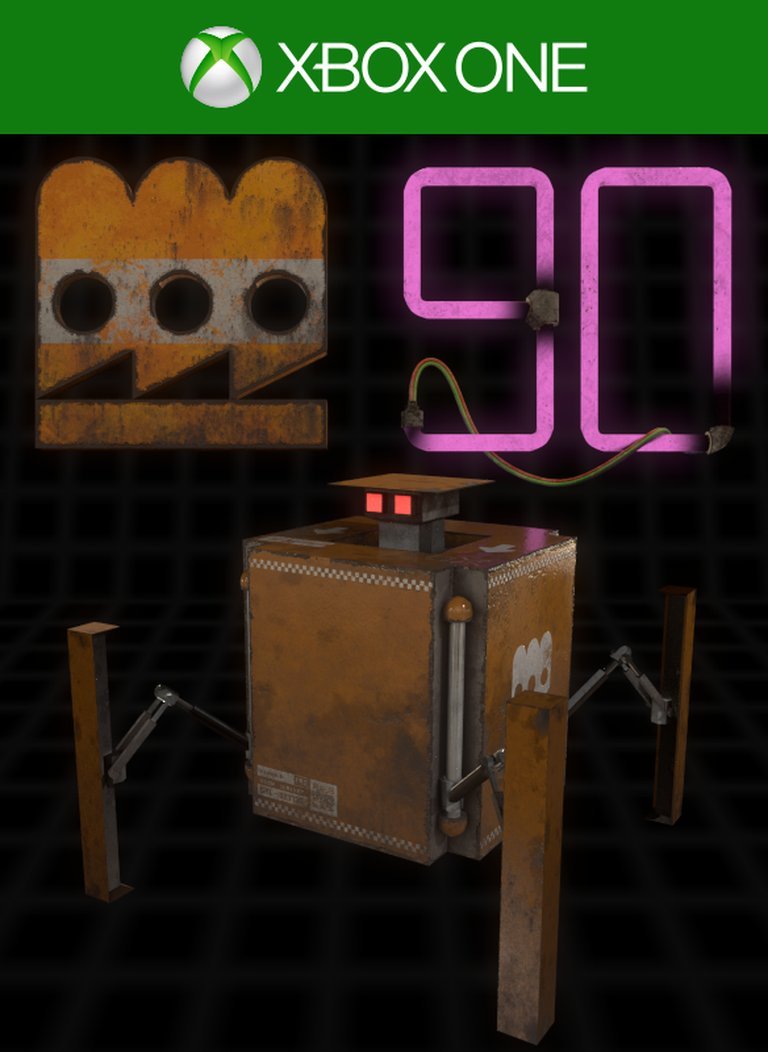
Factotum 90 is a first-person puzzle game set aboard a rapidly deteriorating spaceship. Players control two crab-like robots, Noel and Barbara, navigating industrial environments to solve puzzles involving switches, laser redirection, and box manipulation. Guided by an unnamed crew member, the robots’ beep-filled interactions bring charm to the bleak setting, while security camera-style intros and brown-dominated visuals underscore the dire scenario. New mechanics like phantom duplication are introduced gradually, though the pace remains deliberately slow throughout.
Gameplay Videos
Where to Buy Factotum 90
PC
Factotum 90 Cracks & Fixes
Factotum 90 Guides & Walkthroughs
Factotum 90 Reviews & Reception
opencritic.com (72/100): All in all, Factotum 90 is not a bad puzzle game. I had a decent little time with it and at the cost of six bucks, I’d say puzzle fans should give it a shot.
metacritic.com (71/100): Factotum 90 ended up being an absolutely wonderful puzzle experience, appreciated for the compactness of its design and for the elegance with which it was delivered.
operationrainfall.com : This is a hard game to recommend.
Factotum 90: A Charming but Flawed Journey Through the Cosmos
Introduction
In the crowded cosmos of indie puzzle games, Factotum 90 (2016) emerges as a curious artifact—a title that charms with its robotic protagonists and earnest design but ultimately orbits the periphery of greatness. Developed by TACS Games, this sequel to Factotum (2015) tasks players with navigating a disabled spaceship using two endearing robots, Noel and Barbara. Through 30 levels of environmental puzzles, it promises cerebral satisfaction and a dash of sci-fi mystery. Yet beneath its quaint premise lies a game grappling with pacing issues and untapped potential. This review interrogates Factotum 90’s place in gaming history, arguing that while it excels in atmosphere and character, its mechanical simplicity and lethargic execution prevent it from reaching the stars.
Development History & Context
Factotum 90 was crafted by solo developer Ben Ward under the banner of TACS Games—a testament to the rise of small-scale indie studios in the mid-2010s. Built using the Unity engine, the game began as an enhanced port of its Wii U predecessor, Factotum, before expanding to Xbox One, PlayStation 4, PS Vita, Nintendo Switch, and PC. Released on February 10, 2016, it entered a market saturated with indie puzzle titans like The Witness and The Talos Principle. Ward aimed to distinguish his project through a focus on cooperative single-player mechanics and a retro-futuristic aesthetic evocative of ’80s sci-fi terminals.
Technological constraints are palpable: the minimalist visuals and rudimentary UI reflect budget limitations, while the decision to frame gameplay through a “Walker Control Terminal” (a dual-screen interface) nods to creative problem-solving. Yet this choice also drew criticism for its cramped presentation. In an era where indie darlings leveraged stylized art and intricate narratives, Factotum 90’s subdued ambition positioned it as a niche curiosity rather than a breakout hit.
Narrative & Thematic Deep Dive
The plot is sparse but effective: after a mysterious collision cripples a deep-space vessel, the player—voiceless due to a “broken mic”—must guide robots Noel and Barbara to restore power and life support. An unnamed crew member (voiced with dry wit) serves as the sole narrative conduit, delivering exposition and darkly comic quips (“corn and space basil usually appear on the dinner menu”). The robots, however, are the heart of the story. Their R2-D2-esque beeps and boops convey camaraderie and curiosity, transforming mundane tasks into moments of levity. When they pass each other, their exchanges—untranslated but emotionally resonant—suggest a bond deeper than their programming.
Thematically, Factotum 90 explores isolation and interdependence. The player’s detachment (controlling robots via a terminal) mirrors the crew’s physical separation, while the puzzles demand synchronized effort. Yet the narrative falters in its brevity. At roughly three hours, the mystery of the collision concludes abruptly, leaving world-building threads—like the ship’s corporate dystopia hinted at in terminal logs—underexplored. The robots’ charm carries the emotional weight, but the story feels like a missed opportunity to delve into themes of AI personhood or survival ethics.
Gameplay Mechanics & Systems
At its core, Factotum 90 is a puzzle game built on dual-character coordination. Players switch between Noel and Barbara to manipulate switches, redirect lasers, move boxes, and deploy gadgets like holographic clones. Each of the 30 rooms introduces a new mechanic, from explosive barrels to force fields, but rarely evolves beyond foundational uses. Early puzzles involve simple teamwork (e.g., one bot holds a switch while the other advances), while later stages layer complexity through multi-step sequences.
The controls—basic movement, object interaction, and robot-swapping—are intuitive but lack polish. Critics noted sluggish robot movement, unresponsive inputs, and a narrow field of view, which exacerbate the game’s already deliberate pace. The terminal UI, though immersive, awkwardly splits attention between two camera feeds, occasionally obscuring critical details.
Puzzle design is competent but uninspired. Solutions rely on trial-and-error rather than “eureka” moments, and gadgets like the phantom clone—a standout idea—are underutilized after their introduction. The absence of time limits or penalties (robots respawn instantly) reduces tension, but collectibles add minor replay incentive. Despite its flaws, the gameplay loop remains satisfying for genre enthusiasts, offering a steady drip of accomplishment without frustration.
World-Building, Art & Sound
Factotum 90’s derelict spaceship is rendered in a drab palette dominated by industrial browns and grays—a choice criticized by reviewers for its visual monotony. Yet this austerity reinforces the setting’s bleakness: flickering lights, sterile corridors, and malfunctioning tech evoke Alien’s Nostromo or System Shock’s dystopian claustrophobia. The CRT-filtered camera and terminal interface amplify immersion, framing the adventure as a low-tech emergency response.
Sound design shines brighter. The electronic soundtrack—a mix of ambient synths and pulsating rhythms—accentuates isolation without overwhelming gameplay. Noel and Barbara’s chirps and whirrs inject personality, while the crew member’s voice acting (delivered with weary pragmatism) grounds the sci-fi premise. Environmental sounds, from hissing steam to clanking metal, enhance the setting’s authenticity. Though visually unremarkable, the auditory landscape elevates Factotum 90’s atmosphere.
Reception & Legacy
Upon release, Factotum 90 garnered mixed reviews. Critics praised its premise, robot characterization, and accessible puzzles but critiqued its sluggish pacing, repetitive mechanics, and underwhelming visuals. Metacritic settled at 71 (Xbox One), with outlets like GameCritics awarding 8.5/10 for charm, while Operation Rainfall lamented its lack of challenge. Commercially, it remained a footnote, priced modestly at $3.99–$5.99 across platforms.
Its legacy is subtle but tangible. The dual-robot mechanic prefigured cooperative puzzle games like Degrees of Separation, and its terminal-based UI echoed immersive sims like Viewfinder. Yet Factotum 90’s greatest impact lies in proving that small teams could craft emotionally resonant characters—a blueprint indie studios would later refine. Today, it’s remembered as a “weekend game” (ZTGD): flawed but earnest, ideal for puzzle fans seeking a low-stakes cosmic jaunt.
Conclusion
Factotum 90 is a paradox: a game brimming with heart yet constrained by execution. Noel and Barbara’s endearing dynamism and the atmospheric sound design offer fleeting moments of brilliance, while the puzzles—though mechanically sound—fail to innovate or challenge. Its sluggish pace and visual austerity may deter modern players, but as a time capsule of indie ambition in the 2010s, it warrants curiosity. For historians, Factotum 90 exemplifies the era’s solo-dev ethos—a project where creativity outpaced resources. For players, it remains a charming, if forgettable, interstellar diversion. In the grand tapestry of puzzle games, it is neither a paradigm shift nor a cautionary tale, but a quiet testament to the genre’s enduring appeal.
Final Verdict:
A niche title for puzzle aficionados, Factotum 90 earns a 7/10—admirable for its charm and vision but grounded by its limitations.