
- Release Year: 2023
- Platforms: Nintendo Switch, PlayStation 4, PlayStation 5, Windows Apps, Windows, Xbox One, Xbox Series
- Publisher: Phoenix Labs, Inc.
- Developer: Phoenix Labs, Inc.
- Genre: Role-playing (RPG), Simulation
- Perspective: Diagonal-down
- Game Mode: Co-op, Single-player
- Gameplay: Business simulation, Crafting, Dating, Dungeon Crawling, Exploration, Farming, Managerial, Romance
- Setting: Fantasy
- Average Score: 75/100
Description
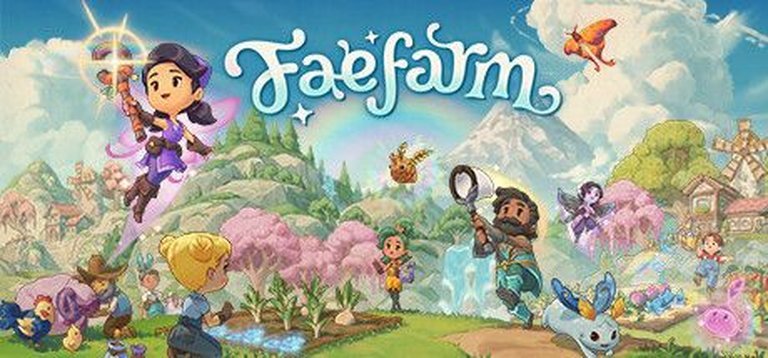
Fae Farm is a charming fantasy life-simulation RPG where players restore a magical farm, cultivate crops, befriend mystical creatures, and explore the enchanting world of Azoria. With a mix of farming, crafting, dungeon exploration, and romance, the game offers a cozy yet adventurous experience in a vibrant, whimsical setting.
Gameplay Videos
Where to Buy Fae Farm
PC
Fae Farm Free Download
Fae Farm Mods
Fae Farm Guides & Walkthroughs
Fae Farm Reviews & Reception
metacritic.com (75/100): Fae Farm is by far my favourite all-around simulator to date. With its cute style, creative creatures and special attention to what players want from their sim games, Phoenix Labs has delivered an outstanding title.
gamesradar.com : Fae Farm is a low-stakes, inclusive, and supremely cozy farming sim that delivers some uniquely interconnected features in a neat and accessible way.
opencritic.com (75/100): Fae Farm has some weak points that need a little more fairy dust to truly fly, but there are still some great things to love about this farming sim.
sweetyhigh.com : Fae Farm brings the action and storyline that most cozy games are missing.
Fae Farm Cheats & Codes
Fae Farm
Enter codes at the main menu or use the provided master code.
| Code | Effect |
|---|---|
| 080E0000 052A1FF8 00000000 00000000 080E0000 052A1FF0 D65F03C0 BD0005A0 080E0000 052A1FE8 BD402560 54000061 080E0000 052A1FE0 7100259F 340000B6 080E0000 052A1FD8 394016B6 540000A0 080E0000 052A1FD0 7100159F 34000076 080E0000 052A1FC8 394012B6 54000120 080E0000 052A1FC0 7100299F 34000076 080E0000 052A1FB8 39400EB6 540001A0 080E0000 052A1FB0 71000D9F 34000076 080E0000 052A1FA8 39400AB6 54000220 080E0000 052A1FA0 71001D9F 34000076 080E0000 052A1F98 394006B6 1E210800 080E0000 052A1F90 1E209001 54000061 080E0000 052A1F88 7100119F 340000B6 080E0000 052A1F80 394002B6 100003D5 040E0000 052A1F7C BD4005A0 040E0000 0277EB14 94AC8D1A 580F0000 08AA8BB8 580F1000 00000030 580F1000 000002A0 580F1000 000006D0 |
Master Code (includes share functions) |
| 040E0000 015C7BEC 2A0203F4 040E0000 0483E7E0 F9000428 040E0000 027D72B4 97B02093 480D0000 00000000 0000008B 610F01D0 00000000 00000005 040E0000 0163C090 39422C08 040E0000 01B50A20 3949E268 040E0000 04E45CEC 3949E008 040E0000 03CF2F34 3949E2A8 |
Restore Code (Use after unchecking any cheats below) |
| 040E0000 015C7BEC 0B020854 | Exp 5x |
| 010E0000 052A1FF8 00000001 | Movement Speed 2.5x |
| 010E0000 052A1FF9 00000001 | Instant Energy Regen |
| 010E0000 052A1FFA 00000001 | Inf Mana |
| 010E0000 052A1FFB 00000001 | Inf Watering Can |
| 010E0000 052A1FFC 00000001 | Inf Money |
| 010E0000 052A1FFD 00000001 | Max Detection Radius |
| 080E0000 052A1F74 17D6721B 29012428 080E0000 052A1F6C 29012448 52800C69 080E0000 052A1F64 B4000068 2A1F03E9 040E0000 0483E7E0 14298DE1 |
Items 99 |
| 040E0000 03BA6734 BD415261 80000002 040E0000 03BA6734 1E2703E1 20000000 |
Moonjump (Hold B) |
| 040E0000 027D72B4 529FFFE0 | Inf. Air Jump |
| 480D0000 00000000 0000008B 610F01D0 00000000 00000000 |
Player is invincible |
| 080E0000 052A1F5C D65F03C0 39422C08 080E0000 052A1F54 1E280800 1E229008 080E0000 052A1F4C 54000060 7114C05F 080E0000 052A1F44 12002C42 B94002D6 040E0000 052A1F40 F9401016 040E0000 0163C090 94F197AC |
Damage Multiplier 5x |
Fae Farm: A Whimsical Yet Flawed Contender in the Cozy Farming Sim Genre
Introduction: A Magical Promise with Mixed Delivery
Fae Farm arrived in 2023 as a bold attempt to carve a niche in the crowded farming simulation genre, blending the pastoral charm of Stardew Valley with the fantastical allure of Animal Crossing and a dash of Disney Dreamlight Valley’s magical whimsy. Developed by Phoenix Labs—a studio previously known for the action-heavy Dauntless—this cozy RPG promised a fresh take on the genre, infusing farming with spellcasting, dungeon crawling, and a vibrant, inclusive world. Yet, while Fae Farm delivers on its aesthetic and mechanical ambitions in many ways, it stumbles in execution, leaving players with a game that is as frustrating as it is enchanting.
At its core, Fae Farm is a love letter to the farming sim genre, but one that struggles to escape the shadow of its predecessors. Its greatest strength lies in its commitment to accessibility and relaxation, stripping away the punitive elements of games like Stardew Valley (no stamina penalties for overwork, no financial losses for staying out late) while introducing magical twists like spell-based farming and fae creature taming. However, its ambitions are often undercut by technical shortcomings, underwhelming social mechanics, and a lack of depth in its most innovative features. This review will dissect Fae Farm’s development, narrative, gameplay, and legacy to determine whether it stands as a worthy successor to the genre’s giants or merely a charming but flawed imitation.
Development History & Context: From Dauntless to Cozy Farming
A Studio in Transition
Phoenix Labs, founded in 2014, cut its teeth on Dauntless, a free-to-play action RPG that blended Monster Hunter’s combat with live-service mechanics. By 2021, however, the studio was undergoing a significant shift. After a management buyout that restored its independence from Chinese publisher Tencent, Phoenix Labs began diversifying its portfolio. Fae Farm emerged as a passion project spearheaded by Creative Director Katie De Sousa, who sought to create a “cozy multiplayer farming experience” that contrasted sharply with the studio’s action-oriented roots.
The game’s development, which spanned from 2021 to 2023, was marked by both ambition and growing pains. The team expanded from a small group of three to over 30 developers, a scaling process that introduced challenges like scope creep. Early prototypes emphasized seamless co-op multiplayer—a carryover from Dauntless’s design philosophy—and integrated magic systems from the outset. The goal was to create a game that felt “approachable” yet “magical,” with mechanics that reduced the grind associated with traditional farming sims.
Technological Foundations and Constraints
Built on Unreal Engine 4, Fae Farm leveraged the engine’s capabilities to craft a vibrant, cartoonish world. The choice of engine allowed for detailed environmental design, from the lush Plains of Plenty to the eerie Spooky Woods, but also introduced technical hurdles. Early builds suffered from performance issues, particularly in multiplayer, where desynchronization and lag plagued co-op sessions. The game’s initial release on Nintendo Switch and PC in September 2023 was met with criticism for bugs, including glitched animal interactions and broken tools, which required post-launch patches to address.
The game’s development was further complicated by Phoenix Labs’ financial struggles. In 2024, the studio laid off over 100 employees—nearly the majority of its workforce—leading to the cancellation of unannounced projects and a refocus on Fae Farm and Dauntless. By January 2025, the studio’s future was uncertain, and in August 2025, Phoenix Labs announced the discontinuation of online multiplayer support for Fae Farm, citing operational challenges. This decision was met with backlash from the community, but a last-minute acquisition by Gambit Digital in September 2025 saved the game from obscurity, ensuring continued updates and online functionality.
The Gaming Landscape at Launch
Fae Farm entered a genre dominated by Stardew Valley, which had set the gold standard for farming sims since its 2016 release. Competitors like Animal Crossing: New Horizons (2020) and Disney Dreamlight Valley (2022) had also carved out niches, the former with its social simulation focus and the latter with its narrative-driven, Disney-themed world. Fae Farm positioned itself as a hybrid: a farming sim with RPG elements, magic, and co-op multiplayer.
Its release in September 2023 coincided with a surge in “cozy games,” a subgenre characterized by low-stakes gameplay, relaxing mechanics, and inclusive design. Fae Farm’s marketing emphasized its accessibility—gender-inclusive character creation, optional combat, and a lack of punitive mechanics—appealing to players seeking a stress-free experience. However, the game’s $40 price tag (or $60 for the Deluxe Edition) placed it in direct competition with more polished titles, raising expectations that it ultimately struggled to meet.
Narrative & Thematic Deep Dive: A Story of Restoration and Whimsy
Plot Overview: From Shipwreck to Magical Stewardship
Fae Farm’s narrative begins with a classic trope: the player character, lured by a message in a bottle, is shipwrecked on the enchanted island of Azoria. Rescued by the eccentric Mayor Merritt, the player is gifted a dilapidated farm and a magical staff, setting the stage for a journey of restoration and discovery. The island, once a harmonious blend of human and fae realms, has been disrupted by dark thorns, whirlpools, and unruly sprites—mischievous magical beings whose antics have thrown Azoria’s ecology into chaos.
The overarching plot revolves around restoring balance to Azoria by befriending these sprites, clearing the thorns, and reuniting the human and fae realms. Key story beats include:
– Neppy the Water Sprite: The player learns that the whirlpools surrounding Azoria are the handiwork of Neppy, who created them for fun, unaware of their danger to humans. A meal and a heartfelt conversation convince Neppy to help.
– The Wisp Mother: The guardian of Azoria, who sealed off the Fae Realm to protect it from a toxic mist called miasma. The player discovers that the miasma was caused by Boletal, a mushroom-like sprite who enjoys its effects but doesn’t realize its harm.
– Grell and Flammo: A frost sprite and lava sprite, respectively, whose unchecked magic has caused blizzards and volcanic eruptions. Like Neppy, they are persuaded to help after being offered meals.
– The Fae Realm: A parallel dimension where humans once coexisted with magical creatures. The player’s efforts culminate in restoring this realm, reuniting the two worlds, and convincing the Wisp Mother to be more attentive to her duties.
The narrative is divided into chapters, each unlocking new areas, abilities, and lore. While the main story is linear, side quests and seasonal events add depth, though they often feel repetitive or underdeveloped.
Themes: Harmony, Responsibility, and Inclusivity
Fae Farm’s central theme is harmony—between humans and nature, magic and mundanity, and individuals and their community. The sprites, though initially framed as antagonists, are revealed to be innocent creatures acting without malice. Their conflicts stem from ignorance rather than malice, and the player’s role is not to defeat them but to educate and befriend them. This reflects a broader emphasis on restorative justice and environmental stewardship, themes that resonate in an era of climate anxiety.
The game also explores responsibility, particularly through the Wisp Mother, whose neglect of her duties leads to Azoria’s disarray. Her arc serves as a cautionary tale about the consequences of abdicating one’s role in maintaining balance—a metaphor that extends to the player’s own responsibilities as a farmer and community member.
Inclusivity is another cornerstone of Fae Farm’s design. The character creator offers a range of body types, skin tones, hairstyles (including textures like dreadlocks and cornrows), and gender-neutral options. Players can choose pronouns and voices independently of their character’s appearance, and romance options are not gender-locked. This commitment to representation is commendable, though the game’s execution of relationships (discussed later) often falls short of its inclusive aspirations.
Characters and Dialogue: Charm Without Depth
Fae Farm’s cast of over 30 NPCs is visually diverse and quirky, but their personalities rarely extend beyond superficial traits. Dialogue is often repetitive, with characters greeting the player as if they’re strangers even after months of in-game interaction. While some NPCs, like the gruff rancher Earline or the eccentric wizard Alaric, have memorable designs, their storylines lack depth. Romanceable characters, in particular, suffer from underdeveloped arcs; courtship feels transactional, with relationships progressing through gift-giving rather than meaningful interaction.
The game’s writing leans heavily on whimsy, with NPCs delivering pun-filled one-liners and exaggerated reactions. While this tone aligns with the game’s fairy-tale aesthetic, it often undermines emotional engagement. The Wisp Mother, for instance, is framed as a neglectful but well-meaning guardian, yet her dialogue lacks the gravitas her role demands. Similarly, the sprites’ obliviousness to the harm they cause is played for laughs, but the game misses opportunities to explore the ethical implications of their actions.
Storytelling Strengths and Weaknesses
Strengths:
– A Sense of Progression: Unlike many farming sims, where the narrative takes a backseat to gameplay loops, Fae Farm’s chapter-based structure provides a clear sense of forward momentum. Each chapter introduces new mechanics, areas, and lore, preventing the stagnation that plagues games like Animal Crossing.
– Environmental Storytelling: The game’s world design subtly reinforces its themes. The dark thorns, for example, are not just obstacles but visual representations of Azoria’s decay, and their removal is framed as an act of healing.
– Accessibility in Narrative: The story avoids complex moral dilemmas or high-stakes conflict, making it approachable for younger players or those seeking a low-stress experience.
Weaknesses:
– Lack of Player Agency: Despite the open-ended nature of farming sims, Fae Farm’s narrative is rigidly linear. Players have little influence over the story’s direction, and choices (such as romance options) do not meaningfully alter the plot.
– Underutilized Lore: The Fae Realm and its history are rich with potential, but the game rarely delves into its deeper implications. The conflict between humans and fae is resolved too neatly, with little exploration of cultural tensions or historical grievances.
– Repetitive Quest Design: Side quests often boil down to fetch quests or simple tasks (e.g., “gather 10 berries”), with little variation in structure or reward.
Gameplay Mechanics & Systems: Innovation and Frustration
Core Gameplay Loops: Farming, Crafting, and Exploration
Fae Farm’s gameplay revolves around three primary loops:
1. Farming: Players cultivate crops, raise animals, and tend to their homestead. The farming system is streamlined compared to Stardew Valley, with fewer punitive mechanics (e.g., crops do not wither if unwatered for a day). However, the lack of consequences can make farming feel shallow; there’s little tension or strategy beyond optimizing space.
2. Crafting and Customization: Crafting is central to progression, with players gathering resources to build tools, furniture, and potions. The game’s “cozy rating” system—where furniture placement boosts stats like health, stamina, and mana—adds a strategic layer to decoration, though the limited variety of furnishings undermines its potential.
3. Exploration and Dungeon Crawling: Azoria is divided into biomes, each with unique resources and challenges. Dungeons, such as the Saltwater Mines, offer combat and mining opportunities, but their design is repetitive, with little variation in enemy types or puzzles.
Combat: A Missed Opportunity
Combat in Fae Farm is simplistic, bordering on tedious. Players wield a magical staff to cast spells (e.g., fireballs, healing auras) against “Jumbles”—animated objects brought to life by dark magic. Enemies telegraph attacks with clear area-of-effect markers, and potions (such as invisibility elixirs) allow players to avoid combat entirely. While this accessibility is commendable, the combat lacks depth:
– No Defensive Mechanics: Players cannot block or dodge, making battles a matter of spamming attacks or relying on potions.
– Repetitive Enemy Design: Jumbles vary little in behavior, and dungeons reuse the same enemy types across floors.
– Lack of Progression: Upgraded spells and tools offer minimal strategic variety, and combat feels like a chore rather than a rewarding challenge.
The game’s approach to combat reflects its broader design philosophy: prioritizing relaxation over depth. While this aligns with the “cozy” genre, it leaves combat feeling like an afterthought.
Progression Systems: Skills and Stats
Fae Farm features a skill-based progression system, where players level up abilities like farming, mining, fishing, and magic through repeated actions. Each skill caps at level 20, unlocking perks such as increased harvest yields or faster tool use. However, the system lacks meaningful customization; perks are largely passive, and there’s little incentive to specialize in one skill over another.
The game’s stat system is tied to furniture placement, with “cozy” items boosting health, stamina, and mana. While this mechanic encourages decoration, it’s undercut by the limited variety of furniture and the fact that many items are purely cosmetic. The lack of a meaningful endgame—such as a family system or late-game challenges—further diminishes the sense of progression.
Multiplayer: Cooperative but Flawed
Fae Farm supports up to four players in co-op, either online or locally (on Nintendo Switch). Multiplayer is seamless in theory, with players sharing a farm and progressing through quests together. However, technical issues mar the experience:
– Desynchronization: Players often experience lag, particularly when interacting with objects or NPCs.
– Limited Shared Progress: While the host’s world advances, guests’ individual progress (e.g., skill levels) is not always saved, leading to frustration.
– Lack of Couch Co-Op: The absence of split-screen co-op on consoles is a notable omission, particularly for a game marketed as a social experience.
The multiplayer mode’s potential is further hindered by the game’s design, which is optimized for solo play. Many tasks, such as watering crops or feeding animals, become tedious when divided among multiple players, and the lack of shared inventory or coordinated goals can lead to disjointed gameplay.
UI and Quality-of-Life Features
Fae Farm’s UI is functional but clunky. Inventory management is particularly cumbersome:
– No Stack Splitting: Players cannot easily divide stacks of items, making crafting and selling inefficient.
– Limited Hotbar: The absence of a customizable hotbar forces players to cycle through tools manually, slowing down gameplay.
– Repetitive Dialogue Prompts: NPC interactions require holding a button to accept quests, a minor but annoying friction point.
The game does excel in some quality-of-life features, such as:
– Tool Auto-Selection: Tools automatically equip when approaching relevant objects (e.g., an axe when near a tree).
– No Stamina Penalties: Players can stay out all night or overwork without consequences, reducing stress.
– Easy Fishing Mode: An accessibility option simplifies fishing, making it more relaxed.
World-Building, Art & Sound: A Feast for the Senses
Setting: Azoria and the Fae Realm
Fae Farm’s world is its greatest triumph. Azoria is a vibrant archipelago divided into distinct biomes:
– Plains of Plenty: A lush, pastoral region ideal for farming.
– Spooky Woods: A misty forest filled with magical creatures and hidden secrets.
– Saltwater Mines: A dungeon-like area for mining and combat.
– Fae Realm: A parallel dimension accessible via portals, featuring floating islands and ethereal landscapes.
The world design is rich in detail, with environmental storytelling reinforcing the game’s themes. Dark thorns choke parts of the map, visually representing Azoria’s decay, while the Fae Realm’s restoration symbolizes hope and renewal. The DLC expansions—Coasts of Croakia (2023) and Skies of Azoria (2024)—add new areas, such as tropical islands and celestial realms, further enriching the world’s diversity.
Art Direction: Whimsical and Inviting
Fae Farm’s art style is a blend of Animal Crossing’s chibi aesthetics and Disney Dreamlight Valley’s fairy-tale charm. Characters are designed with exaggerated proportions and expressive animations, while the environment is rendered in soft, pastel hues. The game’s use of color is particularly striking, with each biome featuring a distinct palette (e.g., the Spooky Woods’ purples and blues contrast with the Plains of Plenty’s greens and yellows).
The game’s visuals are not without flaws, however. Some textures appear muddy, particularly on the Nintendo Switch, and the camera can be unwieldy, obscuring the player’s view during tight spaces. Additionally, the character models, while charming, lack the polish of competitors like Stardew Valley’s pixel art or Animal Crossing’s meticulous animations.
Sound Design: A Relaxing Soundtrack
The audio design in Fae Farm is a standout feature. Composer Cris Velasco (Assassin’s Creed, God of War) crafts a soundtrack that is both soothing and evocative, blending folk instruments with magical motifs. The music dynamically shifts to match the player’s location and time of day, enhancing immersion. Ambient sounds—such as the rustling of leaves or the distant call of fae creatures—further enrich the world’s atmosphere.
Voice acting, while present, is uneven. Some NPCs deliver their lines with charm, while others feel overacted or stilted. The game’s reliance on text-based dialogue for most interactions means that voice acting is sparse, limiting its impact.
Reception & Legacy: A Mixed but Enduring Impact
Critical Reception: Praise and Criticism
Fae Farm received generally favorable reviews, with a Metacritic score of 75/100 based on 47 critic reviews. Critics praised its:
– Accessibility: The game’s lack of punitive mechanics and emphasis on relaxation were highlighted as strengths.
– Visuals and Atmosphere: The art style and soundtrack were widely commended for their charm and immersion.
– Inclusivity: The character creator and gender-neutral romance options were celebrated as progressive.
However, reviews also noted significant flaws:
– Technical Issues: Bugs, such as glitched animal interactions and broken tools, marred the launch experience.
– Shallow Social Mechanics: NPCs were criticized for their lack of depth, and romance was described as transactional.
– Repetitive Gameplay: Combat and dungeon crawling were deemed too simplistic, and farming lacked strategic depth.
Notable Reviews:
– GamesRadar+ (80/100): “A low-stakes, inclusive, and supremely cozy farming sim that delivers some uniquely interconnected features in a neat and accessible way.”
– Nintendo Life (8/10): “A gloriously thoughtful and beautiful farming game that’s packed to the brim with details and charm, Fae Farm is unfortunately let down by its lacklustre NPCs and social dynamics.”
– RPGFan (6.5/10): “Fae Farm can flip-flop from feeling new, fresh, and polished to an Early Access title that needs some refining.”
Commercial Performance and Player Reception
Fae Farm sold over 100,000 copies on Steam in its first month, generating approximately $2.9 million in gross revenue. By September 2025, the game had surpassed 500,000 players across all platforms. While these numbers indicate modest success, they fall short of genre giants like Stardew Valley (over 20 million copies sold) or Animal Crossing: New Horizons (over 40 million copies sold).
Player reception was similarly mixed. On Metacritic, the user score averages 6.2/10, with praise for the game’s charm and relaxation but criticism for its bugs and lack of depth. Common player complaints included:
– Multiplayer Instability: Desynchronization and progress loss were frequent issues.
– Underwhelming Romance: Many players felt that marriage lacked meaningful rewards or narrative payoff.
– Grind Without Payoff: Late-game content was described as repetitive, with little incentive to continue playing after completing the main story.
Legacy and Influence
Fae Farm’s legacy is that of a flawed but ambitious entry in the farming sim genre. Its greatest contributions lie in its:
– Accessibility Innovations: The game’s removal of punitive mechanics (e.g., no stamina penalties) has influenced subsequent titles, such as Coral Island, which adopted similar design philosophies.
– Inclusive Design: Fae Farm’s gender-neutral options and diverse character creator set a new standard for representation in cozy games.
– Magical Twist on Farming: The integration of spellcasting and fae creatures offered a fresh take on the genre, inspiring games like Wylde Flowers to explore similar fantasy elements.
However, Fae Farm’s technical issues and underdeveloped mechanics prevented it from achieving the cultural impact of Stardew Valley or Animal Crossing. Its reception highlights the challenges of innovating within a genre dominated by established titans: while players appreciate fresh ideas, they also demand the polish and depth that come with years of iteration.
The Gambit Digital Acquisition: A Second Chance
The game’s future was uncertain following Phoenix Labs’ layoffs and the announcement of multiplayer’s discontinuation. However, the acquisition by Gambit Digital in September 2025 provided a lifeline. The new publisher has committed to ongoing support, including bug fixes, new content, and the preservation of online multiplayer. This development suggests that Fae Farm may yet evolve into a more polished experience, though its initial reception remains a cautionary tale about the risks of overambition.
Conclusion: A Charming but Imperfect Gem
Fae Farm is a game of contradictions: it is both innovative and derivative, relaxing and repetitive, charming and clunky. Its greatest strength lies in its world-building and commitment to accessibility, offering a magical escape that prioritizes player comfort. Yet, its execution is marred by technical issues, underdeveloped mechanics, and a lack of depth in its most ambitious features.
Final Verdict: 7/10 – A Flawed but Worthwhile Journey
Fae Farm is not the next Stardew Valley, but it doesn’t need to be. It carves out its own niche as a cozy, inclusive, and visually stunning farming sim that appeals to players seeking a low-stress experience. However, its shortcomings—particularly in combat, social mechanics, and technical performance—prevent it from reaching the heights of its predecessors.
For fans of the genre, Fae Farm is a worthwhile addition to the library, particularly for those who enjoy its magical twist and multiplayer potential. For newcomers, it serves as a gentle introduction to farming sims, though it may leave them craving the depth and polish of more established titles. Ultimately, Fae Farm is a game that shines brightest when it embraces its cozy, whimsical heart—but stumbles when it tries to be more than it is.
Recommendation:
– Play It If: You enjoy relaxed farming sims with a fantasy twist, or you’re looking for a co-op experience with friends.
– Skip It If: You prefer deep combat, complex social mechanics, or a game with long-term replayability.
– Wait for Updates If: You’re intrigued but wary of bugs; Gambit Digital’s continued support may address many of the game’s current flaws.
Fae Farm is a reminder that even in a genre defined by repetition, innovation requires more than just magic—it requires polish, depth, and a commitment to the player experience. While it doesn’t quite achieve greatness, it offers enough charm and heart to justify its place in the cozy gaming pantheon.