
Description
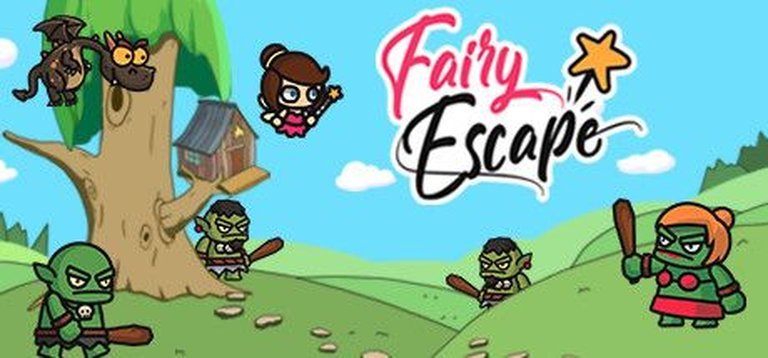
Fairy Escape is an action-packed arcade-runner set in a magical forest where players guide a little fairy through a perilous journey filled with obstacles like lightning, giants, and dragons. Along the way, players can collect stars, complete missions, and use power-ups to enhance their speed and abilities. The game features beautiful 2D scrolling visuals, an upgrade system, and Steam achievements, making it engaging for both children and adults. With its fantasy setting and direct control interface, Fairy Escape offers a delightful mix of challenge and charm, perfect for developing quick reflexes and enjoying a whimsical adventure.
Fairy Escape Guides & Walkthroughs
Fairy Escape Reviews & Reception
steambase.io (58/100): Fairy Escape has earned a Player Score of 58 / 100.
Fairy Escape: A Whimsical Yet Flawed Arcade-Runner in the Fairy Genre
Introduction: A Fleeting Flight Through the Enchanted Forest
Fairy Escape (2018), developed by the obscure studio For Kids, is a 2D side-scrolling arcade-runner that tasks players with guiding a diminutive fairy through a perilous magical forest. At first glance, it appears to be a charming, family-friendly title, but beneath its vibrant aesthetics lies a game that struggles to carve out a distinct identity in an oversaturated genre. This review will dissect Fairy Escape’s development context, narrative (or lack thereof), gameplay mechanics, artistic direction, and its reception—ultimately arguing that while it offers a brief, inoffensive diversion, it fails to leave a lasting impression.
Development History & Context: A Budget Title in a Crowded Market
The Studio Behind the Wings
Fairy Escape was created by For Kids, a developer with a portfolio almost entirely comprised of low-budget, child-oriented games. Their catalog includes titles like Fairy Rescue (2018), Fairy Maids (2016), and Fairy Knights (2018), all of which share a similar aesthetic and mechanical simplicity. The studio’s focus on accessibility and cross-platform compatibility (Windows, Mac, Linux) suggests a business model prioritizing volume over innovation.
Technological Constraints & Design Philosophy
Built in Unity, Fairy Escape leverages the engine’s 2D tools to create a scrolling environment reminiscent of Flappy Bird or Temple Run. The game’s minimal system requirements (e.g., Windows XP support, 512MB RAM) indicate it was designed to run on virtually any modern (or even outdated) machine—a deliberate choice to maximize its potential audience. However, this technical accessibility comes at the cost of depth; the game lacks the polish or mechanical complexity of contemporaries like Rayman Legends or Ori and the Blind Forest.
The Gaming Landscape in 2018
Released on April 27, 2018, Fairy Escape entered a market dominated by both indie darlings (Celeste, Hollow Knight) and AAA behemoths (God of War, Far Cry 5). Within the “fairy” subgenre, it competed with more ambitious titles like Fairy Tail (2020) and Youda Fairy (2010). Its $1.99 price point and Steam achievements suggest an attempt to appeal to achievement hunters and casual gamers, but its lack of marketing or critical buzz relegated it to obscurity.
Narrative & Thematic Deep Dive: A Threadbare Fantasy
Plot: A Minimalist Premise
Fairy Escape’s “story” is barely more than a setup: a fairy must navigate a magical forest filled with obstacles like dragons, giants, and lightning. There are no cutscenes, dialogue, or character development—just a steady progression through procedurally generated hazards. The Steam description’s claim that the game is “suitable for children but fascinating for adults” rings hollow; its narrative void makes it difficult to engage players beyond a superficial level.
Themes: Whimsy Without Substance
The game’s themes revolve around:
– Perseverance: The fairy’s endless flight symbolizes overcoming adversity, but the lack of stakes or consequences undermines this.
– Nature’s Duality: The forest is both beautiful and dangerous, though this is conveyed purely through environmental design rather than storytelling.
– Childlike Wonder: The bright colors and fantastical obstacles evoke a storybook aesthetic, but without narrative context, it feels more like a skin over generic runner mechanics.
Missed Opportunities
A game like Fairy Escape could have benefited from:
– A progression system with unlockable lore (e.g., why the fairy is fleeing, who the dragons serve).
– Character customization to foster player attachment.
– Environmental storytelling (e.g., ruined fairy villages, hints of a larger conflict).
Instead, it relies entirely on its gameplay loop—a choice that limits its emotional resonance.
Gameplay Mechanics & Systems: Simple to a Fault
Core Gameplay Loop
Fairy Escape is a one-button runner:
– Controls: Press SPACE or left-click to ascend; release to descend. This binary input system is accessible but lacks depth.
– Obstacles: Players dodge trees, lightning bolts, and fire-breathing dragons. Collisions result in instant death, sending the fairy back to the last checkpoint.
– Power-Ups: Temporary boosts (shields, magnets for stars, speed bursts) appear sporadically, adding minor strategic variety.
Progression & Upgrades
- Stars: Collected during runs, stars serve as currency for permanent upgrades:
- Starting Speed: Begin runs faster.
- Nitro: Temporary speed boosts.
- Shield Duration: Extended invincibility.
- Quests: Completing missions (e.g., “Survive for 1 minute”) unlocks achievements and additional stars.
Flaws in Design
- Repetition: The procedurally generated obstacles lack variety, leading to monotony.
- Difficulty Curve: The game ramps up speed aggressively, punishing players with abrupt, unfair obstacles (e.g., off-screen dragons).
- Lack of Depth: No alternate paths, boss fights, or skill-based challenges—just reaction tests.
UI & Accessibility
The UI is functional but uninspired:
– A health bar (represented by fairy dust) depletes upon hits.
– Star counters and upgrade menus are straightforward but lack visual flair.
– No controller support, limiting input options.
World-Building, Art & Sound: A Pretty but Shallow Fantasy
Visual Design
- Aesthetic: The game’s hand-drawn, cartoonish style is its strongest asset. Lush forests, glowing mushrooms, and whimsical dragons create a cohesive fairy-tale atmosphere.
- Animation: The fairy’s fluttering wings and fluid movements are charming, though enemy animations are simplistic.
- Backgrounds: Parallax scrolling adds depth, but the repetitive looping of assets betrays the game’s budget constraints.
Sound & Music
- Soundtrack: A light, orchestral score with harps and flutes reinforces the fairy-tale theme. Tracks are pleasant but loop ad nauseam.
- Sound Effects: Wing flutters, dragon roars, and star collection sounds are serviceable but unremarkable.
Atmosphere
The game excels at moment-to-moment charm but fails to build a memorable world. The absence of NPCs, dialogue, or environmental details (e.g., fairy homes, ancient ruins) makes the forest feel like a hollow obstacle course rather than a living ecosystem.
Reception & Legacy: A Forgotten Blip in Gaming History
Critical & Commercial Reception
- Steam Reviews: Mixed (58/100 on Steambase, with 36 positive and 26 negative reviews).
- Praised for: Accessibility, visuals, and suitability for children.
- Criticized for: Repetition, lack of depth, and abrupt difficulty spikes.
- Metacritic: No critic reviews; user reviews are nonexistent.
- Sales: Likely minimal, given its obscurity and lack of marketing.
Legacy & Influence
Fairy Escape has had zero discernible impact on the gaming industry. It exists in the vast sea of Steam’s indie library, overshadowed by more polished runners like Jetpack Joyride or Altos Odyssey. Its only “legacy” is as part of For Kids’ catalog of forgettable titles.
Comparisons to Similar Games
| Game | Year | Key Differences |
|---|---|---|
| Fairy Bloom (2005) | 2005 | More puzzle-focused, less action-oriented. |
| Youda Fairy (2010) | 2010 | Time-management mechanics; deeper narrative. |
| Fairy Tail (2020) | 2020 | RPG elements, licensed IP, far greater scope. |
Conclusion: A Fleeting, Flawed Fantasy
Fairy Escape is a harmless but forgettable arcade-runner that coasts on its visual charm and simplicity. While it may entertain young children or players seeking a mindless diversion, it lacks the depth, innovation, or narrative substance to stand out. Its greatest sin is its mediocrity—neither broken nor brilliant, it exists in a limbo of competency.
Final Verdict: 5/10 – “Inoffensive but Insignificant”
- Play if: You enjoy ultra-casual runners or need a game for a young child.
- Avoid if: You seek narrative depth, mechanical complexity, or lasting engagement.
In the grand tapestry of video game history, Fairy Escape is a single, barely noticeable thread—a game that, much like its titular fairy, flits briefly into view before vanishing into the ether.