
- Release Year: 2016
- Platforms: Windows
- Publisher: Big Fish Games, Inc
- Developer: Spark Plug Games, LLC
- Genre: Action
- Perspective: Point and select
- Game Mode: Single-player
- Gameplay: Time management
- Setting: Fantasy
- Average Score: 50/100
Description
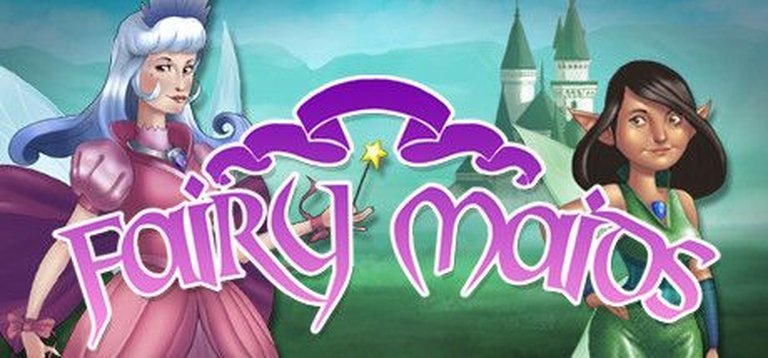
In ‘Fairy Maids’, players step into the shoes of a cleaning fairy tasked with managing the chaotic messes left by storybook creatures in the whimsical Land of Fairy Tales. This time-management game challenges you to juggle hilarious characters, dirty laundry, and cluttered spaces in fast-paced real-time gameplay. Set in a vibrant fantasy world, the game combines strategic task prioritization with lighthearted humor as you work to restore order and earn your reputation as The Glade’s premier cleaning service.
Where to Buy Fairy Maids
PC
Fairy Maids Free Download
PC
Fairy Maids Guides & Walkthroughs
Fairy Maids: Review
Introduction
In the bustling ecosystem of casual gaming, where time management titles jostle for attention amidst farm simulators and hidden object adventures, Fairy Maids (2016) carves out a whimsical niche. Developed by Spark Plug Games and published by Big Fish Games, this Windows-exclusive fantasy romp tasks players with wielding a mop instead of a sword, transforming domestic drudgery into a frenetic challenge. While it never achieved the cult status of Diner Dash or Overcooked, Fairy Maids offers a peculiar charm—and a cautionary tale about the limits of novelty in a saturated genre.
This review positions Fairy Maids as a flawed but earnest attempt to blend fairy tale whimsy with time management mechanics, reflective of mid-2010s casual gaming trends. It’s a game that delights in its absurd premise but struggles to transcend its repetitive core.
Development History & Context
Studio Vision & Constraints
Spark Plug Games, a studio synonymous with casual titles like Farm Tribe and Spa Mania, sought to inject humor into the time management genre with Fairy Maids. Released in July 2016, the game arrived during a peak era for casual PC games, where platforms like Steam and Big Fish Games thrived on low-cost, high-volume releases. With a modest budget and a target audience of time-pressed players seeking short-burst gameplay, Fairy Maids was designed as a “pick-up-and-play” experience, leaning heavily on its fairy tale parody angle.
Technologically, the game was unambitious, built to run on legacy systems like Windows XP with minimal hardware demands (a 1.8 GHz processor and 1GB RAM). This accessibility was both a strength and a limitation: while it broadened its potential audience, it also cemented its status as a mechanically simplistic product in an era when indie games were beginning to push boundaries.
The Casual Gaming Landscape of 2016
By 2016, the casual market was bifurcating. On one end, titles like Stardew Valley redefined depth in ostensibly “simple” genres, while on the other, assembly-line time management games flooded digital storefronts. Fairy Maids fell into the latter category, competing against hundreds of visually and thematically similar games. Its failure to innovate beyond its core premise likely contributed to its muted reception.
Narrative & Thematic Deep Dive
Plot & Characters: A Satirical Sweep
Fairy Maids casts players as an unnamed cleaning fairy tasked with tidying up after a cast of lazily written fairy tale archetypes. From Cinderella’s discarded glass slippers to the Three Bears’ porridge-stained tables, the game revels in poking fun at the messiness lurking beneath “happily ever after.” The dialogue is peppered with groan-worthy puns (“This place is a grimm disaster!”) and light meta-commentary, though the writing rarely rises above sitcom-level humor.
Themes: Domesticity as Heroism
Beneath its slapstick surface, the game inadvertently stumbles into a thematic throughline: the invisibility of domestic labor. By positioning the player as a literal “clean-up crew” for fantasy royalty, it satirizes the trope of the magical fixer—a critique the game itself seems only half-aware of. Unfortunately, this potential depth is undermined by repetitive objectives and a lack of narrative progression.
Gameplay Mechanics & Systems
Core Loop: A Race Against Dust Bunnies
At its heart, Fairy Maids is a textbook time management game. Players click to clean dishes, scrub floors, and organize cluttered rooms within a timer, earning stars for efficiency. The twist lies in the fairy tale setting: cursed brooms might sabotage your progress, or a dragon’s hoard could spill treasure across a ballroom. However, these moments of creativity are frustratingly sparse.
Progression & Flaws
The game’s progression system is rudimentary. Completing levels unlocks slight upgrades, such as faster movement speed or temporary invincibility to interruptions (e.g., pesky pixies dumping trash). Yet, the lack of meaningful difficulty scaling or branching paths reduces much of the experience to a grind. The UI is functional but dated, with cluttered task lists and an overreliance on sparkly particle effects to signify cleanliness.
Innovation vs. Repetition
While Fairy Maids introduces minor gimmicks—like using magic to freeze time or summon gusts of wind—these mechanics feel underdeveloped. By Level 10, players will have seen nearly all the game has to offer, with subsequent stages relying on inflated timers and larger rooms rather than fresh ideas.
World-Building, Art & Sound
Aesthetic: Sugary to a Fault
Fairy Maids embraces a hyper-saturated, cartoonish art style reminiscent of early 2000s Flash games. The fairy tale locales are colorful but generic, leaning on stock assets like cobblestone paths and candy-colored cottages. Character designs are similarly uninspired, with elves, trolls, and princesses rendered in a style that edges perilously close to clip art.
Sound Design: Cheerful but Forgettable
The soundtrack swaps between twee harp melodies and frenetic circus music, underscoring the gameplay’s shifting pace. Sound effects—squeaky clean noises, fairy giggles—are repetitive but serviceable. Notably, the game lacks voice acting, relying instead on text boxes with generic “chime” noises for dialogue.
Reception & Legacy
Launch Reception: A Whimper, Not a Bang
Fairy Maids garnered little attention at release. With only eight Steam user reviews (split evenly between positive and negative), players praised its mindless fun but lambasted its lack of depth. One reviewer quipped, “It’s like someone turned chores into a game—and not in the fun Animal Crossing way.” The absence of professional critic reviews speaks volumes about its industry impact.
Lingering Influence
While Fairy Maids itself faded into obscurity, its core concept—domestic labor as gameplay—anticipates later titles like Unpacking (2021) and Button City (2021), which explore similar themes with far more nuance. Today, it serves as a footnote in the history of time management games, a reminder of how even the quirkiest premises need mechanical heft to survive.
Conclusion
Fairy Maids is neither a triumph nor a disaster—it’s a middling curiosity. Its commitment to whimsy is admirable, and there’s fleeting fun in its absurd premise. Yet, its repetitive design, dated presentation, and half-baked mechanics leave it stranded in the annals of forgotten casual games. For completionists of the genre, it’s a harmless diversion; for others, it’s a reminder that even fairy dust can’t polish every idea into gold.
Final Verdict: A charming but shallow relic of 2010s casual gaming, best left to collectors of oddball curios.