
- Release Year: 2017
- Platforms: Macintosh, Nintendo Switch, PlayStation 4, Windows Apps, Windows, Xbox One
- Publisher: 1C Company, 1C Publishing EU s.r.o., Digerati Distribution & Marketing LLC
- Developer: RuneHeads Srls
- Genre: Action RPG, Hack and Slash, Role-playing (RPG)
- Perspective: Diagonal-down
- Game Mode: Single-player
- Gameplay: Action RPG, Hack and Slash
- Setting: Fantasy
- Average Score: 57/100
Description
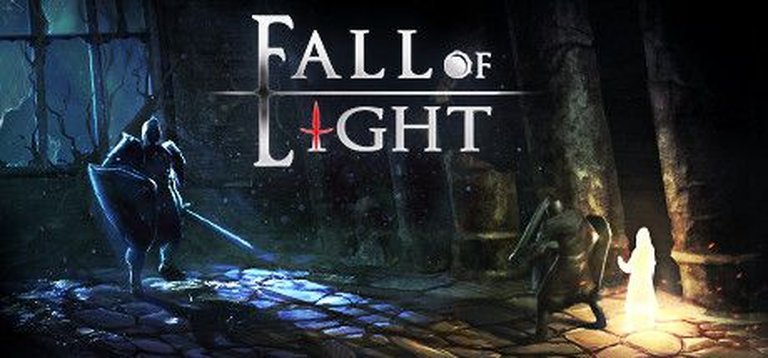
Fall of Light is a 2D action RPG set in a dark fantasy world, where players embark on a journey through a crumbling kingdom filled with eerie landscapes and formidable enemies. Combining hack-and-slash combat with a haunting atmosphere, the game follows a lone warrior navigating treacherous dungeons and uncovering the secrets of a fallen civilization, all rendered in a moody, diagonal-down perspective.
Gameplay Videos
Where to Buy Fall of Light
PC
Fall of Light Cracks & Fixes
Fall of Light Patches & Updates
Fall of Light Guides & Walkthroughs
Fall of Light Reviews & Reception
metacritic.com (69/100): Fall of Light is a strange mix between ICO and Dark Souls. The narrative plot works in a proper way, while the battle system is not as deep as it should have been, though it doesn’t show big defects.
opencritic.com (75/100): Fall of Light is a good Souls-like, but it can differences himself from the usual dark fantasy games.
saveorquit.com : Inspired by a great series, Fall of Light fails to distinguish itself on its own.
gamepressure.com (34/100): Fall of Light features multiple weapons and fighting stances, but these features just did not feel different enough to me to combat all the problems that I experienced.
steamcommunity.com (50/100): I would rate the game at 5/10. There are too many wrong/poorly thought out gameplay decisions to warrant a higher score.
Fall of Light: A Flawed but Fascinating Souls-like Experiment
Introduction
Fall of Light is a game that dares to stand in the shadow of giants. Released in 2017 by the two-person Italian studio RuneHeads, it is an unabashed love letter to Dark Souls and ICO, blending the punishing combat and cryptic storytelling of the former with the emotional escort mechanics of the latter. The result is a game that is as frustrating as it is fascinating—a flawed diamond buried beneath layers of jank, ambition, and raw, unpolished passion.
At its core, Fall of Light is a story about a father and daughter. Nyx, a grizzled warrior, escorts his daughter Aether, an “Indigo child” who emits light, through a world consumed by darkness. Their journey is one of desperation, as they seek the last remnants of sunlight in a realm where evil has already won. The game’s narrative is deliberately sparse, relying on environmental storytelling, cryptic dialogue, and lore fragments to convey its themes of loss, protection, and the inevitability of darkness.
Yet, for all its atmospheric strengths, Fall of Light stumbles in its execution. The game’s mechanics—borrowed heavily from Dark Souls—are implemented with a clumsiness that often undermines the experience. Combat is stiff, the escort AI is infuriating, and the fixed isometric camera frequently obscures threats. These flaws are not merely minor inconveniences; they are fundamental design choices that shape the player’s experience, often for the worse.
But here’s the thing: Fall of Light is not a bad game. It is, however, a deeply flawed one. Its ambition is undeniable, and its heart is in the right place. It is a game made by two people who clearly loved the titles that inspired them and wanted to craft something similarly evocative. The question, then, is whether its strengths—its haunting atmosphere, its emotional core, and its moments of genuine brilliance—are enough to outweigh its many, many weaknesses.
Development History & Context
Fall of Light was developed by RuneHeads, a tiny Italian studio consisting of just two primary developers: Matteo Sciutteri (lead design, level design) and Cristian Marastoni (lead programming, additional design). The game was their debut title, and its development was a labor of love, fueled by a deep admiration for Dark Souls and ICO. The team’s goal was to merge the punishing combat and cryptic storytelling of Dark Souls with the emotional escort mechanics of ICO, all within a top-down, isometric perspective.
The game was built using Unity, a choice that allowed the small team to iterate quickly but also imposed certain limitations. The fixed isometric camera, for instance, was a deliberate stylistic choice meant to evoke classic dungeon crawlers, but it also introduced significant gameplay challenges, particularly in combat and navigation. The developers have openly acknowledged the game’s inspirations, and their transparency about their influences is refreshing. They did not set out to hide their debts to Dark Souls and ICO; instead, they embraced them, attempting to craft something that felt like a natural evolution of those ideas.
Fall of Light was initially released on September 28, 2017, for PC and Mac, with console versions (Xbox One, PlayStation 4, and Nintendo Switch) following in 2018 under the Darkest Edition moniker. The Darkest Edition included additional content, bug fixes, and quality-of-life improvements, though many of the game’s core issues remained unresolved.
The gaming landscape in 2017 was already saturated with Souls-like titles, many of which struggled to escape the shadow of FromSoftware’s masterpieces. Fall of Light entered this crowded space with a unique hook—its escort mechanics and father-daughter dynamic—but it also faced the challenge of standing out in a genre defined by precision, polish, and punishing difficulty. The game’s reception was mixed, with critics and players alike praising its ambition and atmosphere while lamenting its clunky mechanics and technical shortcomings.
Narrative & Thematic Deep Dive
Fall of Light’s narrative is deliberately sparse, relying on environmental storytelling, cryptic dialogue, and lore fragments to convey its themes. The game’s world is one where darkness has already triumphed, and the remnants of humanity are either corrupted or clinging to the last vestiges of light. Nyx, the protagonist, is an old warrior who has seen the world fall to ruin. His daughter, Aether, is an “Indigo child,” a being of light who represents the last hope in a dying world. Their journey is one of desperation, as they seek the last remnants of sunlight in a realm where evil has already won.
The game’s story is told through a series of “Echos,” which are essentially audio logs scattered throughout the world. These Echos provide glimpses into the past, revealing the history of the world and the characters who inhabit it. The narrative is intentionally vague, leaving much to the player’s interpretation. This approach is reminiscent of Dark Souls, where the story is pieced together through item descriptions, environmental clues, and cryptic dialogue.
Themes of loss, protection, and the inevitability of darkness permeate the game. Nyx’s relationship with Aether is central to the narrative, and their bond is tested repeatedly as they navigate a world that seeks to tear them apart. Aether is not just a companion; she is a symbol of hope in a world consumed by despair. Her light is both a literal and metaphorical beacon, guiding Nyx through the darkness.
The game’s ending is particularly poignant, offering three possible conclusions that reflect the themes of sacrifice, hope, and despair. Without spoiling the details, the endings are emotionally resonant, and they underscore the game’s central question: Is it better to cling to hope in the face of inevitable darkness, or to accept the inevitability of loss and find meaning in the journey itself?
Gameplay Mechanics & Systems
Fall of Light’s gameplay is a mix of Dark Souls-inspired combat and ICO-style escort mechanics. The player controls Nyx, a warrior who must navigate a dark, dangerous world while protecting his daughter Aether. The game is played from a fixed isometric perspective, which introduces significant challenges in combat and navigation.
Combat
Combat in Fall of Light is stiff and unpolished, with a heavy emphasis on stamina management and positioning. Nyx can wield a variety of weapons, including swords, daggers, halberds, and crossbows, each with its own attack animations and properties. The game features a stamina bar that depletes with each attack, dodge, or block, and it regenerates slowly, forcing players to carefully manage their actions.
The combat system is heavily inspired by Dark Souls, but it lacks the precision and fluidity of its predecessor. Attacks often feel delayed, and the fixed camera angle makes it difficult to judge depth and positioning. Enemies are often placed in ways that exploit the camera’s limitations, leading to cheap hits and frustrating encounters.
One of the most significant issues with the combat is the lack of a proper lock-on system. While the game does feature a lock-on mechanic, it is unreliable and often fails to track enemies effectively. This, combined with the fixed camera, makes combat feel clumsy and imprecise.
Escort Mechanics
Aether, Nyx’s daughter, is a constant presence in the game. She follows Nyx automatically but can also be led by holding her hand. Aether’s AI is notoriously poor, often getting stuck on geometry or failing to respond to commands. She is also vulnerable to attacks, and if she is killed or kidnapped, Nyx must rescue her before he can progress.
The escort mechanics are a double-edged sword. On the one hand, they add a layer of tension and urgency to the gameplay, as players must constantly be aware of Aether’s safety. On the other hand, they often feel like a chore, particularly when Aether’s AI fails to keep up with Nyx or gets stuck in an inopportune location.
Progression
Progression in Fall of Light is tied to the game’s shrine system, which functions similarly to Dark Souls’ bonfires. Activating a shrine restores Nyx’s health and replenishes his healing items, but it also respawns all enemies in the area. Players can also use shrines to level up, increasing Nyx’s health and unlocking new abilities.
The game features a variety of weapons and armor, but there is no traditional inventory system. Instead, players can only carry a limited number of items, and switching between them requires pausing the game and accessing the inventory menu. This design choice is intended to force players to make meaningful choices about their loadout, but it often feels restrictive and cumbersome.
Puzzles and Exploration
Fall of Light features a variety of environmental puzzles, many of which require players to manipulate Aether in some way. These puzzles are generally simple but can be frustrating due to the game’s poor camera and Aether’s unreliable AI.
Exploration is a key part of the game, and players are encouraged to search every nook and cranny for hidden secrets and lore fragments. The world is dark and oppressive, and the fixed camera angle often obscures important details, making navigation a challenge.
World-Building, Art & Sound
Fall of Light’s world is a bleak, oppressive place, consumed by darkness and filled with the remnants of a once-great civilization. The game’s art style is low-poly and stylized, with a heavy emphasis on shadows and muted colors. The world is deliberately dark, and players must rely on Aether’s light or Nyx’s lantern to navigate.
The game’s sound design is minimalist but effective. The ambient sounds of the world—creaking doors, distant howls, and the echo of footsteps—create a sense of isolation and dread. The game’s soundtrack is sparse, with most of the music reserved for boss battles and key story moments. The voice acting is uneven, with some performances standing out as particularly strong (notably Linnea Sage as Aether) while others feel stiff and unnatural.
The game’s atmosphere is its strongest suit. The world feels alive in a way that few Souls-like games manage, with a sense of history and decay that permeates every corner. The fixed camera angle, while frustrating in combat, contributes to the game’s oppressive tone, making the world feel claustrophobic and unforgiving.
Reception & Legacy
Fall of Light’s reception was mixed, with critics and players alike praising its ambition and atmosphere while lamenting its clunky mechanics and technical shortcomings. The game’s Metacritic score of 69 (based on 5 critic reviews) and user score of 5.8 (based on 23 user ratings) reflect this divide.
Critics generally appreciated the game’s unique blend of Dark Souls and ICO mechanics, as well as its haunting atmosphere and emotional core. However, many also noted the game’s numerous flaws, including its stiff combat, poor escort AI, and frustrating camera angles. Some reviewers, such as TheSixthAxis, were particularly harsh, calling the game “utterly terrible” and advising players to steer clear.
Players, too, were divided. Some, like Arngrim560 on Metacritic, praised the game’s atmosphere and emotional depth, calling it “an amazing game with a huge dark atmosphere.” Others, like viligas96, were far less forgiving, dismissing it as “a horrible game” with “no inventory, no growth except life, [and] wired combat feeling.”
Despite its flaws, Fall of Light has developed a small but dedicated fanbase. Players who appreciate its unique blend of mechanics and its emotional core often overlook its shortcomings, finding value in its atmosphere and storytelling. The game’s legacy is one of ambition and imperfection—a reminder that even flawed games can leave a lasting impression.
Conclusion
Fall of Light is a game that defies easy categorization. It is not a great game, but it is not a bad one either. It is, instead, a fascinating experiment—a flawed but ambitious attempt to merge the mechanics of Dark Souls and ICO into something new and unique.
The game’s strengths—its haunting atmosphere, its emotional core, and its moments of genuine brilliance—are undeniable. The bond between Nyx and Aether is one of the most compelling aspects of the game, and the world they inhabit is rich with lore and history. The game’s flaws—its stiff combat, its poor escort AI, and its frustrating camera angles—are equally undeniable, often undermining the experience and leaving players frustrated.
Ultimately, Fall of Light is a game that will resonate with a specific kind of player—one who is willing to overlook its many flaws in favor of its unique atmosphere and emotional depth. It is not a game for everyone, but for those who connect with it, it offers a deeply personal and haunting experience.
In the pantheon of Souls-like games, Fall of Light is a minor footnote—a flawed but fascinating experiment that dared to stand in the shadow of giants. It is not a game that will be remembered for its polish or precision, but it is one that will be remembered for its heart and its ambition. And in a genre defined by punishing difficulty and unrelenting challenge, that is no small feat.