
- Release Year: 2018
- Platforms: PlayStation 4, Windows, Xbox One
- Publisher: Bethesda Softworks LLC
- Developer: Bethesda Game Studios
- Genre: Extra content, game, Special edition
- Perspective: First-person
- Game Mode: Online Co-op
- Gameplay: Character customization
- Setting: Post-apocalyptic
- Average Score: 52/100
Description
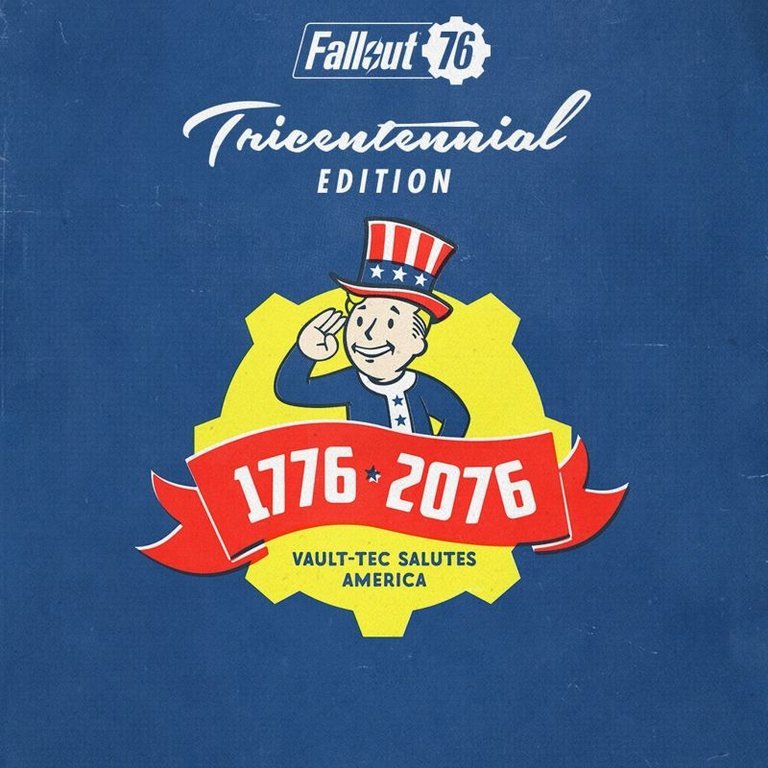
Fallout 76 (Tricentennial Edition) is an online multiplayer action role-playing game set in 2102 Appalachia, 25 years after a nuclear war. As a resident of Vault 76, players venture into the open wasteland to rebuild civilization, uncover a mysterious plague, and survive against threats in a desolate, radiation-scarred landscape. This special edition includes the base game along with patriotic-themed digital extras: customized Power Armor and weapon skins for iconic gear, Uncle Sam outfits, emotes, and commemorative workshop décor celebrating America’s tricentennial.
Gameplay Videos
Fallout 76 (Tricentennial Edition) Guides & Walkthroughs
Fallout 76 (Tricentennial Edition) Reviews & Reception
opencritic.com (55/100): Bethesda’s attempt at Fallout multiplayer is, like so many of the series’ vaults, a failed experiment.
metacritic.com (52/100): Fallout 76 meant to change the very concept of the series, but turned out to be a complete disaster.
mobygames.com (50/100): Fallout 76 retains the same captivating immersion, atmosphere and organic exploration that made Fallout 4 so enjoyable thanks to an excellent open world, though you’ll have to contend with a poorly implemented online component and the typical Bethesda technical hiccups and rough edges.
Fallout 76 (Tricentennial Edition): Review
Fallout 76, Bethesda’s ambitious foray into the multiplayer realm, has had a tumultuous journey since its release in 2018. The Tricentennial Edition, released in November 2018, promised an enhanced experience with exclusive digital extras and a sleek physical package. However, the game’s legacy is a complex tapestry of technological challenges, community resilience, and Bethesda’s evolving approach to live service games. This review will delve into the development history, narrative depth, gameplay mechanics, world-building, reception, and ultimate legacy of Fallout 76, culminating in a definitive verdict on its place in video game history.
Development History & Context
Studio and Creators’ Vision
Fallout 76 was developed by Bethesda Game Studios, a powerhouse known for their immersive single-player experiences. The game was directed by Jeff Gardiner and Jonathan Rush, with Todd Howard serving as the executive producer. The vision for Fallout 76 was to create a multiplayer experience within the beloved Fallout universe, allowing players to explore a vast open world together. The game was set in the Appalachian region of West Virginia, a choice that aimed to provide a more rural and less bombed-out environment compared to previous Fallout settings.
Technological Constraints and Gaming Landscape
The development of Fallout 76 began in 2013, during the creation of Fallout 4. Bethesda decided to leverage their Creation Engine, which had been exclusively used for single-player games. Modifying this engine for multiplayer capabilities proved to be a significant challenge. The team had to implement netcode from older Quake games to handle the multiplayer aspects, a decision that led to numerous technical issues at launch.
The gaming landscape in 2018 was dominated by the rise of battle royale games like PlayerUnknown’s Battlegrounds and Fortnite. Bethesda aimed to carve out a niche for Fallout 76 by focusing on cooperative gameplay and a rich, narrative-driven experience. However, the absence of human non-player characters (NPCs) at launch was a controversial decision that alienated many fans of the series.
Troubled Development
Fallout 76’s development was marked by a lack of proper leadership and a high turnover rate among staff. Todd Howard, who was also working on Starfield, was criticized for his hands-off approach to management. The project suffered from crunch, peer pressure, and a lack of clear direction, leading to a rushed launch that was plagued by bugs and technical issues. Despite these challenges, Bethesda remained committed to supporting the game post-launch, introducing numerous updates and expansions to address community feedback.
Narrative & Thematic Deep Dive
Plot and Characters
Fallout 76 is set in the year 2102, twenty-five years after the Great War. Players take on the role of a Vault Dweller from Vault 76, tasked with re-colonizing the Appalachian wasteland. The game’s narrative is divided into several major updates, each introducing new factions, quests, and storylines.
The original questline revolves around the Scorched Plague, a virus that transforms survivors into Scorched. Players must uncover the source of the plague and secure nuclear weapons to combat the mutated Scorchbeasts. The Wastelanders update introduced human NPCs, allowing for more traditional Fallout-style dialogue and quests. This update also brought in new factions, the Settlers and the Raiders, each with their own agendas and questlines.
Dialogue and Themes
The dialogue in Fallout 76 is a significant departure from previous entries in the series. The absence of human NPCs at launch meant that players interacted with the world through holotapes, terminals, and environmental storytelling. This approach was criticized for lacking the emotional depth and interactivity of past Fallout games. However, the Wastelanders update addressed this issue by reintroducing human NPCs, allowing for more engaging conversations and quests.
The themes of Fallout 76 revolve around survival, community, and the consequences of nuclear war. The game explores the struggle to rebuild society in a post-apocalyptic world, with players facing moral dilemmas and difficult choices. The introduction of factions in the Wastelanders update added layers of complexity, with players having to navigate the politics and power struggles of the new arrivals in Appalachia.
Gameplay Mechanics & Systems
Core Gameplay Loops
Fallout 76 features a variety of gameplay mechanics that cater to both solo and multiplayer experiences. The game’s core loop involves exploring the open world, completing quests, and building bases. Players can engage in combat, crafting, and trading, with a focus on survival and resource management.
Combat and Character Progression
Combat in Fallout 76 is similar to previous entries in the series, with players able to switch between first-person and third-person perspectives. The game features a real-time V.A.T.S. system, which displays information in real-time rather than pausing or slowing down time. Players can use a variety of weapons, including standard guns, energy-based guns, melee weapons, and explosives.
Character progression is handled through the S.P.E.C.I.A.L. system, with players able to allocate points to seven attributes: Strength, Perception, Endurance, Charisma, Intelligence, Agility, and Luck. These attributes govern various aspects of the player character, such as carry weight and damage output. Players can also use perk cards to enhance their abilities, with the number of perk cards available depending on the player’s Charisma stat.
UI and Innovative Systems
The user interface in Fallout 76 has been streamlined compared to previous entries. The Pip-Boy interface has been updated to include a semi-transparent HUD, making it easier to navigate menus and quests. The game also features a fast travel system that allows players to quickly move between discovered locations, with a small caps fee required for fast travel.
One of the innovative systems in Fallout 76 is the Construction and Assembly Mobile Platform (C.A.M.P.), which allows players to build and defend bases. Players can convert raw materials into base structures, with the ability to move their base to different locations on the map. The C.A.M.P. system also allows for the crafting of weapons, armor, and modifications, adding depth to the gameplay experience.
Flawed Systems
Despite its innovations, Fallout 76 has had its share of flawed systems. The game’s launch was marred by numerous bugs and glitches, affecting everything from stability and performance to graphical issues. Bethesda released several patches to address these issues, but many players remained frustrated with the game’s technical performance.
The game’s economy has also been a source of controversy. The introduction of the Atomic Shop, which sells cosmetic items for real-world money, has been criticized for favoring players who are willing to spend money. The game’s subscription service, Fallout 1st, has also been a point of contention, with players criticizing the high cost and limited benefits.
World-Building, Art & Sound
Setting and Atmosphere
Fallout 76 is set in the Appalachian region of West Virginia, a choice that provides a more rural and less bombed-out environment compared to previous Fallout settings. The game’s world is vast, with players able to explore a variety of environments, from dense forests to irradiated wastelands. The art direction is consistent with the Fallout series, featuring a post-apocalyptic aesthetic with a touch of retro-futurism.
Visual Direction
The visual direction of Fallout 76 is impressive, with the game featuring a high level of detail and environmental storytelling. The use of new rendering technology allows for sixteen times more detail than Fallout 4, with players able to see distant buildings and weather systems. The game’s world is also dynamic, with weather and time of day varying between servers.
Sound Design
The sound design in Fallout 76 is top-notch, with the game featuring a rich and immersive audio experience. The soundtrack, composed by Inon Zur, is a standout feature, with the base soundtrack originally around three hours in length, and with updates increased to four hours. The game also features a variety of environmental sounds, from the rustling of leaves to the distant hum of machinery, adding to the game’s atmosphere.
Reception & Legacy
Critical and Commercial Reception
Fallout 76 received mixed reviews at launch, with critics praising the game’s visuals and world-building but criticizing its technical issues and lack of gameplay purpose. The game’s Metacritic scores were 52/100 for PC, 49/100 for Xbox One, and 53/100 for PS4. The game’s launch was described as a “historically bad launch” by Forbes, with the publication questioning whether Bethesda would consider the property “worth saving.”
Despite its troubled launch, Fallout 76 has seen an increase in player count over time. The game sold 1.4 million copies by the end of 2018 and reached 11 million players in total by November 2021. The release of the Amazon Prime Fallout television series in 2024 led to a surge in player count, with the game reaching an all-time high six years after its release.
Influence on Subsequent Games and the Industry
Fallout 76’s legacy is a complex one. The game’s troubled launch and numerous controversies have made it a cautionary tale in the industry. However, the game’s resilience and the community’s dedication have also shown the potential of live service games. Bethesda’s approach to supporting Fallout 76 post-launch, with numerous updates and expansions, has set a precedent for how developers can address community feedback and improve their games over time.
The game’s influence can be seen in subsequent titles, with developers taking note of the challenges and opportunities presented by multiplayer experiences in narrative-driven games. The success of the Wastelanders update, which reintroduced human NPCs and added depth to the game’s narrative, has also shown the importance of community feedback in shaping a game’s direction.
Conclusion
Fallout 76, the Tricentennial Edition, is a game that defies easy categorization. Its troubled launch and numerous technical issues have made it a controversial entry in the Fallout series. However, the game’s resilience, the dedication of its community, and Bethesda’s commitment to supporting the game post-launch have shown the potential of live service games.
The game’s narrative depth, innovative gameplay mechanics, and impressive world-building have made it a unique and memorable experience. Despite its flaws, Fallout 76 has carved out a place in video game history, serving as a testament to the challenges and opportunities presented by multiplayer experiences in narrative-driven games.
In conclusion, Fallout 76, the Tricentennial Edition, is a game that has had a tumultuous journey but has ultimately proven to be a valuable addition to the Fallout series. Its legacy is a complex one, but its impact on the industry and the dedication of its community have ensured that it will be remembered for years to come. For fans of the Fallout series and narrative-driven games, Fallout 76 is a must-play experience, offering a unique and immersive journey into a post-apocalyptic world.