
- Release Year: 2010
- Platforms: PlayStation 3, Windows, Xbox 360, Xbox Cloud Gaming, Xbox One
- Publisher: 1C-SoftClub, ak tronic Software & Services GmbH, Bethesda Softworks LLC
- Developer: Obsidian Entertainment, Inc.
- Genre: Role-playing
- Perspective: First-person
- Game Mode: Single-player
- Gameplay: Action RPG, Crafting, Open World, Sandbox, Shooter
- Setting: Futuristic, Post-apocalyptic, Sci-fi
- Average Score: 87/100
Description
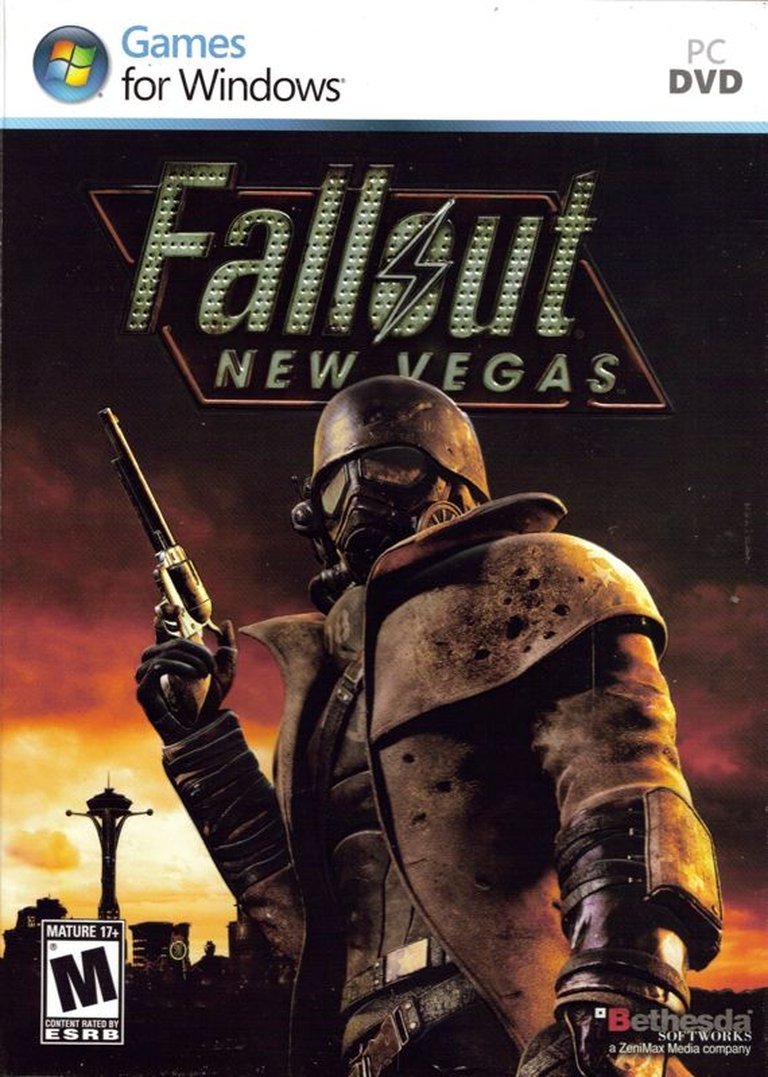
Fallout: New Vegas is set in the post-apocalyptic Mojave Wasteland surrounding the intact gambling paradise of New Vegas in an alternate timeline devastated by a 1950s nuclear war. Players control a courier shot and buried alive during a package delivery to the enigmatic Mr. House, who must survive, seek revenge, and navigate a brewing conflict between the law-bringing New California Republic, savage raiders like the Great Khans and Caesar’s Legion, amid open-world exploration, faction influences, crafting, and survival challenges in an action RPG.
Gameplay Videos
Where to Buy Fallout: New Vegas
Fallout: New Vegas Free Download
Fallout: New Vegas Cracks & Fixes
Fallout: New Vegas Patches & Updates
Fallout: New Vegas Mods
Fallout: New Vegas Guides & Walkthroughs
Fallout: New Vegas Reviews & Reception
ign.com : New Vegas does feel like a giant, awesome expansion.
metacritic.com (84/100): The map, though similar-sized to Fallout 3’s, seems more jam-packed than ever – New Vegas is less a sandbox game than whole beach to play around in.
imdb.com (90/100): it’s breathtaking to climb a steep hill and see the Vegas strip shining for miles over a bleak and destroyed wasteland.
polygon.com : Fallout: New Vegas is a masterpiece, despite its awful launch.
Fallout: New Vegas Cheats & Codes
PC
Press the tilde (~) key during gameplay to open the console, enter the code, and press Enter.
| Code | Effect |
|---|---|
| tgm | Toggle God Mode, making you invulnerable with unlimited ammo and materials for crafting. |
| tcl | Toggle Collision / No clip mode. Allows passing through objects. |
| tdm | Toggle Demigod mode, infinite health and no encumbrance. |
| tfc | Toggle free camera. |
| tm | Toggle menus and UI. |
| tmm 1 | Reveal all map markers. |
| killall | Kill all nearby NPCs and animals. |
| player.resethealth | Restore player health and limb health. |
| advlevel | Advance player level by one. |
| player.setlevel [X] | Set player level to X. |
| player.additem 0000000f [amount] | Add specified amount of bottle caps (currency). |
| player.additem [item ID] [amount] | Add specified item and amount to inventory. |
| player.addperk [perk ID] | Add specified perk to player. |
| unlock | Unlock selected door, container, or terminal. |
| resurrect | Resurrect selected dead NPC. |
| player.srm | Repair selected items to current skill level. |
| GetQuestCompleted | Complete current quest. |
| movetoqt | Teleport player to current quest target. |
| caqs | Complete all quests. |
| help | List all console commands. |
| ShowBarberMenu | Open barber menu to change hair. |
| ShowPlasticSurgeonMenu | Open plastic surgeon menu to change face. |
| SexChange | Change player gender. |
| showracemenu | Open race selection menu. |
| player.rewardxp [amount] | Grant player specified XP amount. |
| set timescale to [value] | Set game time scale speed. |
| player.placeatme 69EE6 | Spawn ammo item box. |
| player.placeatme 69EE7 | Spawn armor item box. |
| player.placeatme 8F7B9 | Spawn weapons item box. |
Fallout: New Vegas: Review
Introduction
In the irradiated shadow of Hoover Dam, where the neon glow of an untouched Las Vegas Strip pierces the post-apocalyptic Mojave like a defiant middle finger to nuclear oblivion, Fallout: New Vegas emerges as a gambler’s paradise of moral ambiguity and emergent storytelling. Released in 2010 by Obsidian Entertainment under Bethesda Softworks’ publishing banner, this fourth mainline entry in the Fallout series doesn’t just survive in the shadow of its blockbuster predecessor, Fallout 3 (2008); it thrives by reclaiming the franchise’s roots in player agency, factional intrigue, and biting satire. As a game historian, I’ve long viewed New Vegas as the pivotal “what if?” scenario: what if the original Black Isle Studios visionaries—scattered after the studio’s collapse—had wielded Bethesda’s Gamebryo engine? The thesis is clear: New Vegas is the definitive evolution of the 3D Fallout formula, blending sandbox exploration with unparalleled narrative depth and choice-driven consequences, cementing its status as a flawed masterpiece that redefined RPGs in the open-world era despite technical gremlins that nearly derailed its launch.
Development History & Context
Fallout: New Vegas was born from a high-stakes bet in the volatile gaming landscape of 2010. Obsidian Entertainment, founded in 2003 by ex-Black Isle alumni including Tim Cain, Leonard Boyarsky, and Chris Avellone—the architects of Fallout (1997) and Fallout 2 (1998)—secured a rushed contract from Bethesda mere months after Fallout 3‘s triumph. With an 18-month development cycle (unprecedentedly tight for an AAA RPG), Obsidian inherited Bethesda’s Gamebryo engine, Havok physics, FaceGen facial tech, and SpeedTree foliage, constraints that echoed the era’s shift toward iterative sequels amid the Xbox 360/PS3 console wars.
Project lead Joshua Sawyer, Van Buren’s (Black Isle’s canceled Fallout 3) designer, envisioned a return to isometric Fallout‘s West Coast roots: the Mojave Desert, NCR expansionism, and tribal warfare over Hoover Dam. This mirrored Van Buren’s unfinished plot, with figures like Joshua Graham (the “Burned Man”) reimagined in DLC like Honest Hearts. Technological limits abound—Gamebryo’s dated visuals struggled with NPC density, shadows, and pop-in, exacerbated by Obsidian’s content-heavy focus over polish. The 2010 market, dominated by linear narratives (Mass Effect 2) and sandboxes (Red Dead Redemption), craved Fallout 3‘s freedom; New Vegas delivered, but launch bugs (freezes, quest-breakers) stemmed from the crunch, with PS3 versions hit hardest by memory leaks.
Bethesda’s oversight ensured IP fidelity, but Obsidian infused Black Isle DNA: 641 credits, including producers like Mikey Dowling and artists like Joseph A. Sanabria. Regional censorship (e.g., German gore removal) and middleware like Bink Video highlighted global ambitions. In context, New Vegas bridged old-school CRPGs and modern open-world epics, proving ex-Black Isle talent could elevate Bethesda’s tech.
Narrative & Thematic Deep Dive
New Vegas‘ narrative is a masterclass in emergent, player-authored epics, far eclipsing Fallout 3‘s linear vault-dweller tale. You embody the Courier: ambushed en route to deliver a Platinum Chip to reclusive mogul Robert House, shot by Benny (the checkered-suited rogue voiced by Matthew Mercer), buried alive, and revived by robot Victor and Doc Mitchell. This inciting incident propels a revenge arc, but sprawls into Mojave power struggles: NCR’s bureaucratic expansionism vs. Caesar’s Legion’s brutal Roman slavers vs. House’s technocratic autocracy vs. an independent wildcard path.
Themes dissect post-apocalyptic governance with scalpel-like satire. NCR embodies flawed democracy—corrupt leaders, naive grunts mirroring contemporary U.S. politics (as player reviews note). Legion’s slavery, crucifixions, and misogyny evoke imperial horrors, yet their discipline contrasts NCR inefficiency. House, an Objectivist cyborg (Ayn Rand nods aplenty), fetishizes pre-war capitalism via Securitrons. Lesser factions like Great Khans, Boomers, and Followers of the Apocalypse add nuance: tribal revivalism, isolationism, humanitarianism. Multiple endings (faction-dependent slides) underscore consequences—your chip heist tips Hoover Dam’s balance, radiating impacts on 30+ locations.
Dialogue shines: skill checks (Speech, Barter) unlock branches, making non-combat builds viable. Characters like Mr. House (Rene Auberjonois), Caesar (John Doman), President Kimball, and companions (e.g., Arcade Gannon’s Enclave arc) boast motivations deeper than Fallout 3‘s caricatures. Themes probe imperialism, identity (Courier’s amnesia enables role-playing), addiction (Chems), and survival ethics—cannibalism, slavery mechanics force gray choices. Humor tempers darkness: Nightkin super mutants’ hilarious radio antics (Tabitha’s falsetto Rhonda) or Kings’ Elvis parody. Player agency peaks in irony—befriend Legion, infiltrate NCR disguised; betray all for anarchy. It’s Fallout 1/2‘s reactivity reborn: quests chain (Vault expedition spawns threats), reputation locks/ unlocks paths, karma supplements faction standings. Weaknesses? Main quest feels wireframe amid side content; voice acting occasionally mismatches (unconvincing skill lines).
Gameplay Mechanics & Systems
Building on Fallout 3, New Vegas refines core loops into a symphony of risk-reward. S.P.E.C.I.A.L. (Strength to Luck) governs progression: perks every even level (post-trait start), skills (Lockpick, Science) enable dialogue/combat hacks. V.A.T.S. tactical pausing returns, augmented by ironsights for hip-fire precision. Combat evolves: 100+ weapons (chainsaws to YCS/186 Gauss rifle), ammo variants (AP shreds armor, hollow points flense flesh, surplus for penny-pinching), mods (scopes, cripplers). Enemies vary—radscorpions, deathclaws scale thoughtfully, eschewing FO3‘s over-scaling.
Innovations elevate RPG depth: Crafting at workbenches (guns/tools), campfires (sun-dried mole rat), reloading benches (ammo types)—junk transmutes into viability, rewarding scavenging. Reputation/Influence: Actions tally faction standings (Liked/Idolized to Hated/Vilified); disguises fool patrols, but superiors pierce veils. Gamble in casinos (Blackjack, Slots) for caps/house ownership. Hardcore Mode revolutionizes survival: stimpaks/RadAway tick-delayed, limbs cripple (doctor bags fix), hunger/thirst/sleep kill, ammo weighs, companions mortal—simulating wasteland grit.
UI quirks persist—clunky Pip-Boy, compass hand-holding—but auto-map, quick-slots aid. Loops mesmerize: explore → loot/craft → quest/faction pivot → level → repeat. Flaws: companion pathing idiocy, energy weapon imbalance, immersion-breakers (karma dings, quest-fail fanfares). Still, 50-100+ hours per playthrough, moddable PC longevity.
World-Building, Art & Sound
The Mojave is New Vegas‘ crown jewel: a sandbox rivaling FO3‘s Capital Wasteland, but denser, more evocative. Nevada’s wastes blend 1950s retro-futurism—glittering Strip (intact pre-war opulence) vs. Freeside slums, Primm ghost towns, mountain oases. Landmarks (Hoover Dam, New Vegas Sphere) anchor lore; setpieces abound—skeleton with five aces, booby-trapped camps, irradiated beaches. Day/night cycles, weather shift atmosphere; interiors (vaults, bunkers) twist mazelike, though repetitive corridors irk.
Art direction captivates despite tech limits: Vault Boy murals, retro ads evoke atomic age Americana. Visuals dated—PS2-tier animations, absent shadows, pop-in, NPC framerate dips—but painterly deserts, neon nights immerse. Sound excels: Inon Zur’s score swells epic; radio stations (Black Mountain’s mutant farce, NCR propaganda) loop 45-minute 50s/60s tracks (Dean Martin, Ink Spots)—repetitive yet nostalgic. VO boasts stars (Felicia Day, Keith Szarabajka); effects (V.A.T.S. crunches, Securitron whirs) punch. Elements coalesce: soundscape amplifies isolation, visuals satirize consumerism’s ruins.
Reception & Legacy
Launch reception was rapturously divided: MobyGames aggregates 84% critic (105 reviews, highs from GameGavel 100%, CanardPC 100%; lows Edge 60% for bugs). Players score 4.0/5 (192 ratings), praising RPG revival (“brings role-playing back”), immersion (“huge, fun”), critiquing glitches (“buggy, esp. PS3”). Sales soared (Ultimate Edition bundled DLCs: Dead Money, Old World Blues, etc.); awards like IGN’s “Most Bang for Buck.”
Reputation evolved glowingly: patches fixed quests/crashes; PC mods (Sawyer’s unofficial tweak) endure. Influence profound—inspired Outer Worlds (Obsidian), Bethesda’s Fallout 4 factions/perks, open-world reactivity (Cyberpunk 2077). As historian, it’s Black Isle’s redemption: Van Buren echoes (Mojave, Graham) realized, proving narrative-first RPGs viable commercially. Trivia nods (Star Trek phasers, Something Awful) cement cult status.
Conclusion
Fallout: New Vegas is the Mojave’s Platinum Chip: a high-value prize amid irradiated dunes, fusing Bethesda’s wanderlust with Obsidian’s soul. Exhaustive quests, factional webs, survival sims deliver transcendent agency, tempered by launch bugs and dated tech—flaws patches/mods mitigate. In video game history, it stands as the 3D Fallout pinnacle, a testament to ex-Black Isle genius reclaiming their wasteland. Verdict: Essential 9.5/10—play it, mod it, live it; the House always wins, but so does the Courier’s legend.