
- Release Year: 2012
- Platforms: Macintosh, Windows
- Publisher: Big Fish Games, Inc
- Developer: GameInvest, S.A.
- Genre: Adventure
- Perspective: 1st-person
- Game Mode: Single-player
- Gameplay: Hidden object
- Setting: Detective, Mystery
- Average Score: 86/100
Description
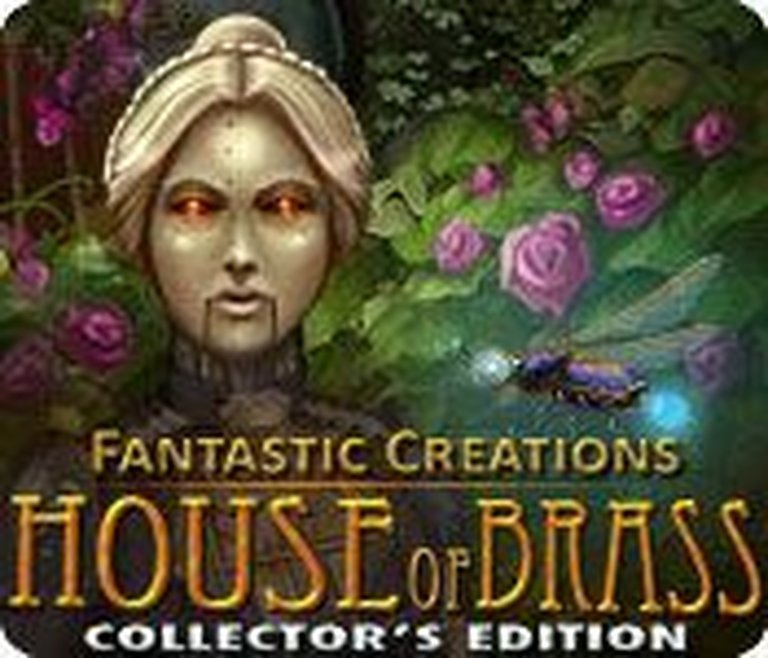
Fantastic Creations: House of Brass (Collector’s Edition) is a hidden object adventure game set in a mysterious underground vault filled with clockwork wonders, where players assist an eccentric inventor in escaping the perilous mansion. The game features a detective/mystery narrative in first-person perspective, with the Collector’s Edition including an exclusive prologue chapter that allows players to step into the shoes of their great-grandmother 100 years in the past, plus bonus content like a mini-game gallery, art collection, wallpapers, and the original soundtrack.
Fantastic Creations: House of Brass (Collector’s Edition) Mods
Fantastic Creations: House of Brass (Collector’s Edition) Guides & Walkthroughs
Fantastic Creations: House of Brass (Collector’s Edition) Reviews & Reception
jayisgames.com : House of Brass is extremely enjoyable if you love exploration and discovery with plenty of mini-games to reward your powers of deduction and reasoning skills.
Fantastic Creations: House of Brass (Collector’s Edition): Review
Introduction
Step into a realm where brass gears turn in perpetual darkness, and eccentric inventions whisper from the walls. Fantastic Creations: House of Brass is not merely a game—it is a meticulously crafted journey into the heart of a steampunk dystopia, where the line between genius and madness blurs. Released in 2012 by GameInvest (later GI Games) and published by Big Fish Games, this Collector’s Edition elevated the hidden object adventure (HOA) genre into a symphony of mechanical marvels and haunting solitude. At its core, the game tasks players with escaping an underground vault designed by the reclusive inventor Edwin Q. Cogglethorpe, whose obsession with immortality trapped him in a decaying labyrinth of his own making. Beyond its surface puzzles lies a profound meditation on isolation, the hubris of creation, and the bittersweet beauty of obsolescence. This review dissects House of Brass as both a technical achievement and a cultural artifact, arguing that its innovative gameplay and atmospheric storytelling cement its place as a standout title in the golden age of casual gaming.
Development History & Context
GameInvest, a Portuguese studio with a penchant for narrative-driven casual games, undertook House of Brass as their inaugural HOA project from concept to completion. Led by Creative Director José João G. Proença, the team sought to transcend the genre’s formulaic roots, blending intricate puzzles with a deeply personal story of loss and ambition. Set in the 1880s, the game drew inspiration from Jules Verne and H.G. Wells, channeling their explorations of technology and human folly into a playable experience. Technologically, the game adhered to the constraints of its era: it was a downloadable title optimized for Windows and macOS, with modest system requirements (e.g., 512 MB RAM, 1 GHz CPU) to ensure accessibility. The gaming landscape of 2012 was dominated by portals like Big Fish Games, where HOAs thrived as mainstream entertainment. House of Brass distinguished itself by emphasizing puzzles over traditional hidden object scenes, a move that aligned with the genre’s evolving sophistication. The Collector’s Edition, released alongside the standard version, added a prologue chapter, replayable mini-games, and an original soundtrack—features that set a new benchmark for bonus content in casual gaming.
Narrative & Thematic Deep Dive
The narrative unfolds in two temporal layers. In the present, players awaken trapped in the House of Brass, guided by the cryptic radio transmissions of Edwin Q. Cogglethorpe, a centuries-old inventor whose voice crackles with paternal eccentricity and desperation. The Collector’s Edition deepens this with a prologue, letting players inhabit Cogglethorpe’s great-grandmother, 100 years prior, offering insight into the house’s origins as a monument to heartbreak and innovation. Themes of isolation permeate the story: Cogglethorpe’s quest for immolation—hermetically sealing himself away from the world—left him entombed with only mechanical animals and malfunctioning robots as companions. The game critiques the folly of unchecked ambition, as the house’s decay mirrors Cogglethorpe’s fraying sanity. Dialogue, sparse yet evocative, is delivered through journal entries and Cogglethorpe’s voice-acted monologues, which toggle between charming and grating. The absence of traditional cutscenes forces players to piece together the narrative through environmental storytelling—crumbling blueprints, scattered notes, and the ghosts of past inhabitants. This approach transforms the house itself into a character, its silence speaking volumes about the cost of genius.
Gameplay Mechanics & Systems
House of Brass subverts HOA conventions by minimizing hidden object scenes (HOS) and centering gameplay on intricate, physics-based puzzles. The core loop involves navigating four interconnected floors—Clockwork, Luxury, Nature, and Surface—each requiring players to reactivate machinery to progress. Key systems include:
- Firefly Collection: Players wield a net to capture fireflies, which serve as light sources and components for assembling a mechanical firefly. This mechanic ties into the game’s central theme of reanimating the dead.
- Elevator Button Halves: A recurring objective where players find half-buttons to unlock vertical movement, symbolizing the fragmented journey to escape.
- Puzzle Diversity: Over 50 unique mini-games test spatial reasoning, logic, and dexterity. Examples include:
- Planetary Orbits: Aligning celestial bodies in a planetarium based on telescope projections.
- Valve Sequencing: Redirecting steam flows by opening/closing pipes in precise sequences.
- Clockwork Zoo: Repairing mechanical animals (armadillo, monkey, iguana) by solving tactile puzzles.
- UI & Navigation: A clean interface uses contextual cursors (magnifying glass for investigation, gears for item use) and a hint system doubling as Cogglethorpe’s transmitter. However, the game’s insistence on “click sensitivity” occasionally triggers a foggy screen penalty, disrupting immersion.
While puzzles are inventive, their complexity can be overwhelming. The narrative lightness, noted in reviews, leaves emotional stakes underdeveloped, reducing Cogglethorpe to a disembodied voice rather than a tragic figure.
World-Building, Art & Sound
The House of Brass is a character as rich as any protagonist, a subterranean cathedral of invention where steam pipes hiss like serpents and gears turn in eternal silence. Each floor is a biome of decayed grandeur:
– Clockwork Floor: Exposed machinery and rusted elevators evoke the basement of a mad scientist.
– Luxury Floor: Gilded parlors and dusty libraries, where a malfunctioning robot housekeeper adds tension.
– Nature Floor: A biomechanical arboretum with glass domes and sentient plants.
– Surface Floor: Cogglethorpe’s lair, revealing the house’s purpose as a mausoleum.
Artistically, the game blends illustrated realism with steampunk excess. Textures gleam with brass patina, and mechanical animals (e.g., a clockwork eagle) are rendered with whimsical precision. The atmosphere shifts from wonder (the house’s prime in the prologue) to dread (its current state), amplified by Pedro Santo’s haunting soundtrack. The score, featuring echoing pianos and ticking clocks, reinforces the theme of time’s passage. Sound effects—from the clang of gears to the buzz of fireflies—anchor players in the tactile world. Voice acting, though optional via volume controls, gives Cogglethorpe a raspy, grandfatherly charm that humanizes his isolation.
Reception & Legacy
Upon release, House of Brass was a commercial juggernaut, charting as a Top 10 bestseller on Big Fish Games for over a month. Its Mac version notably outsold Mystery Case Files: Escape From Ravenhearst, a testament to its cross-platform appeal. Critical reception, however, was muted; Metacritic lists no critic reviews, and player reviews on JayIsGames praise the puzzles but lament the “light” narrative. Developer Carlos Leituga highlighted its success as GI Games’ “second Collector’s Edition,” underscoring its role in elevating the studio’s profile.
Legacy-wise, the game innovated the HOA genre by prioritizing puzzles over HOS, influencing titles like Clockwork Tales: Of Glass and Ink. Its steampunk aesthetic and environmental storytelling prefigured the narrative depth seen in modern adventures. The Collector’s Edition’s prologue and mini-game gallery became a template for premium content, emphasizing replayability and lore expansion. Yet, its niche appeal limited mainstream impact, and its heavy reliance on puzzle repetition kept it from reaching Mystery Case Files-level ubiquity.
Conclusion
Fantastic Creations: House of Brass is a masterclass in atmospheric design and mechanical storytelling. It transcends its genre trappings by transforming a hidden object adventure into a poignant exploration of creation and solitude. While its narrative threads remain frayed and puzzle density borders on exhaustion, the game’s artistry and ingenuity are undeniable. The Collector’s Edition, with its prologue and curated extras, enriches an already compelling experience, offering a window into a world where wonder and decay dance in eternal lockstep. For players seeking a HOA that challenges as much as it charms, House of Brass remains a gleaming relic of 2012’s golden age—a testament to the power of brass, gears, and dreams. Verdict: A must-play for genre enthusiasts and a vital artifact in casual game history.