
- Release Year: 2015
- Platforms: Windows
- Publisher: rokapublish GmbH
- Developer: rokapublish GmbH
- Genre: Puzzle
- Perspective: Top-down
- Game Mode: Single-player
- Gameplay: Tile matching puzzle
- Setting: Fantasy
- Average Score: 100/100
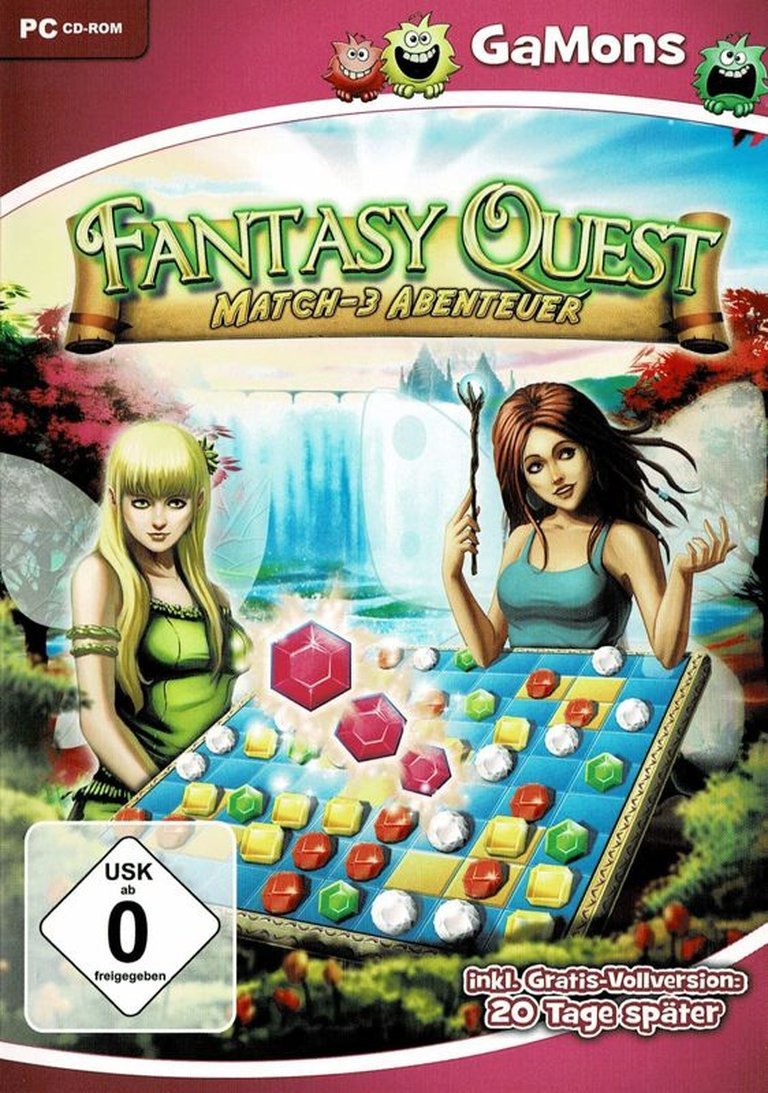
Description
Fantasy Quest is an adventure game that subverts the classic ‘save the princess’ plot in a whimsical setting blending medieval fantasy with modern anachronisms like a castle equipped with microwaves and a farm tractor. Players navigate through puzzles and interactive fiction challenges, uncovering unexpected twists and quirky humor in a world where mundane and magical collide, all while progressing from its 1991 origins to a 1998 public release with enhanced graphics and mouse support.
Where to Buy Fantasy Quest
PC
Fantasy Quest: Review
Introduction
Fantasy Quest, released on April 24, 2015 by rokapublish GmbH, invites players into a whimsical yet perilous realm where magic has been drained by an evil sorcerer. As a tile-matching puzzle adventure, it merges accessible gameplay with a fairy-tale narrative, challenging players to restore balance to a polluted kingdom. While the premise echoes familiar “save the princess” tropes, its execution—enhanced by vibrant visuals, strategic mechanics, and cooperative fairy allies—elevates it beyond a mere casual diversion. This review examines how Fantasy Quest carves a distinct identity within the crowded puzzle genre, offering both timeless charm and innovative design.
Development History & Context
Developed and published by the German studio rokapublish GmbH, Fantasy Quest emerged amid the mid-2010s boom of mobile and PC puzzle games. Operating within the burgeoning match-3 genre—popularized by titles like Bejeweled and Candy Crush—the game embraced a fantasy setting to differentiate itself. Its commercial release on Windows via CD-ROM signaled a commitment to traditional distribution, though it aligned with the era’s trend of accessible, family-friendly digital entertainment. rokapublish, known for lighthearted casual titles, leveraged the fantasy theme to appeal to a broad audience, blending nostalgia for classic adventure games with modern puzzle mechanics. The game’s development prioritized accessibility, ensuring intuitive controls and varied modes to cater to both casual players and puzzle enthusiasts, reflecting the studio’s focus on user-friendly design.
Narrative & Thematic Deep Dive
Fantasy Quest’s narrative unfolds in the idyllic land of Fantasyland, where an unnamed evil sorcerer’s dark magic has corrupted the environment and imprisoned its fairy inhabitants. Players assume the role of a hero tasked with purging pollution, restoring magic, and liberating the kingdom—a classic “save the realm” trope subverted by its emphasis on ecological restoration rather than damsel rescue. The story unfolds across twelve enchanted locations, each presenting new challenges and lore snippets. Key themes include friendship and cooperation, embodied by the four fairy allies—Wind, Fire, Lightning, and Clover—who grant unique abilities. Their collective power underscores the game’s message that unity triumphs over adversity. While the plot is straightforward, its charm lies in its simplicity: it avoids overwrought complexity in favor of a clear, motivating goal, making the narrative a vehicle for gameplay progression rather than a deep exploration of fantasy tropes. The sorcerer’s malevolence serves as a vague antagonist, allowing players to focus on restoration rather than villain backstory.
Gameplay Mechanics & Systems
At its core, Fantasy Quest is a tile-matching puzzle game where players swap adjacent items (e.g., gems, runes) to create chains of three or more identical elements. This mechanic, staple to the genre, is elevated by three distinct game modes—each offering unique rulesets to prevent monotony. Standard levels require clearing tiles to fill a “magic meter,” while timed modes challenge players under pressure, and puzzle levels demand strategic item movement to achieve specific objectives.
The fairy allies introduce depth: each possesses a special ability activated by collected power-ups. For instance, the Wind Fairy can clear entire rows, while the Fire Fairy ignites tiles in a cross-pattern. These abilities must be used judiciously, as power-ups are scarce and often critical to overcoming difficult levels. Progression is tied to completing 120 levels, with difficulty scaling gradually. Early stages teach basic mechanics, later levels introduce obstacles like cursed tiles that require multiple matches to remove.
The UI is clean and intuitive, with a top-down perspective allowing players to easily scan grids. However, the fixed/flip-screen design limits camera movement, occasionally forcing players to memorize tile layouts. The lack of a story-driven tutorial means players must learn through trial, though this aligns with the game’s “pick-up-and-play” philosophy. Multiplayer elements are absent, emphasizing a solitary experience focused on personal achievement.
World-Building, Art & Sound
Fantasy Quest’s world-building is minimalist yet evocative. The twelve locations—ranging from mushroom groves to floating islands—are designed as distinct biomes, each reflecting a facet of a corrupted fantasy realm. Enchanted forests feature glowing flora, while volcanic zones smolder with lava tiles, reinforcing the sorcerer’s impact. Though lore is sparse, environmental storytelling hints at a pre-magic utopia: crumbling statues and overgrown ruins suggest a kingdom in decline.
Art direction leans into vibrant, cartoonish aesthetics. Tiles are rendered as crystalline gems, flowers, and celestial objects, popping against lush backdrops. Character designs for the fairies are distinct—Wind Fairy embodies ethereal blues, while Fire Fairy radiates warm oranges—ensuring visual clarity during gameplay. The art style, devoid of grit, aligns with the game’s all-ages appeal.
Sound design complements the visuals: cheerful melodies loop during gameplay, with chimes and fairy vocalizations accentuating successful matches. Sound effects are crisp—tinkles for tile clears, whooshes for power-ups—creating a satisfying auditory loop. However, the soundtrack lacks memorable leitmotifs, prioritizing functionality over thematic depth. Ambient sounds, like rustling leaves in forest levels, subtly enhance immersion without distracting from puzzles.
Reception & Legacy
Upon release, Fantasy Quest received muted attention. MobyGames records no critic reviews, reflecting its status as a niche title in a saturated market. Player reviews remain absent, suggesting limited community discourse. Commercial performance is undocumented, but its CD-ROM release on Windows positioned it as a budget-friendly alternative to AAA puzzle games.
Its legacy lies in its execution of fantasy tropes within the match-3 template. While not revolutionary, it exemplified how genre staples—magic, quests, fairy allies—could be distilled into accessible gameplay. The game’s emphasis on cooperative abilities (via fairies) predated similar mechanics in titles like Matchington Mansions, though it never achieved their mainstream traction. It remains a footnote in puzzle history, remembered more for its charming aesthetic than innovation.
Conclusion
Fantasy Quest is a polished if unremarkable entry in the match-3 genre. Its strengths lie in cohesive art direction, varied gameplay modes, and a straightforward narrative that avoids overcomplicating its fairy-tale premise. The fairy allies add strategic depth, preventing the core mechanic from growing stale. However, the game’s reliance on formula—both in story and puzzle design—and its lack of narrative ambition or multiplayer options limit its long-term appeal.
For players seeking a lighthearted, visually enchanting puzzle experience, Fantasy Quest delivers. It excels as a casual diversion but fails to transcend its genre conventions. Its place in history is as a competent, if forgettable, fantasy puzzler—enjoyable in short bursts but ultimately overshadowed by more inventive contemporaries. In the grand tapestry of gaming, it is a pleasant thread, not a landmark weave.