
- Release Year: 2018
- Platforms: Windows
- Publisher: Animu Game
- Developer: Animu Game
- Genre: Action
- Perspective: 3rd-person (Other)
- Gameplay: RPG elements
- Setting: Fantasy
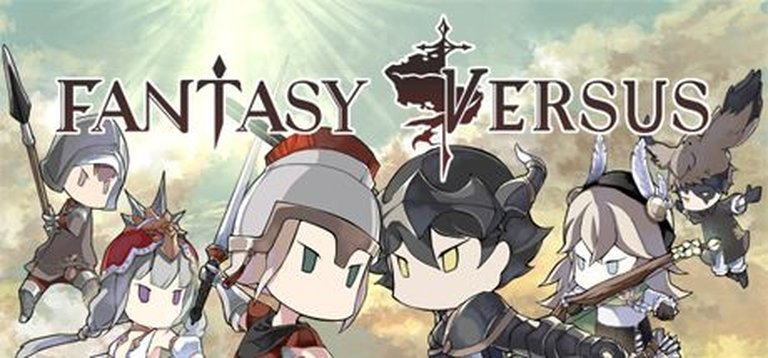
Description
Fantasy Versus is an action game with RPG elements set in a fantasy world, developed by Animu Game and released for Windows in May 2018. Players engage in third-person combat and character progression within a fantastical setting.
Where to Buy Fantasy Versus
PC
Fantasy Versus Free Download
Fantasy Versus Cracks & Fixes
Fantasy Versus Patches & Updates
Fantasy Versus Guides & Walkthroughs
Fantasy Versus: Review
Introduction
In the annals of video game history, few titles boast a development saga as tumultuous or a transformation as radical as Fantasy Versus. Born from the ambitious, decade-long crucible of Square Enix’s Fabula Nova Crystallis mythos, this game began life as Final Fantasy Versus XIII—a dark, PS3 spin-off helmed by visionary Tetsuya Nomura. After a decade of reboots, technological upheavals, and narrative overhauls, it emerged in 2018 as Fantasy Versus, a Windows-exclusive action RPG that redefined expectations for the Final Fantasy series. More than a game, Fantasy Versus is a testament to the industry’s relentless evolution—a flawed, ambitious odyssey that blends open-world exploration with intimate storytelling, culminating in a legacy both celebrated and contested. This review deconstructs Fantasy Versus not merely as a product, but as a cultural artifact—a relic of a development era where ambition often outpaced execution, yet whose audacity left an indelible mark on RPG design.
Development History & Context
Fantasy Versus’s genesis is inseparable from Square Enix’s grandiose Fabula Nova Crystallis project, a shared universe launched in 2006 to rival the scale of Star Wars or The Lord of the Rings. Originally codenamed Versus XIII, it was conceived as a PS3-exclusive dark fantasy RPG, with Nomura envisioning a “seamless open world” powered by the experimental Crystal Tools engine. The game’s early footage showcased Kingdom Hearts-style combat, featuring controllable party members like Prompto and scripted encounters set in a gritty, contemporary-inspired world. However, the project’s trajectory fractured in 2011 when Sony unveiled the PS4. Square Enix leadership, witnessing the PS3’s limitations and Nomura’s slow progress, opted to overhaul Versus XIII into the mainline Fantasy Versus (later rebranded Final Fantasy XV). Director Hajime Tabata took the reins, shifting to the Luminous Engine, excising the Fabula Nova Crystallis lore, and rewriting the narrative to prioritize accessibility. Ten years of development—marked by engine swaps, story cuts, and canceled DLC episodes—culminated in a game that retained Nomura’s aesthetic but embodied Tabata’s vision of “a fantasy based on reality,” blending real-world locales like Venice and Tokyo with magical elements. This turbulent context explains Fantasy Versus’s identity: a product of technological transition, creative friction, and the industry’s shift toward Western RPG design.
Narrative & Thematic Deep Dive
Fantasy Versus’s narrative unfolds as a royal road trip-turned-apocalypse. Players control Noctis Lucis Caelum, prince of the last free nation Lucis, as he journeys to reclaim his homeland from the technocratic empire Niflheim after a devastating invasion. The plot weaves political intrigue—marriage pacts, ancient prophecies, and betrayal—with intimate character dynamics. Noctis’s bond with his retainers—Gladiolus (stoic guardian), Ignis (tactician and chef), and Prompto (jovial marksman)—forms the emotional core, their camaraderie punctuated by banter and shared vulnerabilities. Key themes include sacrifice (Noctis’s destiny as the “True King” who dies to save the world), the duality of legacy (the Crystal’s power as both boon and curse), and the cost of war. The story’s strongest moments are its mundane interludes: roadside camping, fishing, and conversations that humanize the heroes. Yet, Fantasy Versus falters in its late-game act, where narrative cohesion gives way to rushed reveals. Ardyn Izunia, the charismatic antagonist, is underdeveloped, while Lunafreya, Oracle and Noctis’s betrothed, suffers from minimal screen time. The Fabula Nova Crystallis mythos is relegated to background lore, with deities like Bahamut and the Astrals serving as thematic anchors rather than active forces. This dilution of mythos, while intentional for accessibility, robs the story of the Fabula Nova Crystallis’s grandeur, leaving a narrative that’s emotionally resonant but structurally uneven.
Gameplay Mechanics & Systems
Fantasy Versus’s gameplay loop marries real-time action with RPG progression, defined by its “Active Cross Battle” system. Combat is fluid and kinetic, with Noctis wielding a arsenal of weapons—swords, polearms, guns—that materialize from thin air. The core mechanics revolve around warping (teleportation to strike enemies), parrying, and linking with party members for cooperative attacks (“Link-strikes”). Techniques like Gladiolus’s sweeping assault or Ignis’s dagger-marking add tactical depth, though AI companions occasionally feel autonomous. Magic is split into two tiers: Elemancy (crafting elemental bombs from environmental energy) and Arcana (powerful spells tied to the Ring of the Lucii). Summons, such as Leviathan and Titan, serve as spectacular set-pieces but are contextually restricted, feeling more like narrative punctuation than gameplay tools. Progression is tied to Ability Points (AP) spent on the Ascension Grid, a skill tree divided into combat, magic, and passive abilities. Leveling occurs only at safe zones (“Havens”), adding a risk-reward element where defeat erases earned EXP. Minigames like fishing and photography diversify the loop, though the open world often feels underutilized, with repetitive fetch quests. The game’s latter half abandons exploration for linear corridors, a jarring shift that highlights its identity crisis: an action-RPG with open-world aspirations that struggles to reconcile its scope with narrative focus.
World-Building, Art & Sound
Fantasy Versus’s world, Eos, is a masterclass in “fantasy based on reality.” Lucis’ capital, Insomnia, mirrors Tokyo’s neon-drenched urbanity, while Altissia evokes Venice’s canals and architecture. The landscape transitions from lush forests to arid deserts, each region meticulously detailed with weather systems and dynamic lighting. Creatures like the daemonic Marauders and colossal Adamantoises blend myth with biological realism, their designs echoing medieval bestiaries. The art direction, overseen by Yusuke Naora and Isamu Kamikokuryo, emphasizes contrast: the opulence of royal cities versus the decay of Niflheim’s industrial zones. Character designs by Nomura and Roberto Ferrari blend contemporary fashion (e.g., Noctis’s black leather) with fantastical motifs, making the cast visually distinctive. Sound design is equally potent, with Yoko Shimomura’s score—alternately melancholic and epic—enhancing moments like Leviathan’s cataclysmic summon. Environmental audio, from the crunch of snow to the hum of futuristic machinery, immerses players in Eos’ duality. However, the world’s vastness often feels empty, with NPCs exhibiting limited agency, and the linear late-game sections betray the open world’s potential. Fantasy Versus’s artistry lies in its verisimilitude, but its ambition occasionally outstrips its interactive depth.
Reception & Legacy
Upon release, Fantasy Versus was a commercial juggernaut, selling 5 million copies within 24 hours and reaching 10 million by 2022, cementing it as one of Square Enix’s best-selling titles. Critical reception was mixed but generally positive, with Metacritic scores of 81–85/100 across platforms. Praise centered on its combat (“Kingdom Hearts meets Dissidia”), character chemistry, and visual spectacle, while criticism targeted the disjointed narrative, camera issues, and abrupt shift to linear gameplay. The game’s multimedia expansion—a feature film (Kingsglaive), anime (Brotherhood), and canceled DLC—highlighted Square Enix’s struggle to deliver a cohesive story. Retrospectively, Fantasy Versus is viewed as a transitional title: it influenced open-world RPGs like Dragon Age: Inquisition and The Witcher 3 by prioritizing character-driven journeys over lore dumps, yet its flaws underscore the risks of prolonged development. Its legacy is dual-edged: it saved the Final Fantasy franchise from commercial decline but set a precedent for “unfinished” AAA experiences reliant on post-launch content. As NHK’s 2020 poll ranked it the 10th best Final Fantasy title with 71% female votes, Fantasy Versus proved that flawed ambition could resonate across demographics, leaving a legacy as both a cautionary tale and a benchmark for interactive storytelling.
Conclusion
Fantasy Versus stands as a paradox: a game defined by its contradictions. Its development—a decade-long metamorphosis from spin-off to flagship—mirrors its narrative, where ancient prophecies collide with modern road-trip mundanity. As an action RPG, it excels in combat and character bonding yet stumbles in pacing and world utilization. Thematically, it sacrifices the Fabula Nova Crystallis’s mythic scale for personal drama, a trade-off that makes it accessible but less epic. Visually and sonically, it remains a benchmark, yet its open world feels more a testing ground than a living realm. Ultimately, Fantasy Versus is less a masterpiece and more a milestone—a testament to Square Enix’s resilience and the industry’s evolution. Its legacy lies not in perfection but in its audacity: a game that dared to reinvent a franchise, even if it couldn’t entirely resolve its own identity. In the pantheon of RPGs, Fantasy Versus is a flawed, unforgettable odyssey—a reminder that sometimes, the most compelling stories are the ones lived through development as much as gameplay.