
- Release Year: 2022
- Platforms: Windows
- Publisher: RedDot Games
- Developer: RedDot Games
- Genre: Action
- Perspective: 1st-person
- Gameplay: RPG elements, Shooter
- Average Score: 69/100
Description
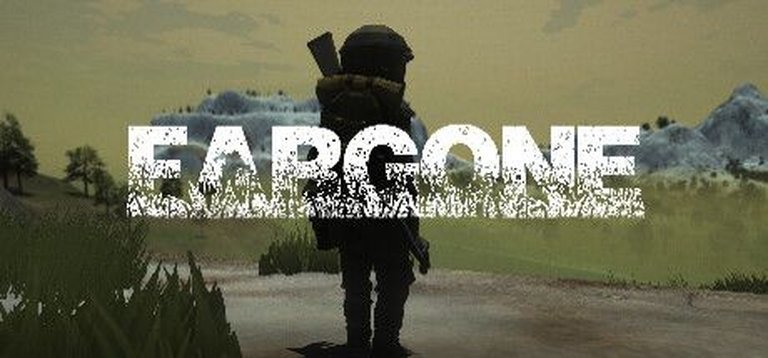
Fargone is an RPG-based survival game set in a post-apocalyptic world known as The Barrens. Players must navigate through a dynamic environment filled with zombies, bandits, and faction wars, utilizing survival skills, combat tactics, and strategic alliances to endure the harsh conditions.
Gameplay Videos
Where to Buy Fargone
PC
Fargone Guides & Walkthroughs
Fargone Reviews & Reception
steambase.io (69/100): Fargone has earned a Player Score of 69 / 100.
games-popularity.com (70.8/100): Reviews: 70.80% positive (337/476)
raijin.gg (69/100): Steam review score: 69% Mostly positive
Fargone: A Nuclear Winter’s Ambitious Struggle for Survival
Introduction
In the irradiated wasteland of indie survival games, Fargone stands as a testament to both the boundless ambition of solo development and the grueling realities of Early Access. Developed by Jordan under the banner of RedDot Games, this first-person survival-RPG hybrid thrusts players into The Barrens—a fictional hellscape scarred by a suspicious nuclear disaster and teeming with mutated horrors, warring factions, and dynamic environmental storytelling. Released into Early Access in December 2022, Fargone has evolved through a turbulent three-year journey, oscillating between flashes of brilliance and the pitfalls of technical instability. This review examines whether Fargone transcends its janky origins to claim a place among the genre’s most compelling anti-utopias.
Development History & Context
The Solo Developer’s Burden
Born from the vision of Jordan, a solo developer, Fargone entered Early Access as a passion project built in Unity. Its development paralleled a surge in post-apocalyptic survival games (DayZ, STALKER, The Long Dark), yet Fargone aimed to differentiate itself through living-world AI systems and faction-driven dynamism. Early builds leaned heavily on asset-store models, but post-2024 updates saw contributions from artist “Sadlife,” signaling a shift toward bespoke visuals.
Technological Ambitions and Constraints
The game’s scope—open-world exploration, modular base-building, dynamic weather, and AI-driven factions—pushed Unity to its limits. Initial releases were marred by memory leaks, pop-in, and AI pathfinding issues, struggles common to solo-dev projects. Jordan’s 2025 roadmap acknowledged these hurdles, citing personal disruptions and the “growing complexities” of systems like multiplayer (still absent at launch). Despite this, Fargone’s Steam page promised long-term support, positioning it as a slow-burn labor of love rather than a polished commodity.
Narrative & Thematic Deep Dive
The Barrens: A Canvas for Desperation
Set in a fragmented land ravaged by The Infection—a dual curse of radiation and viral mutation—Fargone’s worldbuilding thrives on environmental dread. The Barrens’ four key regions (Plains, Mountains, Hazard Zone, Strathem City) aren’t just biomes but thematic statements: the Plains’ faction warfare mirrors Mad Max’s anarchic tribalism, while the Hazard Zone’s green fog and toxic rain evoke STALKER’s Chernobyl nightmares.
Factions as Narrative Engines
- The Military: Authoritarian remnants conducting shady experiments.
- Liberty: A grassroots militia fighting for control.
- Hollowed: Bandits led by the enigmatic Xero, desperate to halt Military incursions.
- Runners: Mountain-dwelling isolationists.
Reputation systems shape encounters, with dynamic missions (e.g., defending Liberty outposts or sabotaging Military convoys) altering faction standing. However, narrative depth is uneven—quests often devolve into fetch tasks, and lore-heavy notes scattered in bunkers feel undercooked compared to Fallout’s environmental storytelling.
Themes of Degradation
Survival isn’t just mechanical but existential. Broken bones slow movement; infections demand antibiotics; radiation sickness forces players to chug vodka as a makeshift cure. This body horror ethos—reminiscent of Pathologic—elevates Fargone beyond generic “eat/drink/sleep” systems.
Gameplay Mechanics & Systems
Survival as Punishment and Reward
- Needs System: Hunger, thirst, toxicity, and radiation debuffs demand constant scavenging.
- Combat: Post-2024 updates refined gunplay, introducing armored zombies requiring heavy weapons and Exploders that charge players Kamikaze-style. NPC AI improvements made enemies use cover and flank, though bugs persist (e.g., jittery animations in hazard zones).
- Crafting & Scavenging: Hundreds of items—from chem lights to makeshift silencers—enable creative playstyles. The ammo salvage bench allows tailoring ammunition to encounters.
Base Building: From Jank to Jubilation
Early builds let players “place items anywhere,” leading to physics glitches. The Busy Work update (2024) overhauled this with:
– Base Computers: Anchor points for constructing radio towers (fast-travel hubs).
– Functional Power Grids: Generators and wiring add Subnautica-like depth.
– Wandering Traders: Selling base parts to reduce grind.
Progression and Perks
Skills improve through use (Skyrim-style), but the Iron Lungs perk bug (fixed in 2024) exemplified early jank. The 0.4.1.0 patch added customizable origins (Hunter, Builder, Bandit), enhancing replayability.
Flaws and Frustrations
- Bugs: Items vanishing from storage, soft locks during looting, and attachment duplication plagued post-update builds (Nov 2025 patches addressed some).
- Bunker Brutality: High-risk bunkers—no saving, permanent death—felt unfairly punitive given instability.
- UI Clunk: Inventory management suffers from tedious drag-and-drop.
World-Building, Art & Sound
Visual Dichotomy
Early asset-flip jank gave way to stylized desolation in later updates:
– The Plains’ rusted trailers and Liberty’s fortified bases.
– The Mountains’ snow-swept observatory, now reworked with lootable debris.
– Weather systems—toxic monsoons, radioactive fog—obscure sightlines, ratcheting tension.
Sound Design: The Barrens’ Voice
Ambient winds carry distant zombie shrieks; Armored Zombies clank with metallic menace. Gunshots echo with satisfying weight, though voice acting is sparse—faction leaders like Sgt. Kaine bark repetitive lines during missions.
Reception & Legacy
Critical Divide
Launched to “Mostly Positive” Steam reviews (70%), recent scores dipped to “Mixed” (62% in Dec 2025) due to update-induced bugs. Players praised:
– Atmospheric immersion and dynamic faction wars.
– The Busy Work update’s base-building depth.
But criticism targeted:
– Technical instability (floating objects, AI glitches).
– Grindy progression without co-op to offset solo fatigue.
Industry Impact
While not a commercial juggernaut, Fargone influenced indie devs with:
– Dynamic faction AI: Later seen in Road to Vostok and Sons of the Forest.
– Modular base-building: Cited by Nightingale’s developers as inspiration.
Jordan’s 2025 roadmap—vehicles, multiplayer—could solidify its legacy, but execution remains key.
Conclusion
Fargone is a flawed masterpiece—a game of staggering ambition hamstrung by the realities of solo development. Its living world, punishing survival systems, and evocative art direction shine brightest in moments of emergent chaos: fending off Exploders during a radioactive storm, negotiating with Liberty scouts, or fortifying a base against Hollowed raiders. Yet, persistent bugs and uneven pacing remind us that The Barrens is still under construction. For patient players, Fargone offers a compelling, if rough-hewn, addition to the survival canon. For now, it remains a promising prototype of what post-apocalyptic RPGs could become—a nuclear dream deferred, but not extinguished.
Final Verdict:
★★★☆☆ (3/5)
A diamond in the rough—cut by radiation, not refinement.