
- Release Year: 2021
- Platforms: Windows
- Publisher: upjers GmbH
- Developer: upjers GmbH
- Genre: Simulation
- Perspective: Diagonal-down
- Game Mode: Single-player
- Gameplay: Business simulation, Managerial
- Setting: Fantasy
- Average Score: 55/100
Description
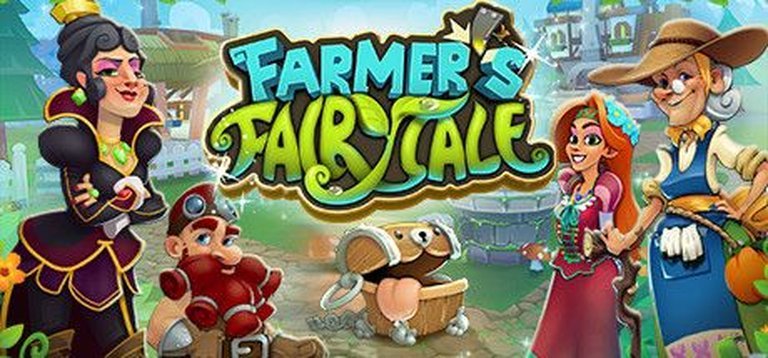
Farmer’s Fairy Tale is a charming farming simulation game set in a whimsical fantasy world. Players find themselves in a fairytale-like setting, tasked by the mayor and her enigmatic assistant, Señor Cato, to restore a run-down farm. The game blends managerial and business simulation elements with a diagonal-down 2D perspective, allowing players to cultivate fields, manage resources, and uncover the mysteries of their new surroundings.
Gameplay Videos
Where to Buy Farmer’s Fairy Tale
PC
Farmer’s Fairy Tale Cracks & Fixes
Farmer’s Fairy Tale Guides & Walkthroughs
Farmer’s Fairy Tale Reviews & Reception
steambase.io (55/100): Farmer’s Fairy Tale has earned a Player Score of 55 / 100.
Farmer’s Fairy Tale Cheats & Codes
PC (PLITCH)
Download and install PLITCH, create an account, open the client, search for the game, and activate cheats.
| Code | Effect |
|---|---|
| Add Gold | Increases in-game gold |
| Unlimited Stamina | Removes stamina limitations |
| Unlimited Items | Provides unlimited items (Premium) |
| Instant craft | Instantly crafts items (Premium) |
| Add Crystals | Increases in-game crystals (Premium) |
Farmer’s Fairy Tale: A Whimsical Yet Flawed Fusion of Farming and Fantasy
Introduction: A Fairy Tale with Unfulfilled Promise
Farmer’s Fairy Tale (2021) is a curious hybrid—a farming simulation draped in the trappings of a story-driven RPG, set in a vibrant, if somewhat shallow, fairy-tale world. Developed and published by German studio upjers GmbH, a company known for browser-based games like My Free Farm, this title attempts to blend the methodical satisfaction of agricultural management with the charm of a narrative adventure. The result is a game that sparkles with potential but stumbles over execution, leaving players with a bittersweet experience—one that is as frustrating as it is enchanting.
At its core, Farmer’s Fairy Tale invites players to step into the shoes of a nameless heroine (a rare female protagonist in the farming sim genre) who awakens in a mysterious, storybook realm. Tasked by the town’s mayor and her enigmatic assistant, Señor Cato, the player must restore a dilapidated farm while unraveling the secrets of this fantastical land. The premise is compelling: a fusion of Stardew Valley’s pastoral charm and The Legend of Zelda’s adventurous spirit, all wrapped in a visual style reminiscent of a living pop-up book.
Yet, despite its ambitions, Farmer’s Fairy Tale struggles to reconcile its dual identities. Is it a farming sim with light RPG elements, or an adventure game with farming mechanics? The answer, unfortunately, is neither fully realized. This review will dissect the game’s development, narrative, gameplay, and legacy to determine whether it deserves a place in the pantheon of farming simulations—or if it remains a forgotten footnote in the genre’s history.
Development History & Context: From Browser Games to Steam Ambitions
The Studio Behind the Plow: upjers GmbH
Founded in 2006, upjers GmbH is a German developer specializing in browser-based and mobile games, particularly in the farming and simulation genres. Their portfolio includes titles like My Free Farm, My Little Farmies, and Molehillempire—games designed for casual, long-term engagement rather than deep, narrative-driven experiences. Farmer’s Fairy Tale represents a departure from their usual formula, marking their first foray into a premium, story-focused farming RPG on Steam.
The shift from free-to-play browser games to a paid, narrative-driven experience was a risky gambit. upjers’ expertise lay in monetization through microtransactions and incremental progression, not in crafting immersive worlds or compelling storytelling. This transition is evident in Farmer’s Fairy Tale, which retains some of the grind-heavy, energy-system mechanics of mobile games while attempting to layer on a more traditional RPG structure.
Technological Constraints & Design Choices
Built in Unity, Farmer’s Fairy Tale employs a diagonal-down 2D scrolling perspective, a choice that evokes classic farming sims like Harvest Moon while allowing for a more stylized, cartoonish aesthetic. The game’s 3D graphics are colorful and charming, though they lack the polish of contemporaries like Stardew Valley or Story of Seasons. The art style is undeniably whimsical, with exaggerated character designs (such as the diminutive Giant Shorty and the Rapunzel-esque Valerie) that reinforce the fairy-tale theme.
However, the game’s technical limitations become apparent in its clunky animations, repetitive environments, and occasional performance hiccups. The UI, while functional, feels dated, with menus that are not as intuitive as those in more refined farming sims. The inventory system, in particular, is cumbersome, requiring excessive clicking to manage tools and resources.
The Gaming Landscape in 2021: A Crowded Field
Farmer’s Fairy Tale launched on May 31, 2021, into a market already dominated by farming simulation giants:
– Stardew Valley (2016) had long been the gold standard, offering deep farming mechanics, rich storytelling, and near-endless content.
– Story of Seasons (the spiritual successor to Harvest Moon) continued to refine the formula with polished mechanics and seasonal charm.
– Indie darlings like My Time at Portia and Rune Factory blended farming with crafting and combat, appealing to players seeking more action.
In this competitive landscape, Farmer’s Fairy Tale struggled to carve out a niche. Its unique selling point—a fairy-tale setting with RPG quests—was intriguing, but the execution failed to match the ambition. The game’s mixed reception on Steam (48% positive reviews) reflects this disconnect: players were drawn to the concept but left disappointed by its repetitive gameplay, shallow narrative, and technical rough edges.
Narrative & Thematic Deep Dive: A Storybook World with Little Depth
Plot Overview: A Heroine’s Mysterious Journey
The game begins with the protagonist mysteriously transported to a fairy-tale kingdom, where she is immediately tasked by the mayor (a stern but benevolent ruler) and her assistant, Señor Cato, to restore a rundown farm. The premise is ripe with potential: Who is the protagonist? Why was she brought here? What secrets does this world hold?
Unfortunately, the narrative never delivers on its promises. The story unfolds through quests and NPC interactions, but the writing is shallow, often humorous in a forced way, and lacking in emotional weight. The protagonist remains a silent cipher, with no backstory or personality, which makes it difficult for players to invest in her journey.
Characters: Quirky but Underdeveloped
The game’s cast of NPCs is one of its most charming yet frustrating aspects. Characters like:
– Giant Shorty (a tiny giant with a love for plants)
– Valerie (a red-haired woman with Rapunzel-like tresses)
– Ashley (a flamboyant, fashion-obsessed villager)
…are visually distinctive and occasionally amusing, but their personalities are one-dimensional, and their dialogue rarely evolves beyond fetch quests and exposition dumps.
The mayor and Señor Cato serve as the primary quest-givers, but their roles are purely functional, lacking the depth of relationships seen in games like Stardew Valley or Animal Crossing. There is no romance system, no deep friendships, and no meaningful character arcs—just a series of transactional interactions that propel the player from one task to the next.
Themes: Whimsy Over Substance
Farmer’s Fairy Tale leans heavily into fairy-tale tropes, but it does so without subversion or depth. Themes of:
– Rebirth and renewal (restoring the farm)
– Discovery and wonder (exploring a magical world)
– Community and labor (helping villagers)
…are present but underdeveloped. The game never questions the fairness of the mayor’s demands, the protagonist’s lack of agency, or the ethical implications of exploiting a magical world for personal gain. Compared to Stardew Valley’s subtle critiques of capitalism and corporate life, Farmer’s Fairy Tale feels naïve and uncritical.
Dialogue & Localization: A Missed Opportunity
The game’s English localization is serviceable but uninspired, with stiff, sometimes awkward phrasing that undermines the fairy-tale charm. Humor often falls flat, and key story moments lack impact due to poor pacing and delivery.
Gameplay Mechanics & Systems: Farming, Crafting, and Repetition
Core Gameplay Loop: A Grind in Disguise
At its heart, Farmer’s Fairy Tale is a farming simulation with light RPG elements. The core loop involves:
1. Clearing and tilling land
2. Planting and harvesting crops
3. Crafting tools and items
4. Completing quests for NPCs
5. Exploring new areas
On paper, this sounds like a standard but enjoyable farming sim. In practice, the game suffers from excessive repetition and poor pacing.
Farming & Agriculture: Tedious Rather Than Therapeutic
Farming in Farmer’s Fairy Tale is functional but uninspiring:
– Crops grow slowly, and watering is manual (no sprinklers or automation).
– Tools degrade quickly, forcing players to constantly craft replacements.
– Harvesting animations are sluggish, making large-scale farming a chore.
Unlike Stardew Valley, where farming feels rewarding and meditative, Farmer’s Fairy Tale turns it into a grind, especially in the early game when resources are scarce.
Crafting & Progression: A Shallow System
The crafting system is one of the game’s most touted features, allowing players to upgrade tools and create new items. However, it suffers from:
– Limited variety (most crafts are functional rather than creative).
– Repetitive resource gathering (mining, chopping wood, etc.).
– No real innovation—players are funneled into a linear upgrade path rather than encouraged to experiment.
Quests & Exploration: A Checklist of Chores
The game’s quest system is its biggest missed opportunity. Instead of organic, engaging storytelling, most quests boil down to:
– “Gather X resources”
– “Talk to Y NPC”
– “Craft Z item”
There is little narrative payoff, and quests rarely feel meaningful. The notice board system (a staple of farming sims) is overused, leading to a sense of monotony rather than adventure.
Combat & Adventure: A Half-Realized Idea
One of the game’s most intriguing promises was the blend of farming and RPG combat. However, combat is almost nonexistent. The few enemy encounters (such as goblins or magical creatures) are easily dispatched with basic tools, and there is no real challenge or strategy.
This is a glaring omission—games like Rune Factory prove that farming and combat can coexist beautifully, but Farmer’s Fairy Tale fails to deliver on this front.
UI & Quality-of-Life Issues: A Clunky Experience
The game’s user interface is one of its biggest weaknesses:
– Inventory management is cumbersome (no quick-swap for tools).
– Menus are poorly organized, making navigation frustrating.
– No clear tutorials for advanced mechanics, leaving players to figure things out through trial and error.
World-Building, Art & Sound: A Pretty Façade with Little Depth
Setting & Atmosphere: A Storybook Aesthetic
The game’s visual design is its strongest asset. The fairy-tale world is bright, colorful, and full of charm, with:
– Whimsical architecture (gingerbread houses, towering castles).
– Exaggerated character designs (giants, witches, talking animals).
– A vibrant color palette that evokes children’s storybooks.
However, the world feels empty. Despite its visual appeal, there is little to discover—no hidden secrets, no lore-rich environments, just a series of functional zones (farm, village, mine, etc.).
Sound Design & Music: Forgettable but Pleasant
The soundtrack is **light and cheerful, fitting the fairy-tale theme, but lacks memorability. The ambient sounds (birds chirping, tools clinking) are adequate but unremarkable.
Voice acting is nonexistent, which is a shame—given the game’s story-driven aspirations, voiced dialogue could have added much-needed personality.
Reception & Legacy: A Game That Failed to Enchant
Critical & Commercial Reception: Mixed at Best
Farmer’s Fairy Tale received a tepid response upon release:
– Steam reviews are mixed (48% positive), with players praising the art style and concept but criticizing the repetitive gameplay and lack of depth.
– Metacritic has no critic reviews, indicating little mainstream attention.
– Player discussions on Steam reveal frustration with bugs, grind, and unfinished storylines (a common complaint from former mobile players).
Legacy: A Forgotten Experiment
Unlike Stardew Valley or Story of Seasons, Farmer’s Fairy Tale has not left a lasting impact on the farming sim genre. Its failure to innovate and shallow execution ensure that it remains a footnote—a game that could have been great but lacked the polish and depth to compete.
Influence on Future Games: A Cautionary Tale
Farmer’s Fairy Tale serves as a cautionary example for developers attempting to blend farming sims with RPG elements. It proves that:
– A strong premise is not enough—execution matters.
– Narrative depth requires more than quirky NPCs.
– Gameplay loops must be engaging, not just functional.
Conclusion: A Fairy Tale That Lost Its Magic
Farmer’s Fairy Tale is a game of missed opportunities. It dangles the promise of a whimsical, story-driven farming adventure but delivers a repetitive, shallow experience that struggles to justify its existence in a crowded genre.
Final Verdict: 5.5/10 – “A Charming Mess”
Pros:
✅ Beautiful, storybook-inspired visuals
✅ Unique fairy-tale setting
✅ Female protagonist in a male-dominated genre
Cons:
❌ Repetitive, grindy gameplay
❌ Shallow narrative and underdeveloped characters
❌ Clunky UI and technical issues
❌ Lack of meaningful progression or innovation
Who Should Play It?
- Casual farming sim fans who enjoy lighthearted, low-stakes gameplay.
- Players who prioritize aesthetics over depth.
- Those curious about niche, experimental farming games.
Who Should Avoid It?
- Fans of deep storytelling (e.g., Stardew Valley, Rune Factory).
- Players who dislike grind-heavy mechanics.
- Those seeking innovation in the farming sim genre.
Final Thoughts
Farmer’s Fairy Tale is not a bad game, but it is a disappointing one. It had the potential to be something special—a fairy-tale farming RPG that stood out from the crowd. Instead, it settles for mediocrity, offering a pretty but hollow experience that fades from memory as quickly as a forgotten bedtime story.
If you’re desperate for a new farming fix, it might be worth a look during a sale. But for most players, there are far better tales to tend to.
End of Review
Would you like any additional sections or deeper analysis on specific aspects of the game?