
- Release Year: 2021
- Platforms: Windows
- Publisher: Tegridy Made Games
- Developer: Tegridy Made Games
- Genre: Action
- Perspective: Side view
- Game Mode: Single-player
- Gameplay: Platform
- Setting: Fantasy
- Average Score: 60/100
Description
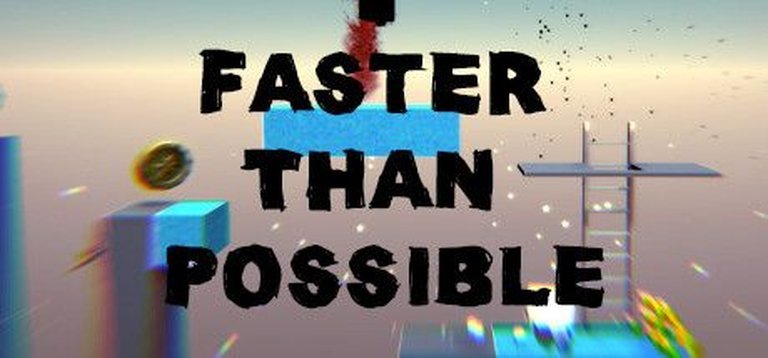
Faster Than Possible is a 2D side-scrolling platformer set in a fantasy world, developed and published by Tegridy Made Games using the Unity engine. Released on November 5, 2021, for Windows via Steam, it features action-oriented gameplay with direct control mechanics, challenging players to navigate side-view levels in a fantastical setting.
Where to Buy Faster Than Possible
PC
Faster Than Possible Reviews & Reception
steambase.io (60/100): Player Score of 60 / 100 from 5 total reviews.
Faster Than Possible: Review
Introduction
In an era dominated by sprawling open-world epics and live-service behemoths, Faster Than Possible emerges as a defiant throwback—a minimalist speedrunning platformer that demands pixel-perfect mastery over movement mechanics in a blistering race against the clock. Released in November 2021 by the enigmatic solo developer Tegridy Made Games, this unassuming Unity-powered title challenges players to “be faster than possible” across 10 trap-laden levels, leveraging triple jumps, wall climbs, and wall-hugging exploits to shave seconds off their times. While it lacks the narrative depth or cultural footprint of genre titans like Celeste or Super Meat Boy, its thesis is simple yet profound: true gaming excellence lies not in bombast, but in the intimate thrill of mechanical perfection and personal bests. This review dissects its sparse but laser-focused design, revealing a niche gem for precision platforming purists amid a sea of forgettable indies.
Development History & Context
Tegridy Made Games, a one-person operation led by developer Eric Young (as hinted by linked YouTube channels), launched Faster Than Possible on Steam on November 5, 2021, for a modest $1.99—frequently discounted to $0.55. Built in Unity, the game reflects the post-Unity boom indie landscape of the early 2020s, where accessible tools empowered solo creators to prototype tight, mechanic-driven experiences without AAA budgets. Unlike the hobby-turned-phenomenon origin stories of contemporaries like FTL: Faster Than Light (often erroneously linked in databases due to titular similarities), there’s no crowdfunding saga or GDC spotlight here; Tegridy operates in obscurity, bundling this title in their “TGM Speedrun Games” franchise alongside other unheralded efforts.
The 2021 gaming scene was saturated with speedrun-friendly platformers (Pizza Tower, Celeste expansions), but Faster Than Possible carved a hyper-focused niche amid COVID-era indie floods. Technological constraints were minimal—targeting low-spec rigs (Intel Core i3, GT 1030)—prioritizing buttery-smooth physics for wall-hugging and triple jumps over visual flair. Tegridy’s vision, per the Steam blurb, was pure: a leaderboard-chasing gauntlet emphasizing exploit mastery, controller support (Xbox/PS), and local/global tracking. No patches or expansions noted, it embodies the “release and iterate via leaderboards” ethos of speedrun communities, contrasting the procedural ambition of roguelites like FTL that share database real estate.
Narrative & Thematic Deep Dive
Faster Than Possible eschews traditional storytelling for a fantasy-tinged void, classified under MobyGames’ “Fantasy” setting despite zero overt lore. There’s no plot, no characters, no dialogue—just an anonymous avatar propelled through abstract, trap-filled corridors. This narrative minimalism amplifies its thematic core: the human struggle against impossibility. Levels serve as metaphors for iterative failure, where each death (from spikes, pitfalls, or mistimed jumps) reinforces themes of persistence and optimization. Coins accelerate your run (a counterintuitive reward-punishment loop), while gems trigger time-slow for clutch maneuvers, evoking a Faustian bargain—speed at the cost of control.
Deeper analysis reveals subtle psychology: the “level unlock system” gates progression behind competence, mirroring real-world skill gates in speedrunning culture. No voice acting or cutscenes; instead, themes emerge via UI feedback—local best times taunt repeat failures, Steam leaderboards foster global rivalry. Compared to FTL‘s sparse sci-fi lore (Rebel-Federation war, alien factions), this is anti-narrative purity, prioritizing mechanical dialogue over scripted beats. Flaws abound: absent exposition risks alienating casuals, but for obsessives, the “story” is your ghosted best run, replayed in endless pursuit of sub-minute clears.
Gameplay Mechanics & Systems
At its heart, Faster Than Possible is a precision platformer disguised as a side-scrolling action game, with core loops revolving around movement exploitation across 10 levels. The protagonist boasts a triple jump (air dash chaining), wall climb (vertical adhesion), and wall hugging (horizontal slides/grinds), demanding frame-perfect inputs to bypass traps like spikes, lasers, and deceptive platforms. Collect coins to boost speed (escalating risk), gems for bullet-time slows (strategic pauses), and speedrun each stage for leaderboard glory.
Core Loops and Progression
- Run Structure: Start → Exploit mechanics → Collect/Avoid → Finish. Level unlocks via completion, encouraging sequential mastery.
- Combat? None: Pure traversal; “enemies” are environmental hazards.
- Progression: No RPG elements—no upgrades, skills, or meta-progression. Character growth is skill-based; local bests and Steam leaderboards (per-level) provide extrinsic motivation. 79 Steam achievements likely tie to times/milestones (e.g., “Sub-30s Level 1”).
- UI/Controls: Direct control shines—responsive gamepad support (Xbox/PS), intuitive overlays for timers/scores. Flaws: No rewind/save states, amplifying roguelite-like permadeath per run.
Innovations include abuse-friendly physics—wall hugging enables “skip strats,” turning levels into puzzles of momentum conservation. Drawbacks: Repetitive (10 levels max), punishing learning curves without tutorials, potential jank in 2.5D visuals (tags: 3D Platformer/Side Scroller). Holistic systems interlock seamlessly—gems counter coin-induced frenzy—yielding addictive “one more try” loops rivaling Super Meat Boy, but shorter scope limits depth.
World-Building, Art & Sound
The “world” is a linear fantasy gauntlet: 10 side-scrolling levels blending 2D scrolling with 2.5D/3D Platformer aesthetics—cartoonish, colorful corridors riddled with traps. No expansive lore or biomes; atmosphere builds via escalating trickery, from introductory jumps to glitch-exploiting finales. Visual direction is functional: vibrant palettes (cartoony tags), particle effects for jumps/slows, blood/gore on deaths (Mature descriptor). Unity’s sheen ensures 60FPS fluidity, but low-poly models and static backgrounds evoke budget constraints—effective for focus, lackluster for immersion.
Sound design amplifies tension: punchy SFX for jumps/impacts, a driving chiptune/arcade OST (uncredited, but fitting casual/strategy tags) ramps urgency. No voice work; audio cues (gem chimes, coin dings) guide feedback. Collectively, these forge a hypnotic flow state—art recedes, letting mechanics dominate, much like Geometry Dash. Contributions: Trap visuals telegraph dangers subtly, sound punctuates exploits, creating “faster than possible” euphoria amid gore-splattered frustration.
Reception & Legacy
Launch reception was muted: No Metacritic/MobyScores, zero critic reviews on MobyGames. Steam logs ~5-60% positive (2-5 user reviews), praising tight controls but critiquing repetition/short length. Peak players negligible (1 concurrent noted), sales propped by bundles/discounts. Wikidata/SteamDB confirm obscurity—no ports beyond Windows, partial controller support.
Legacy? Nascent at best. As a 2021 release, it influences no majors, but resonates in speedrun niches (leaderboards foster WR hunts). Related to FTL only nominally (name echo), it embodies indie attrition—Tegridy’s bundle suggests a micro-franchise. Evolving rep: Steam tags (Precision Platformer, Collectathon) attract masochists; 2025 player score ~54/100 hints cult endurance. Industry ripple: Reinforces Unity’s speedrun viability, but overshadows amid Pizza Tower/Celeste giants. No mods/patches noted, capping impact.
Conclusion
Faster Than Possible is a razor-sharp precision platformer that distills speedrunning to its essence: exploit, iterate, transcend. Tegridy Made Games delivers 2-5 hours of brutal joy across 10 levels, bolstered by leaderboards and achievements, but falters on depth, polish, and visibility. In video game history, it claims a footnote as a pure mechanic showcase—ideal for Super Meat Boy veterans craving wall-hug skips, irrelevant to story-hungry masses. Verdict: 7/10—a niche triumph for speed demons, forever racing in obscurity. Recommended at $0.55 for platforming historians; skip otherwise.