
- Release Year: 2018
- Platforms: Windows
- Publisher: Square Gem Software
- Developer: Square Gem Software
- Genre: Action
- Perspective: Side view
- Game Mode: Single-player
- Gameplay: Shooter
- Setting: Futuristic, Sci-fi
- Average Score: 59/100
Description
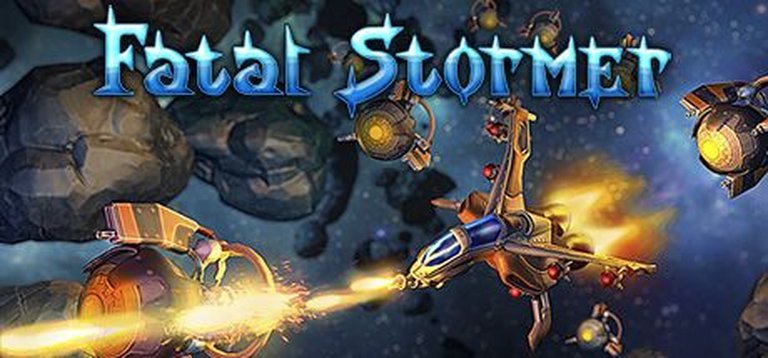
Fatal Stormer is a hardcore, side-scrolling arcade shooter set in a sci-fi universe where players pilot a warship through 24 unique levels across four distinct worlds—distant space, an enemy planet, the ocean, and underground. Featuring modern graphics and sound, the game challenges players to defeat over 60 enemy types and 20 unique bosses while earning credits to upgrade their ship’s weapons, engines, shields, and more at an in-game store.
Gameplay Videos
Where to Buy Fatal Stormer
PC
Fatal Stormer Guides & Walkthroughs
Fatal Stormer: Review
Introduction
In an era saturated with retro-inspired indie titles, Fatal Stormer stands as a curious artifact—a deliberate attempt to distill the unbridled chaos of 1990s arcade shooters into a modern, digitally distributed package. Released on April 4, 2018, by Square Gem Software, this Windows-exclusive title promises a “classical ‘kill’em all’ scrolling arcade game” with “modern graphics, sound and hardcore gameplay.” Yet, beneath this veneer of nostalgia lies a product that embodies both the timeless appeal and the inherent limitations of its genre. Fatal Stormer is an uncompromising, technically flawed, yet strangely compelling experience—a relic that challenges players with its raw difficulty while faltering under the weight of its own ambition. This review deconstructs its place in gaming history by examining its development, gameplay, world-building, and enduring legacy, concluding that it represents a niche, cautionary tale of indie game development.
Development History & Context
Fatal Stormer was the brainchild of Square Gem Software, a modest studio whose primary focus on Unity-based projects suggests an emphasis on accessibility and rapid development. The game was crafted during a period of significant indie resurgence in 2018, where 2D shooters like Enter the Gungeon and Hollow Knight demonstrated that classic genres could thrive with modern polish. However, Square Gem’s vision for Fatal Stormer was distinctly retro: to emulate the relentless, high-score-driven gameplay of arcade classics like Gradius and R-Type, while leveraging Unity to deliver “modern graphics and sound.”
Technologically, the game adhered to the constraints of its era. Its Unity engine facilitated cross-platform compatibility, but the lack of optimization became a critical flaw. Steam discussions reveal persistent issues: frame rate instability (especially on lower-end hardware), missing features like 4K resolution support, and complete omissions such as mouse controls and cooperative play. The developer’s post-launch silence, evidenced by unanswered queries on Steam about updates and fixes, further underscores the challenges faced by small teams striving to deliver a “hardcore” experience with limited resources. Within the 2018 landscape—dominated by polished, narrative-rich indies—Fatal Stormer arrived as an outlier, prioritizing mechanical purity over user-centric design.
Narrative & Thematic Deep Dive
Fatal Stormer eschews narrative complexity in favor of archetypal sci-fi action. The plot is a threadbare pretext for carnage: players pilot a warship across “distant space,” an “enemy planet,” “endless waters,” and “underground” realms to repel an alien invasion. There are no named characters, no dialogue, and no lore codices—only the relentless advance of enemies and the player’s survival instinct. The game’s “very fat and an unfriendly dude” bosses, mentioned in the Steam description, serve as punctuation marks between stages, devoid of personality beyond their role as obstacles.
This minimalism, however, underscores the game’s thematic focus on perseverance and resource scarcity. The credit-based progression system—where players spend points earned mid-mission on weapons, shields, and bombs—frames combat as an economic struggle. Every death resets this economy, forcing players to weigh risk versus reward. Thematically, Fatal Stormer mirrors the existential futility of arcade shooters: waves of enemies symbolize an overwhelming, faceless threat, while the player’s lone ship embodies fragile defiance. Without a story, the game’s message is purely mechanical: survival demands mastery, not empathy.
Gameplay Mechanics & Systems
Fatal Stormer’s core loop is a masterclass in arcade brutality. Players control a spacecraft that auto-fires forward while allowing manual directional movement. Enemies spawn in intricate patterns—over 60 types according to the Steam description—from nimble fighter craft to screen-filling turrets. Combat is a symphony of evasion and precision: power-ups (e.g., spread shots, homing missiles) provide momentary relief, but the game’s “hardcore” ethos punishes mistakes with instant death.
Progression is segmented into 24 levels across 4 episodes, with each stage concluding in a unique boss fight. Between levels, a rudimentary “store” allows players to upgrade weapons, engines, shields, or purchase bombs using credits. This system creates a meta-game of risk management: accumulating credits requires surviving longer, but death nullifies progress. Three difficulty modes (Easy, Normal, Hard) cater to skill levels, but even on “Normal,” the game demands pixel-perfect dodging and memorization.
Yet, Fatal Stormer’s systems are undermined by technical and design flaws. The absence of checkpoints (a major point of contention in Steam discussions) means hours of progress can evaporate. Weapon upgrades feel incremental rather than transformative, and enemy variety, while plentiful, often recycles patterns. Bosses, despite their claimed uniqueness, rely on repetitive bullet-hell mechanics that test endurance more than strategy. The lack of mouse support and gamepad-centric controls further alienate players seeking fluid, responsive action.
World-Building, Art & Sound
Fatal Stormer’s worlds, though procedurally generated, offer distinct visual identities. The Steam description promises “expanses of distant space,” “enemy planets,” “oceans,” and “underground” settings, each realized with Unity’s 2D scrolling engine. Environments range from starfields dotted with debris to alien jungles with bioluminescent flora, though the art style leans toward functional clarity over artistic ambition. Sprites are crisp but small, and backgrounds, while varied, lack depth.
Sound design aligns with the game’s arcade ethos: synth-heavy electronic tracks pulse with urgency, and weapon-fire effects are punchy and satisfying. The audio, described as “modern” in the Steam blurb, effectively amplifies the chaos, but its looping nature becomes grating during extended play. Together, the art and sound evoke a sense of relentless motion, but fail to create a truly immersive world. The game’s “local attractions”—brief environmental details like crumbling ruins or coral reefs—are fleeting distractions in a universe that prioritizes action over atmosphere.
Reception & Legacy
Fatal Stormer’s reception at launch was, at best, mixed. On Steam, it holds a “Mixed” rating (53% positive from 15 user reviews), with praise directed at its challenging gameplay and nostalgic feel. Positive reviews lauded the “tons of enemies” and “unique bosses,” while negatives centered on technical issues and the lack of quality-of-life features. One user’s complaint—“HELL ON EARTH”—encapsulated the game’s punishing difficulty, while others noted freezes (reported in 2019) and the absence of promised features like 4K support.
Critically, the game flew under the radar. MobyGames lists no professional reviews, and OpenCritic reports no aggregated scores, indicating minimal industry attention. Its legacy is similarly muted. Unlike influential retro revivals, Fatal Stormer did not spawn sequels or modding communities. Its modest MobyGames collection (4 players) and sparse forum activity underscore its niche appeal. However, it remains a case study in indie game development: a well-intentioned project hampered by polish and scope, serving as a cautionary example of balancing ambition with execution.
Conclusion
Fatal Stormer is a product of contradictions: a modern indie game with retro DNA, a challenging experience undermined by technical flaws, and a nostalgic package devoid of narrative depth. It excels in its core gameplay—delivering frenetic, uncompromising shooting that will resonate with arcade purists—but falters in execution. The credit-based progression and boss encounters offer moments of triumph, while the lack of checkpoints and optimization ensures frustration.
As a historical artifact, Fatal Stormer is unremarkable. It did not redefine the shooter genre, influence developers, or leave a lasting cultural impact. Instead, it occupies a liminal space: a tribute to a bygone era that fails to transcend its inspirations. For the dedicated few who crave pixel-perfect challenges, it offers a brief, bloody diversion. For the broader gaming community, it stands as a reminder that nostalgia alone cannot sustain a game. In the end, Fatal Stormer is a flawed, honest attempt to capture lightning in a bottle—a bottle that, unfortunately, leaked more than it contained.