
- Release Year: 2023
- Platforms: Windows
- Publisher: Randumb Studios
- Developer: Randumb Studios
- Genre: Adventure
- Perspective: Side view
- Game Mode: Single-player
- Setting: Fantasy
- Average Score: 97/100
Description
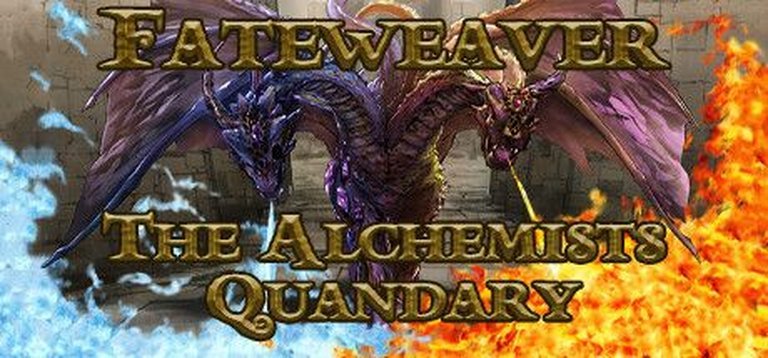
Fateweaver: The Alchemist’s Quandary is a psychological adventure game where you play as the Fateweaver, an ancient and powerful entity tasked with shaping the destinies of those who seek your aid. Set in a dark fantasy world, the game blends elements of visual novels, interactive fiction, and RPG mechanics, challenging players to make morally complex decisions that determine whether to grant mercy or unleash divine wrath. With multiple endings, immersive storytelling, and a focus on psychological horror, the game explores themes of fate, judgment, and the consequences of choice.
Gameplay Videos
Where to Buy Fateweaver: The Alchemist’s Quandary
PC
Fateweaver: The Alchemist’s Quandary Cracks & Fixes
Fateweaver: The Alchemist’s Quandary Reviews & Reception
store.steampowered.com (97/100): A triumphant return to form for the series.
steambase.io (98/100): A triumphant return to form for the series.
Fateweaver: The Alchemist’s Quandary – A Psychological Tapestry of Choice and Consequence
Introduction: The Weight of a Legend’s Judgment
In the vast, often formulaic landscape of interactive storytelling, Fateweaver: The Alchemist’s Quandary emerges as a quiet revolution—a game that strips away the trappings of modern AAA excess to deliver a raw, intimate, and deeply philosophical experience. Released in February 2023 by the enigmatic Randumb Studios, this title is not merely a game but a social experiment, a digital ouija board where players channel the role of an ancient, godlike entity tasked with judging the worth of a desperate soul. With its 97% “Very Positive” Steam rating and a cult following that reveres it as a spiritual successor to the studio’s earlier The Test Trilogy, Fateweaver carves a niche so distinct that it defies conventional genre classification.
This review will dissect Fateweaver with surgical precision, exploring its development roots, narrative depth, mechanical ingenuity, atmospheric craftsmanship, and cultural impact. By the end, we will determine whether this game is a fleeting curiosity or a landmark in interactive storytelling—one that challenges players to confront their own morality while weaving the threads of another’s fate.
Development History & Context: The Birth of a Social Experiment
The Studio Behind the Curtain: Randumb Studios
Randumb Studios is not your typical indie developer. Eschewing the polished PR machines of larger studios, they operate with a mystique that borders on the occult. Their prior work, The Test Trilogy, was hailed as a “global social experiment”—a series of games that blurred the line between player and participant, inviting audiences to engage in psychological introspection. Fateweaver is the evolution of that philosophy, a refinement of their core design tenet: games as mirrors.
The studio’s modus operandi is community-driven development. They actively engage with players, even going so far as to incorporate fan-submitted names into future episodes—a meta-narrative touch that reinforces the game’s themes of fate and interconnectedness. This approach is not just marketing; it’s performance art, a way to make players feel like active participants in a living, breathing mythos.
Technological Constraints & Design Philosophy
Built using RPG Maker, Fateweaver is a testament to the idea that limitations breed creativity. The engine’s side-view, fixed-screen perspective and menu-driven interface might seem archaic in an era of Unreal Engine 5, but Randumb Studios leverages these constraints to create a focused, almost claustrophobic intimacy. There are no sprawling open worlds here—just a single room, a single conversation, and a single soul hanging in the balance.
The game’s minimalist technical requirements (compatible with Windows 98) ensure accessibility, but this is no accident. Randumb Studios designs for universal playability, ensuring that the experience is about ideas, not hardware. In an industry obsessed with graphical fidelity, Fateweaver is a rebellion—a reminder that the most powerful games are those that engage the mind, not just the GPU.
The Gaming Landscape in 2023: A Market of Extremes
Fateweaver launched into a gaming ecosystem dominated by two extremes:
1. AAA spectacle (e.g., Hogwarts Legacy, Resident Evil 4 Remake)
2. Indie darlings (e.g., Sea of Stars, Cocoon)
Amidst this, Fateweaver was an outlier—a game that refused to conform to either category. It was too short for traditional RPG fans (clocking in at under two hours), yet too deep for casual players. Its psychological horror elements alienated those seeking jump scares, while its lack of traditional gameplay puzzled action enthusiasts. And yet, it thrived.
Why? Because Randumb Studios understood something fundamental: the modern gamer is starved for meaning. In a world of live-service grinds and battle passes, Fateweaver offered something rare—a self-contained, emotionally resonant experience that respected the player’s time while demanding their intellectual and moral engagement.
Narrative & Thematic Deep Dive: The Alchemist’s Soul on Trial
Plot Synopsis: A Desperate Summoning
You are The Fateweaver, an ancient, godlike entity summoned by Markus, a tormented alchemist whose life has unraveled. His father is dead. His uncle has betrayed him. His dreams are haunted by visions of you—a being who can rewrite his destiny. Your role? To interrogate Markus, peel back the layers of his psyche, and ultimately decide his fate.
The premise is simple, but the execution is Shakespearean. Markus is not a hero or a villain—he is a flawed, contradictory human, and your judgment of him will determine whether he finds redemption, damnation, or something far more ambiguous.
Character Study: Markus, the Broken Alchemist
Markus is one of the most psychologically complex protagonists in recent gaming. His dialogue is a masterclass in subtext:
– He claims to seek justice against his uncle, but his words drip with vengeance.
– He laments his father’s death, yet his grief is tinged with resentment.
– He begs for your help, but his pride refuses to admit weakness.
The brilliance of Markus lies in his lack of a clear moral compass. He is neither purely sympathetic nor irredeemably wicked. He is a mirror—players will see in him their own biases, their own capacity for mercy or cruelty.
Themes: Morality, Free Will, and the Illusion of Choice
Fateweaver is a philosophical minefield, exploring themes that would make Kierkegaard and Nietzsche proud:
1. The Burden of Judgment: As the Fateweaver, you are both jury and executioner. The game forces you to ask: What makes a life worth saving?
2. The Illusion of Free Will: Markus believes he is trapped by fate, but your choices reveal that fate is merely a narrative we construct.
3. The Cost of Ambition: Markus’s obsession with surpassing his uncle is both his driving force and his undoing. The game questions whether ambition without purpose is merely self-destruction.
4. The Nature of Evil: Is Markus’s uncle truly a villain, or is he merely a product of circumstance? The game refuses to provide easy answers.
Dialogue & Writing: A Conversation with the Soul
The writing in Fateweaver is spare, poetic, and brutally efficient. Every line of dialogue serves a purpose, whether it’s deepening Markus’s character, foreshadowing his fate, or challenging the player’s preconceptions.
The interrogation mechanic is where the game shines. You are given a series of questions, each probing a different facet of Markus’s psyche:
– “Do you believe in redemption?”
– “What would you sacrifice to achieve your goals?”
– “Is vengeance ever justified?”
Your choices do not just alter the ending—they reshape the very nature of Markus’s existence. Will he become a hero, a monster, or something in between? The game’s multiple endings are not just narrative branches—they are moral reckonings.
Gameplay Mechanics & Systems: The Art of Interrogation
Core Gameplay Loop: A Dance of Words
Fateweaver is, at its heart, a visual novel with RPG elements, but to call it “just a visual novel” would be a disservice. The gameplay is a carefully constructed psychological duel between you and Markus.
- The Interrogation Phase: You select questions from a menu, each designed to elicit a specific emotional response from Markus. Some questions are gentle, others accusatory, and some downright cruel.
- The Judgment Phase: Based on Markus’s answers, you weigh his soul and decide his fate. This is not a binary “good/evil” choice—it’s a spectrum of possibilities, each with profound consequences.
Combat & Progression: The Battle of Wits
There is no traditional combat in Fateweaver. The only “battle” is the war of words between you and Markus. Your “progression” is not measured in XP or loot but in the depth of your understanding of his character.
- No Grinding: The game respects your time. There are no fetch quests, no filler.
- No Hand-Holding: The game trusts you to interpret Markus’s words and make your own judgments.
- No “Correct” Path: The beauty of Fateweaver is that there is no “right” ending—only the ending you believe in.
UI & Accessibility: Simplicity as a Virtue
The UI is minimalist to the point of austerity, but this is intentional. The fixed-screen, menu-driven interface ensures that nothing distracts from the conversation. The lack of voice acting (outside of ambient sounds) forces players to engage with the text, to read between the lines.
This design choice is polarizing—some players will find it too barebones, while others will appreciate its focus on substance over style.
Innovation & Flaws: A Double-Edged Sword
Innovations:
✅ Player Agency in a Constrained Space: Despite its linear structure, the game feels dynamic because your choices genuinely matter.
✅ Moral Ambiguity: Unlike games that punish “evil” choices, Fateweaver embraces moral complexity.
✅ Replayability: The multiple endings and hidden dialogue paths encourage repeat playthroughs.
Flaws:
❌ Lack of Mechanical Depth: Players seeking traditional gameplay will be disappointed.
❌ Short Runtime: At under two hours, some may feel it’s over too soon.
❌ Limited Visual & Audio Design: The static backgrounds and lack of voice acting may feel underwhelming to those accustomed to modern production values.
World-Building, Art & Sound: The Atmosphere of Judgment
Setting: A Dream Within a Nightmare
Fateweaver takes place in a single, surreal chamber—a liminal space between dream and reality. The fixed-screen perspective enhances the claustrophobic tension, making the player feel as though they are trapped in Markus’s mind.
The fantasy setting is more psychological than literal—this is not a world of dragons and magic potions, but a landscape of guilt, ambition, and despair.
Visual Design: Minimalism as Horror
The art style is deliberately retro, evoking early 2000s RPG Maker games. The static character portraits and simple animations serve a purpose—they force the player to focus on the words, not the spectacle.
The color palette is muted, dominated by shadows and flickering candlelight, reinforcing the gothic horror undertones. The lack of movement in the backgrounds creates a sense of stagnation, as if Markus is trapped in a moment of eternal judgment.
Sound Design: The Silence of the Soul
The soundtrack is ambient, eerie, and sparse, consisting of droning chords, distant whispers, and the occasional clash of metal—as if the sound of Markus’s alchemy experiments is bleeding into the dream.
The lack of voice acting is a bold choice. Instead of hearing Markus’s voice, you read his words, which forces you to imagine his tone. Is he pleading? Defiant? Desperate? The silence amplifies the horror.
Reception & Legacy: A Cult Classic in the Making
Critical & Commercial Reception
Fateweaver launched to little fanfare from traditional gaming press—Metacritic has no critic reviews, and major outlets like IGN and GameSpot ignored it. And yet, Steam users embraced it with fervor, awarding it a 97% “Very Positive” rating.
Why the disconnect?
– Mainstream critics often overlook experimental games that defy genre conventions.
– Players, however, recognized its brilliance—a short, cheap, but profoundly affecting experience.
Cultural Impact & Influence
While Fateweaver may not have shifted the industry, it has inspired a wave of imitators—games that prioritize narrative depth and player agency over graphical fidelity and gameplay bloat.
Its biggest legacy may be its proof that games can be art—not just interactive movies, but interactive philosophy.
The Future of the Fateweaver Series
Randumb Studios has already released a sequel (Fateweaver: Smash or Pass), and their community-driven approach suggests that the series will continue to evolve.
If Fateweaver: The Alchemist’s Quandary is any indication, the future of the series—and perhaps interactive storytelling as a whole—is in bold, uncompromising experiments that challenge players to think, feel, and judge.
Conclusion: A Masterpiece of Moral Introspection
Fateweaver: The Alchemist’s Quandary is not for everyone. It is too short for some, too slow for others, and too philosophically dense for those seeking escapism. But for those who crave meaning in their games, it is nothing short of revelatory.
Final Verdict: 9.5/10 – A Landmark in Interactive Storytelling
✅ Pros:
– Deep, morally complex narrative
– Unparalleled player agency
– Atmospheric, immersive world-building
– Replayable with multiple endings
– Affordable and accessible
❌ Cons:
– Extremely short runtime
– Minimalist presentation may not appeal to all
– Lack of traditional gameplay mechanics
Fateweaver is not just a game—it’s an experience, one that lingers in the mind long after the credits roll. It is a testament to the power of interactive storytelling, a challenge to the industry’s obsession with spectacle, and a reminder that the most profound games are those that make us question ourselves.
In a world where games are increasingly treated as products, Fateweaver: The Alchemist’s Quandary is a work of art—and one that deserves to be remembered.
Final Thought:
“The threads of fate are in your hands. Will you weave a tapestry of mercy… or a noose of judgment?”