
- Release Year: 2011
- Platforms: Windows
- Publisher: UTV Ignition Games Ltd.
- Developer: UTV True Games
- Genre: Role-playing (RPG)
- Perspective: 3rd-person (Other)
- Game Mode: MMO, Online PVP
- Gameplay: Ability queuing, Capture points, Multi-classing, Spell maturation
- Setting: Fantasy
- Average Score: 48/100
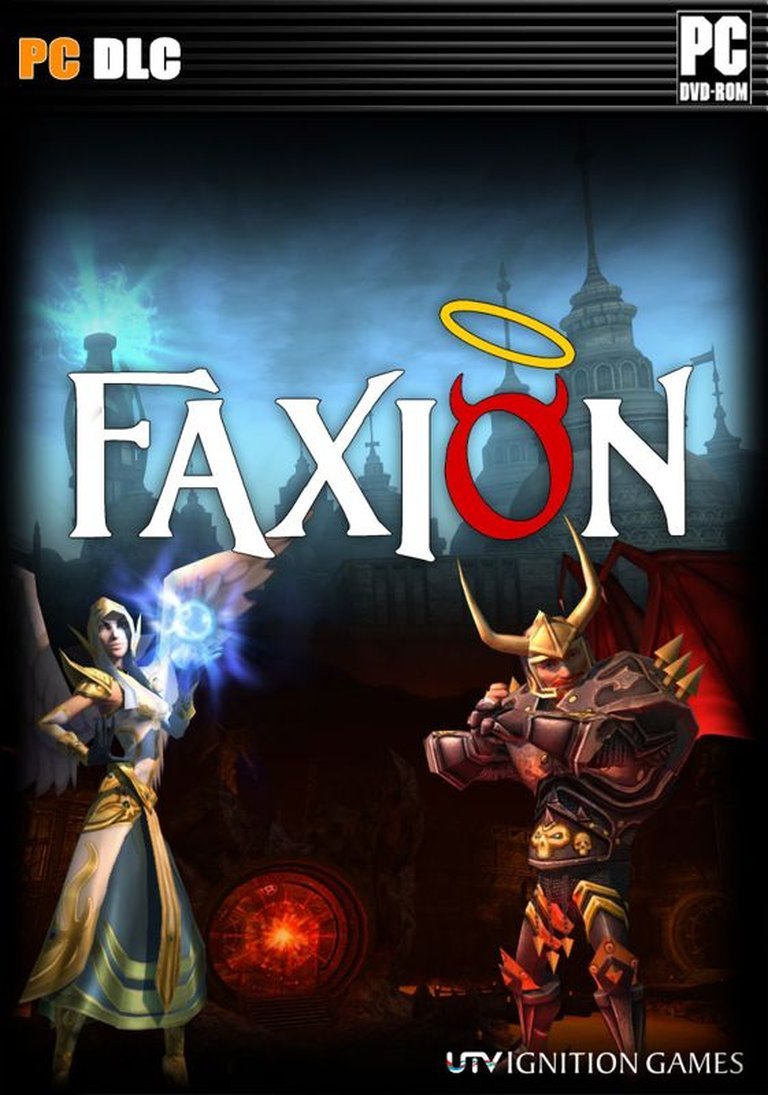
Description
Faxion Online is a free-to-play PvP MMO set in a fantasy world where factions of Heaven and Hell wage war for control over the seven deadly sins, with contested battles revolving around capture points similar to Team Fortress 2, where victorious factions claim zone dominance. Players benefit from a unique spell-ranking system that matures queued abilities over time, enabling flexible playstyles even during downtime, alongside multi-classing between Crusader/Reaver, Diviner/Occultist, and Guardian/Zealot archetypes, while Purgatory City offers a PvP-free hub for socializing and guild interactions.
Faxion Online Cracks & Fixes
Faxion Online Reviews & Reception
metacritic.com (48/100): One of those games that is too little, too late.
Faxion Online: Review
Introduction
In the annals of MMORPG history, few titles burn as brightly and briefly as Faxion Online, a free-to-play PvP juggernaut that launched into the digital afterlife on May 26, 2011, only to be unceremoniously shuttered on August 24 of the same year. Developed by UTV True Games in Austin, Texas, this Heaven-vs.-Hell brawler promised a visceral twist on the genre’s endless grind, pitting players against each other in eternal battles over the Seven Deadly Sins within the limbo realms. Amid a crowded 2011 MMO landscape dominated by giants like World of Warcraft and emerging free-to-play challengers, Faxion dared to prioritize raw player conflict, multi-class customization, and offline progression. Yet, its ambitious vision crumbled under technical woes and a rushed timeline. This review argues that Faxion Online stands as a tragic “what if”—a game with innovative PvP DNA and thematic flair that could have influenced faction-based warfare in later titles, but instead became a cautionary tale of overpromise and underdelivery.
Development History & Context
Faxion Online emerged from UTV True Games, a studio helmed by industry veterans like Studio Head Frank E. Lucero and Creative Director Michael Madden, who drew from pedigrees including Wizard101, Star Wars: The Old Republic, and Pirate101. Built on the HeroEngine—later popularized by BioWare’s SWTOR—the game was conceived as a lean, PvP-centric MMO to sidestep the multi-year, nation-budget epics of the era. Launched amid the free-to-play boom (RuneScape, early Tera), Faxion targeted casual grind-haters with real-money transactions (RMT) for leveling boosts and an offline ability queue, allowing “players with limited game time” to compete against grinders.
Development spanned roughly a year (June 2010–July 2011), per a former Client/Graphics Programmer’s blog, emphasizing optimizations like terrain vertex reduction (saving ~300MB per zone) and a “visceral combat feedback system” with full-screen effects for stuns, blood splashes, and blindness. The 57-person team, including Art Director Mark Vearrier, Lead Programmer Jared Twing, and Combat Designer Jonathan Pollard, focused on stylized visuals and faction asymmetry. However, era constraints—2011 PCs struggled with HeroEngine’s demands, and UTV’s ambitions outpaced resources—led to performance pitfalls. Pre-launch hype via E3 trailers and GDC tours painted Faxion as a “Spellborn successor,” but rumors of layoffs preceded its swift shutdown, blaming budget overruns in a post-Cataclysm WoW market favoring polished behemoths.
Narrative & Thematic Deep Dive
At its core, Faxion Online weaves a mythic tapestry of cosmic war in Limbo, where Heaven’s Crusaders, Diviners, and Guardians clash with Hell’s Reavers, Occultists, and Zealots over the Seven Deadly Sins—manifested as contested zones. Purgatory City serves as a neutral hub for taunting and socializing, evoking Dante’s Inferno with a multiplayer twist: players, as damned souls, choose eternal allegiance upon “death,” ferrying across the River Styx to faction docks.
The lore, detailed in MMORPG.com pieces, personifies sins vividly: Lust‘s Garden of Ardor traps souls in endless hedge-maze embraces; Greed‘s Avarice Canyons spawn Miser wretches hoarding baubles amid thief skirmishes; Wrath‘s Penitent Wastes drown in blood rivers; Envy‘s Misfortune Woods harbor covetous Jade Hand bandits besieging the Blighted Cathedral; Sloth‘s Shadow Delta numbs with quagmire despair; Pride‘s Ascedia Peaks fuel arrogant tower-builders; Gluttony‘s Fields of Hunger force eternal harvest for insatiable masters. Quests blend PVE fodder (kill/fetch in Purgatory Valley) with PvP stakes, where faction control unlocks sin-themed vendors.
Characters spout pop-culture quips (“Newbstick” weapons, Princess Bride nods), undercutting gravitas but injecting irreverence. Themes probe free will vs. damnation—multi-classing symbolizes hybrid souls—but shallow dialogue and repetitive arcs (early quests cluster poorly, per GameStar) dilute depth. Still, the Heaven/Hell asymmetry fosters identity: Heaven’s faith-fueled mobility vs. Hell’s brutal hymns, culminating in apocalyptic “territory control” for Limbo dominance.
Gameplay Mechanics & Systems
Faxion‘s loops revolve around PvP supremacy, with PVE as a leveling ramp to viability (~level 20). Core innovation: multi-classing across faction triples (e.g., sword-wielding healer or fire-balling tank), using skill points (base class cheaper). Abilities queue offline (2 slots base, expandable via True Coins), maturing over 9–10 hours—boostable by RMT—enabling “play, not grind” via EVE-like persistence.
Combat innovates with “visceral feedback”: screen-wide blood for crits, vines for roots, desaturated tunnel-vision/watercolor blur on death, scrambled controls for confusion, blinding darkness. Hotbar slinging feels standard (mana/health bars), but unpredictability shines in PvP—queue-matured spells escalate power, multi-class hybrids surprise. Territory Control mimics Team Fortress 2‘s king-of-the-hill: daily contested sins feature major/minor capture points; points accrue from holds/kills, granting faction vendors.
UI suits PvP (clean hotbars, faction maps), but flaws abound: endless walking (no mounts early, “blistered feet” per Engadget), clunky zoning, low-res animations. Progression ties to True Coins shop (optional cosmetics/boosts), balancing free viability. PVE quests bore (kill 5 X), yet build to chaotic open-world ganks outside sanctuaries. Innovative, but unpolished—performance tanks FPS, dooming reflexes.
World-Building, Art & Sound
Limbo’s stylized aesthetic—nacreous clouds for Heaven, volcanic crimsons for Hell—evokes timeless cartoon grit (WoW-lite, sans cheese). Zones immerse via sin theming: Arcturus’ lush mazes, Avarice’s jagged mines, Delta’s foggy mires. Purgatory’s drab docks contrast vibrant wilds, with excellent forests masking low-poly woes. HeroEngine’s particles (precipitation, additive mesh emitters) and LOD tools shine, but flat lighting and dated textures age poorly.
Sound impresses: whistling winds, harp ambients, thunder peals in Limbo; faction chatter buzzes with demonic vexations. Combat pops with visceral cues (splashes, groans), though repetitive loops grate during treks. Atmosphere builds tension—PvP-enabled wilds pulse danger—but empty hubs and laggy effects undermine immersion, evoking a promising sketch half-finished.
Reception & Legacy
Critics averaged 51% (MobyGames): MMORPG.com’s 54% praised PvP potential (“foundation in the right direction”) but NIC-unit viability; Ten Ton Hammer’s 48% decried “too little, too late” amid 2011 saturation; GameStar unscored travel tedium but lauded class-mixing. Players rated 2.5/5 (sparse). Engadget’s “Rise and Shiny” spotlighted art/skill queues but slammed FPS (low-settings only) and running. Launch hype faded to “no one notices” shutdown forums.
Commercially, free-to-play drew beta buzz but low retention tanked it—layoffs hit pre-closure. Influence lingers subtly: offline queues prefigure Elder Scrolls Online‘s systems; visceral screens echo Warframe‘s flair; sin-zones inspire New World‘s territories. As a defunct live-service relic, Faxion warns indies of HeroEngine pitfalls and rushed F2P pivots, yet its PvP purity echoes in New World or Albion Online.
Conclusion
Faxion Online was a bold PvP evangelist—multi-class freedom, sin-fueled wars, sensory combat—in a grind-weary era, crafted by passionate Austin talents against HeroEngine headwinds. Yet performance molasses, traversal drudgery, and brevity (three months online) relegate it to obscurity. Not a masterpiece, but a noble failure: 6/10 for vision, docked for execution. In MMO history, it whispers “potential unrealized,” a limbo soul deserving emulation in modern arena-brawlers. Seek archived footage; its hellfire flickers on.