
- Release Year: 2017
- Platforms: Windows
- Genre: Action
- Perspective: 1st-person
- Average Score: 64/100
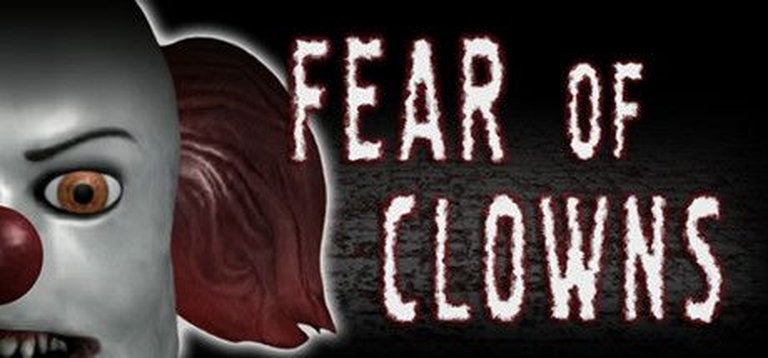
Description
Fear of Clowns is a first-person horror game that begins with a doorbell ringing in the middle of the night, prompting the player to investigate and face a resurrected nightmare embodied by clowns, mimes, and harlequins. Featuring stealth gameplay, unpredictable enemies, and a breathtaking horror atmosphere, it immerses players in a chilling experience best enjoyed in the dark with headphones.
Gameplay Videos
Where to Buy Fear of Clowns
PC
Fear of Clowns: A Review
Introduction: The Unseen Nightmare
In the landscape of horror gaming, few phobias are as visually potent yet conceptually simple as coulrophobia—the fear of clowns. From the grotesque Pennywise of It to the menacing Klowns of Killer Klowns from Outer Space, the amalgamation of human features into a distorted, playful mask taps into a primal unease. Into this crowded carnival of terror stepped Fear of Clowns in 2017, a solo-developed, first-person horror title that promised “stealth gameplay” and “unpredictable enemies” for less than a dollar on Steam. This review posits that Fear of Clowns is not a forgotten masterpiece but a crucial, if flawed, artifact of the late-2010s indie horror boom. It represents the raw, unfiltered output of the “democratization of development” era, where accessible tools like FPS Creator allowed a creator to directly engage with a niche subgenre’s audience, resulting in an experience that is less a coherent narrative and more a pure, atmospheric manifestation of a single, potent fear. Its legacy is not one of critical acclaim but of exemplifying the grassroots, often technically constrained, pathway to realizing a specific horror vision.
Development History & Context: The One-Person Scare Factory
Fear of Clowns was developed and published by a single individual, Mikhail Nevsky, a fact immediately evident from its MobyGames and Steam store pages. This situates it within a long tradition of solo-developed horror games, from the ASCII terrors of NetHack to the viral phenomenon of Slender: The Eight Pages. Nevsky’s chosen engine, FPS Creator (also listed as FPSC), is the key to understanding the game’s technological ceiling. Released in the early 2000s, FPS Creator was a budget-friendly, drag-and-drop tool designed to allow non-programmers to build basic first-person shooters. By 2017, it was a legacy engine, known for producing games with dated graphics, simplistic AI, and limited environmental interactivity—constraints that define Fear of Clowns‘ aesthetic and mechanical identity.
The game’s release on April 29, 2017, places it at the tail end of the indie horror “golden age” ignited by Amnesia: The Dark Descent (2010) and popularized by Slender (2012) and Outlast (2013). By 2017, the market was saturated with cheap, steam-centric horror titles, many using prefab assets from the Unity and Unreal asset stores. Fear of Clowns’s price point of $0.99 (often discounted to $0.89) was standard for this tier, positioning it not as a premium experience but as a digital impulse buy—a curiosity driven by its specific theme. A ModDB comment reveals it was previously known as “Dead Darkness” and underwent significant changes in its final year of development, suggesting a project in flux trying to find its thematic core. Its journey to Steam likely involved the now-defunct Steam Greenlight process, as Nevsky requested votes on ModDB in late 2016, highlighting the direct, community-facing development model of the time.
Narrative & Thematic Deep Dive: A Blurb is a Blueprint
The entire provided narrative is contained within the official store description: “You woke up in the middle of the night from the doorbell’s sound. Who could it be in such a late hour? You decided to go and check it, but it would be better if you stayed at home… Someone resurrected the forgotten nightmare and now you are his next prey.”
This is not a story but a narrative setup—a classic horror premise stripped to its bare bones. The protagonist is an everyman with zero backstory or motivation beyond basic curiosity. The setting is a generic, isolated home at night, a universal symbol of false security. The inciting incident, a doorbell at midnight, is an intrusion of the external world into the most private, vulnerable space. The warning (“it would be better if you stayed at home”) is the genre’s sacred contract, immediately establishing the protagonist’s fatal flaw: agency in the face of danger.
The antagonist is a “forgotten nightmare” that has been “resurrected.” This phrasing is deliberately vague, opening two thematic avenues:
1. The Personal Trauma: The nightmare could be a personal, repressed memory or local urban legend given form, aligning with psychological horror. It’s “forgotten,” suggesting it was buried by the community or the protagonist themselves.
2. The Archetypal Evil: It could refer to a clown archetype itself—a historically jovial figure turned sinister in modern culture. Its “resurrection” taps into the cyclical nature of clown-based horror in media (e.g., the resurgence of Pennywise in 2017 with the It film).
The enemy is specified only through the game’s group tags on MobyGames: “Characters: Clowns, Mimes, and Harlequins.” This is a significant detail. Expanding beyond simple clowns to include mimes (silent, gesturing tormentors) and harlequins (the jester archetype, historically linked to violence and madness) creates a motley crew of historical jesters and performers. It suggests the “nightmare” is not a single entity but a carnival of perverted performance, a legion of ancient tricksters and sad clowns unleashed. This moves the threat from a specific monster to an environmental, thematic infestation. The horror is not just that they are clowns, but what they represent: the corruption of play, the silence of mimes becoming threatening, the jester’s malice replacing humor.
There is no dialogue, no cutscenes, no plot twists described. The theme is pure, unadulterated coulrophobia as environmental hazard. The player’s journey is not to solve a mystery but to survive an onslaught of a purified, symbolic fear. This aligns with the “stealth gameplay” feature—the goal is not to fight but to evade the manifestation of this resurrected archetype.
Gameplay Mechanics & Systems: Stealth in the Engine-Limited Dark
Based on the sparse features listed—“Stealth gameplay,” “Unpredictable enemies,” “Breathtaking horror atmosphere”—and the known limitations of the FPS Creator engine, a clear mechanical picture emerges.
Core Loop: The loop is a tense, deliberate exploration of a linear or semi-linear environment (presumably a house and surrounding areas, given the doorbell setup). The player must navigate from point A to B, or perhaps find keys/items to escape, while avoiding detection by clown/mime/harlequin entities. The “stealth” is likely binary: hidden vs. detected. Given the engine, there is probably no complex light/darkness system or sound propagation simulation beyond basic triggers. Hiding may involve crouching in shadows or behind objects until the enemy loses interest.
Enemy Design & AI: “Unpredictable enemies” is the most critical hint. In a low-budget FPS Creator game, true procedural unpredictability is unlikely. Instead, this suggests:
1. Scripted, Random Trigger Points: Enemies may spawn in predefined locations at semi-random times or patrol predefined paths that can change.
2. Aggressive, Unscripted Chase States: Once detected, enemies likely charge directly at the player with simple pathfinding, creating sudden, panicked chase sequences—a hallmark of indie horror.
3. Jumpscare Integration: The “unpredictability” is primarily used to fuel predetermined jumpscares (sounds, sudden appearances), which are explicit design choices noted in the store description’s “breathtaking horror atmosphere.”
The inclusion of mimes (who are silent) and harlequins (often depicted with bells) suggests aural cues will be varied and unreliable, heightening tension. A silent mime could appear without warning; a harlequin might give away its position with a jingle, creating a risk-reward dynamic.
Progression & Systems: There is no mention of character progression, skill trees, or inventory management. The game is almost certainly a pure, linear experience from start to finish. The only “system” is the stealth/hide mechanic and perhaps a simple objective tracker. The absence of a health system beyond a few hits (implied by the lethality of horror) is likely. The note to “use headphones and play in the dark” confirms the game’s entire design is predicated on audio cues and visual obscurity as its primary mechanics.
Flaws Inherent to the Engine: FPS Creator was not built for sophisticated AI or complex interaction. Thus, we can anticipate:
* Repetitive Enemy Behavior: Once the patrol pattern is learned, tension dissipates.
* Collision and Clipping Issues: Enemies or the player may get stuck on geometry.
* Limited Environments: Textures will be repetitive, geometry simple.
* Basic UI: Likely a minimal HUD or none at all, with simple text prompts for objectives.
The Steam community discussions corroborate this, with reports of crashes (fixed by a setup.ini tweak indicating memory management issues) and blurry visuals, symptomatic of the engine’s age and lack of modern rendering support.
World-Building, Art & Sound: The Atmosphere of the Arena
The world of Fear of Clowns is not a sprawling, lore-rich setting but a functional arena for terror. The sole locale implied is a domestic space at night—a bedroom, hallway, perhaps a basement or yard—transitioning to what one might assume is a distorted, clown-inhabited version of these spaces. The MobyGames tag “Characters: Clowns, Mimes, and Harlequins” suggests the environment might become increasingly surreal, with props or graffiti hinting at a carnival or theater, but this is speculative. The world-building is entirely diegetic to the fear: the house is merely the stage upon which the archetypal jesters perform.
The art direction is a product of the FPS Creator limitations. Expect:
* Low-polygon models for the clown enemies, likely with stretched textures to create distorted features.
* Repetitive, low-resolution textures for walls, floors, and furniture, contributing to a bland, uncanny “dollhouse” realism that collapses when the enemy appears.
* Poorly lit environments reliant on baked-in lighting or simple point lights, creating pools of darkness and stark highlights—a cost-effective way to generate fear of the unseen.
* Visual distortion effects (red/orange tint, static) when enemies are near or during chase sequences, a common trope in indie horror to signal danger.
The sound design is explicitly called out as the game’s primary pillar. The store’s instruction to “use headphones” is not a recommendation but a critical design mandate. The audio likely features:
* Environmental Ambience: Distant, unsettling music or atonal drones, the creak of floorboards, wind.
* Directional Audio: The crunch of gravel, jingle of bells, or the silent, unsettling footstep of a mime to signal enemy proximity and location. This is the core “stealth” UI.
* Jumpscare Stingers: Sudden, loud mechanical sounds or screams synchronized with enemy appearances.
* Silence as a Tool: Areas of dead quiet, broken only by the player’s own breathing or heartbeat, amplifying paranoia.
The combination of simple, repetitive visuals with carefully crafted, immersive audio is a classic indie horror cheat code, maximizing psychological impact while minimizing asset creation cost.
Reception & Legacy: A Whisper in the Digital Aisle
Fear of Clowns exists in the long tail of Steam’s buried treasure. It has no critic reviews on Metacritic or MobyGames, astatistic that speaks volumes about its cultural footprint. Its reception is gauged solely by user reviews on Steam: “Mixed” with 64% of 151 reviews being positive at the time of data collection. This is a tepid but not damning score for a $0.99 horror game, indicating a small, divided audience.
Positive reviews likely praise its effectiveness as a short, scary experience. For the price, it delivers on its promise of “breathtaking horror atmosphere” through audio and jump scares. Users who found the clown theme particularly resonant probably enjoyed its focused execution.
Negative reviews, as hinted in Steam community posts, focus on technical and design shortcomings: crashes (systemmemorycapoff=1 fix), blurry graphics, lack of clarity (“very blurry for me”), and perceived low quality (“bad game by kids”). One user even asked why it was renamed from Dead Darkness, indicating some brand confusion. The criticism is not about failed ambition but about basic functionality and perceived value—even at under a dollar, some expect a smoother experience.
Its commercial performance is obscure but presumably modest. Sold for less than a dollar and collected by only 8 players on MobyGames (a site used by historians and completionists), it is a negligible financial entity.
Its legacy is microscopic:
1. A Related Game: Molly: Fear of Clowns (2019) appears in MobyGames’ “Related Games” list. Without developer credits or shared creators listed, the connection is ambiguous—it could be a spiritual successor, a clone, or merely thematically linked.
2. A ModDB Artifact: It has a ModDB page with a small following (~11,490 visits), where it is noted as not compatible with NVIDIA RTX Remix, confirming its technical obsolescence.
3. A Data Point: It is a single entry in the vast MobyGames database (ID 172484), awaiting a proper description and credits, symbolizing countless other obscure digital releases.
4. No Influence: There is no evidence it influenced any major titles or trends. It did not spawn a franchise, a meme, or critical discussion. It is a perfect example of the “long tail” of indie horror—games made for a specific niche, consumed by a few, and promptly forgotten by the mainstream.
Conclusion: The Ghost in the Machine
Fear of Clowns (2017) is not a game to be evaluated by traditional standards of narrative depth, mechanical complexity, or graphical fidelity. To do so is to miss its point entirely. It is a ritual object, a digital effigy constructed by Mikhail Nevsky using the totems of FPS Creator to summon a very specific, visceral dread. Its narrative is a haiku of intrusion. Its gameplay is a barebones lesson in tension and release. Its world is a flatscreen shadow play.
Its MobyScore is “n/a” for a reason: it exists outside conventional critical frameworks. Its 64% Steam user score is an accurate reflection—it works for some, fails for others, and its intentions are transparently modest.
In the halls of video game history, Fear of Clowns occupies a shelf labeled “Niche Indie Artifacts: Horror – Clown Subgenre.” It is a footnote demonstrating the accessibility of game engines, the persistence of niche phobias in interactive media, and the business of the digital fire sale. It is the gaming equivalent of a haunted house attraction built in a garage: technically rickety, aesthetically cheap, but capable of eliciting a genuine, startled scream in the dark. For a historian, its value lies not in its polish but in its purity of purpose—a stark, unvarnished transmission of a single creator’s fear, offered directly to players willing to brave its technical quirks for ninety cents worth of anxiety. It is, ultimately, the sound of a doorbell in the dead of night, expertly rendered in a low-poly engine, and nothing more. And for that, it is precisely what it set out to be.