
- Release Year: 2018
- Platforms: Windows
- Publisher: Snail Games USA Inc.
- Developer: Snail Games USA Inc.
- Genre: Action
- Perspective: Behind view
- Game Mode: MMO
- Gameplay: Direct control, RPG elements, Survival horror
- Setting: Fantasy
- Average Score: 55/100
Description
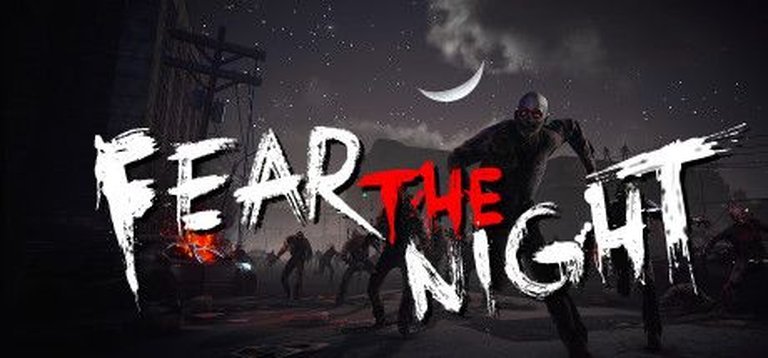
Fear the Night is a massively multiplayer online game set in a fantasy survival horror universe. Players must navigate a dark and perilous world filled with RPG elements, where survival is the ultimate goal. Developed by Snail Games USA Inc., the game was released on December 12, 2018, and offers a behind-view perspective with direct control, immersing players in a thrilling and terrifying experience.
Where to Buy Fear the Night
PC
Fear the Night Patches & Updates
Fear the Night Guides & Walkthroughs
Fear the Night Reviews & Reception
steambase.io (55/100): A triumphant return to form for the series.
gamepressure.com : An important role in the game is also played by the day and night system.
mobygames.com : In Fear the Night, you are a survivor in a world plagued with zombies.
Fear the Night Cheats & Codes
PC
Press Tab/Tilde to open console. Use ‘enablecheats [password]’ to log in as admin.
| Code | Effect |
|---|---|
| enablecheats [password] | Logs you in as the administrator |
| ShowMyAdminManager | Enables the Admin UI |
| cheat listplayers | Shows a list of all players on the server with their SteamID |
| cheat saveworld | Saves the current worldstate |
| cheat settimeofday [timestring] | Changes the time of day |
| cheat god | Enables godmode (cannot die except from drowning) |
| cheat fly | Allows you to fly |
| cheat walk | Deactivates flying and allows walking |
| cheat ghost | Turns on noclip (walk through walls/objects) |
| cheat destroyallenemies | Destroys all enemies (they respawn) |
| cheat kill | Instantly kills the targeted creature/structure, leaving a corpse |
| DestroyMyTarget | Instantly destroys the targeted creature/structure without leaving a corpse |
| cheat setplayerpos 0 0 0 | Teleports to coordinates |
| cheat SetPlayerSpeedModifier [number] | Increases movement speed (max 10) |
| cheat teleport | Teleports to coordinates 0 0 0 (X Y Z) |
| cheat teleporttoplayer [id] | Teleports to a player by their ID |
| cheat TeleportPlayerNameToMe [PlayerName] | Teleports a player to you by their Steam name |
| cheat TeleportPlayerIDToMe [PlayerID] | Teleports a player to you by their in-game ID |
| cheat infinitestats | Grants infinite hunger, stamina, and ammo |
| cheat addexperience 1000 0 0 | Grants 1000 XP (adjustable) |
| cheat GiveExpToTarget [QTY] [tribeshared] [preventsharing] | Grants XP to the targeted player/robot |
| cheat giveexptoplayer [id] [QTY] [tribeshared] [preventsharing] | Grants XP to another player by ID |
| cheat giveitemnum [ItemID] [QTY] [Quality] [True/False] | Gives an item by ID |
| cheat giveitem [ItemName] [QTY] [Quality] [True/False] | Gives an item by blueprint name |
| cheat giveitemnumtoplayer [PlayerID] [ItemID] [QTY] [Quality] [True/False] | Gives an item by ID to another player |
Fear the Night: Review
Introduction
In the saturated landscape of survival horror multiplayer games, Fear the Night (2018) emerges as a valiant but flawed contender. Developed by Snail Games USA—a studio better known for titles like Ark: Survival Evolved and Dark and Light—this open-world, zombie-infested MMO sought to carve a niche with its emphasis on cooperative rebuilding and dynamic environmental threats. Yet, despite ambitious systems like robot hacking and territory reclamation, Fear the Night struggled to escape the shadows of genre titans like DayZ and State of Decay 2. This review dissects its legacy, interrogating whether its innovations outweighed its technical limitations and asking why it remains a footnote in the annals of survival horror.
Development History & Context
Studio Vision and Technological Constraints
Snail Games USA positioned Fear the Night as a cooperative sandbox survival RPG, leveraging Unreal Engine 4 to create a sprawling, persistent world. Released into Steam Early Access in December 2018, the game targeted players seeking a blend of Rust-style base-building and Left 4 Dead-esque zombie hordes. However, the studio’s inexperience with MMO design was evident. Early builds grappled with server instability, capped at 40 players per instance—a modest number compared to contemporaries like Conan Exiles. The use of PhysX physics and BattlEye anti-cheat middleware hinted at aspirations for realism and fairness, but optimization issues plagued lower-end systems, demanding at least an Intel i5 and GTX 670 for stable performance.
The 2018 Survival Horror Landscape
Fear the Night debuted during a genre renaissance. PlayerUnknown’s Battlegrounds had popularized survival mechanics, while Project Zomboid and 7 Days to Die refined the zombie-apocalypse template. Snail’s vision—emphasizing PvE over PvP—stood out by allowing players to “restore order” by clearing zombie caves and reclaiming factories. Yet, this idealism clashed with player expectations; the MMO market of 2018 craved the cutthroat tension of Escape from Tarkov, not communal重建.
Narrative & Thematic Deep Dive
A World Without Stories
Unlike narrative-driven horror games (The Last of Us, Resident Evil), Fear the Night offered minimal plot: a generic zombie outbreak leaves survivors to rebuild society. Lore existed in scraps—notes in abandoned facilities, robotic adversaries hinting at pre-collapse technology—but lacked depth. Thematically, it echoed The Walking Dead’s exploration of trust, with PvP zones like lawless “Free Fire Areas” forcing players to betray allies for resources. Yet, these moments felt unearned without narrative scaffolding.
The Silence of the Setting
The game’s world screamed potential but whispered execution. Locations like derelict water treatment plants and overgrown forests were visually distinct but sterile, lacking environmental storytelling. Zombies—while aggressive at night—were generic shamblers, devoid of the mutated variety seen in Dying Light. The absence of NPCs or factions (à la Fallout 76) rendered the apocalypse feel inert, a canvas without brushstrokes.
Gameplay Mechanics & Systems
The Survival Loop: Scavenge, Craft, Repeat
At its core, Fear the Night revolved around three pillars:
1. Scavenging: Resources like resin, gasoline, and medicine spawned in procedurally generated structures, pushing players to risk night runs for rarer materials.
2. Crafting: A serviceable but uninspired system allowed for base building, weapon upgrades, and medical kits. Late-game players could hack combat robots—a novel twist—but their AI often glitched, rendering them unreliable.
3. Combat: Third-person shooting dominated encounters, with clunky aiming and minimal weapon variety. Melee felt weightless, lacking the visceral impact of Dead Island.
Day/Night Cycle: Promise vs. Reality
The day-night cycle was Fear the Night’s boldest innovation. Daylight encouraged exploration, while darkness amplified zombie senses, forcing stealth via crouching and noise suppression. In practice, however, nocturnal gameplay devolved into tedious waiting; without light mechanics (e.g., Don’t Starve’s sanity system), nights were punishing but not thrilling.
Multiplayer Dynamics: Stranded Potential
Co-op shone in theory. Squads could clear zombie caves to “sanitize” regions, creating safe havens for resource hubs. Yet, poor squad management—kicking members when proximity-based—and shallow clan systems (shared storage required manual permissions) bred frustration. PvP, confined to specific zones, felt tacked-on, lacking the high-stakes tension of DayZ’s anywhere-anytime conflicts.
World-Building, Art & Sound
Visual Design: Mundane Apocalyptica
Unreal Engine 4 delivered competent but forgettable visuals. Forests and towns evoked State of Decay 2’s aesthetic but lacked polish, with textures popping in and zombies clipping through geometry. Character models were detailed yet stiff, and weather effects (rain, fog) failed to enhance atmosphere. The sole standout: abandoned factories, their rusted machinery echoing Half-Life 2’s dystopian industrialism.
Sound Design: A Symphony of Missed Opportunities
Ambient sounds—wind through trees, distant groans—initially immersed players, but repetitive zombie cues grew tiresome. The absence of a dynamic soundtrack (contrast The Forest’s haunting score) left tension flat. Weapon sounds were serviceable, but robotic enemies emitted generic sci-fi whirrs, undermining their narrative significance.
Reception & Legacy
Launch and Player Backlash
Fear the Night launched to a muted 55/100 Steam rating (“Mixed”). Players praised its ambition but lambasted bugs: disappearing loot, broken AI, and server crashes. The lack of controller support alienated console converts, while updates slowed post-2019, suggesting development abandonment. By 2023, peak concurrent players rarely topped 50—a ghost town compared to V Rising’s 150,000.
Industry Impact: A Cautionary Tale
Snail’s game became a case study in squandered potential. Its robot-hacking mechanic influenced The Anacrusis’s ally systems, while the “reclaim territory” concept resurfaced in Sons of the Forest. Yet, Fear the Night itself faded, its legacy a footnote in post-mortems about MMO overreach.
Conclusion
Fear the Night is a mosaic of unrealized ideas. Its day-night cycle and cooperative rebuilding hinted at a fresh take on survival horror, but flat storytelling, janky combat, and technical woes buried its prospects. For genre historians, it remains a curiosity—a testament to how even compelling mechanics crumble without polish. In Snail’s catalogue, it joins Dark and Light as a ambitious misfire, a game that dared to dream big but stumbled into the abyss.
Final Verdict: A middling relic of the survival MMO boom, worth studying but not resurrecting.