
- Release Year: 2021
- Platforms: Linux, Macintosh, Nintendo Switch, PlayStation 4, PlayStation 5, Windows, Xbox One, Xbox Series
- Publisher: Ratalaika Games S.L., RedBlack Spade
- Developer: RedBlack Spade
- Genre: Action
- Perspective: Side view
- Game Mode: Single-player
- Gameplay: Metroidvania
- Setting: Fantasy
- Average Score: 77/100
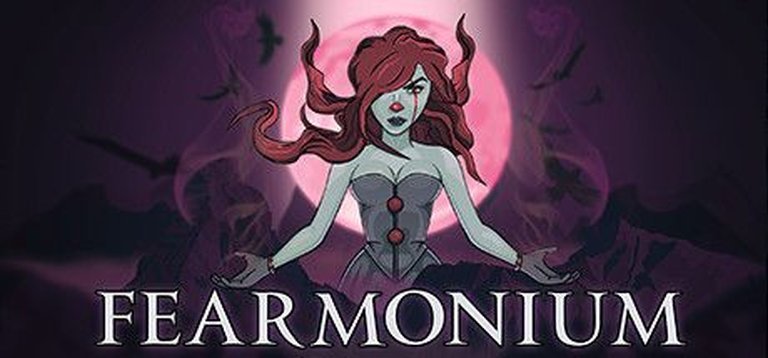
Description
Fearmonium is a psychedelic hand-drawn 2D Metroidvania set in the surreal, fantasy landscape of a teenager’s mind, where players navigate the phobia-driven psyche of Max as he battles depression, his girlfriend’s forced relocation, and an abusive stepfather. The game combines challenging combat, memorable boss fights, and a haunting narrative, offering players the power to either deepen Max’s traumas or help him overcome his fears through exploration and growth.
Gameplay Videos
Where to Buy Fearmonium
PC
Fearmonium Patches & Updates
Fearmonium Guides & Walkthroughs
Fearmonium Reviews & Reception
opencritic.com (72/100): Fearmonium is a very addictive, moderately long metroidvania that will draw you in with an interesting plot and catchy aesthetics, both visual and audio.
metacritic.com (67/100): Fearmonium’s creative premise and interesting themes help it stand out in the crowded sea of Metroidvania-style action-adventure games on the Switch. In practice, however, it’s never as cool to play as it is to describe.
Fearmonium: A Descent into the Psyche’s Labyrinth
Introduction
In the crowded pantheon of indie metroidvanias, Fearmonium stands as a uniquely disquieting masterpiece. Released in 2021 by solo developer Slava Gris under the RedBlack Spade banner, this psychedelic descent into a teenager’s fractured consciousness isn’t just another side-scroller—it’s a visceral exploration of mental illness disguised as a whimsical horror adventure. You don’t play as a hero, but as Claude, a sentient clown representing Max’s nascent coulrophobia, tasked with transforming into a full-blown phobia to devastate the boy’s already fragile psyche. This audacious premise—where gameplay mechanics embody psychological trauma—sets the stage for a game that is as intellectually ambitious as it is emotionally harrowing. Yet, Fearmonium is a study in contrasts: a game whose stunning hand-drawn aesthetic belies its punishing difficulty, whose profound thematic depth is occasionally overshadowed by its technical imperfections. This review will argue that Fearmonium is a flawed but essential work of interactive art—a diamond in the rough that redefines the boundaries of what a metroidvania can express, even if its execution often struggles to match its visionary scope.
Development History & Context
Fearmonium emerges from the singular vision of Slava Gris, a Russian developer whose background in psychology (with a master’s degree) and work with at-risk minors profoundly shapes the game’s DNA. Over three years, Gris, aided by musician Dmitry Emelyanov (Expecte Amour), crafted this ambitious project using the Construct engine—a choice that underscores the indie’s resourcefulness but also hints at its technical limitations. Initially conceived with a pixel-art aesthetic akin to Gris’s earlier title Catmaze, the art direction pivoted to a striking hand-drawn style inspired by Fleischer Studios’ 1930s cartoons and the Ghostemane music video “Mercury,” blending grotesque character designs with fluid, rubbery animation. This visual evolution was crucial, allowing the game to channel its psychological themes through a lens that feels both timeless and unnervingly modern.
The development landscape of 2021 was dominated by AAA blockbusters and indie darlings like Hollow Knight and Ori and the Blind Forest, making Fearmonium a bold outlier. Gris aimed to bridge education and entertainment, leveraging his expertise to explore phobias and neuroses in a medium rarely associated with clinical depth. As he noted, the game’s concepts—like “consolidation” (auto-save) representing memory transition—were drawn from university lectures. This ambition was recognized early; developers from Blizzard, tinyBuild, and Creative Assembly Sofia praised the prototype, highlighting its potential to subvert genre conventions. Console ports, handled by Ratalaika Games in 2023, expanded its reach but also amplified critiques of its technical roughness. The result is a game born from a unique confluence: a psychological treatise wrapped in a platformer’s skin, constrained by indie resources yet elevated by its creator’s unflinching commitment to a dark, challenging vision.
Narrative & Thematic Deep Dive
Fearmonium‘s narrative unfolds as a layered psychological odyssey. At its core is Max, a teenager drowning in depression after his girlfriend Alice moves away, his abusive stepfather moves in, and his beloved grandfather dies. His mind becomes a battleground where fears manifest as anthropomorphic entities, and you—Claude, a clownish neurosis—must navigate this labyrinth. Guided by the bathrobe-clad Lady Depression, whose tub fills with Max’s tears, your goal is to “graduate” from an unpleasant memory into a full-blown phobia by defeating rival fears. This setup is deceptively straightforward, yet the narrative twists into profound emotional territory. As Claude, you battle manifestations of Max’s trauma: the Bullies (a grotesque amalgamation of school tormentors), the Stepfather (wielding a soap-filled sock), and Dolls (an eerie puppeteer). Each boss is a cathartic confrontation, forcing players to confront real-world horrors through a surrealist lens.
What elevates the story is its subversion of expectations. Midway, it’s revealed Claude isn’t a phobia at all but Dopamine—the neurochemical antithesis to Depression. The narrative shifts from psychological predation to therapeutic salvation, as Claude helps Max reclaim his agency. This duality is Fearmonium‘s genius: it weaponizes ludonarrative dissonance, making players complicit in Max’s suffering before rewarding them with redemption. Themes of mental illness are woven into every facet: environments dynamically shift to reflect phobias (e.g., the “Forest Phobia” zone becomes increasingly claustrophobic as acrophobia intensifies), and passive abilities like “vampirism” symbolize coping mechanisms. Dialogue, delivered via comic-book cutscenes, blends clinical terminology (“objective fears,” “neuroses”) with dark humor, though some critics find the explanations overly intrusive. Ultimately, Fearmonium asks a haunting question: Can phobias be tools for healing, or are they only agents of destruction? Its answer—a hopeful, hard-won triumph over despair—cements it as one of gaming’s most poignant explorations of the human psyche.
Gameplay Mechanics & Systems
Fearmonium adheres to the metroidvania blueprint—exploration, backtracking, and ability-driven progression—but with idiosyncratic mechanical quirks. The core loop involves navigating Max’s interconnected mental realms, defeating bosses to acquire keys and abilities, and using upgrades to access new areas. Movement is fluid yet frustratingly imprecise; the floaty physics and delayed collision detection turn platforming into a test of patience, especially during precision jumps or narrow passages. Combat, while initially simple (a hammer for basic attacks), evolves into a varied but flawed system. A diverse arsenal—including pie bombs, ice cream van homing missiles, and explosive birthday presents—adds creative flair, but the lack of weight in attacks undermines satisfaction. Boss battles, though thematically resonant, often devolve into pattern-matching slogs, with some encounters dragging due to excessive health pools.
Progression is gated by “objective fears” (bosses) and passive abilities. “Consolidation” (auto-save) and “vampirism” (health regain) are clever psychological metaphors, but their implementation is inconsistent. Currency, collected as balloons, is used to buy healing items and hints from forgetful clowns—a mechanic that feels more tacked-on than integrated. The UI is a mixed bag: a minimap aids navigation, but its lack of customization and cluttered design exacerbates backtracking frustrations. Save points are sparse, limited to Lady Depression’s bathtubs, which also serve as fast-travel hubs—a welcome feature in a world of punishing difficulty. Speaking of which, Fearmonium leans into masochism: death is frequent, checkpoints are far apart, and early helium-balloon flight sequences demand pixel-perfect execution. While some players find this rewarding, others see it as artificial padding. Innovative set pieces—like riding a rocket-powered skeleton skateboard or racing on a mental scooter—break up the monotony, yet they can’t fully compensate for the core gameplay’s rough edges. In essence, Fearmonium‘s systems are a microcosm of its identity: ambitious in concept, but hindered by execution.
World-Building, Art & Sound
The world of Fearmonium is a triumph of atmospheric design, a dreamscape that mirrors Max’s deteriorating mental state. Environments are segmented into distinct zones, each representing a facet of his trauma: a decaying circus (his childhood fear of clowns), a nightmarish school (bully manifestations), and a gothic castle (memories of his grandfather’s fairy tales). These areas aren’t just backdrops; they’re reactive entities. In the “Risky Business” school zone, armed guards and labyrinthine hallways intensify as Max’s anxiety grows, while the “Forest Phobia” zone’s lush scenery curdles into a claustrophobic thicket of shadows and spikes. This dynamic environmental storytelling creates an immersive sense of psychological unraveling, akin to BioShock‘s Rapture or Psychonauts’ mental levels.
Visually, Fearmonium is a feast for the eyes. Gris’s hand-drawn art channels 1930s Fleischer cartoons with a grotesque twist—characters like Lady Depression, a tear-filled bathrobe-clad figure, and the skeletal circus performers are animated with rubbery expressiveness. The color palette shifts from garish carnival hues (early zones) to oppressive, monochromatic greys (later areas), visually tracking Max’s descent into despair. Yet, the art isn’t without flaws; some environments lack detail, and character animations occasionally feel stiff. Still, the overall aesthetic is cohesive and memorable, evoking the stylized horror of Cuphead with a uniquely somber edge.
Sound design, however, is the game’s weakest element. The soundtrack by Expecte Amour is thematically appropriate—moody ambient tracks and sparse piano melodies underscore the psychological horror—but lacks the dynamism to elevate key moments. Boss themes, in particular, are forgettable, failing to build tension. Sound effects are serviceable (hammer thuds, enemy screams), but a slight audio lag disrupts immersion. What’s most glaring is the missed opportunity to amplify the game’s horror; sharper audio cues—dissonant strings, sudden silences—could have deepened the descent into madness. Despite this, the world-building remains Fearmonium‘s greatest strength, proving that even in a flawed game, art can transcend mechanics.
Reception & Legacy
Upon its 2021 PC release, Fearmonium garnered a mixed but generally positive reception, cementing its status as a cult favorite. On Steam, it holds a “Very Positive” rating (85% from 529 reviews), with players praising its art style and bold themes. Critics were similarly divided: VG Reloaded lauded its “great story, memorable bosses, and amazing art style,” while Touch Arcade lamented its “awkward writing” and “clumsy mechanics.” Metacritic scores hover around 70-80%, reflecting consensus on its ambition but frustration with its execution. Commercially, it found modest success, with over 9,000 units sold on Steam and strong wishlists (35.2K), buoyed by Ratalaika’s console ports in 2023.
Legacy-wise, Fearmonium is increasingly recognized as a trailblazer in psychological gaming. Its influence is evident in titles like Terrors of LIB and Exorcist Fairy, which similarly merge horror with mental health themes. Gris’s background in psychology has sparked academic interest, with the game cited in discussions of ludonarrative therapy and interactive media’s potential to destigmatize mental illness. Yet, its technical flaws have limited its mainstream impact. Unlike Hollow Knight, which refined the metroidvania template, Fearmonium remains a niche reference point—a testament to the power of auteur vision over polish. As Gazettely noted, it’s “a diamond in the rough,” and its enduring appeal lies in its willingness to explore the darkest corners of the human mind, reminding players that even in pixelated form, trauma can be both a subject and a mirror.
Conclusion
Fearmonium is a paradox: a game that is both profoundly brilliant and frustratingly flawed. Its greatest strengths—its audacious narrative about mental illness, its stunning hand-drawn art, and its unflinching exploration of trauma—make it a standout in the indie landscape. As Claude/Dopamine, players don’t just traverse a map; they grapple with the very nature of fear, depression, and hope, all through mechanics that mirror psychological concepts. The catharsis of defeating a bully boss or helping Max overcome his stepfather is unmatched in gaming, a testament to how form and function can intertwine to create emotional resonance.
Yet, Fearmonium is held back by technical shortcomings. The floaty controls, punishing difficulty, and confusing map often undermine its momentum, turning moments of insight into bouts of frustration. Its audio design, while competent, fails to capitalize on the visual and thematic horror, leaving a void where dread should reside. These flaws prevent it from reaching the pantheon of genre greats, but they don’t diminish its significance.
In the end, Fearmonium is more than a game—it’s an interactive thesis on the human psyche. For those willing to endure its imperfections, it offers a harrowing, beautiful journey into the mind of a broken boy, proving that video games can be both a playground and a therapist’s couch. It may not be perfect, but its ambition and artistry make it indispensable. As Fearmonium itself asks, “Does a phobia always cause irreparable harm, or can its presence change life for better?” In this case, the answer is a resounding yes—flaws and all, Fearmonium enriches our understanding of what games can be.