
- Release Year: 2014
- Platforms: PlayStation 4, Windows, Xbox One
- Publisher: Reverb Publishing, Reverb Triple XP
- Developer: Green Lava Studios S.A.
- Genre: Action
- Perspective: Side view
- Game Mode: Single-player
- Gameplay: Platform
- Setting: Fantasy
Description
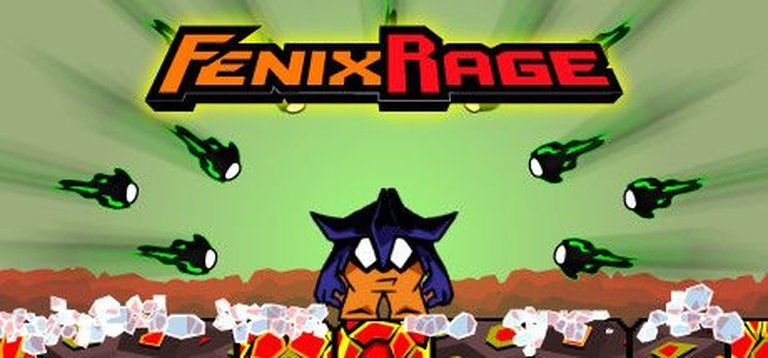
Fenix Rage is a challenging 2D side-scrolling platformer set in a fantasy world where players take on the role of Fenix, a hero consumed by rage after his village is destroyed. With fast-paced, precision-based gameplay similar to Super Meat Boy, it offers punishing difficulty and demanding level design that tests the skills of even veteran platformer fans.
Gameplay Videos
Where to Buy Fenix Rage
PC
Fenix Rage Cracks & Fixes
Fenix Rage Mods
Fenix Rage Reviews & Reception
ign.com : Ultimately, I never felt like I got “good” at Fenix Rage, only occasionally lucky.
biogamergirl.com : The game uses a unique mixture of speed and floaty, jump mechanics that makes the title more than a Super Meat Boy clone, but tiresome controls and some rather bland environments make the game not quite as exciting as it could have been.
Fenix Rage: A Brutalist Ode to Platforming Purism
Introduction: The Essence of Digital Agony and Ecstasy
In the pantheon of “masocore” platformers—those games that exist not to be conquered, but to be survived—few titles wear their masochistic heart on their sleeve as literally as Fenix Rage. Released in 2014 by the diminutive Costa Rican studio Green Lava Studios, this title arrived not as a revolutionary force, but as a deliberate, almost academic, distillation of a specific design philosophy: that pure, unadulterated challenge, divorced from narrative padding or ability gating, is a virtue in itself. Its very name is a promise and a warning. The thesis of this review is that Fenix Rage is a game of profound and fascinating contradictions. It is a masterclass in tight, instant-response controls paired with level design that frequently feels antagonistic rather than fair. It channels the spirit of 16-bit speed runs while often bogging down in puzzle-like precision. It is, in the words of one critic, “a worthy entry into an unfortunately short line of hardcore and enjoyable platformers,” yet it is also a title where the line between “enjoyable challenge” and “frustrating grind” is perilously thin and often crossed. To play Fenix Rage is to engage in a volatile dialectic between triumph and rage, between the elegant simplicity of its mechanics and the often chaotic, repetitive execution of its levels.
Development History & Context: Three Hearts, One Blurry Blue Hero
Fenix Rage emerged from the vibrant but often under-documented Central American indie scene. Its development studio, Green Lava Studios S.A., was, and remains, a small operation. The core team consisted of just three individuals: CEO and lead programmer Eduardo Ramirez, artist and animator Diego Vasquez, and composer José Mora. This triune structure is critical to understanding the game’s character; it is a vision executed with the focus, and the constraints, of a minimalist collective. They built the game using YoYo Games’ GameMaker: Studio, a tool beloved by indies for its accessibility but one that imposes certain technical ceilings. This origin explains much: the game’s graphical simplicity, its focus on 2D sprite work, and the absence of complex physics systems beyond collision detection.
The team’s stated vision, as articulated by Ramirez, was to make players “recapture the feeling of discovery.” This is a fascinating goal for a game in the Super Meat Boy mold, where discovery often means memorizing a single-frame window through a hail of death. Their inspirations were eclectic and telling. Gameplay mechanics were directly inspired by the momentum and kinetic joy of Sonic the Hedgehog, aiming for that sense of blistering speed. Yet, the art direction was a deliberate mashup of the 90s action cartoon SWAT Kats—with its sharp, angular, squadron-blue aesthetic—and the high-contrast, heavy-inked noir of Mike Mignola’s Hellboy comics. This resulted in a visual style that is at once cartoony and grimly stylized, a world that feels both retro-futuristic and infernal.
The game’s journey was atypical. A “simple” prototype existed on Google Play years before its full announcement. Its first major public showing was at PAX East 2014, where the team crucially received positive feedback on the controls—the single most important element for a precision platformer. This validation likely encouraged them to double down on their punishing design. After a Windows release in September 2014, publisher Reverb Triple XP (a label known for niche and retro titles) shepherded a console re-release in June 2016 under the new moniker Fenix Furia for PlayStation 4 and Xbox One. This port notably introduced a split-screen multiplayer mode and marked the cancellation of a planned PlayStation Vita version, a common fate for smaller indies targeting less mainstream handhelds. The rebranding, swapping “Rage” for “Furia” (Spanish/Italian for “fury”), may have been a marketing attempt to distance the game from the crowded “rage game” niche, though it ultimately failed to significantly broaden its audience.
Narrative & Thematic Deep Dive: A Tale Told in Still Frames and Glowing Eyes
Narrative is not Fenix Rage’s strong suit, but this is both a weakness and a conscious stylistic choice fitting its arcade ethos. The plot is conveyed through a series of motion-comic style cutscenes that play between worlds. The premise is archetypal: the cheerful, cookie-loving creature Fenix returns to find his village frozen solid by a mysterious, cloaked figure named Oktarus. He then pursues Oktarus across nine distinct worlds, battling his sin-themed lieutenants (Buer, Wrath, Baal, Laikos, etc.) before a final confrontation with the true mastermind, Lilith.
The narrative operates on pure symbolic and archetypal logic. Dialogue is nonexistent; characters communicate through posture, dramatic zooms, and expressive glowing eyes. This “Heroic Mime” approach strips the story to its fairy-tale bones. The thematic core is one of obsessive, silent vengeance. Fenix is not a character with motivation beyond “stop the bad guy.” His love of cookies is a quirky, humanizing detail but has no narrative payoff. The villains follow a clear Seven Deadly Sins motif (Wrath, Lust [implied with Lilith], etc.), though it’s only superficially explored.
TV Tropes analysis reveals a game deeply in love with its own procedural language. It employs classic boss fight tropes like the Advancing Boss of Doom (Buer), the Dual Boss (Oktarus’s Faith, where two previous bosses must be dodged while attacking a central node), and the Mirror Match for the final battle, where the tiny, mobile Lilith finally matches Fenix’s scale and agility. The Heel–Face Turn of Oktarus after his “Faith” is destroyed—where he loses his power, becomes old and pathetic, but later redeems himself by freezing Lilith—adds a layer of convoluted mythology that feels imported from a 90s anime rather than organic to the game’s world. Ultimately, the story is a thin but serviceable scaffolding for the gameplay, using visual shorthand (ice = evil, red eyes = danger) to maintain momentum without halting the player’s progress for dialogue.
Gameplay Mechanics & Systems: The Architecture of Agony
At its mechanical core, Fenix Rage is deceptively simple. Fenix possesses two fundamental abilities:
1. Infinite Jump: He can jump an unlimited number of times in mid-air. This is not a double-jump but a true “air jump” that can be chained endlessly, allowing for vertical traversal and precise, feather-light adjustments.
2. Dash: A rapid, horizontal burst that can be used in the air or on the ground. Dash is multifunctional: it is a movement tool, a weapon (it destroys certain weak walls and enemy projectiles), and a necessary component for solving puzzles (e.g., melting ice blocks).
The core gameplay loop is brutally efficient: spawn at start of level -> navigate to blue exit door -> die (instantly, from any hazardous contact) -> instant restart at level beginning. There is no “life” system, no penalty for death beyond the mental one. This “instantaneous pace of play” is the game’s greatest strength and its most divisive feature. The lack of loading screens or fades creates a hypnotic, addictive “one more try” rhythm.
Level Design & Progression: The 200+ levels are packed into nine themed worlds. The early worlds act as a tutorial, introducing elements like fire blocks (require a dash to ignite Fenix, allowing him to melt ice), ice platforms (slippery, requiring adjustment), and jump portals that teleport and reorient him. The design philosophy is “hard as nails from the start.” There is no gentle onboarding; the game expects players to learn through rapid, iterative failure. However, a significant criticism from reviewers like IGN’s Marty Sliva is the lack of iconic, memorable stages. Challenges feel “disposable,” the product of a master algorithim rather than crafted experiences. The difficulty curve is also spiky, not linear. A world might feature a few “breather” levels before a brutal crescendo, often placing the most fiendish obstacle at the very beginning, maximizing frustration.
Boss Fights: The bosses are a highlight, translating the 2D platforming into “David vs. Goliath” scenarios. They are large, slow, and pattern-based. Buer is an advancing slime you must outrun. Wrath requires “deadly dodging,” making its detached shell segments crash into walls. Laikos and its evolved form Laikos Blak use Extra Eyes on stalks as weak points, with the latter firing a punishing barrage of mostly harmless ice and occasionally lethal black projectiles—a masterclass in Harmless Freezing mixed with lethal threat. The final boss, Lilith, subverts the pattern by being Fenix’s size and mobility, resulting in a frantic, mirror-match dash duel.
Progression & Reward Systems: The primary extrinsic reward is stars, earned for beating a level under a par time, used to unlock arcade mini-games that test specific mechanics (e.g., “limited dashes” mode, jokingly called “HOW IS THIS EVEN POSSIBLE!?!?!” Mode). The most famous (or infamous) reward is the cookie. Each level hides one in an excruciatingly difficult spot. Collecting enough unlocks real-world cookie recipes. This charming, meta touch was widely praised as a dose of much-needed personality, a tangible reward for virtual suffering that connects the game to the real world.
Flaws in the Systems: The most consistent critique is that success often feels based on luck, not skill. IGN specifically noted feeling “out of control,” blaming the game’s “chaotic and random elements” like ghost enemies that arbitrarily stop chasing. This suggests a lack of player agency in some encounters. Furthermore, the repetition of enemy types and environmental hazards becomes glaring after a few worlds. As Game Revolution’s review starkly stated, the game “exhausts most of its gameplay elements in the first world or so,” leading to a sense of “lookalike stages” and a “sour relationship” with the player after the initial magic fades.
World-Building, Art & Sound: A Stylistic Patchwork
The game’s aesthetic is a deliberate collage of influences, resulting in a look that is both its most distinctive feature and a source of its blandness.
Visual Direction & Setting: The nine worlds use a limited, cel-shaded color palette with hard, black outlines. This serves a crucial gameplay function: hazard readability. Everything that can kill you is often brightly colored (reds, purples, glowing whites) against more subdued backgrounds, a lesson from the flash game era. The influence of SWAT Kats is evident in the sharp-angled machinery, bases, and vehicles. The Hellby influence manifests in the heavy shadows, stark compositions, and the imposing, silhouette-heavy boss designs, especially Oktarus with his Glowing Eyes. However, as multiple reviews noted, the worlds, while thematically different (ice, fire, mechanical), often feel like they have “just received a slightly different paint job.” The level geometry—blocks, spikes, lava pits—is reused extensively, creating a sense of environmental monotony that contradicts the promise of “nine vastly unique worlds.”
Sound Design & Music: The soundtrack, composed by José Mora, is a point of extreme contention. It is described as “grating, looped chiptune-fueled butt-rock” (IGN) and “bland and forgettable” (Use a Potion!). This is a significant misstep. For a game demanding intense focus and repetition, a grating soundtrack is a cardinal sin, leading many players to mute it entirely. Conversely, some praised its “slick retro-inspired” energy. The sound effects for jumps, dashes, and deaths are crisp and satisfying, providing crucial audio feedback that partially compensates for the visual clutter.
Atmosphere: The atmosphere is one of isolated, relentless pursuit. The frozen village prologue sets a tone of desolation that the subsequent action levels rarely recapture. The focus is on the moment-to-moment challenge, not world immersion. The cutscenes, while stylish motion comics, are brief and sparse, failing to build a compelling atmosphere between the brutal gameplay segments.
Reception & Legacy: A Cult Curiosity with a Caveat Emptor
At launch, Fenix Rage received a mixed-to-positive critical reception, aggregating to a 69% on MobyGames and a 77/100 Player Score on Steam (Mostly Positive). Critics consistently positioned it in the shadow of Super Meat Boy, often unfavorably.
- Praised For: Its responsive core controls, the satisfaction of its boss fights, the sheer volume of content (200+ levels, challenge modes, arcade games, cookie recipes), and its distinct, retro-modern visual style.
- Criticized For: Its excessive and often unfair difficulty that breeds frustration, repetitive level and enemy design, a lack of unique personality beyond its aesthetics, and a soundtrack that actively detracts from the experience.
The most insightful critique came from the schism between “hardcore” and “casual” players, perfectly summarized by 411mania: “Fenix Furia is a really good game that can be appreciated by only the most hardcore… I recommend it as a game to be played in between sessions of something else. Why? Because the stress and rage induced by this game cannot be taken for extended sessions.” This identifies its precise niche: not a main course, but a spicy, intense side dish for players who already crave precision platforming pain.
Its legacy is that of a strong also-ran. It did not define the masocore genre; it served as a competent, late-era entry. It did not spawn a wave of imitators. Instead, it stands as a cautionary tale about the importance of fairness and variety in ultra-hard games. Games like Celeste (2018), which arrived later, learned from Fenix Rage‘s missteps by pairing brutal challenge with emotional narrative, varied mechanics, and a brilliant soundtrack. Fenix Rage demonstrated that tight controls and high difficulty are not enough; the level design must feel crafted, not procedurally cruel, and the audiovisual presentation must sustain, not undermine, the player’s endurance.
Conclusion: A Flawed Gem for the Discerning Masochist
Fenix Rage (or Fenix Furia) is a game that demands to be evaluated on its own narrow terms. It succeeds brilliantly at creating a pure, stripped-down test of reflexes and pattern recognition. For the player who finds joy in the micro-second timing of a perfect dash through a needle’s eye, who derives pleasure from memorizing a 10-second stage over 50 attempts, its core loop is魔性 (magical). Its boss fights are inventive translations of its mechanics into memorable encounters.
However, it fails as a consistently engaging experience. The repetition grinds down the initial thrill. The soundtrack is a liability. The narrative is an afterthought. Most critically, it often confuses brutal with unfair, leading to victories that feel like escapes rather than conquests. It captures the surface-level agony of the 90s—the throw-the-controller frustration—without consistently capturing the deep, earned satisfaction.
Its place in video game history is secure, but it is a footnote, not a landmark. It is a testament to what a small, passionate team can achieve with limited tools and a clear vision. It is also a reminder that in the pursuit of purity, one must not sacrifice the player’s sense of agency and progress. Fenix Rage is not a forgotten classic, but it is a fascinating case study: a game whose heart is in the right place, whose mechanics are sound, but whose execution is uneven enough to prevent it from reaching the pantheon it clearly aspires to join. It is, ultimately, a game for the collector of digital pain, the connoisseur of frustration, who will likely appreciate its cookies more than its core. For everyone else, the rage may be too one-sided to be enjoyable.