
- Release Year: 2016
- Platforms: Windows
- Publisher: Aerosoft GmbH
- Developer: TML-Studios
- Genre: Driving, Racing, Simulation
- Perspective: 1st-person
- Game Mode: Single-player
- Gameplay: Business simulation, Managerial
- Setting: Bus
- Average Score: 40/100
Description
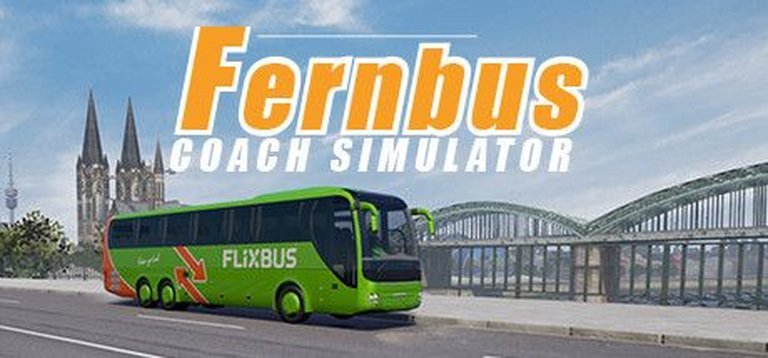
Fernbus Coach Simulator is a realistic vehicle simulation game where players take on the role of a long-distance bus driver navigating detailed European routes. Developed by TML-Studios, the game emphasizes authentic bus operation, passenger management, and schedule adherence, featuring licensed coaches and real-world locations. With expansions adding regions like Austria, Switzerland, France, and beyond, players experience varied terrain, weather conditions, and logistical challenges while maintaining passenger satisfaction.
Gameplay Videos
Where to Buy Fernbus Coach Simulator
PC
Fernbus Coach Simulator Guides & Walkthroughs
Fernbus Coach Simulator Reviews & Reception
metacritic.com (30/100): Fernbus Simulator should stay back in the garage and let the more capable sims hit the road.
thexboxhub.com (60/100): Fernbus Coach Simulator puts you in the driving seat, but how does it feel?
monstercritic.com (30/100): With a confusing setup, a really poor user interface, at times abysmal presentation, and a Career Mode that offers no meaningful progression, Fernbus Simulator should stay back in the garage and let the more capable sims hit the road.
completexbox.co.uk : I was actually gobsmacked by how good Fernbus Simulator looks and how detailed the presentation is on Xbox Series X.
Fernbus Coach Simulator Cheats & Codes
Fernbus Simulator PC
Activate cheats using PLITCH.
| Code | Effect |
|---|---|
| Set Bus Speedlimiter (km/h) | Sets the maximum speed limit for the bus in km/h |
| Set Zero Traffic Density | Reduces all traffic to zero density |
| Set 50% Traffic Density | Reduces traffic density to 50% |
| Set 100% Traffic Density | Sets traffic density to normal 100% |
| Set 150% Traffic Density | Increases traffic density to 150% |
| Set 250% Traffic Density | Increases traffic density to 250% |
| Add XP | Adds experience points to the player |
| Reset: Property Damages | Resets all property damage counters |
| Reset: Pedestrian Injureds | Resets all pedestrian injury counts |
| Reset: Accidents | Resets all recorded accidents |
| Reset: Radar Control Speedings | Resets radar-controlled speeding incidents |
| Reset: Extreme Brakes | Resets extreme braking occurrences |
| Reset: Extreme Steerings | Resets extreme steering incidents |
| Reset: Curbstone Collisions | Resets collisions with curb stones |
| Allowed Speed Limit 75% | Limits maximum speed to 75% of normal |
| Allowed Speed Limit 125% | Increases maximum speed to 125% of normal |
| Allowed Speed Limit 150% | Increases maximum speed to 150% of normal |
| Allowed Speed Limit 200% | Increases maximum speed to 200% of normal |
Fernbus Coach Simulator: Review
Introduction
In the niche realm of vehicle simulation games, Fernbus Coach Simulator (2016) occupies a peculiar space—a title with lofty ambitions of delivering an authentic intercity bus-driving experience but struggling under the weight of its technical limitations and design shortcomings. As a rare collaboration between developer TML-Studios and real-world bus operator FlixBus, the game promised unparalleled realism. Yet, eight years after its debut, it remains a divisive relic: hailed by sim purists for its painstaking detail yet scorned for its clunky execution. This review interrogates whether Fernbus Coach Simulator is a misunderstood gem or a cautionary tale in the crowded simulation genre.
Development History & Context
The Studio and Vision
Founded in Germany, TML-Studios carved a niche with simulation titles like the City Bus Simulator series and World of Subways. Fernbus Coach Simulator marked their most ambitious project—an attempt to elevate bus simulations beyond urban routes into the vast expanse of European highways. Partnering with Aerosoft (a publisher known for hardcore sims) and FlixBus lent the game credibility, enabling authentic licenses for MAN and VDL buses and access to real route data.
Technological Constraints and Landscape
Built on Unreal Engine 4, the game aimed for photorealism, simulating dynamic weather, day-night cycles, and a 1:10 scale recreation of 20,000 km of German roads. Yet, the technology strained under its scope. Upon its 2016 launch, gamers compared it unfavorably to genre benchmarks like Euro Truck Simulator 2, criticizing its optimization and UI. The era’s hardware limitations exacerbated issues: frame drops, texture pop-ins, and controls that felt unresponsive on non-wheel peripherals.
Despite these hurdles, the game’s post-launch DLC strategy mirrored Euro Truck’s success, expanding into Austria, Switzerland, and beyond. However, reliance on paid DLC for content like the Neoplan Skyliner bus or Football Team Bus mode drew ire—a symptom of a broader industry shift toward fragmentation.
Narrative & Thematic Deep Dive
Unlike narrative-driven games, Fernbus eschews traditional storytelling, instead framing itself around the mundane poetry of transit. Its “narrative” lies in the quiet tension of a driver’s responsibilities: navigating autobahns, managing passenger tickets, and adhering to schedules. Thematic focus centers on routine and precision—mirroring the real-world bus driver’s life.
The Football Team Bus DLC introduced a meta-narrative element, tasking players with transporting soccer teams while managing budgets for snacks and bus upkeep. Though shallow, this mode hinted at untapped potential for systemic storytelling through logistics. Yet, without character arcs or emotional stakes, the game’s themes collapse into monotony, echoing critiques of “long-term motivation” issues.
Gameplay Mechanics & Systems
Core Loop and Driving
At its best, Fernbus delivers a methodical driving experience. Players choose between arcade (simplified controls) and realistic modes (manual gear shifts, door controls, windshield wipers). The physics model, aided by PhysX, convincingly renders a coach’s weight and momentum, demanding careful braking and steering.
Yet, the UI/UX design sabotages immersion. Menus are labyrinthine, controller support is erratic, and tutorials are nonexistent—forcing players to intuit systems like ticket-checking via trial and error. As critic Gamer’s Palace noted, “terrible, unintuitive menus” and “useless controller settings” marred the experience.
Passenger and Route Management
Beyond driving, players handle ticketing—validating pre-booked passengers and selling to walk-ups—a novel but underdeveloped mechanic. Career mode tasks drivers with expanding route networks across Europe, yet progression feels hollow. Unlike Euro Truck’s business management, Fernbus lacks depth: no fleet customization, hiring drivers, or financial strategy.
Technical Flaws
Bugs persist: AI traffic glitches, passengers clipping through seats, and abrupt disconnects from controllers. The Flash Bass .FM DLC added radio functionality, but base-game audio is limited to engine noises and canned announcements—omitting music or dynamic chatter, exacerbating the tedium of long hauls.
World-Building, Art & Sound
Visual Design
Powered by Unreal Engine 4, Fernbus’s landscapes oscillate between stunning and sterile. Germany’s autobahns are meticulously recreated, with accurate signage and foliage, while cities like Berlin and Munich feature recognizable landmarks. Weather effects—rain slicking windshields, fog obscuring mountain passes—are highlights, lending dramatic flair.
However, environmental repetition creeps in: rural areas lack detail, and cities feel underpopulated. Bus interiors are technical marvels, with fully interactive dashboards and lifelike materials, but exterior models suffer from low-res textures at a distance.
Sound Design
The game’s sonic palette is functional but sparse. Engine roars and tire-on-asphalt sounds are authentic, yet the absence of a radio or passenger dialogue renders long drives eerily quiet. Voice-overs for stops are robotic, lacking regional accents—a missed opportunity for immersion.
Reception & Legacy
Critical and Commercial Reception
Launch reception was brutal. Critics panned its lack of polish, with MobyGames aggregating a 25% average from reviews like Gamer’s Palace’s scathing take: “In almost all decisive disciplines, this game fails miserably.” Players were more forgiving, awarding mixed Steam ratings (74% positive) praising its ambition while lamenting bugs and DLC dependency.
Commercially, it found a cult audience, buoyed by post-launch DLC that expanded the map to eight countries and added buses like the Scania Touring. The 2023 console ports introduced enhancements but failed to address systemic flaws, earning tepid reviews (DualShockers: “No meaningful progression”).
Industry Influence
Though no genre revolution, Fernbus influenced niche sims by proving demand for bus-focused experiences. It laid groundwork for successors like The Bus (2021), which iterated on passenger management, and highlighted the perils of prioritizing scale over depth.
Conclusion
Fernbus Coach Simulator is a flawed monument to ambition. Its simulation of cross-country bus driving is unmatched in scope, offering hours of meditative highway traversal for patient players. Yet, it falters as a game—hamstrung by poor UX, shallow systems, and a lack of connective tissue between its parts.
For simulation devotees, it remains a curio worth exploring, especially with DLC fleshing out its world. For most, however, it’s a relic of unrealized potential—a reminder that technical realism alone cannot sustain engagement. In video game history, it endures not as a trailblazer but as a cautionary footnote: a bus ride that never quite reaches its destination.