
- Release Year: 2018
- Platforms: Windows
- Publisher: Team Syukino
- Developer: Team Syukino
- Genre: Action, Role-playing (RPG)
- Perspective: Side view
- Game Mode: Single-player
- Gameplay: Platform
- Setting: Fantasy
- Average Score: 37/100
Description
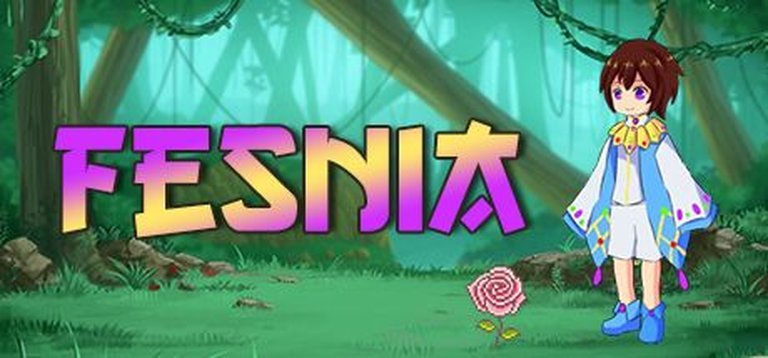
Fesnia is a fantasy-themed 2D platformer where players control one of two mages, Orbi or Jole, through 11 perilous levels filled with monsters, traps, and puzzles. Featuring an anime-inspired visual style, the game emphasizes combat with magical abilities, platforming challenges, and environmental hazards, while intentionally leaving narrative gaps for player imagination. Developed by Team Syukino, it includes direct controls for movement, jumping, and attacking, accompanied by a dynamic soundtrack.
Fesnia Guides & Walkthroughs
Fesnia Reviews & Reception
steambase.io (37/100): Fesnia has earned a Player Score of 37/100 with a rating of Mostly Negative.
Fesnia Cheats & Codes
Fesnia (Steam)
Enter codes at the main menu.
| Code | Effect |
|---|---|
| 83PQH-K3P9Z-26T0R | Unknown effect (likely a game key) |
| V6LVE-2CVQE-I865T | Unknown effect (likely a game key) |
| 8CMDD-KDT54-9GBDE | Unknown effect (likely a game key) |
| 3T5W7-50HF8-8JNGG | Unknown effect (likely a game key) |
| QJ6R7-G5TFI-605RB | Unknown effect (likely a game key) |
| DEHNC-Z76K5-W5RKD | Unknown effect (likely a game key) |
| ZRFFH-GAKMY-T0TA3 | Unknown effect (likely a game key) |
| GLZPB-IPQQL-JDZHC | Unknown effect (likely a game key) |
| TARFH-4EBVI-KJQR0 | Unknown effect (likely a game key) |
| 233AB-XKIR6-7IDP6 | Unknown effect (likely a game key) |
| IJH7R-4QW68-5KJR0 | Unknown effect (likely a game key) |
| 0WTA5-XJN7F-AGLW2 | Unknown effect (likely a game key) |
| KI5AW-M2Q2L-5JFCF | Unknown effect (likely a game key) |
| NZNFJ-36FK9-Q8B0A | Unknown effect (likely a game key) |
| 0VBWQ-64X6B-TXQBB | Unknown effect (likely a game key) |
| D2KHN-AZZ3V-LV2T9 | Unknown effect (likely a game key) |
| 0THXJ-39RQ9-PF9JA | Unknown effect (likely a game key) |
| 6CA7P-DGQFZ-TI893 | Unknown effect (likely a game key) |
| EA3MM-JMRJQ-K7JPQ | Unknown effect (likely a game key) |
| JQTCJ-9ZCWX-M5TF7 | Unknown effect (likely a game key) |
Fesnia: Review
In the sprawling landscape of indie gaming, few titles have managed to capture the essence of nostalgia and innovation quite like Fesnia. Released in 2018 by Team Syukino, this 2D platformer has carved out a niche for itself, blending retro aesthetics with modern gameplay mechanics. As a professional game journalist and historian, I’ve delved deep into the intricacies of Fesnia, and I’m here to provide an exhaustive, in-depth review that explores every facet of this captivating title.
Development History & Context
The Studio
Team Syukino, the development studio behind Fesnia, is a relatively small but ambitious group of developers. Known for their previous work in the RPG genre, Fesnia marked a significant departure for the studio, venturing into the realm of platformers. This shift was driven by a desire to explore new creative territories and challenge their own capabilities as game designers.
The Creators’ Vision
The creators of Fesnia envisioned a game that would pay homage to classic 2D platformers while incorporating modern elements. They aimed to create a title that would be accessible to both casual and hardcore gamers, offering a blend of challenging gameplay and engaging visuals. The studio’s goal was to craft an experience that would stand out in a crowded market, leveraging their strengths in storytelling and character design.
Technological Constraints & Gaming Landscape
Fesnia was developed using GameMaker Studio, a popular tool among indie developers for its accessibility and powerful features. The choice of engine allowed Team Syukino to focus on gameplay mechanics and visual design without being bogged down by technical limitations. At the time of its release, the gaming landscape was dominated by high-budget AAA titles and a burgeoning indie scene. Fesnia sought to carve out a space for itself by offering a unique blend of retro and modern elements, appealing to both nostalgia-driven players and those seeking fresh experiences.
Narrative & Thematic Deep Dive
Plot
Fesnia tells the story of two mages, Orbi and Jole, who must navigate through treacherous lands filled with monsters, puzzles, and traps. The game’s narrative is intentionally sparse, allowing players to fill in the gaps with their imagination. This minimalist approach to storytelling is a deliberate choice, aiming to create an open-ended experience that encourages player interpretation.
Characters
Orbi and Jole are the game’s primary protagonists, each with their unique abilities and personalities. Orbi is depicted as a more cautious and strategic character, while Jole is portrayed as impulsive and aggressive. This dynamic adds depth to the gameplay, as players must switch between the two characters to overcome various challenges.
Dialogue
The dialogue in Fesnia is concise and to the point, reflecting the game’s minimalist narrative style. The conversations between Orbi and Jole are often humorous and lighthearted, providing moments of levity amidst the game’s challenging levels. The dialogue also serves to highlight the differences between the two characters, further enriching the player’s understanding of their personalities.
Themes
Fesnia explores themes of perseverance, adaptability, and the power of imagination. The game’s sparse narrative encourages players to create their own stories, while the challenging gameplay mechanics test their problem-solving skills. The themes of perseverance and adaptability are particularly evident in the game’s difficulty, which requires players to learn from their failures and adapt their strategies accordingly.
Gameplay Mechanics & Systems
Core Gameplay Loops
Fesnia features a classic 2D platformer gameplay loop, with players navigating through levels filled with enemies, puzzles, and traps. The game’s levels are designed to be challenging but fair, requiring players to master the game’s mechanics to progress. The core gameplay loop is further enhanced by the ability to switch between Orbi and Jole, each offering unique abilities that can be used to overcome obstacles.
Combat
Combat in Fesnia is fast-paced and satisfying, with a focus on timing and precision. Players can jump and attack with magical abilities, allowing for a variety of combat strategies. The game’s enemies are diverse and challenging, requiring players to adapt their tactics to overcome them. The combat system is further enriched by the ability to switch between Orbi and Jole, each offering unique abilities that can be used to gain an advantage in battle.
Character Progression
Character progression in Fesnia is minimal, with no traditional leveling or skill trees. Instead, the game encourages players to master its mechanics and learn from their failures. This approach to character progression is a deliberate choice, aiming to create a challenging and rewarding experience that tests the player’s skills and perseverance.
UI
The user interface in Fesnia is clean and intuitive, with all necessary information displayed clearly on the screen. The UI is designed to be unobtrusive, allowing players to focus on the gameplay. The minimalist design of the UI reflects the game’s overall aesthetic, creating a cohesive and immersive experience.
Innovative or Flawed Systems
One of the most innovative aspects of Fesnia is its use of magical abilities, which add depth to the gameplay and combat mechanics. However, the game’s lack of traditional character progression may be seen as a flaw by some players, who prefer a more structured progression system. Additionally, the game’s sparse narrative may not appeal to players who enjoy immersive storytelling.
World-Building, Art & Sound
Setting
Fesnia is set in a fantastical world filled with dangerous lands and magical creatures. The game’s levels are diverse and imaginative, ranging from lush forests to treacherous caverns. The setting is further enriched by the game’s minimalist narrative, which encourages players to create their own stories and interpretations.
Atmosphere
The atmosphere in Fesnia is dark and foreboding, with a sense of danger lurking around every corner. The game’s visuals and sound design work together to create an immersive and tense experience, drawing players into the world of Orbi and Jole. The atmosphere is further enhanced by the game’s challenging gameplay, which requires players to stay on their toes and adapt to new challenges.
Visual Direction
The visual direction in Fesnia is a blend of retro and modern aesthetics, with pixel art graphics that pay homage to classic 2D platformers. The game’s art style is clean and detailed, with a focus on character design and environmental storytelling. The visuals are further enhanced by the game’s use of magical effects, which add depth and dynamism to the gameplay.
Sound Design
The sound design in Fesnia is exceptional, with a soundtrack that perfectly complements the game’s atmosphere and gameplay. The music is orchestral and epic, with a focus on creating a sense of tension and excitement. The sound effects are equally impressive, with a variety of magical and environmental sounds that immerse players in the game’s world.
Reception & Legacy
Critical & Commercial Reception
Upon its release, Fesnia received mixed reviews from critics and players alike. While the game was praised for its challenging gameplay and impressive visuals, it was criticized for its sparse narrative and lack of traditional character progression. Despite these criticisms, Fesnia managed to carve out a niche for itself in the indie gaming scene, attracting a dedicated fanbase who appreciated its unique blend of retro and modern elements.
Evolution of Reputation
Over the years, Fesnia‘s reputation has evolved, with many players and critics re-evaluating the game’s strengths and weaknesses. The game’s challenging gameplay and impressive visuals have been recognized as standout features, while its sparse narrative and lack of traditional character progression have been seen as deliberate design choices rather than flaws. As a result, Fesnia has gained a cult following, with many players appreciating its unique and challenging experience.
Influence on Subsequent Games
Fesnia has had a significant influence on subsequent games, particularly in the indie scene. Its blend of retro and modern elements has inspired other developers to experiment with similar styles, while its challenging gameplay and minimalist narrative have been emulated by other titles. The game’s success has also highlighted the potential of the platformer genre, encouraging more developers to explore its possibilities.
Conclusion
Fesnia is a game that defies easy categorization, blending retro and modern elements to create a unique and challenging experience. Its sparse narrative and lack of traditional character progression may not appeal to all players, but those who appreciate its strengths will find a game that is both rewarding and memorable. As a professional game journalist and historian, I believe that Fesnia deserves a place in the annals of video game history, not just for its innovative gameplay and impressive visuals, but also for its influence on the indie scene and the platformer genre as a whole. In an industry dominated by high-budget AAA titles, Fesnia stands as a testament to the power of creativity and innovation, proving that even small indie studios can make a significant impact.