
- Release Year: 2010
- Platforms: Macintosh, Windows
- Publisher: Fugazo Inc.
- Developer: Fugazo Inc.
- Genre: Puzzle
- Perspective: 3rd-person
- Game Mode: Single-player
- Gameplay: Hidden object, Puzzle
- Setting: Fantasy
- Average Score: 74/100
Description
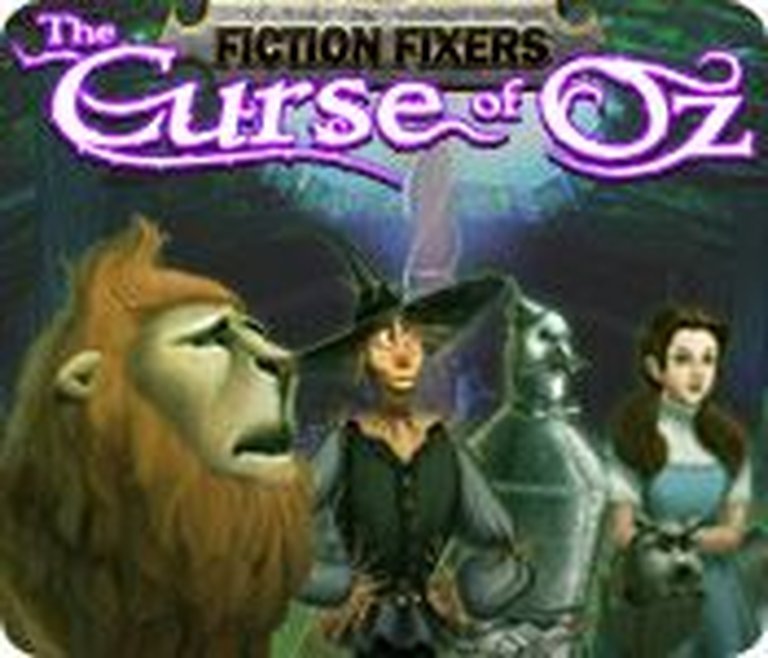
Fiction Fixers: The Curse of Oz is a hidden-object adventure game set in the magical land of L. Frank Baum’s The Wonderful Wizard of Oz. Players assume the role of a Fiction Fixer, tasked with escorting Dorothy and Toto through Oz to thwart the alliance between the villain Victor Vile and the Wicked Witch of the West, who are draining the land’s light and life with ominous towers. Gameplay involves finding hidden objects, solving puzzles, and utilizing the unique abilities of the Scarecrow, Tin Woodman, and Cowardly Lion to navigate and restore the threatened world.
Gameplay Videos
Fiction Fixers: The Curse of Oz Guides & Walkthroughs
Fiction Fixers: The Curse of Oz Reviews & Reception
metacritic.com (74/100): offers a good mix of typical hidden object and adventure gameplay.
gamezebo.com : didn’t live up to its great potential
Fiction Fixers: The Curse of Oz: Review
Introduction: A Literary Lifeline in a Sea of Casual Games
In the bustling ecosystem of mid-2010s casual gaming, few genres were as persistently populated as the hidden object puzzle adventure (HOPA). Titles like Mystery Case Files and Dark Parables dominated digital storefronts, often prioritizing gentle, repetitive cognitive tasks over narrative ambition. Into this milieu stepped Fugazo Inc.’s Fiction Fixers: The Curse of Oz (2010), a licensed title that dared to blend meta-narrative with a classic American mythos. It is a game that wears its heart—and its pulp heritage—on its sleeve, tasking players with becoming “Fiction Fixers,” agents who repair narrative damage inflicted by the villainous Illiterati. This review will argue that while The Curse of Oz is a mechanically competent and aesthetically pleasing entry in the HOPA canon, it is ultimately a game constrained by its genre’s conventions and its own cautious design. It succeeds as a serviceable, respectful adaptation of L. Frank Baum’s world but fails to leverage its clever premise into a truly memorable or innovative experience, remaining a fascinating footnote rather than a landmark in the history of literary-based gaming.
Development History & Context: Building on a PopCap Foundation
Studio Vision & Legacy: Fugazo Inc., the developer and publisher, was a small studio with a clear niche. As evidenced by the “Fiction Fixers” series branding—this being the second title after Adventures in Wonderland—the studio aimed to build a franchise around the concept of “fixing” corrupted literary worlds. The creative vision, helmed by Andrew Lum (Creative Director) and Jay Abrahamse (Designer/Producer), was to create an accessible, story-driven HOPA series for a mainstream, often older, casual audience. The choice of The Wonderful Wizard of Oz as the second setting was astute; it is arguably America’s most beloved and instantly recognizable fantasy novel, guaranteeing a built-in audience that Adventures in Wonderland had also targeted.
Technological Constraints & Framework: The game’s technical identity is explicitly stated in its MobyGames credits: it was “Adapted from the PopCap Framework.” This is a crucial piece of context. PopCap Games, the studio behind Bejeweled and Plants vs. Zombies, had developed an internal framework for their own suite of casual games. By licensing or adapting this framework, Fugazo could focus on content creation (art, puzzles, story) rather than engine programming. This explains the game’s functional, if unspectacular, polish. The perspective is a “3rd-person (Other),” meaning a static, painterly scene viewed from a fixed angle—a hallmark of the HOPA genre at the time. The business model was shareware, typical for download-focused casual games, with a free trial chapter and a full unlock. System requirements (1.2 GHz CPU, 1GB RAM) were minimal, targeting the non-gaming PCs common in 2010.
Gaming Landscape: The Curse of Oz arrived at the peak of the HOPA boom. Big Fish Games, GameHouse, and iWin were the major digital distributors, and the genre’s formula was well-established: a weak narrative pretext for moving through a series of cluttered scenes. Fugazo’s twist was the “Fiction Fixer” lore, a血清 (serum) of self-aware fan-fiction that attempted to give the item-hunting a purpose beyond simple collection. However, it competed directly with more established series and larger studios. Its simultaneous release with another Oz-based title, L. Frank Baum’s The Wonderful Wizard of Oz (also 2010), highlights how saturated the niche had become.
Narrative & Thematic Deep Dive: A Serviceable Metaphor
Plot & Structure: The plot is a direct, if expanded, side-story to Baum’s novel. The player, a new “full-fledged” Fiction Fixer, is dispatched to Oz via the “Fictionizer” device (a literal book-wormhole) upon discovering the Illiterati agent Victor Vile has allied with the Wicked Witch of the West. Their plan: to erect dark towers that drain the “light, people, and life” from the land. The narrative thrust is to escort Dorothy and Toto, gradually recruiting the Scarecrow, Tin Woodman, and Cowardly Lion, to reach Glinda the Good Witch and break the curse. The story is delivered through sparse, voiced dialogue and text boxes between location transitions. It is a plot of convenience, built to justify the game’s progression through iconic Oz locales: Kansas farmhouse, Yellow Brick Road, Wicked Witch’s castle, Emerald City, Glinda’s castle.
Characters & Adaptation: The game’s primary charm lies in its affectionate, if shallow, treatment of Baum’s characters. Dorothy is the perpetually worried but brave catalyst. The companions are reduced to their core traits and game functions: the Scarecrow scares crows, the Tin Man chops logs, the Lion leaps chasms. Their “rescues” are the first major set-pieces:
* The Scarecrow is stapled to a pole; you gather hay and twine to reconstruct him.
* The Tin Man is rusted; you find an oil can to lubricate his joints.
* The Lion is caged; you solve a sliding-block puzzle to free him.
These moments are effective mini-narratives that mirror their original quests (brain, heart, courage) but feel transactional. Victor Vile is a generic mustache-twirling villain, and the Wicked Witch is present but curiously passive until the final confrontation. The meta-plot of “fixing fiction” is the most interesting thematic layer, positioning the player as a curator of narrative integrity, but it is rarely explored beyond the premise. There is no commentary on the nature of adaptation or the “soul” of a story; the Illiterati simply want to destroy for destruction’s sake.
Dialogue & Tone: The writing is functional and aimed at a family audience. It avoids literary pretension but also misses opportunities for wit. The tone is consistently earnest, matching the earnestness of the original novel but lacking its whimsical strangeness. The voice acting (credited to Somatone Interactive) is competent but unremarkable, fitting the budget constraints. The narrative’s greatest failure is pacing. Major story beats—meeting the Witch, infiltrating her castle, confronting the Wizard—are brief interregnums between long sequences of item hunting, deflating dramatic tension.
Gameplay Mechanics & Systems: The HOPA Engine, Refined but Repetitive
Core Loop & Hidden Object Scenes (HOS): The gameplay is a 70/30 split between hidden object scenes and point-and-click adventure puzzles. HOS are the bread and butter. The player is presented with a static, detailed scene and a list of 10-15 items to find against a clock (in timed modes) or simply for completion. The lists are algorithmically generated from a larger pool, meaning replays offer slight variation. As the Gamezebo review notes, “Hidden object lists are slightly different each time you play.” The scenes are generally well-drawn, with objects fairly hidden but not unfairly cluttered. The “Regular” vs. “Expert” difficulty toggle primarily affects hint/skip meter recharge rates and whether interactive areas sparkle, a common genre feature.
Inventory & Crafting/Assembly: A significant improvement over Fiction Fixers: Adventures in Wonderland, as noted by Gamezebo, is the constant inventory display in the lower-left corner. Items are collected and stored, often requiring combination (e.g., lantern parts + fuel jug = lit lantern) or use in a specific scene later. This leads to the game’s most divisive mechanic: extensive backtracking. The walkthroughs from Big Fish Games and Gamezebo reveal a structure where you frequently collect item parts (lantern, bolt cutters, raft, axe, oil can, bell panel, gate panel, torch, iron pot) only to return to previous areas to assemble or use them. The map indicates “unfinished” locations with an hourglass icon, but this often simply means redoing a HOS you just completed minutes prior to find one new item. This creates a padding effect that inflates playtime to the oft-cited 2-3 hours at the cost of pacing.
Puzzle & Mini-Game Variety: The game’s strongest asset is its variety of puzzle mini-games, which break up the HOS monotony. The walkthroughs document a veritable syllabus of casual puzzle types:
1. Slider Puzzles: Used for the Tin Man’s axe, the Lion’s cage lock, and the Wizard’s math tower.
2. Rotation Puzzles: Restoring shields on power towers by rotating tiles.
3. Lights-Out: The lantern-lighting sequence in the woods (a classic logic puzzle where toggling a light affects neighbors).
4. Pattern Sequencing: The doorbell musical puzzle (repeating a note sequence) and the gem alignment lock in Emerald City (rotating nested rings to match colors).
5. Pipe Rotation: The “Fictionizer” repair circuit board puzzle.
6. Logic Grids: The marble/button puzzle on the Wizard’s throne (a complex button-press sequence).
7. Sliding Block (Traffic Jam): Used in multiple locations.
8. Jigsaw Puzzles: Reassembling maps.
9. First-Person Object Manipulation: Pouring water from a pitcher, using tools on characters.
These puzzles are generally well-explained in-game and through the intuitive cursor changes. Their difficulty is appropriate for the target audience, requiring observation and trial-and-error rather than deep logical deduction.
Companion Abilities & Integration: The recruitment of the Scarecrow, Tin Man, and Lion is not just narrative; it gates progression. Their abilities are context-sensitive icons:
* Scarecrow: Scares groups of crows (click on him, then on each crow).
* Tin Man: Chops blocking logs (click on him, then on each log, multiple times).
* Lion: Leaps across small chasms/ditches (click on him, then on the far side).
These are simple but effective. The game also implements “villain interventions” where Vile or the Witch will kidnap a companion, triggering a short side-quest to rescue them, adding minor variety. However, their use is infrequent and the puzzles themselves don’t deeply integrate the companions’ abilities beyond these pre-set interactions.
UI & Accessibility: The user interface is clean and genre-standard. The map is functional, though its utility is hampered by the backtracking design. The hint system is generous (unlimited but with a cooldown), and the skip function is available for puzzles. The “sparkle” highlight for active areas in Regular mode is a helpful accessibility feature. The overall design philosophy is one of minimal friction, ensuring the player is rarely truly stuck for long.
World-Building, Art & Sound: A Charming But Static Oz
Visual Direction & Art Style: The game employs a pre-rendered, illustration-style aesthetic that aims to capture the storybook quality of Baum’s world. The screenshots from MobyGames and LaunchBox show brightly colored, detailed, but static scenes. There is no animation on characters beyond occasional bobbing; the world is a series of beautiful dioramas. The art direction successfully evokes the iconic imagery of the 1939 film (green Emerald City, yellow brick road) while adding its own darker, more saturated twists for the “cursed” areas (the dark towers, the thorn-choked paths, the Witch’s dungeon). The character portraits for dialogue are simple but expressive enough. The art is a high point, providing a visually pleasant experience that fits the licensed property without attempting photorealism it cannot achieve.
Sound Design & Music: The audio, credited to Somatone Interactive, is functional. The background music is pleasant, generic orchestral-fantasy fare that shifts subtly between safe, adventurous, and ominous themes as needed. It is inoffensive and mood-appropriate but forgettable. Sound effects for item collection, puzzle completion, and character abilities are clear and satisfying. The voice acting, as mentioned, is adequate but lacks the iconic gravitas of the film or the theatricality of other adaptations. It serves its purpose of delivering plot without detracting.
Atmosphere & Setting: The game’s atmosphere is one of gentle peril. The “curse” is represented visually by desaturated colors, looming dark towers, and thorny vines, but there is no genuine sense of dread or mystery. The world of Oz feels like a theme park: each location is a contained, safe puzzle box. The pacing and lack of exploration (you move via predefined arrows between screens) prevent any emergent atmosphere. The connection between the “fixing” of object clutter and the “fixing” of the fictional world is a metaphorical stretch that never becomes visceral. You are not saving Oz; you are cleaning its cupboards and solving its locks.
Reception & Legacy: A Niche Success, A Historical Blip
Critical Reception: Critical coverage was sparse but existent. The Metacritic page shows a single critic review from GamingXP (score 74/100), which praised “a good mix of typical hidden object and adventure gameplay” and the added depth of companion abilities but implicitly noted the game’s lack of ambition. The Gamezebo review was more balanced, concluding it was “simply average from beginning to end,” citing short length, excessive backtracking, and underdeveloped world exploration. User scores on MobyGames are minimal (1 rating, 3.2/5), reflecting a game that was played by a small segment of the casual audience but not widely discussed.
Commercial Performance & Place in Franchise: As a shareware title distributed through Big Fish Games and GameHouse, The Curse of Oz likely performed adequately within its niche. It was a follow-up to an existing series, leveraging a powerful license. Its existence on multiple platforms (Windows, Macintosh) and continued availability on sites like iWin and GameHouse years later suggests it maintained a baseline of sales. However, the “Fiction Fixers” series did not become a household name. A quick survey of MobyGames’ “Related Games” shows a sequel of sorts, Towers of Oz (2014), but not a direct Fiction Fixers 3. The series seems to have concluded here, with Towers of Oz possibly being a rebranded or similar game. The license to adapt Oz is not unique (multiple games in the database hold it), and Fugazo’s entry is not cited as influential.
Influence on the Industry: The Curse of Oz holds no discernible influence on the broader game industry. It did not pioneer new mechanics, storytelling techniques, or business models. It represents the steady, unflashy state of the HOPA genre in the late 2000s/early 2010s: a focus on accessibility, puzzle variety within a narrow scope, and leveraging popular IPs to attract players. Its use of the “PopCap Framework” is a footnote in the history of shared middleware in the casual space, but PopCap’s own frameworks were not widely licensed like Unity or Unreal. Its legacy is purely archival: it is a competent example of its subgenre for scholars studying the evolution of casual games, literary adaptations in games, or the business of digital distribution in the 2010s.
Conclusion: A Competent Curio, Not a Classic
Fiction Fixers: The Curse of Oz is a game of solid fundamentals and missed opportunities. As a piece of software, it works. The puzzles are varied and satisfying, the art is colorful and coherent, the controls are responsive, and the barrier to entry is virtually non-existent. As an adaptation, it is respectfully literal, ticking off Baum’s locations and characters with faithful, if uninspired, precision. It delivers a complete, if brief, adventure.
However, its thesis—that you are a “Fiction Fixer” repairing a story—remains purely cosmetic. The gameplay isomorphism between cleaning a Kansas farmhouse and “fixing” Oz is nevermeaningfully explored. The narrative is a skeleton, existing only to move the player from one hidden object scene to the next. The backtracking, while perhaps extending playtime, feels like a chore rather than a meaningful exploration of a “living” world. Compared to more narratively ambitious HOPAs that would come later (or to adventure games that better integrate puzzles into story), The Curse of Oz feels like a game afraid to embrace its own clever premise.
In the grand tapestry of video game history, Fiction Fixers: The Curse of Oz is a single, neatly woven thread. It is not a landmark, nor is it a disaster. It is a professional, polite, and perfectly average piece of casual entertainment from an era when such games were produced by the dozens. For the Oz enthusiast, it offers a pleasant, interactive stroll through a familiar world. For the game historian, it is a clear snapshot of the mid-tier casual game in 2010: technically sound, IP-driven, and creatively conservative. Its ultimate verdict is one of quiet mediocrity: a game that fixes nothing, breaks no new ground, and is, in the end, easily forgotten—much like the scattered objects it tasks you with finding. It is, in itself, a hidden object, lost in the cluttered archives of a bygone casual gaming age.