
- Release Year: 1999
- Platforms: Windows
- Publisher: Dice Multi Media Europe B.V., Sierra On-Line, Inc.
- Developer: Dynamix, Inc.
- Genre: Simulation, Sports
- Perspective: 3rd-person (Other)
- Game Mode: LAN, Online PVP, Single-player
- Gameplay: Boat navigation, Fishing, Tackle customization, Tournaments
- Setting: North America
- Average Score: 82/100
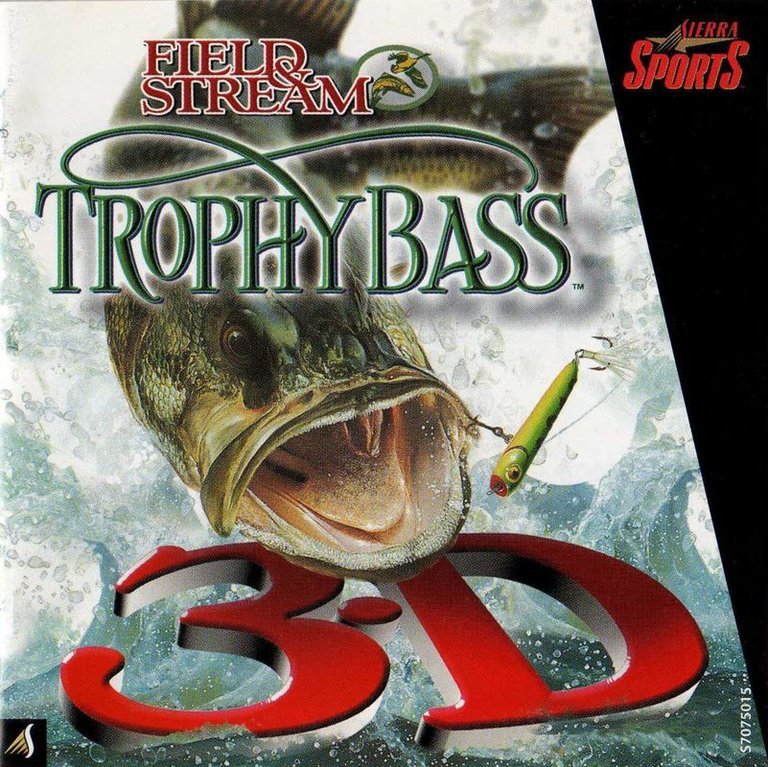
Description
Field & Stream: Trophy Bass 3D is a realistic fishing simulation set on famous lakes across North America, where players pilot bass boats through detailed 3D environments, scouting ideal spots and weather conditions to catch bass and other species using hundreds of tackle, rod, reel, lure, and bait combinations, while competing in single-player and multiplayer tournaments for the heaviest five-fish totals, enhanced by pro bassmaster video tutorials.
Gameplay Videos
Field & Stream: Trophy Bass 3D Free Download
Field & Stream: Trophy Bass 3D Patches & Updates
Field & Stream: Trophy Bass 3D Reviews & Reception
en.wikipedia.org (70/100): The game received above-average reviews according to the review aggregation website GameRankings.
Field & Stream: Trophy Bass 3D: Review
Introduction
Imagine gliding across the glassy surface of a North American lake at dawn, the mist rising off the water as your bass boat hums softly, rod in hand, waiting for that explosive strike from a lurking largemouth bass. In 1999, Field & Stream: Trophy Bass 3D brought this serene yet exhilarating ritual into the digital realm, elevating fishing simulations from niche curiosities to a pinnacle of immersive realism. As the third installment in the Trophy Bass series—following the groundbreaking originals from 1995 and 1998—this Dynamix-crafted title arrived amid a PC gaming boom dominated by first-person shooters and real-time strategy epics. Yet, it carved its own path, blending hardcore simulation with educational depth. My thesis: Trophy Bass 3D stands as a landmark in sports simulation gaming, not merely for its technical prowess in rendering angling’s subtleties, but for pioneering multiplayer tournaments and pro-level tutorials that bridged virtual hobbyists with real-world experts, cementing its legacy as the gold standard for fishing games of its era.
Development History & Context
Developed by Dynamix, Inc.—a Sierra On-Line subsidiary renowned for flight sims like Red Baron and sports titles in the Front Page Sports line—Field & Stream: Trophy Bass 3D was helmed by director Steven D. Letsom, technical director Richard Rayl, designer Kurt Weber, and art director Mary Ann Fernandes (also credited as Mary Ann O’Leary). The credits list an impressive 202 contributors, including a robust programming team (Bruce Schuldt, Dan Spracklen, Donald Rayl, Gary J. Shannon, and others) specialized in Direct3D rendering (David Lawson) and multiplayer networking (Letsom himself). Art resources were coordinated by Jay Dee Alley and Doug Kelly, with a cadre of artists like James Powell, Damon Mitchell, and Joseph Maruschak crafting the visuals.
Released on June 16, 1999 (per MobyGames; Wikipedia notes a North American street date of July 6), the game emerged during the late-90s PC explosion, where DirectX advancements enabled fluid 3D environments. Hardware constraints—typical 1999 rigs with Pentium II processors, 3D accelerators like Voodoo2 cards, and 64-128MB RAM—demanded optimization, yet Dynamix leveraged Sierra’s publishing muscle (alongside European partner Dice Multi Media) to push boundaries. The gaming landscape was shifting: id Software’s Quake III Arena and Blizzard’s StarCraft expansions ruled multiplayer, but niche sims thrived amid a surge in licensed sports titles (NHL 2000, Madden NFL). Trophy Bass 3D built on predecessors’ 2D foundations, introducing full 3D lakes, dynamic weather, and online play via LAN, modem, or internet—innovative for a sim. Its vision? Democratize professional bass fishing, partnering with Field & Stream magazine for authenticity, amid a cultural boom in outdoor licensing (paralleling Deer Hunter fever). Technological hurdles like fish AI and water physics were met with era-appropriate compromises, but the result set a “new pillar of standard,” as one critic noted.
Narrative & Thematic Deep Dive
Trophy Bass 3D eschews traditional plotting for an emergent narrative rooted in progression and mastery, a hallmark of simulation design. There’s no scripted protagonist or dialogue-heavy cast; instead, you embody an aspiring tournament angler, starting on accessible lakes and ascending through single-player challenges to elite multiplayer derbies. This “career arc” unfolds organically: rack up winning five-fish limits (the tournament standard, emphasizing heaviest catches), unlock prestigious venues like Kentucky Lake or Lake Okeechobee, and invest in superior gear. Regional lore peppers the experience—murky coves teeming with aggressive bass, crystal-clear waters hiding finicky trout—crafting a documentary-like tapestry of American angling heartlands.
Thematically, the game champions realism as education. Integrated video tutorials from “top professional bassmasters” (accessible at marinas or loading screens) dispense real-world wisdom on lure selection, wind reading, and seasonal patterns, blurring virtual and physical pursuits. No overwrought characters or voice-acted banter; the “dialogue” is instructional narration, reinforcing themes of patience, adaptation, and environmental harmony. Fish behave with improved AI, reacting to weather, time-of-day, and bait presentation, underscoring ecology: study currents, cloud cover, and forage to “match the hatch.” Absent melodrama, the narrative thrives on self-driven discovery—your personal best 10-pounder becomes the story—mirroring fishing’s meditative essence. In an era of bombastic RPGs, this minimalist approach innovates, positioning the game as a virtual mentor rather than escapist fantasy.
Gameplay Mechanics & Systems
At its core, Trophy Bass 3D revolves around a meticulously tuned loop: scout, rig, cast, fight, weigh. Piloting your bass boat in third-person view feels responsive—throttle across open water or finesse into shallows, scanning for hotspots via subtle visual cues (ripples, bird activity). The tackle system dazzles with hundreds of combinations: rods/reels by action and line weight, lures (topwater plugs, shaky heads, crankbaits), live baits, and rigs tailored to species (bass, walleye, trout, over 30 total). Realism shines in mechanics—lure action simulates depth/wobble, line stretch demands precise drag management, and hooksets require timing amid fights where fish dive, leap, or run.
Single-player tournaments escalate difficulty: early lakes forgive errors; later ones punish with finicky biters and brutal weather. Multiplayer (Internet/LAN/modem, up to 8 players) crowns victors by aggregate five heaviest fish, fostering strategy over twitch reflexes. UI, mouse-driven, is dense but intuitive post-tutorial—radial menus for quick swaps, depth finders for fish arcs. Innovative systems include dynamic conditions (wind shifts barometric pressure, fog limits visibility) and hardware enhancements (3D acceleration for smoother renders). Flaws? Occasional framerate hitches on complex lakes, steep newbie curve for tackle tweaking, and limited progression beyond unlocks. Yet, the loop’s addictiveness—chasing “just one more cast”—and pro tips elevate it, making victories feel earned.
World-Building, Art & Sound
The game’s world comprises 15 iconic North American lakes, rendered in pioneering 3D with above/below-water views for unparalleled immersion. Atmosphere hinges on dynamic cycles: dawn’s golden light yields to stormy chop, sunsets painting fiery horizons, fog cloaking coves—each altering fish behavior and visuals. Shorelines bustle with detailed vegetation, submerged structure (logs, rocks), and wildlife, fostering a living ecosystem where no outing repeats.
Art direction excels for 1999: crisp boat/angler models animate fluidly (rod bends, line spools), water boasts realistic reflections/ripples via Direct3D wizardry. Fish models scale authentically, thrashing with species-specific flair. Sound design amplifies solitude-to-thrill tension: gentle lapping waves, boat hum, reel drag’s zing crescendo into explosive strikes and roars. Ambient birdsong, wind howls, and pro tutorial voiceovers ground the sim; no bombastic score, just naturalistic immersion. These elements synergize, transforming mechanics into poetry—hooking a trophy at dusk feels transcendent, cementing the game’s atmospheric mastery.
Reception & Legacy
Launch reception was solidly niche-positive. MobyGames aggregates 84% from critics (88% Gaming Entertainment Monthly: “the fishing game companies now have to match”; 80% Adrenaline Vault: “best fishing simulation available… fills its niche expertly”). GameRankings averaged 70%, with CNET Gamecenter (7/10), GamePro, and PC Accelerator (5/10) praising customization but noting accessibility barriers. Player scores hover at 4.2/5 (sparse data). Commercially, it bundled in compilations like Field & Stream: Trophy Buck ‘n Bass 2 (2000) and sold steadily via eBay ($7-15 today), thriving as evergreen abandonware.
Legacy endures in fishing sim evolution: it influenced Trophy Bass 4 (2000), Bass Pro Shops: Trophy Bass series (to 2007), and modern titles like Fishing Planet with multiplayer tournaments and realism. Dynamix’s closure (2000) amid Sierra woes curtailed sequels, but its multiplayer pioneer status and educational bent prefigured Bassmaster franchises. In gaming history, it exemplifies late-90s sim ambition—niche yet influential, preserving angling’s digital torch amid mainstream flash.
Conclusion
Field & Stream: Trophy Bass 3D masterfully distills bass fishing’s zen and strategy into a 3D sim triumph, excelling in customization, atmosphere, and innovation despite UI quibbles and hardware limits. As a historian, I place it firmly in video game canon: a 1999 milestone that professionalized hobbyist sims, educated generations, and outshone ancestors. Verdict: 9/10—essential for sim enthusiasts, a nostalgic gem warranting modern ports. Cast a line; you won’t regret the tug.