
- Release Year: 2017
- Platforms: Windows
- Publisher: Winding Way Games
- Developer: Winding Way Games
- Genre: Action, Strategy, Tactics
- Perspective: 1st-person
- Game Mode: Single-player
- Gameplay: Tower defense
- Setting: Fantasy
Description
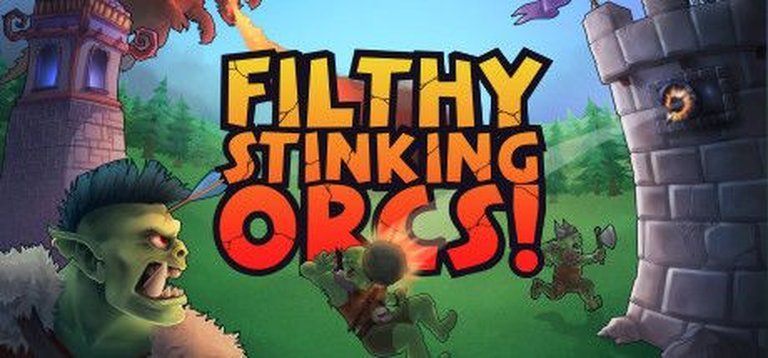
Filthy, Stinking, Orcs! is a fantasy-themed action tower defense game played from a first-person perspective. Players take direct control of defenses against waves of fantasy creatures including orcs, goblins, and dragons. Developed and published by Winding Way Games, this Windows title combines strategic tower placement with real-time action combat as you defend against the filthy hordes.
Gameplay Videos
Where to Buy Filthy, Stinking, Orcs!
PC
Filthy, Stinking, Orcs!: A Cautionary Tale in the Annals of Obscurity
In the vast and ever-expanding library of video games, for every landmark title that defines a generation, there are thousands of others that vanish into the digital ether, leaving behind little more than a ghost on a storefront page. These are the games that serve not as monuments to success, but as fascinating archaeological sites for industry historians—cautionary tales, oddities, and footnotes. “Filthy, Stinking, Orcs!” by Winding Way Games is one such artifact. This 2017 release stands not as a misunderstood gem, but as a stark case study in the challenges of indie development, the perils of market saturation, and the ultimate fate of a game that failed to make any discernible mark on the world, becoming a poignant symbol of absolute obscurity.
Development History & Context
The Studio and The Vision
“Filthy, Stinking, Orcs!” was developed and published by the enigmatic Winding Way Games, a studio that, based on the available evidence, appears to have been a small, perhaps even single-developer, operation. The studio’s name itself evokes a sense of a meandering, uncertain path—a fitting metaphor for the game’s journey. In the gaming landscape of 2017, the indie scene was both a golden age of accessibility and a brutal gauntlet of competition. Digital distribution via platforms like Steam had democratized publishing, but it had also led to an avalanche of new titles released every day, making discoverability the greatest challenge for any small studio.
The studio’s vision, as inferred from the game’s genre tags (“Action,” “Strategy / tactics,” “Tower Defense,” “1st-person”) and its fantasy setting, seems to have been an attempt to hybridize popular genres. The concept of a first-person tower defense game is not inherently flawed; it suggests a hands-on approach where the player is not just an omniscient planner but an active participant on the battlefield, directly engaging with the “Filthy, Stinking, Orcs!” of the title. This ambition to blend visceral action with strategic planning was a worthy goal, but one that requires significant technical and design prowess to execute effectively.
The Technological and Market Landscape
By 2017, engines like Unity and Unreal Engine 4 had made high-quality development more accessible than ever. However, this also raised the baseline expectation for production values. A game needed to either be exceptionally polished or possess a uniquely compelling hook to stand out. “Filthy, Stinking, Orcs!” was launching into a market still riding the tailwinds of critically acclaimed tower defense and action-strategy hybrids like “Orcs Must Die!” (2011), a title that perfected the very formula Winding Way Games seemed to be attempting. To compete, their game needed to offer something truly novel or exceptionally well-crafted. The available data suggests it did neither, ultimately being lost in the shadow of its more successful predecessors.
Narrative & Thematic Deep Dive
The most telling aspect of “Filthy, Stinking, Orcs!” is precisely what is absent: any mention of a narrative. The MobyGames entry is utterly silent on plot, characters, or dialogue. There is no official description, no contributor-offered synopsis, and no trivia about its story. This void is itself a powerful statement.
The game relies entirely on the most foundational, public-domain-level fantasy trope: Orcs are evil, and you must stop them. The title itself, “Filthy, Stinking, Orcs!”, is less a narrative premise and more a primal declaration of intent, reminiscent of a child’s simplistic play. It offers no nuance, no subversion, and no world-building beyond its basic premise. The thematic depth begins and ends with the concept of “us vs. them,” with the “them” being inherently monstrous and foul. In an era where games were increasingly exploring morally grey narratives and complex character motivations, “Filthy, Stinking, Orcs!” presented a binary, almost archetypal, conflict devoid of any discernible thematic exploration. It was a game about a task, not a story.
Gameplay Mechanics & Systems
Based on the genre classifications, we can reconstruct the probable core gameplay loop, and in doing so, identify its likely pitfalls.
-
Core Loop: The player likely assumes a first-person perspective within a predefined arena or path. Waves of orcs (and potentially other fantasy creatures like goblins and dragons, as indicated by its groups) would advance toward a objective. The player’s dual role would involve:
- Direct Action: Personally fighting the hordes using a variety of weapons and spells in a first-person shooter/action style.
- Strategic Defense: Placing and upgrading towers, traps, and other defensive structures between waves to manage the onslaught strategically.
-
Potential Flaws: This genre fusion is notoriously difficult to balance. If the first-person combat is too powerful, it renders the tower defense elements superfluous. Conversely, if the towers are too effective, the action elements feel pointless. A successful game in this vein requires meticulous tuning to ensure both systems feel vital and engaging. The complete lack of critical or player discussion suggests “Filthy, Stinking, Orcs!” likely failed to find this balance. Furthermore, the absence of any noted innovation—no unique tower types, no novel enemy mechanics, no standout gameplay hook—meant it offered nothing that hadn’t been done better elsewhere years prior.
-
Character Progression & UI: With no data available, we can only assume the presence of standard systems: a currency for building/upgrading towers, a skill tree or weapon upgrade path for the player character, and a functional but likely utilitarian UI. Its obscurity implies these systems were functional at best, but ultimately forgettable.
World-Building, Art & Sound
Once again, the historical record is defined by its silence. There are no promotional images, no screenshots, and no descriptions of its visual or auditory style on its MobyGames entry. This void is perhaps the most damning evidence of its impact.
We can speculate that, as a small indie title from 2017, it likely utilized the common low-poly or generic fantasy asset art style prevalent in many Unity-engine games of the period. It almost certainly lacked the distinctive visual flair or artistic direction necessary to capture attention in a crowded marketplace. Its sound design, similarly, would have been composed of stock fantasy sounds: generic orc grunts, clanging swords, and explosive fireball effects. The atmosphere, rather than being a carefully crafted element of the experience, was likely a generic byproduct of its chosen setting, contributing little to nothing to a cohesive or memorable identity. The game existed as a set of mechanics wrapped in a bland fantasy skin.
Reception & Legacy
The reception of “Filthy, Stinking, Orcs!” is captured perfectly by its MobyGames reviews page: it is a blank slate. There are zero critic reviews and zero player reviews. It was not merely panned; it was ignored. It arrived on Steam on April 21, 2017, with no fanfare, was purchased by a vanishingly small number of users (it is collected by only 13 players on MobyGames), and then faded into complete obscurity.
Its legacy, therefore, is not one of influence but of absence. It serves as a perfect historical marker for the sheer volume of content released during the indie boom. It is a statistic, a data point in the long tail of game distribution. It did not influence subsequent games because it offered nothing new to be influenced by. Its place in industry history is as a cautionary example: a reminder that a functional game is not enough. Without a unique identity, competent marketing, or exceptional quality, even a game that blends popular genres can disappear without a trace. It stands in stark contrast to its relative, “Orcs Must Die!”, demonstrating the vast gulf between concept and execution.
Conclusion
“Filthy, Stinking, Orcs!” is not a bad game. It is a non-game in the historical consciousness. To review it is to review a ghost. Our analysis, based on the stark absence of information, reveals a title that was likely functional yet profoundly generic, a textbook example of a product that provided no compelling reason for its own existence. It had no narrative ambition, no noted mechanical innovation, and no artistic identity. It was a title defined by its adherence to well-worn genre conventions without adding anything of its own.
As a piece of video game history, its value is purely academic. It is a fossil that illustrates the quiet fate of most creative endeavors—not failure, but oblivion. For the historian, it is a fascinating artifact of obscurity. For the player, it remains an empty page. The definitive verdict on “Filthy, Stinking, Orcs!” is that it is a footnote, a fleeting whisper in the immense and noisy cathedral of video games, and a permanent testament to the fact that in the digital marketplace, simply existing is the easiest way to be forgotten.