
- Release Year: 2009
- Platforms: PlayStation 3, PlayStation Now, Windows Apps, Windows, Xbox 360
- Publisher: Sony Computer Entertainment Inc., Square Enix Co., Ltd., Square Enix, Inc., Square Enix Limited
- Developer: Square Enix Co., Ltd.
- Genre: Role-playing (RPG)
- Perspective: Behind view
- Game Mode: Single-player
- Gameplay: JRPG
- Setting: Fantasy, Futuristic, Sci-fi
- Average Score: 89/100
Description
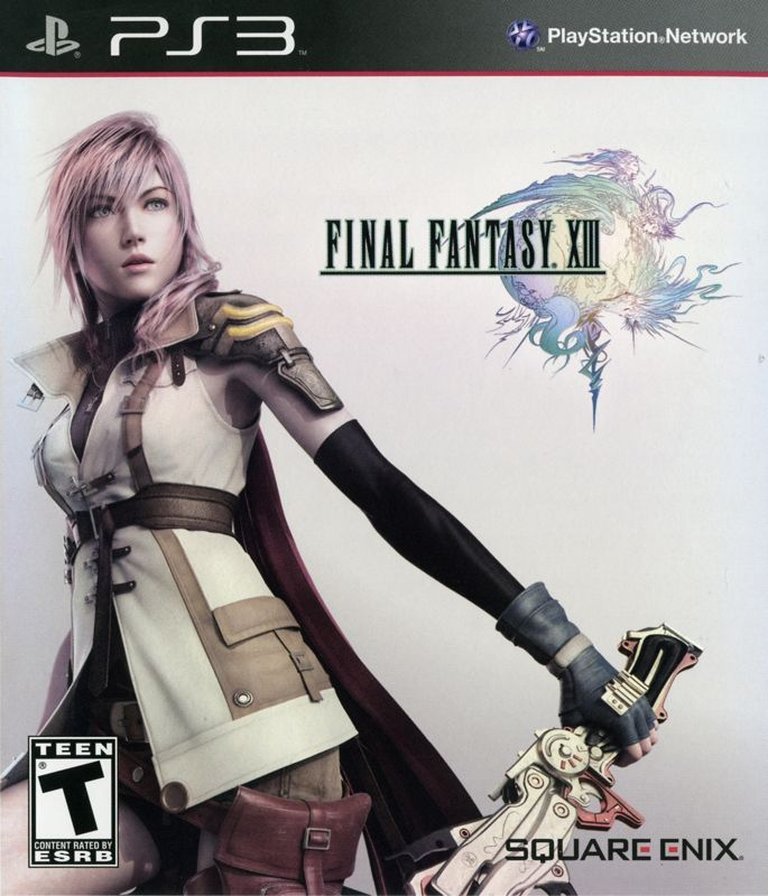
Final Fantasy XIII is set in a sci-fi fantasy world divided between the utopian floating city of Cocoon, built to protect humanity from the dangerous fal’Cie beings on the planet Pulse below. When Lightning, a former soldier, seeks her sister Serah—who has been branded a l’Cie slave by a fal’Cie and turns into crystal with a plea to ‘save Cocoon’—she joins rebel Snow and others, only for the group to become l’Cie themselves, embarking on a quest to uncover their mysterious Focus and defy their fates in this JRPG adventure.
Gameplay Videos
Where to Buy Final Fantasy XIII
PC
Final Fantasy XIII Free Download
Final Fantasy XIII Cracks & Fixes
Final Fantasy XIII Patches & Updates
Final Fantasy XIII Mods
Final Fantasy XIII Guides & Walkthroughs
Final Fantasy XIII Reviews & Reception
metacritic.com (83/100): It probably goes without saying that this is one of the most gorgeous games to grace a video game console.
imdb.com (100/100): I honestly loved this game. It’s beautiful in almost every aspect–the visuals are probably the best visuals in a video game to date, the narrative is amazing, the combat system is nothing short of brilliant.
gamepressure.com (75/100): Mostly Positive
novacrystallis.com (98/100): Unquestionably the highest echelon of event and movie scenes.
Final Fantasy XIII: Review
Introduction
Imagine a world suspended in the heavens, a gleaming utopia called Cocoon, where humanity thrives under the watchful gaze of god-like machines known as fal’Cie—until a single branding shatters the illusion, thrusting ordinary people into a cosmic game of servitude, rebellion, and existential dread. Final Fantasy XIII, released in 2009 for PlayStation 3 and a year later on Xbox 360, stands as a pivotal chapter in Square Enix’s iconic JRPG saga, blending science fiction spectacle with mythological tragedy. As the flagship of the Fabula Nova Crystallis sub-series, it promised to redefine the franchise on next-gen hardware with its Crystal Tools engine, introducing Lightning, a stoic female protagonist who became one of the series’ most enduring icons. Yet, its legacy is one of polarization: a technical triumph that alienated longtime fans with its unapologetic linearity and cinematic ambitions. This review argues that Final Fantasy XIII is a bold, flawed masterpiece—a visually stunning, narratively ambitious experiment that prioritized emotional intimacy and streamlined combat over open-world freedom, ultimately reshaping the series’ trajectory while exposing the tensions between Japanese RPG traditions and Western expectations.
Development History & Context
Final Fantasy XIII‘s development was a Herculean effort spanning five years, beginning in February 2004 under director Motomu Toriyama, producer Yoshinori Kitase, and a massive team of over 1,000 credits, including art director Isamu Kamikokuryo, character designer Tetsuya Nomura, and composer Masashi Hamauzu. Initially codenamed “Colors World” and targeted for PlayStation 2, the project shifted to PS3 in 2005 amid the success of the Final Fantasy VII: Advent Children tech demo, necessitating Square Enix’s new Crystal Tools engine. This multiplatform middleware, shared with titles like Final Fantasy XIV, caused delays as it grappled with HD demands, complex character models, and seamless cutscene-to-gameplay transitions.
Toriyama’s vision drew from scenario conceptor Kazushige Nojima’s “Fabula Nova Crystallis” mythology—fal’Cie as mechanistic deities, l’Cie as branded slaves with cryptic “Foci,” and themes of fate versus free will. Lead writer Daisuke Watanabe fleshed out 13 character-focused chapters, emphasizing interpersonal collisions amid despair. The 2006 E3 reveal trailer, more artistic vision than gameplay prototype, hyped a revolutionary RPG, but internal struggles persisted: battle director Toshiro Tsuchida iterated the Paradigm system post-Advent Children demo to mimic its fluid action, while cuts to towns, minigames, and DLC (enough for “another game,” per Kamikokuryo) streamlined scope amid length concerns.
Launched in Japan’s late-2009 holiday window amid a JRPG landscape dominated by Persona and Tales series, XIII faced high stakes post-Final Fantasy XII‘s gambit system experiment. Technological constraints like PS3’s Cell processor pushed graphical fidelity (real-time facial hair on Sazh remains a highlight), but Xbox 360 ports compromised resolution. Globally, it targeted broader appeal, ditching MP costs and towns for “streamlined” pacing, amid Square Enix’s push into Western markets—yet dev woes, like fabricated E3 demos, foreshadowed criticisms of aimlessness.
Narrative & Thematic Deep Dive
Plot Synopsis and Structure
Final Fantasy XIII‘s tale unfolds across Cocoon, a fal’Cie-maintained utopia floating above the wild, vestige-ridden Gran Pulse. Flashbacks frame the Purge of Bodhum after Pulse fal’Cie Anima brands Serah Farron as an l’Cie, sparking Lightning’s quest. Joined by Snow Villiers (Serah’s fiancé, NORA leader), Sazh Katzroy (pilot mourning his l’Cie son Dajh), Hope Estheim (vengeful teen), and Pulse exiles Vanille and Fang, the party becomes l’Cie, haunted by visions of Ragnarok—their supposed Focus to destroy Orphan, Cocoon’s life-support fal’Cie, dooming billions.
Structured in 13 chapters, each spotlights a protagonist: Lightning’s stoic resolve clashes with Snow’s bravado, Hope’s patricidal rage evolves via mentorship, Sazh grapples paternal loss, while Vanille/Fang withhold War of Transgression secrets (their failed Ragnarok attempt centuries prior). Climax reveals Barthandelus (Primarch Dysley) manipulating events to force Cocoon’s fall, summoning the “Maker.” Vanille and Fang sacrifice as dual Ragnarok, crystallizing Cocoon safely; survivors awaken brandless on Pulse.
Characters: Strengths and Archetypes
Lightning (voiced by Ali Hillis/Maaya Sakamoto) subverts JRPG tropes—a muscular, “frigid bitch” ex-soldier whose “worst birthday ever” quip amid Serah’s tears humanizes her vulnerability. Snow (Troy Baker/Daisuke Ono) embodies cocky heroism masking grief; Sazh (Reno Wilson/Masashi Ebara) offers grounded likability via Chocobo chick antics and suicidal despair. Hope (Vincent Martella/Yūki Kaji) matures from whiny Tidus-clone to resilient ally; Vanille (Georgia van Cuylenburg/Yukari Fukui) annoys with orgasmic moans and faux-naivety, hiding guilt; Fang (Rachel Robinson/Mabuki Andou) exudes rugged Pulse authenticity.
Critics laud interpersonal chemistry—Hope/Snow reconciliation, Lightning’s growth—but decry soap-opera repetition (“Pulse l’Cie,” “save Cocoon”) and contrived twists (Vanille’s accidental catalysis). Datalog exposition frustrates, yet emotional peaks (Sazh’s gun-to-head, Serah’s crystallization) resonate.
Themes: Fate, Sacrifice, and Human Divinity
Thematically, XIII probes predestination: l’Cie as slaves to fal’Cie whims, defying Focus for agency. Cocoon’s Purge mirrors authoritarian fearmongering; Pulse’s ruins evoke hubris. Barthandelus craves annihilation for reunion with the Maker, subverting savior tropes. Critics note metaphysical mumbo-jumbo dissolves promising sci-fi into clichés, but Toriyama’s “characters at mercy of unjust fate” shines in arcs rejecting divine scripts.
Gameplay Mechanics & Systems
Core Loops: Paradigm Shift and ATB Evolution
Battles trigger on-field encounters (à la Xenosaga), ditching XII‘s seamless integration for dedicated screens. The revamped Active Time Battle (ATB) fills slots (expanding 2-6) sans MP—health auto-restores post-fight. Control one leader; AI handles allies via Paradigms: preset role trios (Commando: physical DPS; Ravager: magic stagger; Medic: heals; Synergist: buffs; Saboteur: debuffs; Sentinel: tanks). Shift mid-fight for dynamism—e.g., Relentless Assault (COM/RAV/RAV) builds stagger, then Ruthless Judgment (COM/COM/RAV) exploits.
Stagger mechanic shines: chain gauge fills via Ravager (faster decay post-stagger), enabling 99x damage multipliers, launches, and juggles. Auto-Battle streamlines, but manual queuing rewards strategy. Eidolons (Odin, Shiva) summon for Gestalt Mode finishers; Crystarium spheres (X-inspired) allocate CP to role trees, unlocking passives/stats.
Flaws: AI idiocy (overhealing), paradigm-switch animations risk leader KO (game over if leader falls), forced duo sections (first 20 hours). Linearity: 50%+ straight corridors, no towns/NPCs till Pulse’s Cieth Stone hunts (fetch quests).
Progression, UI, and Innovation
Crystarium offers flexible builds (e.g., hybrid Commager), but unlocks gate progress. UI excels: datalog bestiary, paradigm decks. Innovative yet flawed—speedy chains thrill initially, but auto-reliance dulls depth; no direct ally control hobbles tactics versus XII‘s Gambits.
World-Building, Art & Sound
Cocoon’s sterile spires contrast Pulse’s verdant ruins, evoking American landscapes (photos inspired wilds). No towns yield “lifeless” corridors—pure eye-candy hallways. Art direction dazzles: Nomura’s frilly designs, Amano’s illustrations, Kamikokuryo’s vibrant palettes. PS3 visuals stun (FMVs rival Bayhem); Xbox/PC ports lag (720p, poor PC port: no res options, ESC quits).
Hamauzu’s OST (10 discs) innovates: piano motifs evolve per chapter/character, orchestral swells (Warsaw Philharmonic). Tracks like “Sunleth Waterscape” enchant; lyrics grate (“chasing rainbows”). Voicework polarizes—melodramatic, repetitive—but immerses.
Atmosphere: Claustrophobic rails build tension, Pulse’s openness rewards (briefly).
Reception & Legacy
Launch acclaim (Metacritic: PS3 83/100, Xbox 82/100; Famitsu 39/40) hailed graphics/combat (“genre’s finest,” Edge); MobyGames: 78% critics, 7.3 overall. Sold 1.7M Japan Day 1 (series record), 7M+ consoles by 2017; PC: 746K. Praise: “Magical” (Norrköpings Tidningar 100%), “enchanting 60-hour quest” (CVG 92%). Critiques: “Dreadfully linear” (Unicorn Lynx), “nothing happens” (Lain Crowley), PC port “shoddy” (Hardcore Gamer 2.5/5).
Players divided (Moby 3.4/5): hate “rail-playing,” love character arcs. Evolved rep: “Gets better post-Cocoon” Stockholm; sequels (XIII-2, Lightning Returns) shipped 11M total, Xbox One BC/X-enhanced. Influenced: Paradigm-like shifts in XV, Type-0; spotlighted linearity debates, pushing Square toward hybrids (XVI action-RPG).
Conclusion
Final Fantasy XIII is a double-edged sword: a crystalline showcase of PS3-era ambition, with peerless visuals, pulse-pounding combat, and poignant character drama, yet hamstrung by egregious linearity, AI shortcomings, and narrative bloat that renders it more interactive anime than RPG. It alienated purists craving VI/X‘s freedom but captivated with Lightning’s saga, birthing a trilogy that sold millions. In history, it marks Square Enix’s risky pivot—streamlining for accessibility amid HD pressures—foreshadowing XV‘s sprawl and XVI‘s reinvention. Verdict: Essential for JRPG completists (8/10), skippable for open-world fans; a flawed gem cementing Final Fantasy‘s evolution, not its finale. Play for the spectacle, endure for the heart.