
- Release Year: 2017
- Platforms: Windows
- Publisher: ODBear Studios
- Developer: ODBear Studios
- Genre: Adventure
- Perspective: 1st-person
- Game Mode: Single-player
- Gameplay: Cards, Mini-games, Tiles, Visual novel
- Average Score: 37/100
Description
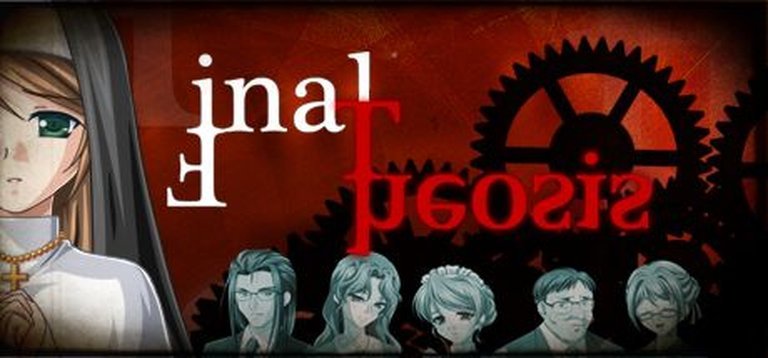
Final Theosis is an anime-style visual novel adventure set in Purgatory, where the player awakens as a newly deceased soul with amnesia about their final day alive, surrounded by other ghosts awaiting judgment. To uncover the truth of their demise and earn passage to Heaven, players help humans on Earth through mini-missions to gain Graces, engage in a collectible card game mini-game, pursue multiple romance routes with diverse love interests, and navigate detective mysteries leading to various endings.
Gameplay Videos
Where to Buy Final Theosis
PC
Final Theosis Reviews & Reception
steambase.io (37/100): Player Score of 37 / 100. This score is calculated from 19 total reviews which give it a rating of Mostly Negative.
Final Theosis: Review
Introduction
Imagine awakening in a spectral limbo, your last mortal memories shattered like fragile stained glass, surrounded by a motley crew of restless souls haggling with eternity itself. This is the haunting premise of Final Theosis, a 2017 visual novel that dares to reimagine Purgatory not as a monotonous waiting room, but as a bustling afterlife hub teeming with mystery, romance, and moral mini-quests. Developed and published by the indie outfit ODBear Studios, this obscure gem emerged during Steam’s visual novel gold rush, blending otome romance tropes with detective intrigue and card-game whimsy. Yet, for all its bold conceptual ambition, Final Theosis stumbles into obscurity, its innovative afterlife mechanics undermined by shallow execution. My thesis: While it carves a unique niche in afterlife narratives, its fragmented systems and underdeveloped storytelling relegate it to a footnote in indie visual novel history—a daring swing that whiffs more than it connects.
Development History & Context
ODBear Studios, a small French indie developer helmed by a passionate but under-resourced team, unleashed Final Theosis on March 24, 2017, exclusively for Windows via Steam at a modest $4.99 price point. This was ODBear’s sophomore effort following Dawn, a prior visual novel that hinted at the studio’s affinity for introspective, choice-driven tales. With no external funding evident and credits sparse (as per MobyGames), the game screams bootstrapped indie: minimalistic system requirements (1GHz processor, integrated graphics), bilingual support (English and French), and Steam extras like achievements and trading cards to boost visibility.
The 2017 gaming landscape was a paradise for visual novels, with Steam’s algorithm favoring cheap, narrative-heavy titles amid the rise of otome games like Hatoful Boyfriend clones and mystery VNs such as Danganronpa. Purgatory-themed stories echoed classics like What Remains of Edith Finch (2017) or earlier experiments in The Cat Lady series, but Final Theosis stood out by fusing romance with Catholic eschatology—Purgatory as a grace-earning grind. Technological constraints? Negligible; Unity-like engines handled anime art and simple menus effortlessly. Yet, ODBear’s vision—to gamify the afterlife with global soul-saving missions and a collectible card game—clashed against the era’s pitfalls: oversaturated Steam market, lack of marketing, and player fatigue with unpolished indies. No patches noted, no sequels; it launched fully formed but unfinished in spirit.
Narrative & Thematic Deep Dive
Final Theosis thrusts players into a first-person fugue as an amnesiac soul in Purgatory, a grand mansion lit by ethereal glows where diverse ghosts—Spaniard Jorge, Russian Nikolai, a nun guide—convene before a heavenly portal. The core mystery: How did you die? Dialogue unfolds in multilingual harmony (everyone understands native tongues), blending detective procedural with theological parable. A nun bestows “powers” (UI shortcuts), tasking you to accrue Graces via Earthly interventions, mingle with souls, and unravel your demise amid romance routes.
Themes probe mortality’s sting: redemption through altruism, love transcending death, tolerance in limbo. Purgatory here is democratized—no fire and brimstone, but a bureaucratic waystation where good deeds buy passage to Heaven, eternal Limbo reveals truths, or limbo lingers indefinitely. Multiple endings hinge on Grace totals and bonds, with 15+ love interests (per otome wikis): males like Benito, Hassan, Jean-Marie, Lasse, Nikolaï, Hanung, T.C.; females including Cassie, Dora, Nanami, Tamara, Hannah, Laureen, Ludivine, Valentina. Gay options abound, promoting “pure love” and peace, yet a Steam review laments heavy-handed preaching.
Plot beats: Initial disorientation escalates to mini-missions (e.g., aid a homeless person—money or meal?), gift exchanges fostering romances, card duels unlocking lore. Dialogues are functional but sparse; characters like Tamara (achievement: “Spend some time with Tamara”) or Jean-Marie evoke archetypes—brooding artist, pious healer—without depth. Twists feel telegraphed: Your death’s truth dangles like bait, resolved in static epilogues. Thematically rich on paper (afterlife bureaucracy satirizes mortality), it falters in prose—stilted lines and rushed arcs compress 3-6 hours of play into superficial catharsis, echoing Dawn‘s intimacy but lacking polish.
Gameplay Mechanics & Systems
At heart a visual novel, Final Theosis layers choice-driven loops atop anime stills and menus. Core cycle: Explore Purgatory mansion (1st-person navigation), chat with souls to build affinity, deploy to Earth for Graces, gift purchases to woo routes, duel in a Collectible Card Game (CCG) mini-game.
-
Grace Farming: Simplest loop—access a list of 8-10 global crises (infinite retries), pick one, choose binary aid (e.g., meal vs. cash). Yields vary, netting currency for shop trinkets. Critics call it “two clicks,” rote padding belying redemption themes.
-
Romance Progression: Invite souls to the “romantic terrace,” gift items, “open your heart” for rare cards. Easy route skips (no replaying prologues) suit VN speedrunners, but abundance of interests dilutes bonds—random picks advised for first playthroughs, frustrating depth-seekers.
-
CCG Mini-Game: Standalone-accessible, cards earned via bonds depict souls/abilities. Turn-based tile-matching? Sources vague, but reviews decry opacity—fun for collectors, baffling otherwise.
UI shines in accessibility: Relationship meters, inventory, shop radial menus; powers integrate narratively (e.g., “discover tricks”). Flaws abound—shallow choices lack replay incentive beyond achievements (25 total, like “Heaven,” “Limbo,” “Rei”). Combat? Absent. Progression feels grindy, not empowering; 3-6 hours fly by, but mini-games disrupt VN flow. Innovative? Yes—afterlife CCG hybrid. Flawed? Profoundly, per player gripes of “boredom and frustration.”
World-Building, Art & Sound
Purgatory manifests as a nocturnal mansion-portal nexus: foggy grounds, grand halls, terrace vistas—anime/manga art renders ghosts in vibrant, ethereal styles (diverse ethnicities nod inclusivity). Stills pop with cel-shaded flair, though low-res textures betray budget. Earth missions flash global vignettes—urban alleys, rural woes—juxtaposing mortal grit against limbo’s serenity, amplifying isolation.
Atmosphere builds via mystery: Visual distortions, multilingual chatter evoke drugged haze (early suspicion). Sound design? Sparse mentions imply ambient whispers, nun chants, card shuffles—no orchestral swells or VAs noted, likely minimalist MIDI or stock. These elements coalesce into a contemplative haze—art evokes Ever17‘s submarine dread, sound underscores existential drift—but repetition erodes immersion. Purgatory feels lived-in yet claustrophobic, mirroring thematic entrapment.
Reception & Legacy
Launch reception: Meteoric invisibility. No MobyGames/Metacritic critic scores; Steam tallies ~19 reviews at 36-42% positive (“Mostly Negative”). A French Steam critique (karakatapakatapa, 2019) encapsulates woes: Engaging opener devolves into “clumsy” mechanics, “frustrating” romances, abrupt endings—”2H of boredom.” Achievements hit 100% on some (Tamara route, Heaven), but 0% on Limbo, signaling drop-off. Collected by 5 Moby users; RAWG logs 6-hour averages, top 2017 casual obscurity.
Commercially? Dormant—$4.99 lingers, no bundles/sales spikes. Legacy: Negligible. No direct successors; ODBear faded post-Dawn/Theosis. Influences otome fringes (gay-inclusive afterlives rare), prefiguring Paradise Killer (2020) mysteries or Card Shark (2022) minis, but too niche. Evolved rep: Cult curiosity for VN historians, meme fodder for “failed ambitious indies.” Steam Deck unplayable; forgotten amid 2017 giants like Nier: Automata.
Conclusion
Final Theosis tantalizes with Purgatory’s untapped potential—a visual novel where death spawns detective romance, grace-grinding, and card soul-binding—yet crumbles under underdeveloped characters, rote mechanics, and narrative haste. ODBear Studios’ vision outpaces execution, birthing a 3-6 hour curiosity marred by frustration. In video game history, it occupies indie limbo: Not a masterpiece like Steins;Gate, nor trash like asset flips, but a bold “what if” eclipsed by better peers. Verdict: 4/10—Skip unless you’re a completionist archaeologist; its theosis remains forever pending.