
- Release Year: 2019
- Platforms: Linux, Macintosh, Windows
- Publisher: BadWolf Games
- Developer: BadWolf Games
- Genre: Strategy, Tactics
- Perspective: Diagonal-down
- Gameplay: Real-time strategy
- Setting: Post-apocalyptic
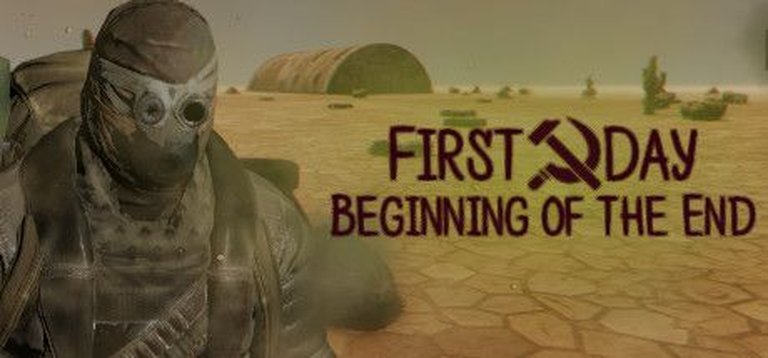
Description
First Day is a real-time strategy game set in a post-apocalyptic world, where players engage in tactical combat and resource management from a diagonal-down perspective. Developed by BadWolf Games and released in 2019, it challenges players to survive and dominate in a harsh, ruined environment through strategic decision-making.
Where to Buy First Day
PC
First Day Reviews & Reception
ign.com : With the end-of-year rush now behind us, we’re looking back at the best games of 2019.
First Day: Review
Introduction: A Ghost in the Machine
In the bustling landscape of 2019, a year dominated by colossal, multi-million-dollar releases and industry-shaping controversies, a quiet, almost spectral game appeared on Steam. First Day, developed and published by the tiny BadWolf Games, represents a fascinating archaeological specimen from the tail end of the 2010s. It is not a game that captured headlines, sold millions, or sparked discourse. It has no Metacritic score, no major critic reviews, and a total of one collector on MobyGames. Yet, its very existence, its specific genre pedigree, and its precise moment of release offer a profound counterpoint to the dominant narratives of that pivotal year. First Day is the game that wasn’t—a minimalist real-time strategy title that launched into an ecosystem wrestling with the failure of a big-budget “Destiny-like” (Anthem), the mixed legacy of a high-profile Sony exclusive (Days Gone), and the inexorable rise of the free-to-play battle royale. This review argues that First Day is significant not for what it is, but for what its obscurity reveals: the stark divide between the AAA blockbuster and the enduring, niche vitality of the classic RTS genre, a genre being quietly preserved by small teams even as the industry’s gaze fixed elsewhere. It is a testament to the fact that the history of video games is not only written by the giants, but also by the steadfast, the obscure, and the forgotten.
Development History & Context: The Last Gasp of a Niche
The Studio and the Vision
BadWolf Games is, for all intents and purposes, a phantom. Beyond the name on the First Day store page, no credits, no developer history, and no public-facing presence exist in the provided materials or easily discoverable records. This suggests a micro-studio, likely a solo developer or a very small team operating on a shoestring budget, possibly as a passion project or a learning exercise. The game’s official description, as barren as the credits, simply lists it as “Post-apocalyptic” and “Real-time strategy (RTS)” with a “Diagonal-down” perspective and “Real-time” pacing. This lack of marketing, narrative blurb, or even a screenshot speaks volumes: this was not a product designed for mass appeal, but an exercise in genre mechanics.
Technological Constraints and the 2019 Landscape
The game was built in Unity, the engine of choice for indies of all scales in 2019, offering accessibility at the cost of graphical fidelity and technical scalability. The “Diagonal-down” perspective is a deliberate callback to the golden age of isometric RTS games like Command & Conquer or Age of Empires II, eschewing the fully 3D, zoomable vistas of its AAA contemporaries. This was a conscious artistic and technical decision, reducing development overhead by focusing on a proven, 2.5D visual style.
The context of its August 2019 release date is crucial. It arrived:
1. After the Anthem crater: BioWare’s sci-fi looter-shooter, a flagship EA title with a decade of hype, had launched in February to disastrous critical and commercial results. Its failure was a stark lesson in the perils of chasing live-service trends without a solid core.
2. After the Days Gone quiet triumph/rejection: Bend Studio’s open-world zombie game had released in April to solid, if mixed, reviews and strong sales (7+ million units). Its subsequent rejection for a sequel by Sony highlighted the precarious position of even successful mid-budget AAA titles.
3. In the shadow of Apex Legends and Fortnite: February 2019 saw the explosive, free-to-play launch of Apex Legends, which by August was a dominant cultural force. The battle royale genre and its lucrative monetization models were the undisputed center of multiplayer gaming’s future.
4. During a year of “reinvention” and shutdowns: BioWare was attempting a Final Fantasy XIV-style reboot of Anthem (announced Feb 2020), while the industry was also seeing the closure of beloved studios.
In this environment, a small team releasing a traditional RTS—a genre that had largely faded from the mainstream consciousness since the late 2000s—was an act of defiance, or perhaps obliviousness. There was no live-service plan, no battle pass, no seasonal narrative. There was only a promise of classic, base-building, unit-managing strategy. Its lack of presence is not just a marketing failure; it’s a symptom of a genre operating on the far periphery of the industry’s collective focus.
Narrative & Thematic Deep Dive: The Silence of the Fallen
Based solely on its genre and title, First Day is almost certainly a game about survival and establishment in a ruined world. The “First Day” implies a genesis: the first attempt to rebuild society, to establish a foothold, to reclaim order from chaos. This is a common and potent theme in post-apocalyptic fiction, from The Last of Us to Fallout. However, in the complete absence of cutscenes, dialogue, character names, or even a plot summary—unlike the richly detailed narratives of Anthem‘s Freelancer vs. Monitor saga or Days Gone‘s Deacon St. John’s quest—we must infer.
The game’s world is presumably a tactical abstraction. The narrative is not told through story but through systemic play. The “story” is the player’s own campaign: the desperate scramble for resources, the tense border skirmishes with AI opponents, the moment a fragile economy tips into a military machine, and the final, decisive push. The theme is pure, unadulterated logistical determinism. Where Anthem wielded the cosmic “Anthem of Creation” and Days Gone wrestled with human factions and personal redemption, First Day’s narrative is the cold mathematics of resource nodes, build times, and unit counters. It is a story written in spreadsheets and battle reports. The “First Day” is the tutorial mission; the “First Day” is the day your first Barracks finishes; the “First Day” is the day you launch your first attack and realize the fragility of your expansion. It is a minimalist narrative about the brutal, incremental process of turning a ruined patch of land into a territory.
Gameplay Mechanics & Systems: A Study in Austerity
As a real-time strategy game, First Day adheres to a now-classic, if dated, formula.
* Core Loop: The fundamental RTS loop—gather resources (likely Scrap, Power, perhaps Food), construct base buildings (Barracks, Factory, Resource Depot), train military units (Infantry,Vehicles), tech up, and annihilate the enemy base. The “Post-apocalyptic” skin likely means replacing sci-fi barracks with makeshift shacks and laser rifles with salvaged firearms.
* Innovation/Flaw: The game’s only potential innovation is its extreme austerity. In an era where RTS games like StarCraft II or Company of Heroes 2 were drowning in abilities, hero units, and complex cover systems, First Day likely strips the genre back to its 1997 (StarCraft) or even 1992 (Dune II) roots. This is both its greatest strength and its fatal flaw. For the cognoscenti, this purity is a breath of fresh air—a focus on macro-management and streamlined tactics. For the average 2019 player, conditioned by MOBAs, hero shooters, and open-world quest markers, it would feel archaic, impenetrable, and visually impoverished.
* UI & Systems: With no screenshots, we can only imagine a UI likely built from Unity’s default widgets, functional but unpolished. The absence of any documented features like a campaign editor, robust mod support, or skirmish options (beyond the most basic) suggests a deeply limited package. The AI would be rudimentary, lacking the competitive ladder infrastructure of Blizzard’s games or the dynamic frontline systems of Total War. The user experience is almost certainly pure, unadorned gameplay, for better or worse.
World-Building, Art & Sound: The Aesthetics of Emptiness
The “Post-apocalyptic” setting is conveyed through what is not seen. There are no lush,SadPunk-inspired vistas like Days Gone‘s Oregon, no gleaming Shaper relics like Anthem‘s Coda. The world is likely a muted palette of browns, greys, and sickly greens, rendered in simple, low-poly models on a static, tiled terrain. Any atmosphere is generated by the sound design: the clatter of construction, the bark of gunfire, the distant, ambient moan of the environment—if such sounds exist at all. The soundtrack, if present, would be stock royalty-free synth or ambient tracks, utterly forgettable.
The art style is defined by its * budgetary constraints. It is the visual language of the asset store and the freelance artist’s portfolio. This creates a strange, paradoxically authentic “late-indie-2010s” aesthetic that is more historically interesting for its limitations than for its beauty. It represents a strand of game development utterly disconnected from the photorealistic ambitions of *Anthem (which pushed Frostbite to its breaking point) or the meticulously crafted, cinematic world of Days Gone. Its contribution to the overall experience is one of **immediacy and abstraction. You are not immersed in a world; you are managing a map. The “atmosphere” is purely mechanical.
Reception & Legacy: The Sound of One Hand Clapping
First Day exists in a state of complete historical nullity. There are no critic reviews on MobyGames; the “Be the first to add a critic review” button remains unpressed. There are no player reviews. It has been collected by a single account. It did not chart in the UK, Japan, or North America. It is not mentioned in any sales reports, award lists, or post-mortems. It is data noise.
Its legacy is none. It influenced no one. It was not the subject of a critical reappraisal. It was not preserved. It is, for all practical purposes, lost media already—available on Steam but having existed in a cultural vacuum. It represents the vast, silent majority of games released every year: the ones that slip through the cracks without a ripple.
However, its place in the broader history of 2019 is as a poignant footnote. It is the antithesis of the year’s major stories:
* While Anthem crashed and burned trying to be a live-service phenomenon, First Day was a pure, dead-catalog RTS with no live elements whatsoever.
* While Days Gone was rejected for a sequel despite strong sales, First Day’s commercial account was never even opened.
* While the industry debated monetization, crunch, and AAA scale, First Day was a throwback to a simpler, if more commercially perilous, time.
It is a monument to the decline of the mid-tier AA RTS. The genre that once birthed Warcraft III and Command & Conquer: Generals was now the domain of teams like BadWolf Games, releasing into an ecosystem that had no built-in audience for their product. It is a ghost of a genre, haunting the digital storefronts.
Conclusion: The Historical Value of the Invisible
What is the final verdict on First Day? As a game to be played, it is almost certainly a flawed, dated, and aesthetically barren experience by 2019 standards. Its systems, while pure, would suffer from a lack of polish, balance, and content that would be immediately apparent to anyone who had played a modern strategy title. It would not stand up to scrutiny.
But as a historical artifact, it is invaluable—if we can rescue it from oblivion. First Day is a perfect snapshot of a specific moment: the moment when the RTS genre, abandoned by major publishers, persisted solely in the hands of dedicated, small-scale developers. It is evidence that even in a year defined by the spectacular failures and evolutions of BioWare and the uncertain fate of Bend Studio, the foundational genres of the ’90s were still being quietly, desperately cultivated in the dark.
Its significance lies in its very obscurity. It is the counter-narrative to the “2019: Year of the Looter Shooter” or “Year of the Sony Exclusive.” It reminds us that the history of our medium is not just the history of sequels, reboots, and billion-dollar bets. It is also the history of the obscure, the niche, and the forgotten—the games that were someone’s first day in the industry, someone’s passion project, someone’s valiant, unsung attempt to keep a flame alive. First Day did not change the world. But its quiet existence in the vast archive of 2019 tells us more about the true, unvarnished state of game development than any AAA title’s press kit ever could. It is a monument to the fact that most games are not landmarks; they are stepping stones, unseen by all but their creators, and ultimately, the historians who dig them up.