
- Release Year: 2022
- Platforms: Macintosh, Nintendo Switch, PlayStation 5, Windows
- Publisher: Boomzap Inc, Ocean Media d.o.o.
- Developer: Boomzap Inc
- Genre: Puzzle
- Perspective: Fixed / flip-screen
- Game Mode: Single-player
- Gameplay: Hidden object, Point and select
Description
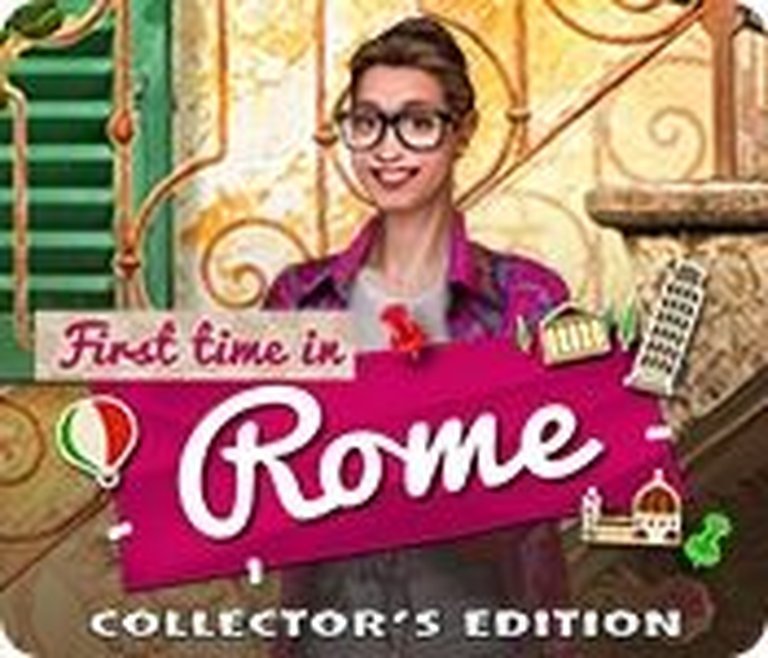
Join Kate Robinson and her daughter Nicole on an exciting adventure in Rome, the beautiful capital of Italy, where Kate is working on a tourism agency assignment amidst exploring the city’s iconic landmarks and hidden secrets. This Hidden-Object Puzzle Adventure game challenges players to balance work and exploration through immersive scenes, clever puzzles, and hidden object gameplay, with the Collector’s Edition offering bonus chapters, unlimited replay mode, and achievements for an extended experience.
Gameplay Videos
Where to Buy First Time in Rome (Collector’s Edition)
PC
First Time in Rome (Collector’s Edition) Guides & Walkthroughs
First Time in Rome (Collector’s Edition): Review
Introduction
In the crowded landscape of casual gaming, few franchises capture the essence of “cozy” adventure quite like the First Time In… series. First Time in Rome (Collector’s Edition), released by Boomzap Inc. in 2022, continues the tradition of blending tranquil exploration with engaging puzzles, transporting players to the eternal city through meticulously crafted hidden-object scenes and light narrative. This installment follows Kate Robinson and her daughter Nicole as they navigate Rome’s cobblestone streets, balancing professional assignments with familial bonding. Though it doesn’t reinvent the hidden-object puzzle adventure (HOPA) genre, its Collector’s Edition content and polished execution elevate it to a standout experience for fans of the form. This review dissects Rome’s historical context, narrative depth, mechanical design, and lasting legacy to argue that it’s a quintessential entry in the genre—charming, accessible, and thoughtfully constructed.
Development History & Context
Boomzap Inc., a studio with a decade-long focus on casual and puzzle games, developed First Time in Rome as part of its established First Time In… series. Prior entries like First Time in Paris (2022) demonstrated the studio’s formula: low-pressure storytelling paired with vibrant, location-based HOPA gameplay. Released initially on Windows (August 27, 2022) and swiftly ported to Macintosh, Nintendo Switch (November 10, 2022), and PlayStation 5 (2023), the game targeted browsers of Nintendo’s eShop and PC gaming storefronts like Steam and Big Fish Games.
Technologically, the game leverages Unity, allowing for clean, scalable visuals across platforms. Its development coincided with a surge in mobile-to-console ports, as publishers like Ocean Media d.o.o. sought to expand HOPA’s reach beyond traditional PC audiences. The Collector’s Edition—a staple of the genre—was baked into the core release, offering bonus content to justify a premium price point ($11.99–$14.99). This strategy reflected the HOPA market’s reliance on repeatable content and player retention, a stark contrast to the AAA blockbusters crowding 2022’s release calendar.
Narrative & Thematic Deep Dive
The plot centers on Kate Robinson, an amateur travel blogger hired by Rome’s tourism agency to document the city’s “true beauty.” Joined by her daughter Nicole, she must juggle her professional duties with motherly affection, all while uncovering secrets hidden beneath Rome’s postcard-perfect exterior. The narrative leans into juxtapositions: ancient history versus modern tourism, work-life balance, and the idea that “beauty” lies in overlooked details.
Characters are deliberately archetypal—Kate is the nurturing professional, Nicole the wide-eyed child—making them relatable yet uncomplicated. Their dynamic provides emotional grounding: Nicole’s exclamations (“Mom, look at the Colosseum!”) humanize Kate’s task-driven journey. Dialogue is functional, prioritizing clarity over profundity, but it succeeds in framing the puzzles. For instance, Nicole’s request for gelato becomes a hidden-object hunt for ingredients, seamlessly integrating gameplay with story.
Thematically, the game explores tourism’s duality. While Rome’s landmarks (Trevi Fountain, Pantheon) serve as backdrops for HOPA scenes, the narrative subtly critiques superficial sightseeing. Kate’s “assignment” evolves from a checklist of attractions to a deeper appreciation for local culture, a nod to the idea that travel should be immersive, not transactional. Though never overtly political, this gentle critique adds a layer of maturity to what could have been a purely escapist experience.
Gameplay Mechanics & Systems
As an HOPA game, First Time in Rome revolves around two core loops: hidden-object scenes and minigames.
- Hidden-Object Scenes: Environments like a bustling café or a Vatican archive are cluttered with dozens of items, often grouped by theme (e.g., “Roman artifacts”). The “find list” includes objects camouflaged in plain sight—a chipped amphora tucked behind a fresco—or contextual clues (e.g., “things Nicole might play with”). The game avoids pixel-hunting by using clear visual contrasts and a hint system that subtly highlights areas.
- Minigames: Over 30 minigames break up the HOPA monotony. These include logic puzzles (rearranging mosaics), pattern-matching games (matching Roman coins), and dexterity challenges (stacking olives). While not revolutionary, they’re varied enough to prevent repetition. The “Unlimited Mode” in the Collector’s Edition lets players replay these scenes, extending replayability.
Character progression is light: players collect “achievements” for completing scenes and chapters, unlocking wallpapers and the soundtrack. The UI is minimalist, with a clean inventory system and interactive hotspots marked by subtle shimmer effects. The fixed/flip-screen navigation suits the game’s leisurely pace, though some players might crave more seamless exploration.
Flaws are minor: a few minigames feel filler-like, and the narrative’s coziness occasionally borders on saccharine. Yet these quibbles are mitigated by the game’s accessibility—ideal for newcomers to HOPAs or players seeking stress-free gameplay.
World-Building, Art & Sound
Rome’s ambiance is the game’s true protagonist. Boomzap Inc. renders the city with reverence, marrying historical accuracy with artistic flair. Landmarks like the Colosseum and St. Peter’s Basilica are recognizable but stylized, bathed in the warm, golden light of an eternal afternoon. The art direction prioritizes vibrancy: cobalt skies, terracotta rooftops, and lush gardens create a living postcard.
Sound design reinforces this tranquility. The soundtrack features light, melodic compositions blending classical and folk influences, with mandolin and accordion evoking Mediterranean charm. Ambient sounds—church bells, distant fountains, chatter in Italian piazzas—immerse players without overwhelming them. Voice acting is serviceable, if unremarkable, with Kate’s narration providing gentle guidance.
The world-building excels in细节 (detail). Hidden-object scenes include period-specific items (chariots, scrolls), while minigames incorporate Roman mythology (e.g., reconstructing Hercules’ labors). This commitment to authenticity transforms Rome from a backdrop into a character, enriching the player’s connection to the setting.
Reception & Legacy
At launch, First Time in Rome enjoyed modest commercial success, particularly on Nintendo Switch, where its cozy aesthetic aligned with the console’s family-friendly image. Though no major critics reviewed it, player feedback on platforms like GameFAQs and Big Fish Games praised its polished visuals and relaxing tone. The Collector’s Edition was lauded for its bonus content, which added 2–3 hours of gameplay beyond the main story.
Its legacy lies in refining HOPA conventions. By blending tourism-themed storytelling with accessible puzzles, it set a benchmark for location-based casual games. The First Time In… series, including 2024’s First Time in Paris (Collector’s Edition), continues this approach, proving that there’s a steady market for low-stakes, culturally immersive adventures. While it won’t be remembered for innovation, it solidified Boomzap Inc.’s reputation as a reliable purveyor of quality HOPAs.
Conclusion
First Time in Rome (Collector’s Edition) is a masterclass in genre craftsmanship. It doesn’t aspire to revolutionize gaming but instead perfects the HOPA formula—a blend of serene exploration, clever puzzles, and heartfelt storytelling. Its portrayal of Rome is both a love letter to the city and a gentle meditation on travel’s deeper rewards. The Collector’s Edition’s bonus chapters and replayable modes ensure longevity, making it a worthwhile investment for series veterans and newcomers alike.
In an industry obsessed with epic scale, First Time in Rome champions intimacy. It reminds us that sometimes, the most memorable journeys aren’t about slaying dragons, but about savoring a moment—whether it’s finding a lost coin in the Trevi Fountain or sharing gelata with a daughter. For this, it earns its place as a standout in the casual canon: a game that’s as comforting as it charming.