
- Release Year: 2014
- Platforms: Android, iPad, iPhone, Nintendo Switch, PlayStation 4, Windows Apps, Windows Phone, Windows, Xbox One
- Publisher: Clickteam SARL, Scottgames, LLC
- Developer: Scottgames, LLC
- Genre: Adventure, Horror
- Perspective: 1st-person
- Game Mode: Single-player
- Gameplay: Disguise, Light management, Surveillance, Survival
- Setting: Pizzeria
- Average Score: 40/100
Description
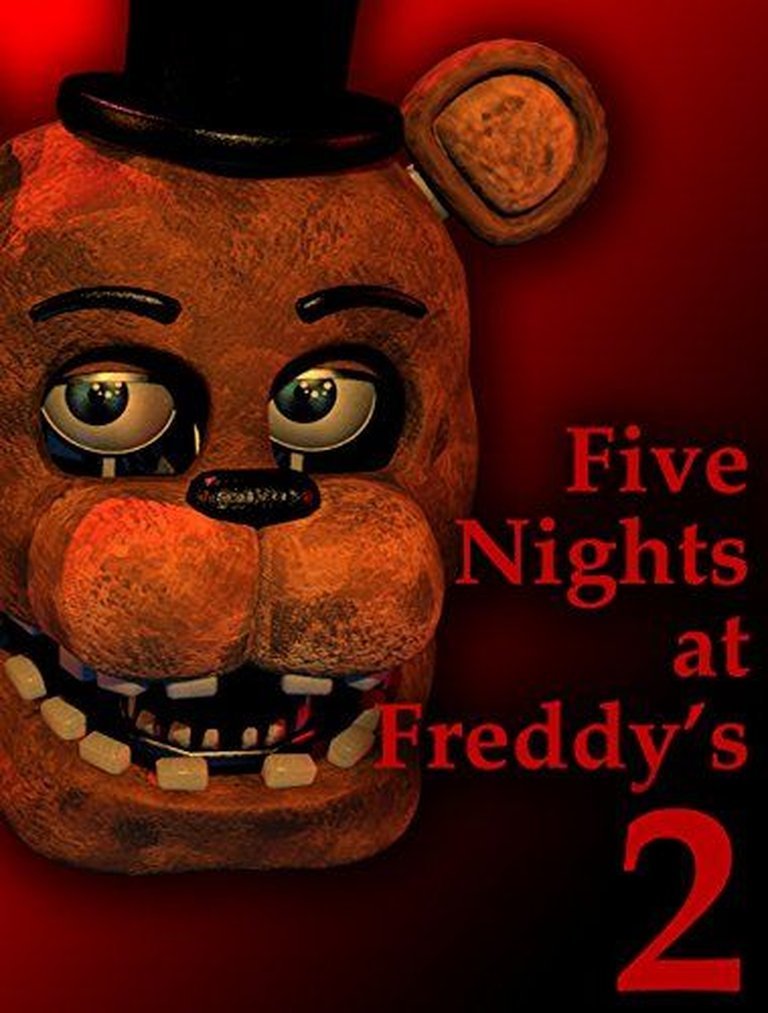
In ‘Five Nights at Freddy’s 2’, players assume the role of Jeremy Fitzgerald, a night security guard at the revamped Freddy Fazbear’s Pizza. Tasked with surviving five terrifying nights, players must monitor a cast of malfunctioning animatronic characters through security cameras while fending them off with a flashlight and a hollow Freddy mask. Unlike its predecessor, the game removes doors and hall lights, intensifying the suspense as players defend a single entry point to their office. Set in a dark, eerie pizzeria, this sequel ramps up the horror with new animatronics, jump scares, and a nerve-wracking soundtrack.
Gameplay Videos
Where to Buy Five Nights at Freddy’s 2
PC
Five Nights at Freddy’s 2 Free Download
Five Nights at Freddy’s 2 Mods
Five Nights at Freddy’s 2 Guides & Walkthroughs
Five Nights at Freddy’s 2 Reviews & Reception
rottentomatoes.com (16/100): offers up pretty much the same gateway horror de
screenrant.com (88/100): has earned a high score with audiences on Rotten Tomatoes as the horror video game adaptation’s critic score sinks to 11%.
ign.com (30/100): Five Nights at Freddy’s 2 gives sequels, video game adaptations, and gateway horror movies a bad name.
metacritic.com (26/100): has a more involved story, but also features more engaged filmmaking throughout, with more camera setups and visual brio.
Five Nights at Freddy’s 2 Cheats & Codes
PC
Enter codes at the main menu or during gameplay as specified.
| Code | Effect |
|---|---|
| C + D + 1 | Unlock Night 6 and a star at the main menu |
| C + D + 2 | Unlock Custom Night (Night 7) and a second star |
| C + D + [Keypad Plus] (while highlighting Toy Freddy’s nose on the poster) | Skip the current night instantly |
| Left Mouse Button + C + D + [Keypad Plus] (while highlighting Freddy’s nose) | Immediately complete the current night |
Android (with wired keyboard)
Start the game with a wired keyboard. Tap and hold Toy Freddy’s nose (on the poster), then type the code.
| Code | Effect |
|---|---|
| C D + | Skip the current night and see the 6 AM screen |
iOS (iPhone/iPad, with wired keyboard)
Use a wired keyboard. Tap and hold Toy Freddy’s nose (on the poster), then type the code.
| Code | Effect |
|---|---|
| C D + | Skip the current night and see the 6 AM screen |
Five Nights at Freddy’s 2: Reassessing the Nightmare
Introduction: A Deeper Descent into Digital Horror
When Five Nights at Freddy’s 2 (FNAF 2) launched in November 2014—mere months after its predecessor—it defied conventional sequel logic. Rather than refining the original’s minimalist formula, Scott Cawthon doubled down on chaos, stripping away defensive tools like security doors and flooding the player’s attention with amplified threats. This bold pivot polarized critics but catalyzed the franchise’s transformation from a viral jumpscare simulator to a labyrinthine horror epic. As both a direct sequel and a canonical prequel, FNAF 2 deepened the mythos of Freddy Fazbear’s Pizza while exposing the toxic legacy of its creator, William Afton. Our analysis reveals how Cawthon’s design gambles, born from necessity and creative ambition, forged a flawed yet foundational pillar of modern indie horror.
Development History & Context: Speed, Constraints, and Vision
Studio & Creator’s Vision
Developed solely by Scott Cawthon under his ScottGames banner, FNAF 2 was engineered in just three months using Clickteam Fusion 2.5, the same engine as its predecessor. Facing relentless demand after the first game’s surprise success, Cawthon opted against iterative refinement. Instead, he reimagined the series as a prequel, retrofitting lore while escalating mechanical complexity. This decision reflected both pragmatism (reusing assets like camera feeds) and ambition—Cawthon sought to expand the narrative scope hinted at in FNAF 1’s cryptic newspaper clippings and phone calls.
Technological & Creative Constraints
Hardware limitations shaped FNAF 2’s design. Clickteam Fusion’s 2D framework restricted environmental interactivity, necessitating a static office perspective. To compensate, Cawthon introduced multi-layered systems: a Freddy Fazbear mask for evasion, a flashlight for limited visibility, and a music box requiring constant vigilance. The absence of doors—a key defensive tool in FNAF 1—forced players into frantic multitasking, heightening vulnerability.
The 2014 Gaming Landscape
FNAF 2 arrived during an indie horror renaissance, with Slender: The Eight Pages (2012) and Amnesia: The Dark Descent (2010) popularizing atmospheric, resource-managed terror. Yet FNAF 2 defied trends by doubling down on artificial constraint. Its fixed camera feeds evoked early ’90s PC point-and-click adventures, while its real-time systems predated the “multi-tasking horror” later seen in Phasmophobia (2020). The game’s $8 price point and Steam Greenlight campaign leveraged accessibility, ensuring instant reach to YouTubers and lore hunters.
Narrative & Thematic Deep Dive: Tragedy Before the Tragedy
Plot Structure & Chronology
Set in 1987 at a “new and improved” Freddy Fazbear’s Pizza, FNAF 2 follows Jeremy Fitzgerald, a night guard besieged by animatronics retrofitted with criminal-database facial recognition. Phone Guy calls reveal the restaurant’s sinister backdrop: the original animatronics, now dilapidated “Withered” models, are kept for parts, while the shiny Toy variants malfunction, mistaking adults for threats. Newspaper clippings and minigames later confirm this location’s ties to the “Missing Children Incident,” where William Afton (the “Purple Guy”) murdered five kids—an event foreshadowed via 8-bit vignettes.
Characters & Symbolism
– Jeremy Fitzgerald: A blank-slate protagonist whose lobotomy in the “Bite of ’87” (implied to be caused by Toy Chica or Mangle) closes the game’s loop.
– The Puppet (Marionette): A guardian spirit manipulated by Afton, whose music box mechanic symbolizes lost innocence. Its corruption mirrors Charlie Emily’s murder in the Fazbear Frights lore.
– Withered vs. Toy Animatronics: The decaying originals embody unresolved trauma (their endoskeletons harbor dead children’s souls), while the Toys represent corporate hubris—technology failing to contain human evil.
Themes: Surveillance and Exploitation
FNAF 2 critiques capitalist negligence. Fazbear Entertainment’s cost-cutting repurposing of haunted machines as children’s entertainers mirrors real-world corporate cover-ups. The facial recognition software—intended to detect predators like Afton—ironically weaponizes the animatronics against innocents, framing the player as both victim and unwitting accomplice.
Gameplay Mechanics & Systems: Controlled Chaos
Core Loop & Tools
Players juggle three primary systems:
1. Camera Surveillance: Monitoring 11 camera feeds to track animatronic movements.
2. Mask Evasion: Donning a Freddy head to deceive most animatronics—ineffective against Foxy or the Puppet.
3. Music Box Maintenance: Rewinding a music box via cameras to prevent the Puppet’s attack.
The flashlight serves dual purposes: deterring Foxy in the hallway and checking vents for Balloon Boy, who disables the light if ignored.
Innovation & Flaws
– Progression: Nights escalate in difficulty, introducing mechanics like audio lures (Night 2) and vent-sealing (Night 4).
– UI/UX: The tablet-style camera interface immerses players but creates blind spots—Mangle’s ceiling crawl or Withered Bonnie’s vents.
– Critiqued Systems: RNG-heavy animatronic paths (e.g., Toy Bonnie’s erratic behavior) often led to unfair deaths. The music box’s perpetual winding monopolized attention, leaving players vulnerable to other threats.
The Jumpscare Paradox
While FNAF 2’s jumpscares are technically impressive (higher-resolution models than FNAF 1), their frequency diluted tension. PC Gamer noted the shift from “dread” to “desperation,” arguing the sequel prioritized sensory overload over psychological horror.
World-Building, Art & Sound: A Haunted Playground
Visual Design
– Toy Animatronics: Sleak, colorful designs parodying ’80s toy commercials contrast their soulless glowing eyes.
– Withered Models: Exposed endoskeletons, torn fabric, and missing limbs evoke body horror, suggesting decayed innocence.
– Environment: The pizzeria’s cheery posters (“SAFETY FIRST!”) clash with flickering lights and bloodstained props discovered in minigames.
Sound Design
– Diegetic Cues: Footsteps, mechanical whirring, and Balloon Boy’s laughter create auditory tension.
– Musical Leitmotifs: The music box’s twisted lullaby (My Grandfather’s Clock) underscores tragedy, while robotic giggles signal imminent attacks.
Atmospheric Legacy
The static-laced camera feeds and VHS-style minigames (FNAF 2’s “Save Them” sequence) established a lo-fi aesthetic later emulated by Inscryption (2021) and Bendy and the Ink Machine (2017).
Reception & Legacy: Divided Audiences, Enduring Influence
Launch Reception
Critics praised the expanded lore and stress-inducing gameplay but lambasted the difficulty spike. Destructoid (7/10) called it “charming in its own creepy way,” while Nintendo Life (6/10) criticized its “irritating mechanics.” The game holds a 61% aggregate critic score on MobyGames, with complaints about “unpredictable chaining” of animatronic attacks.
Commercial Success
Despite mixed reviews, FNAF 2 sold over 1 million copies in its first month, bolstered by Let’s Play culture. Its $7.99 price and mobile ports (Android/iOS) amplified accessibility.
Cultural Impact
– Lore Expansion: FNAF 2’s minigames introduced Afton’s murders and the Puppet’s backstory, fueling MatPat’s Game Theory deep dives.
– Fan Engagement: Custom Night’s “20 Mode” (unlocking Night 7) rewarded dataminers, fostering community collaboration.
– Industry Ripple Effects: The game’s “multi-threat management” design inspired Security Breach’s hectic sequences and Poppy Playtime’s surveillance mechanics.
Ongoing Legacy
FNAF 2’s reputation has softened post-Pizzeria Simulator (2017), as fans reframed its flaws as intentional commentary on overwhelming trauma. The 2019 console ports introduced new players, while the 2025 film sequel draws from its lore to explore Afton’s origins.
Conclusion: An Imperfect Cornerstone
Five Nights at Freddy’s 2 remains a contentious yet vital entry in horror gaming. Its mechanical overreach and RNG frustrations are undeniable, but its narrative ambition and oppressive atmosphere redefined the franchise’s identity. By trading the first game’s claustrophobic simplicity for sprawling, systemic dread, Cawthon gambled on a vision that would ultimately cement FNAF as a cultural phenomenon. For all its flaws, FNAF 2 is the rotting heart of the series—a testament to how raw ambition, even when imperfect, can reshape an entire genre.
Final Verdict: ★★★☆✩ (3.5/5) — A flawed masterpiece whose ambition outweighs its execution, forever altering indie horror’s DNA.