
Description
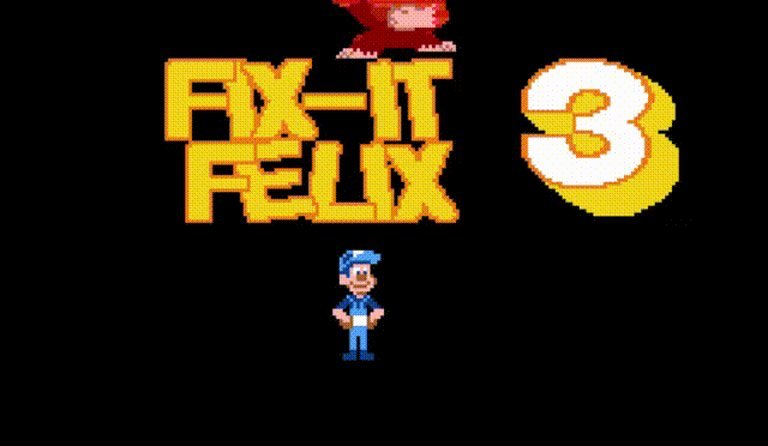
Fix-It Felix 3 is a fan-made arcade action game developed with GameMaker, set in the Wreck-It Ralph universe where players control the hammer-wielding hero Fix-It Felix Jr. in a side-view, fixed/flip-screen environment, repairing the Niceland apartments damaged by Wreck-It Ralph’s destructive antics using his magical golden hammer.
Gameplay Videos
Fix-It Felix 3 Reviews & Reception
forums.arcade-museum.com : Fun little game. It’s pretty easy tho.
Fix-It Felix 3: Review
Introduction
Imagine the golden age of arcades, where pixelated heroes scaled precarious structures amid chaotic destruction—now reimagined through the lens of Disney’s Wreck-It Ralph. Fix-It Felix 3, a 2021 fan-made gem, boldly extends the fictional 1980s arcade legacy of Fix-It Felix Jr. into uncharted territory, blending nostalgic Tobikomi-style platforming with fresh twists on classic destruction-and-repair antics. As a spiritual successor to the movie’s beloved (yet entirely invented) original, this GameMaker-powered indie title doesn’t just pay homage; it resurrects the era’s raw, quarter-munching intensity. My thesis: Fix-It Felix 3 masterfully captures the unforgiving charm of 1980s arcade design, transforming a Disney fantasy into a playable reality that rivals its inspirations like Donkey Kong 3, while cementing its place as a pinnacle of fan-driven preservation in gaming history.
Development History & Context
Developed single-handedly by indie creator Sergio Corras (known online as “sergiostuff”), Fix-It Felix 3 emerged from a passion project rooted in an obsession with Wreck-It Ralph‘s universe. Released on March 11, 2021, for Windows via GitHub (under the repository meyers980/Fix-It-Felix-3), it builds on Sergio’s hobby of crafting authentic 1980s-style arcade games. Explicitly modeled after Nintendo’s Donkey Kong 3—a “Tobikomi” (vertical shooter-platformer hybrid) sequel that shifted from barrel-rolling ladders to pest-spraying defense—this game positions itself as the logical “next step” after the fictional Fix-It Felix Jr. (and its real-world promotional arcade counterpart from 2012).
Sergio utilized GameMaker Studio 2, a modern tool ideal for pixel-perfect retro prototypes, to emulate the era’s technological constraints: a native 224×256 resolution optimized for CRT displays, limited sprite palettes, and fixed/flip-screen visuals. Hardware targets include Nintendo-style cabinets with PC internals, requiring a 4-way joystick, two action buttons, and dual start buttons for 1-2 player modes. Controls are customizable via settings.ini, supporting freeplay or coin-op simulation—practical nods to homebrew arcade enthusiasts.
The 1980s gaming landscape provides perfect context: Donkey Kong 3 (1983) innovated by flipping the script on platformers, with player-controlled Stanley fending off airborne Donkey Kong using a spray gun amid multi-level chaos. Amid the arcade crash recovery, Tobikomi games emphasized tight scoring, escalating difficulty, and character-driven antics. Fix-It Felix 3 channels this, born in a modern era of fan games spurred by Wreck-It Ralph‘s 2012 success, which fictionalized Fix-It Felix Jr. as a Donkey Kong-esque hit. Disney’s limited real releases (a promo arcade cab and mobile ports) left fans hungry; Sergio filled the void, emphasizing it’s a non-commercial fan work unaffiliated with Disney. Added to MobyGames in 2025 by contributor Lampbane, it joins groups like “Wreck-It Ralph / Fix-It Felix fangames,” underscoring its role in a burgeoning homebrew ecosystem.
Narrative & Thematic Deep Dive
Arcade games of the 1980s rarely boasted deep plots, favoring simple hooks via attract screens and escalating challenges. Fix-It Felix 3 adheres faithfully: Wreck-It Ralph menaces yet another high-rise with ropes and brute force, hurling obstacles while Felix races to safeguard it. No cutscenes or dialogue—pure action distilled to its essence—but thematic echoes of Wreck-It Ralph abound. Felix, the “all-around good guy” (per his canonical bio), wields his magical golden hammer not just to repair, but to strategically transport keys to locks, preventing total collapse. Ralph embodies chaotic villainy, a sympathetic brute hardwired for wrecking, mirroring the film’s exploration of role-bound characters yearning for change.
Deeper themes emerge through gameplay loops: redemption via persistence (fix what Ralph wrecks), the hero’s burden (Nicelanders’ praise implied but absent), and arcade life’s quarter-driven grind. Felix’s cheery, kind-hearted persona—from Jack McBrayer’s voicing in the film—infuses the spritework; his window-washing cart evokes everyman heroism akin to Mario’s plumbing roots. Subtle nods to Donkey Kong 3‘s pest-control frenzy recast Ralph as a multi-level menace, thematizing escalation: early levels test basics, later ones demand mastery amid ropes, debris, and time pressure. No explicit story, but the “sequel” framing implies narrative progression—post-Jr., Felix faces evolved threats, embodying resilience. In fan context, it humanizes Ralph’s antagonism, aligning with the movie’s anti-villain arc, while critiquing arcade tropes: players “fix” Ralph’s rampage eternally, looping back to square one.
Gameplay Mechanics & Systems
At its core, Fix-It Felix 3 is a side-view arcade defender, dissecting Donkey Kong 3‘s formula: fixed/flip-screen progression across levels, direct control via joystick for horizontal movement and cart-based vertical scrolling. Felix’s kit includes hammer taps for repairs/invulnerability (via pies?) and key-grabbing to secure locks before Ralph dooms the structure. Primary loop: dodge Ralph’s rope-swinging assaults and thrown hazards, shuttle keys upward/downward, score via efficiency—mirroring 80s high-score chases.
Core Loops & Combat: Ralph climbs via ropes (a twist on DK3‘s pipes), spawning multi-angle threats. Players maneuver Felix’s cart for precise vertical positioning, hammering to counter. Action buttons handle hammer swings and key drops; timing is ruthless, with flip-screens gating progress. Difficulty ramps authentically: early stages teach patterns, later introduce denser ropes and faster Ralph.
Progression & UI: No RPG elements—pure arcade scoring with lives, but DIP-like settings (via ini) tweak coins/lives. UI is minimalist: score, lives, level counters in crisp pixel font; attract mode loops gameplay demo. Flaws? Predictable AI (Ralph’s paths feel scripted, per forum notes), but innovations like key mechanics add puzzle-strategy layers absent in DK3.
Innovations & Flaws: Customizable controls shine for cabs; scales to modern displays without losing CRT authenticity. Minor gripes: no local co-op depth (alternating turns), and GitHub builds demand compilation for non-Windows. Overall, buttery 4-way precision and escalating chaos deliver addictive 80s flowstate.
World-Building, Art & Sound
The game’s world is a single, vertical skyscraper under siege—perpetual night sky framing pixelated urban grit, evoking Fix-It Felix Jr.‘s Niceland apartments. Fixed screens flip upward, revealing layered platforms, ropes, and locks; sprites (Ralph’s bulky menace, Felix’s cap-and-overalls charm) use DK3-authentic palettes, limited to era hardware (e.g., 224×256 begs CRT scanlines).
Visual direction nails 1980s Tobikomi: chunky, expressive animations (Ralph swinging, Felix cart-riding) prioritize readability amid chaos. Atmosphere builds tension—building teeters as locks fail, dust/debris sprites heighten peril—immersing players in arcade urgency.
Sound design elevates: 4-channel chiptunes remix old pop songs (Level 1 hints at earworm classics; Level 4 a melodic standout via Beepbox.co), ditching public domain classics for fresh nostalgia. SFX remaster DK3 staples—boops for jumps, crunches for wrecks—layered with custom beeps. No voice (unlike film’s “I can fix it!”), but punchy feedback reinforces fixes/dodges, crafting an auditory time machine that pulses with 80s energy.
Reception & Legacy
Launched quietly via Sergio’s blog and GitHub, Fix-It Felix 3 lacks formal scores (MobyGames: n/a; no critic/player reviews). Niche acclaim thrives in homebrew circles: Arcade-controls.com and Arcade-Museum forums buzz with cab integrations (e.g., PC kits, MAME compatibility queries); itch.io kin like Fix-It Felix Classic (4.6/5 stars) reflect fan hunger. Commercially free/non-monetized, its “success” is preservation—thousands of downloads, YouTube playthroughs, fueling Wreck-It Ralph fangame boom (e.g., Wreck It vs Fix It, Felix Jumpman).
Reputation evolved from obscurity to cult staple: 2021 release tapped post-Ralph Breaks the Internet nostalgia; 2025 MobyGames entry cements archival status. Influence? Sparked cab recreations (DonPanetta’s kits), inspired authenticity pushes (e.g., 125scratch’s GameMaker 8.2 retro constraints). Industry-wide, it exemplifies fan games bridging fiction/reality—echoing Disney’s promo Jr. cab—revitalizing 80s arcade amid retro resurgence (Evercade, indie chiptune titles). A beacon for Wreck-It Ralph preservation.
Conclusion
Fix-It Felix 3 transcends fangame status, distilling Donkey Kong 3‘s ingenuity into a Wreck-It Ralph sequel that feels ripped from 1983 cabinets. Sergio’s meticulous retro fidelity—authentic visuals, chiptune pop anthems, nail-biting key-hauling—delivers unadulterated arcade bliss, flaws like pattern predictability mere era artifacts. In video game history, it claims a vital niche: proof fans can resurrect fictional classics, influencing homebrew culture and underscoring Wreck-It Ralph‘s enduring arcade love letter. Verdict: Essential for retro enthusiasts—a 9/10 masterpiece of preservation, worthy of any digital collection. Play it, fix it, love it.