
- Release Year: 2023
- Platforms: Windows
- Publisher: X.D. Network Inc.
- Developer: X.D. Network Inc.
- Genre: Action
- Perspective: Side view
- Game Mode: Single-player
- Gameplay: Fighting, Platform
- Setting: Anime, Manga
- Average Score: 79/100
Description
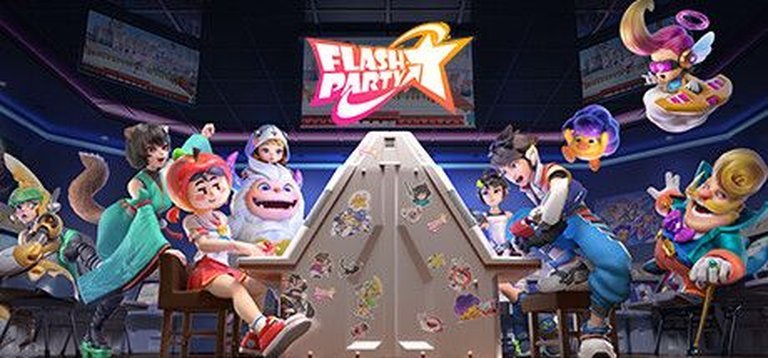
Flash Party is a 2D side-scrolling action game with anime/manga-inspired visuals, blending fighting and platforming mechanics. Developed by X.D. Network Inc. and released in 2023, the game features direct control gameplay and a vibrant, fast-paced environment. Players can expect dynamic combat and platforming challenges, set against a colorful, scrolling backdrop. The game also hints at future expansions, including a potential Roguelike mode, and follows a structured seasonal update cycle with evolving rewards and events.
Gameplay Videos
Where to Buy Flash Party
PC
Flash Party Patches & Updates
Flash Party Mods
Flash Party Guides & Walkthroughs
Flash Party Reviews & Reception
store.steampowered.com (68/100): Flash Party brings another major update: new colorful stickers, weekly free heroes, community event trophy wall… The fun and exciting fighting party continues!
metacritic.com (90/100): Get the Smash-like style of fighting on your mobile with the colourful flair of Flash Party with many quirky creative characters, solid controls, and a lot of rewards to unlock.
steamcommunity.com : From the perspective of someone who has played Smash Bros Ultimate and Melee I think the developers of Flash Party did a good job in recreating what makes smash bros fun.
Flash Party Cheats & Codes
Android
Open the game, go to Settings, select Exchange Code, enter the code, and confirm.
| Code | Effect |
|---|---|
| STARDUSTWARRIORS | Grants in-game rewards and resources |
| NEWBATTLE | Grants in-game rewards and resources |
| NEWSHOP | Grants in-game rewards and resources |
| PARTYPASS | Grants in-game rewards and resources |
| PARTYROYALE | Grants in-game rewards and resources |
iOS
Open the game, go to Settings, select Exchange Code, enter the code, and confirm.
| Code | Effect |
|---|---|
| STARDUSTWARRIORS | Grants in-game rewards and resources |
| NEWBATTLE | Grants in-game rewards and resources |
| NEWSHOP | Grants in-game rewards and resources |
| PARTYPASS | Grants in-game rewards and resources |
| PARTYROYALE | Grants in-game rewards and resources |
Flash Party: A Bold but Flawed Contender in the Platform Fighter Arena
Introduction: The Smash Bros. Challenger That Could (Almost) Be
Flash Party (2023) is a game that wears its influences on its sleeve—specifically, the oversized, neon-lit sleeve of Super Smash Bros. Developed by X.D. Network Inc., this free-to-play platform fighter attempts to carve out its own niche in a genre dominated by Nintendo’s juggernaut. With its vibrant anime-inspired aesthetics, cross-platform play, and a roster of quirky original characters, Flash Party presents itself as a accessible, live-service alternative for players craving Smash-like chaos on PC and mobile.
But does it succeed? Or does it stumble under the weight of its own ambitions, microtransactions, and design quirks? This review dissects Flash Party from every angle—its development, mechanics, narrative (or lack thereof), reception, and legacy—to determine whether it’s a worthy successor, a shameless clone, or something in between.
Development History & Context: The Rise of a Mobile-First Smash Clone
The Studio Behind the Game: X.D. Network Inc.
X.D. Network Inc., a Chinese developer and publisher, is no stranger to the mobile gaming market. Known for titles like Durango: Wild Lands and Taichi Panda, the studio has a history of blending Western gaming trends with Eastern aesthetics. Flash Party is their most ambitious foray into the fighting game genre, explicitly targeting the gap left by Super Smash Bros.’s absence on mobile and PC.
The game began as Stardust Warriors before rebranding to Flash Party in 2023, signaling a shift toward a more party-centric, social experience. The Unity engine powers its 2D scrolling battles, ensuring broad accessibility across platforms.
The Gaming Landscape: A Smash-Shaped Void
When Flash Party launched in January 2023, the platform fighter genre was in an odd state:
– Super Smash Bros. Ultimate (2018) remained the undisputed king, but Nintendo’s reluctance to embrace cross-play or mobile left a void.
– Brawlhalla (2017) had already filled part of that gap with its free-to-play model, but its art style and mechanics leaned more toward casual play.
– MultiVersus (2022) had just imploded after Warner Bros.’ abrupt cancellation, leaving fans of the genre hungry for alternatives.
Flash Party entered this space with a bold proposition: What if Smash, but with anime waifus, microtransactions, and a live-service model?
Technological Constraints & Design Choices
As a mobile-first title, Flash Party had to balance depth with accessibility:
– Touch Controls: The game’s swipe-based combat was designed for smartphones, but PC players found it clunky without a controller.
– Netcode: Early reviews criticized laggy online matches, though later updates improved stability.
– Monetization: The free-to-play model meant progression was gated behind grinding or purchases—a contentious choice for competitive players.
Narrative & Thematic Deep Dive: A Party Without a Plot
The “Story” (Or Lack Thereof)
Flash Party is, at its core, a competitive multiplayer game. There is no traditional narrative—no single-player campaign, no lore-heavy cutscenes. Instead, the game’s “story” is its roster of eccentric fighters, each with a vague backstory hinted at in their designs:
– Tong: A sword-wielding warrior with a samurai aesthetic.
– Alice: A high school girl with an apple for a head (yes, really).
– Mr. 5: A burly, Wario-esque brawler.
– Cupid: A cherubic archer with a mischievous grin.
The game’s theme is simple: a chaotic, colorful battle royale where the only goal is to knock your opponents off the stage. There’s no deeper meaning, no grand conflict—just pure, unadulterated fighting game energy.
Themes: Celebration, Competition, and Consumerism
While Flash Party lacks a traditional narrative, its themes are clear:
1. The Party Aesthetic: Bright colors, upbeat music, and a focus on social play (local multiplayer, team battles) reinforce the idea of gaming as a communal experience.
2. Competitive Spirit: The “Pinnacle Arena” and ranked modes cater to hardcore players, while casual modes keep things light.
3. Live-Service Grind: The game’s monetization model—season passes, gacha-style skin pulls, and character unlocks—turns progression into a marathon of microtransactions.
Gameplay Mechanics & Systems: Smash, But With a Twist
Core Gameplay Loop: Knock ‘Em Off the Stage
Like Smash Bros., Flash Party revolves around percentage-based knockback:
– The higher your opponent’s KO Score (damage percentage), the farther they fly when hit.
– The goal is to launch them off the stage, not deplete a health bar.
Character Classes & Mechanics
The game categorizes fighters into four classes, each with unique mechanics:
1. All-Rounder: Balanced, with a super move charged by attacking in three directions.
2. Assaulter: Combo-focused, with cancelable moves to extend juggles.
3. Power House: Gets stronger as their KO Score rises.
4. Impeder: Gains energy by attacking shields, leading to devastating grabs.
This system adds depth, but some players argue it overcomplicates what should be a simple, pick-up-and-play experience.
Sticker System: Customization with a Catch
A standout feature is the Colorful Sticker system, which lets players modify a character’s moveset. Want a different special attack? Slap on a sticker. This adds replayability but also fragments the meta, as players experiment with unpredictable loadouts.
Game Modes: Variety with Mixed Execution
- 1v1, 2v2, 4-Player Brawl: Standard fare, but online matchmaking can be inconsistent.
- Soccer Mode: A fun diversion where players kick a ball into goals.
- Pinnacle Arena: Ranked modes for competitive players.
- Local Multiplayer: A rare bright spot—great for couch co-op.
UI & Controls: A Mobile Game on PC
The biggest criticism? The controls feel like a mobile port.
– Touchscreen swipe gestures translate poorly to keyboard/mouse.
– Controller support exists but lacks the precision of Smash Bros.
– The camera occasionally loses track of off-screen opponents, a frustrating oversight.
World-Building, Art & Sound: A Visual Feast with a Side of Cacophony
Art Style: Anime Meets Cartoon Chaos
Flash Party’s visuals are its strongest selling point:
– Vibrant, cel-shaded characters with exaggerated proportions (see: Alice’s apple head).
– Detailed stages ranging from neon-lit cities to whimsical fantasy realms.
– Smooth animations that make combat feel dynamic.
However, the inconsistent character designs (some look like Overwatch rejects, others like Genshin Impact cast-offs) weaken the game’s identity.
Sound Design: Hit or Miss
- Music: Upbeat, J-pop-inspired tracks that fit the party theme but lack memorability.
- Voice Acting: Minimal—most characters grunt or shout generic battle cries.
- Sound Effects: Satisfying thwacks and booms during combat, but nothing groundbreaking.
Reception & Legacy: A Mixed Bag of Praise and Backlash
Critical Reception: “A Decent Smash Clone, But…”
- Pocket Gamer (90/100): Praised its accessibility and visuals but noted monetization concerns.
- Multiplayer.it (80/100): Called it a “solid” mobile Smash alternative but criticized its grind.
- Steam Reviews (Mixed, 68% Positive): Players loved the concept but hated the pay-to-win elements.
Commercial Performance: Free-to-Play Success, But at What Cost?
- 1 million+ downloads (per GameRebellion).
- Active player base sustained by seasonal updates.
- Controversy over monetization: The “Stardust Warriors” update introduced paywalled character upgrades, frustrating competitive players.
Legacy: Will It Last?
Flash Party’s future hinges on two factors:
1. Can it escape the “Smash clone” label? Right now, it’s too derivative to stand on its own.
2. Will the live-service model alienate its core audience? If microtransactions keep creeping into gameplay, players may abandon ship.
Conclusion: A Flawed but Fun Party Crasher
Flash Party is not the Smash Bros. killer it aspires to be—but it doesn’t have to be. As a free-to-play alternative, it delivers fast-paced, chaotic fun with a unique art style and decent mechanics. However, its monetization, inconsistent controls, and lack of identity hold it back from greatness.
Final Verdict: 7/10 – “A Solid Contender, But Not the Champion”
- Play it if: You want a free, cross-platform Smash-like with anime flair.
- Skip it if: You hate grind-heavy live-service games or demand precision controls.
Flash Party is a party worth attending—but don’t expect it to outshine the main event.
Final Thought: If X.D. Network refines the controls, tones down monetization, and leans harder into its own identity, Flash Party could evolve into something truly special. For now, it’s a fun but flawed experiment—one that proves the platform fighter genre still has room to grow.