
- Release Year: 2005
- Platforms: Windows
- Publisher: Matrix Games, Ltd.
- Developer: Simulations Canada
- Genre: Simulation, Strategy, Tactics
- Perspective: Top-down
- Game Mode: Single-player
- Gameplay: Air strikes, Artillery, Electronic warfare, Minefields, Scenario editor, Turn-based combat
- Setting: Cold War, Europe
- Average Score: 75/100
Description
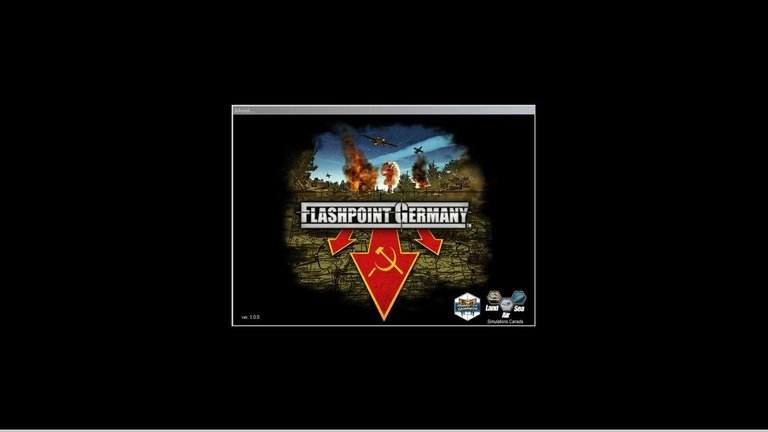
Flashpoint Germany is a turn-based strategy game set at the end of the Cold War, where the Soviet Union invades Germany, igniting World War III between NATO and the Warsaw Pact. Players command regiments or brigades as Soviets, Germans, Brits, or Americans across 17 scenarios, issuing orders every 30 in-game minutes in a top-down view, while managing electronic warfare that risks exposing headquarters, autonomous units, nuclear/chemical weapons, air strikes, artillery, and realistic late-1980s equipment.
Flashpoint Germany Cracks & Fixes
Flashpoint Germany Patches & Updates
Flashpoint Germany Mods
Flashpoint Germany Reviews & Reception
metacritic.com (76/100): Flashpoint’s fresh subject matter, clever approach, and deep strategies make it worth playing.
gamespot.com (77/100): Flashpoint Germany is an excellent and engaging introductory wargame that puts you in the middle of a hypothetical war between NATO and the Warsaw Pact.
forums.matrixgames.com : Inviting graphics, unit presentation, and interface. Easy to play as a beginner, but enough tweaking options to scale realism to almost painful levels.
ign.com (72/100): Old school wargaming in a modern package.
Flashpoint Germany: Review
Introduction
Imagine the iron curtain shattering not with glasnost, but with the thunder of T-72 tanks rolling across the Fulda Gap—a hypothetical World War III where the Soviet Union launches a desperate invasion of West Germany, igniting the Cold War’s ultimate flashpoint. Flashpoint Germany (2005), developed by Simulations Canada and published by Matrix Games, plunges players into this nerve-shredding alternate history as a regimental or brigade commander on either side of the NATO-Warsaw Pact divide. As a professional game journalist and historian, I’ve dissected countless wargames, from the hex-grid behemoths of the 1980s to today’s real-time tactical sims, and Flashpoint Germany stands out as a bold, if imperfect, bridge between rigid traditional wargaming and more approachable modern combat simulations. Its thesis? In an era of bloated RTS spectacles, this turn-based gem delivers the raw tension of high-intensity conventional warfare—complete with nukes, chemicals, and electronic trickery—without micromanaging every platoon, proving that strategic depth can thrive in restraint. It’s the greatest war that never was, simulated with chilling authenticity.
Development History & Context
Simulations Canada, a modest Canadian outfit specializing in tactical wargames, birthed Flashpoint Germany as their ambitious debut under On Target Simulations Inc., positioning it as a “stepping stone” to future titles like the 2015 remake Flashpoint Campaigns: Germany Reforged. Released on January 24, 2005, for Windows (supporting up to 1920×1080), the game emerged from Matrix Games’ ecosystem—a publisher synonymous with deep strategy titles amid the mid-2000s wargaming renaissance. This was the post-Close Combat era, where gamers craved realism beyond pixelated sprites, but PCs grappled with modest specs: 600MHz CPU, 128MB RAM, and DirectX 7. Technological constraints favored turn-based “WEGO” (We Go) mechanics over real-time chaos, echoing classics like Steel Panthers while innovating with 30-minute turns and autonomous units.
The creators’ vision, articulated on On Target’s site, was to capture “the highest intensity and density potential combat in human history—the Central Front of a NATO vs. Warsaw Pact World War III.” Drawing from declassified late-1980s data, they modeled 177 unit types, 195 platforms, and 112 weapons across four nationalities (Soviets, Germans, Brits, Americans). The 2005 gaming landscape was dominated by Call of Duty 2 and Battlefield 2‘s spectacle, but wargamers hungered for what-if Cold War sims like Germany 1985 (1982). Flashpoint Germany filled that void, emphasizing command at a distance—issue orders, then watch the fog of war unfold—amid patches up to v1.13 (2007) that refined AI aggression and multiplayer (PBEM/TCP/IP). Its included editor empowered modders, cementing its cult status in a niche overshadowed by mainstream shooters.
Narrative & Thematic Deep Dive
Flashpoint Germany eschews cinematic cutscenes or branching plots for pure procedural warfare across 17 scenarios and 2 tutorials, framed by a stark premise: the Soviet Union invades West Germany at the Cold War’s zenith, sparking global Armageddon. No named protagonists or dialogue exist; players embody faceless generals commanding regiments/brigades in 20×15 km slices of German countryside. The “narrative” unfolds via objective briefings—e.g., hold the Fulda Gap against overwhelming MiG strikes or punch through NATO lines with chemical barrages—mirroring real doctrinal tensions from REFORGER exercises.
Thematically, it’s a meditation on mutual assured destruction’s razor edge. Scenarios probe the era’s paranoia: electronic warfare betrays your HQ if orders flood the airwaves; nuclear/chemical options tempt but risk escalation; stealthy advances evade prep barrages that could vaporize squads. Units exhibit eerie autonomy—attacking spotted foes, falling back on enemy turf—evoking the fog of command in Tom Clancy’s Red Storm Rising. Themes of fragility permeate: realistic morale, fatigue, and training differentiate Warsaw Pact human-wave tactics from NATO’s precision fire. The Soviets’ blunt regiments contrast NATO’s platoon-level finesse, underscoring ideological chasms. No heroes emerge; victory logs read like grim ledgers—”butcher’s bill too high”—hammering home war’s impersonality. In extreme detail, post-battle reports dissect spotting failures, doctrine mismatches, and EW blunders, turning each defeat into a doctrinal autopsy. This what-if WWIII isn’t glorified; it’s a sober requiem for brinkmanship, where a single airstrike ends your campaign.
Gameplay Mechanics & Systems
At its core, Flashpoint Germany loops through WEGO turns: every 10/20/30 in-game minutes, plot orders (move, fire, entrench) across a 500m-grid map with 8 terrains, rivers, elevations, and dead ground for ambushes. Hit “execute,” and units act autonomously—you watch artillery blooms, air strikes scream in, and combats resolve simultaneously, blending Operational Art of War‘s plotting with Combat Mission‘s execution phase. Innovation shines in electronic warfare: excessive orders spike radio traffic, pinpointing your HQ for enemy bombs—stealth demands restraint, flipping micromanagement on its head.
Core Loops and Combat: Regiments/brigades (Warsaw Pact companies/platoons; NATO platoons/sections) mix historical vehicles/weapons—T-80s vs. Abrams, with morale/fatigue modeled. Combat factors spotting (detailed model with elevation), doctrine (engagement range/proximity), and supports: smoke screens visibility, minefields channel foes, nukes/chemicals devastate but invite reprisal. Autonomy prevents babysitting—units skirmish en route—but flaws emerge: AI lacks “bite” (per Gamers’ Temple), battles resolve slowly.
Progression and UI: No RPG trees; progression is scenario-to-scenario, with 30 setup parameters (e.g., turn length, aggression) and a robust editor for custom maps/scenarios (protectable for sharing). UI earns praise—intuitive for novices (GameSpot), with unit icons, zoomable top-down view, and persistent orders across turns. Flaws: micromanagement limits (positioning over tactics, per Out Of Eight), long resolutions.
Innovative/Flawed Systems:
– EW/HQ Risk: Brilliant risk-reward—overcommand loses wars.
– Autonomy: Frees generals but frustrates control freaks.
– Multiplayer: PBEM shines for async play.
– Drawbacks: Aggressive AI overwhelms unevenly; quick 4-14 hour games end abruptly on casualties.
| Mechanic | Strengths | Weaknesses |
|---|---|---|
| WEGO Turns | Tense plotting/watching; realistic delays | Slow resolutions |
| Supports (Nuke/Chem/Air) | Escalation dread | AI underutilizes |
| Editor | Infinite replayability | Steep for beginners |
| Autonomy | No babysitting | Limits strategies |
Exhaustive yet accessible, it acclimates noobs while challenging vets.
World-Building, Art & Sound
The world is late-1980s Central Europe: 20×15 km maps evoke Fulda Gap authenticity, with rolling hills, forests, villages, and rivers creating tactical “vistas and dead ground.” Elevation variations enable hull-down ambushes; spotting simulates binoculars/radar limits. No overworld—pure battlefield immersion, where mines funnel assaults and smoke cloaks advances.
Visuals are functional: top-down icons (tanks as NATO stars, Soviet crosses) on colorful terrain maps—sober but clear (Gameplay Benelux). 1024×768 support feels dated, yet UI clarity shines. Sound design is minimalist—muffled booms, radio chatter—prioritizing simulation over bombast, enhancing isolation as distant strikes bloom unseen. Atmosphere builds dread: fogged icons tease threats, turning every turn into a recon gamble. Collectively, they forge a gritty, unglamorous WWIII—maps as chessboards of doom, icons as expendable lives.
Reception & Legacy
Launched to solid acclaim (MobyScore 7.3/10, critics 77% avg.), Flashpoint Germany ranked #3,955 on Windows (of 9,281). Armchair General (84%) lauded its “flashes of brilliance” and modern combat taste without micromanagement. GameSpot (77%) hailed its low curve for beginners and “greatest war that never was” fun, despite flaws. Gamers’ Temple (78%) recommended it for vets interested in WWIII what-ifs, critiquing tame AI. Out Of Eight (75%) favored novices, preferring deeper engines like Decisive Battles. Gameplay (72%) praised innovative tactics over “sober” graphics/sound.
Commercially niche, it sold steadily via Matrix’s digital store (discontinued later). Reputation evolved from “promising first-gen” (GameSpot) to “classic PC wargame” (On Target), influencing Flashpoint Campaigns: Germany Reforged—a 2015 overhaul with refined AI/UI. It pioneered accessible platoon-scale modern sims, paving for Command: Modern Operations and Graviteam Tactics, proving WEGO/EW hybrids viable. In wargaming history, it’s a vital Cold War artifact—simulating REFORGER’s ghost.
Conclusion
Flashpoint Germany masterfully distills WWIII’s terror into elegant WEGO loops, blending historical fidelity, EW intrigue, and restrained command into an addictive “what-if.” Flaws—meek AI, resolution waits—pale against innovations for novices and vets alike. As a historian, it enshrines the Cold War’s shadow; as a journalist, it’s a 8/10 benchmark—essential for strategy fans, forever the flashpoint that lit tactical sims’ fuse. Play it, or its reforged heir, and command the war we dodged.