
- Release Year: 2020
- Platforms: Nintendo Switch, PlayStation 4, Windows, Xbox One, Xbox Series
- Publisher: Minimol Games, QUByte Interactive Ltda.
- Developer: Minimol Games
- Genre: Action
- Perspective: Side view
- Game Mode: Single-player
- Gameplay: Platform, Puzzle elements
- Setting: Futuristic, Sci-fi
- Average Score: 75/100
Description
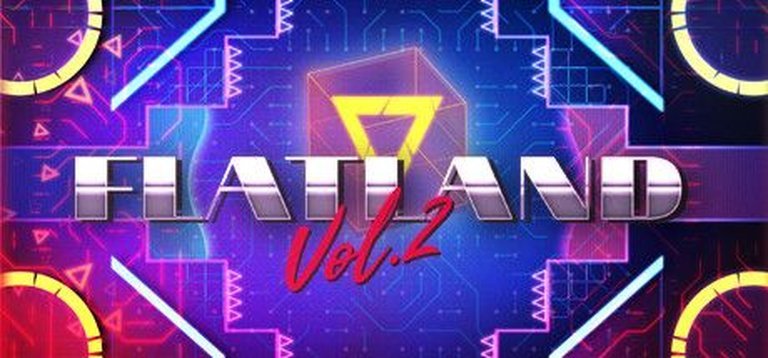
Flatland Vol.2 is a fast-paced, hardcore 2D platformer set in a sci-fi/futuristic world, where players guide the character Square through treacherous, hand-crafted levels filled with obstacles and puzzles. The game emphasizes precision platforming with simple yet deep controls, lightning-fast respawns to maintain momentum, and a variety of collectibles and unlockable modes. Its challenging, high-speed gameplay encourages a ‘run, jump, die, learn, repeat’ approach as players navigate the flooded wells of Flatland.
Gameplay Videos
Where to Buy Flatland Vol.2
PC
Flatland Vol.2 Guides & Walkthroughs
Flatland Vol.2 Reviews & Reception
metacritic.com (86/100): It’s hard, but in that perfectly pitched way that encourages one more go, time and time again.
metacritic.com (70/100): Flatland Vol.2 is a very hard platformer with a lot of depth to it.
opencritic.com (80/100): Flatland Vol. 2 is a surprisingly captivating and competent 2D platformer.
opencritic.com (60/100): Flatland Vol.2 brings enjoyable gameplay through exhilarating challenges.
Flatland Vol.2: A Masterclass in Precision Platforming and Minimalist Design
Introduction: The Evolution of a Hardcore Platformer
Flatland Vol.2 (2020) is not just a sequel—it’s a refinement of the brutal, fast-paced platforming formula introduced in Flatland: Prologue. Developed by Minimol Games and published by QUByte Interactive, this game thrusts players into the role of Square, a geometric protagonist navigating the treacherous flooded wells of Flatland, a world where every misstep is met with instant death and even faster respawns. At its core, Flatland Vol.2 is a love letter to the masochistic charm of precision platformers, drawing clear inspiration from classics like Super Meat Boy and Celeste, while carving its own identity through minimalist aesthetics, punishing difficulty, and a near-flawless feedback loop of failure and mastery.
This review will dissect Flatland Vol.2 in exhaustive detail—from its development roots to its mechanical brilliance, its atmospheric world-building, and its place in the modern indie platforming landscape. By the end, we’ll determine whether it stands as a hidden gem or a niche curiosity in the pantheon of hardcore 2D platformers.
Development History & Context: The Birth of a Hardcore Vision
The Studio Behind the Squares: Minimol Games
Minimol Games, a small but ambitious indie studio, emerged with a singular focus: crafting challenging, fast-paced platformers that prioritize tight controls, instant feedback, and relentless difficulty. Their debut, Flatland: Prologue (2020), served as a proof of concept—a short but brutal introduction to the world of Flatland. Vol.2 expands on this foundation, introducing new mechanics, expanded level design, and additional game modes, all while retaining the series’ signature minimalist art style and punishing gameplay.
The game was developed using GameMaker Studio, a tool favored by indie developers for its accessibility and flexibility. This choice allowed Minimol to iterate rapidly, fine-tuning the physics, hitboxes, and level layouts to near-perfection. The result is a game that feels like a labor of love—a product of countless hours spent refining movement, enemy placement, and the rhythm of death and resurrection.
The Gaming Landscape in 2020: A Renaissance of Precision Platformers
Flatland Vol.2 arrived during a golden age of indie platformers, a period where games like Celeste (2018), The End is Nigh (2017), and Dead Cells (2018) had already redefined what players expected from the genre. The market was saturated with roguelikes, metroidvanias, and narrative-driven platformers, but Flatland Vol.2 carved its niche by stripping away distractions—no story cutscenes, no RPG mechanics, no open-world exploration. Just pure, unadulterated platforming.
This minimalist approach was both a strength and a risk. While games like Celeste balanced difficulty with emotional storytelling, Flatland Vol.2 bet everything on gameplay purity. It’s a game that demands patience, reflexes, and an almost zen-like acceptance of failure—a philosophy that resonates deeply with fans of old-school arcade platformers but may alienate casual players.
Technological Constraints & Design Philosophy
Given its 2D side-scrolling perspective and GameMaker roots, Flatland Vol.2 doesn’t push technical boundaries in the traditional sense. Instead, its innovation lies in level design and player feedback:
– Lightning-fast respawns ensure that death is never frustrating—just a split-second delay before another attempt.
– Tight, responsive controls make every failure feel like the player’s fault, not the game’s.
– Handcrafted levels (as opposed to procedural generation) guarantee that every obstacle is intentionally placed for maximum challenge.
The game’s visual and audio design also reflect its minimalist ethos. There are no flashy particle effects or orchestral scores—just clean geometry, stark colors, and a pulsing electronic soundtrack that keeps the adrenaline pumping.
Narrative & Thematic Deep Dive: The Silence of Square
A Story Told Through Gameplay
Flatland Vol.2 is not a narrative-driven experience. There are no dialogue trees, no lore-heavy cutscenes, no character arcs. Instead, the game’s story is told through its mechanics and environment:
– Square is a silent protagonist, a geometric entity navigating a hostile, abstract world.
– The flooded wells serve as both a physical challenge and a metaphor—a descent into the unknown, where every jump could be your last.
– The lack of traditional storytelling reinforces the game’s arcade roots, harkening back to titles like Donkey Kong or Ghosts ‘n Goblins, where the journey itself was the narrative.
Themes of Perseverance and Mastery
While Flatland Vol.2 may lack explicit storytelling, its themes are universal:
1. The Cycle of Failure and Improvement – The game’s mantra, “Run, jump, die, learn, repeat,” is more than just a tagline—it’s a philosophy. Every death is a lesson, every respawn an opportunity to refine your approach.
2. Precision as a Virtue – In a world where one pixel can mean the difference between success and failure, the game celebrates perfectionism.
3. Minimalism as Immersion – By stripping away distractions, the game forces players to focus entirely on movement and timing, creating a meditative, almost trance-like state during extended play sessions.
The Absence of Dialogue: A Strength or a Weakness?
Some players may criticize Flatland Vol.2 for its lack of narrative depth, but this is a deliberate design choice. The game doesn’t need words—its challenges speak for themselves. The satisfaction of overcoming a seemingly impossible jump is its own reward, and the absence of dialogue ensures that the player’s personal struggle remains the focal point.
Gameplay Mechanics & Systems: The Art of Dying (and Learning)
Core Gameplay Loop: Die, Respawn, Improve
At its heart, Flatland Vol.2 is a precision platformer with a simple but deep control scheme:
– Movement: Square can run, jump, and wall-slide (a crucial mechanic for navigating tight spaces).
– Momentum: Unlike floaty platformers, Flatland emphasizes weighty, deliberate movement—jumps must be timed perfectly, and mid-air adjustments are limited.
– Instant Respawns: Death is not a punishment—it’s a teaching tool. The game wastes no time sending you back to the last checkpoint, ensuring that the flow of play is never broken.
Level Design: A Masterclass in Sadism
The game’s handcrafted levels are where Flatland Vol.2 truly shines. Each stage is a meticulously designed obstacle course, with:
– Moving platforms that require pixel-perfect timing.
– Spikes, saws, and bottomless pits that punish hesitation.
– Enemies that must be avoided or outmaneuvered—no combat, just pure evasion.
– Hidden collectibles that encourage exploration and mastery.
The difficulty curve is steep but fair—early levels ease players in, but by the flooded wells, the game demands frame-perfect execution.
Game Modes & Replayability
Beyond the main campaign, Flatland Vol.2 offers:
– “Faster Than Light” Mode – A speedrunning challenge where levels must be completed in record time.
– “No Hit” Mode – A true test of skill, requiring players to complete levels without taking a single hit.
– Time Trials & Leaderboards – For those who crave competition, the game tracks best times and completion rates.
These modes extend the game’s lifespan, but the core appeal remains the main campaign’s brutal, rewarding progression.
UI & Feedback: Less Is More
The game’s user interface is minimalist to a fault:
– No health bars, no complex menus—just Square, the obstacles, and the timer.
– Death animations are instantaneous, reinforcing the “fail fast, learn faster” philosophy.
– Checkpoints are frequent but not forgiving—each one is a new challenge to conquer.
This lack of clutter ensures that the player’s focus remains on the gameplay, not on stat screens or unnecessary UI elements.
World-Building, Art & Sound: The Aesthetics of Abstraction
Visual Design: Geometry as Atmosphere
Flatland Vol.2 embraces a stark, minimalist art style that feels both retro and modern:
– Square and the environment are rendered in simple shapes—blocks, lines, and gradients.
– The color palette is limited but effective, using high-contrast hues to ensure clarity in movement and obstacles.
– Backgrounds are abstract, often featuring floating geometric patterns that reinforce the game’s otherworldly setting.
This visual simplicity serves a functional purpose—every element is easily distinguishable, ensuring that deaths are never the result of poor visibility.
Sound Design & Music: The Pulse of Precision
The game’s soundtrack is a synth-heavy, electronic pulse that mirrors the gameplay’s intensity:
– Fast-paced beats keep players in the zone, syncing with the rhythm of jumps and respawns.
– Sound effects are sharp and immediate—every jump, every death, every collectible has a distinct audio cue.
– The lack of voice acting reinforces the minimalist ethos, letting the gameplay itself be the star.
Atmosphere: A World of Silent Challenge
Flatland Vol.2 doesn’t need elaborate lore or cinematic set pieces to feel immersive. The abstract, geometric world creates a sense of isolation and focus—it’s just you, Square, and the obstacles. The flooded wells add a subtle narrative layer, suggesting a descent into danger, but the real story is the player’s journey from frustration to mastery.
Reception & Legacy: A Cult Classic in the Making?
Critical Reception: Praise for Precision, Criticism for Repetition
Flatland Vol.2 received generally positive reviews, with critics praising its:
✅ Tight, responsive controls – “A masterclass in precision platforming.” (Xbox Tavern)
✅ Addictive difficulty – “It’s hard, but in that perfectly pitched way that encourages one more go.” (TheXboxHub)
✅ Minimalist charm – “The look, music, and level design have everything to please even the most demanding player.” (Nintendo Blast)
However, some critics noted:
❌ Repetitive level design – “Stages become repetitive with little replay factor.” (Nintendo Blast)
❌ Lack of narrative depth – “Some camera zooming problems and a few pesky bugs stop it from attaining excellency.” (Game Forces PT)
Player Reception: A Divide Between Hardcore and Casual
On Steam, the game holds a Positive (89/100) rating, with players praising its:
✔ Satisfying difficulty curve – “One of the best precision platformers I’ve played in years.”
✔ Fast respawns – “Death doesn’t feel cheap—it feels like a lesson.”
✔ Replayable modes – “Faster Than Light mode is insane in the best way.”
However, some players found it:
❌ Too punishing for casuals – “If you don’t love dying repeatedly, this isn’t for you.”
❌ Lacking in content – “Short but sweet—wish there were more levels.”
Legacy & Influence: A Niche Gem in a Crowded Genre
While Flatland Vol.2 may never reach the mainstream success of Celeste or Hollow Knight, its influence is felt in the indie platforming scene:
– It proves that minimalism can be powerful—not every game needs open worlds or RPG mechanics to be compelling.
– It refines the “die and retry” formula, making failure part of the fun rather than a frustration.
– It inspires other indie devs to focus on pure gameplay over narrative fluff.
Comparisons to Other Platformers
| Game | Similarities | Differences |
|---|---|---|
| Super Meat Boy | Brutal difficulty, fast respawns | Flatland is more abstract, less gory |
| Celeste | Precision platforming, emotional themes | Celeste has a deep story; Flatland is pure gameplay |
| N++ | Minimalist design, hardcore challenge | N++ has more varied mechanics |
| The End is Nigh | Punishing difficulty, retro aesthetics | Flatland is more streamlined |
Conclusion: A Triumph of Minimalist Mastery
Final Verdict: 8.5/10 – A Must-Play for Hardcore Platformer Fans
Flatland Vol.2 is not for everyone. It is unapologetically difficult, stripped of unnecessary fluff, and designed for players who crave challenge above all else. But for those who embrace its philosophy, it is one of the most satisfying precision platformers of the modern era.
Strengths:
✔ Fluid, responsive controls that make every death feel earned.
✔ Brilliantly designed levels that teach through punishment.
✔ Minimalist art and sound that enhance immersion rather than distract.
✔ Multiple game modes that extend replayability.
Weaknesses:
✖ Lack of narrative may deter story-driven players.
✖ Repetitive level themes could have used more variety.
✖ Steep difficulty curve will frustrate casual gamers.
Who Should Play It?
- Fans of Super Meat Boy, Celeste, or N++.
- Players who love mastering tough games through repetition.
- Speedrunners and completionists looking for a new challenge.
Who Should Avoid It?
- Casual gamers who prefer forgiving difficulty.
- Players who need strong narrative or character development.
- Those who dislike abstract, minimalist aesthetics.
Final Thoughts: A Hidden Gem Worth Discovering
In an era where indie platformers often prioritize storytelling or metroidvania exploration, Flatland Vol.2 stands out by doubling down on pure, unfiltered gameplay. It is a testament to the power of simplicity, proving that a square, some spikes, and perfect controls can create an experience as rewarding as any epic adventure.
If you’re ready to embrace the grind, Flatland Vol.2 will test your skills, frustrate your patience, and ultimately reward your perseverance in ways few modern platformers can match.
Verdict: A modern classic for the hardcore platforming faithful. 🎮🔥