
- Release Year: 2021
- Platforms: Android, Linux, Macintosh, Windows
- Publisher: Assemblage Adventures
- Genre: Adventure
- Perspective: 1st-person
- Game Mode: Single-player
- Gameplay: Visual novel
- Setting: Fantasy
Description
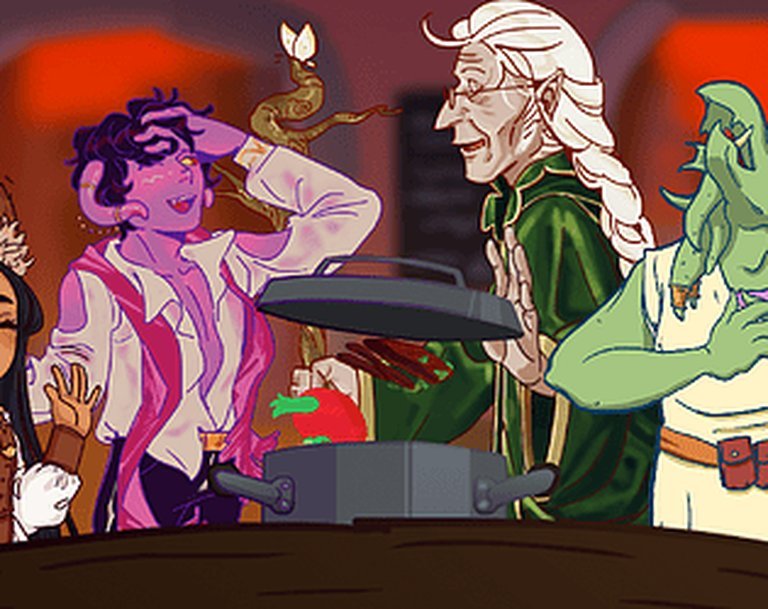
Flavor Savior is a hybrid visual novel cooking game set in a fantasy tavern where players assist four unique patrons in recovering lost recipes and memories from their past. Featuring an anime art style and point-and-click gameplay, the game emphasizes forming connections through restoring forgotten culinary traditions within a whimsical fantasy setting.
Flavor Savior Reviews & Reception
steamcommunity.com : I seek the girsh nephilim, but the lairs of the nephilim remain a closely guarded secret known only to their highest devotees.
Flavor Savior Cheats & Codes
Flavor Savior
Type in following codes in the text box and press ok.
| Code | Effect |
|---|---|
| hungry | (+1 food) |
| starving | (+3 food) |
| picnic | (+10 food) |
| thirsty | (+1 water) |
| dehydrated | (+3 water) |
| watertank | (+10 water) |
| revival | (revives all dead character) (N/A in Demo) |
| babysitter | (adds Leona to party)(N/A in Demo) |
| leader | (adds Isabel to party)(N/A in Demo) |
| hornygirl | (adds Alexandria to party)(N/A in Demo) |
| boxofjoy | (+2 food, +2 water, +2 metal, +2 wood, +2 fabric) |
| orangeherb | (+2 green and pink herb) |
| medikit | (+1 first-aid kit and cure) |
| superhealing | (heals all characters to max health) |
| nosex | (reduces horniness of all characters) |
| amused | (maxed sanity of all characters) |
| boost | (+3 enhancement serum) |
| powergirl | (+10 enhancement serum) |
| vaccinated | (cures infection of all characters) |
| outoftime | (-10 days)(N/A in Demo) |
| blacksmith | (naked Isabel) |
| farmer | (naked Leona)(N/A in Demo) |
| mechanic | (naked Alexandria)(N/A in Demo) |
Flavor Savior: Review
Introduction
In the crowded landscape of independent game development, few titles manage to carve a distinct identity through sheer thematic ambition alone. Flavor Savior, a name shared by two remarkably distinct projects, embodies this rarity. One is a Global Game Jam 2021 creation—a poignant visual novel centered on culinary nostalgia and human connection. The other is a polished student RPG that weaponizes cooking mechanics in turn-based combat. While both games coexist under the same title, their divergent visions reflect the multifaceted nature of indie innovation. This review will dissect both iterations, arguing that the Global Game Jam visual novel, despite its humble origins, stands as a masterclass in emotional economy and thematic resonance, while the student RPG serves as a promising albeit flawed proof-of-concept. Together, they illustrate how the “savior” metaphor can manifest as either intimate healing or grand heroism.
Development History & Context
The Global Game Jam Vision
Flavor Savior’s visual novel originated in the crucible of the Global Game Jam 2021, where a team of seven collaborators—Carson Alexander Lewis (sound), Nak (art), Peter Allen Clark (music/writing/art), Rice (art), speck (programming/design/writing), Sunny Solomon (writing), and themafboss (art)—converged over a 48-hour sprint. Speck, the project lead, described the vision as a “hybrid visual novel cooking game” where players run a fantasy tavern, helping patrons recover lost recipes tied to personal memories. Constrained by the jam’s time limit, the initial build prioritized narrative mechanics over polish. Post-jam development addressed this with expanded assets, refined writing, and Android porting, turning a prototype into a cohesive experience. The publisher Assemblage Adventures facilitated broader distribution, but the game’s core identity remained rooted in its jam-born ethos: cozy, story-driven, and unabashedly sentimental.
The Student RPG Framework
Parallel to this, a separate project emerged from a Digital Design, Animation and Videogames degree program. Led by Eva Qube (programming), AngelaCA (art), Maite (Olelei) (design/production), and Criss2R (UI/programming), this iteration reimagined Flavor Savior as a turn-based RPG. Built in Unreal Engine, it traded the visual novel’s introspection for high-energy combat, where “cooking minigames” (inspired by Cooking Mama) served as battle mechanics. The team leveraged academic resources to craft a 2.5D world, though its development timeline—unlike the jam version—remains undocumented. Both projects reflect contemporary indie trends: one embracing the experimental spirit of game jams, the other showcasing academic ambition. Yet, their shared title remains a coincidence, not a franchise.
Narrative & Thematic Deep Dive
Memory as Recipe: The Visual Novel’s Emotional Core
The visual novel’s narrative is an exercise in restrained storytelling. Players act as an innkeeper in a fantasy tavern, welcoming four patrons burdened by fragmented memories. Each character’s quest revolves around reviving a lost recipe—a metaphor for reclaiming their past. The “Memory Soup” mechanic is central: players gather ingredients and combine them to unlock narrative segments, where dialogue reveals poignant backstories. For instance, one patron mourns a grandmother’s stew, another a warrior’s pre-battle meal. The themes resonate deeply: food as a vessel for identity, cooking as therapy, and community as salvation. The dialogue, penned by Solomon, Clark, and speck, avoids melodrama, favoring understated warmth. “A lost recipe isn’t just food,” a line reads. “It’s a piece of someone brought back.” The linear structure ensures each character’s arc concludes with catharsis, emphasizing that connection heals as much as culinary skill.
Kingdom-Sized Stakes: The RPG’s Heroic Undertones
In stark contrast, the RPG positions its protagonist, Tofi, as a literal savior of the “Sweet Kingdom.” Here, cooking combats enemies—turning ingredients into weapons to defeat threats like the “Gingerbread Golems.” The narrative leans into Shonen tropes: Tofi forges companions, explores vibrant kingdoms, and battles a faceless “Hunger Lord.” Themes shift to courage, teamwork, and resilience, with food framed as both sustenance and a tool for empowerment. While the writing is serviceable, it lacks the visual novel’s nuance. The cooking battles, though mechanically inventive, reduce recipes to gameplay mechanics rather than emotional anchors. Yet, the RPG’s world-building—lush markets, sentient kitchens—injects whimsy, suggesting a richer narrative potential beneath its surface simplicity.
Gameplay Mechanics & Systems
Point-and-Click Culinary Intimacy
The visual novel’s gameplay is a study in minimalist design. Using a point-and-click interface, players navigate a fixed-screen tavern, interacting with patrons and ingredient shelves. The loop is deliberate: listen to a patron’s fragmented memory, deduce the missing ingredients, and “cook” by combining items in a soup pot. Speck’s programming ensures these sequences are tactile, with satisfying audio cues for each ingredient addition. The 220-recipe system, a self-imposed challenge for the team, creates surprising variety: “Sunset Carrot Broth” might differ from “Moonlight Carrot Broth” by a single spice. Progression is linear, unlocking one patron after another, but the hint system—updated post-jam—prevents frustration. However, the lack of fail states risks passivity; cooking puzzles are never truly puzzles, but empathetic gestures.
Turn-Based Culinary Combat
The RPG overhauls this into a combat system. Battles turn into timed cooking minigames—chopping, stirring, seasoning—to damage foes. Tofi explores the Sweet Kingdom, collecting items and crafting “companions” (e.g., a sentient rolling pin) for tactical advantages. The Unreal Engine enables smooth animations, but the combat can feel repetitive. While inspired by Cooking Mama, the RPG’s execution is less forgiving; mistimed inputs lead to enemy attacks, breaking the “cozy” tone. The progression loop—dungeon delving for ingredients, upgrading recipes— echoes roguelites but lacks depth. Still, the three-language support (English, Galician, Spanish) and configurable controls demonstrate accessibility awareness, a nod to its student development roots.
World-Building, Art & Sound
Anime-Inspired Warmth
The visual novel’s art, primarily by Nak and Rice, adopts an Anime/Manga aesthetic—soft lines, expressive eyes, and warm pastel palettes. The tavern, a central hub, is rendered with meticulous detail: steaming pots, wooden tables, and twinkling fairy lights. Each patron’s design reflects their backstory (e.g., a weary knight with a soup-stained apron). Peter Allen Clark’s soundtrack blends acoustic guitar and piano, evoking a sense of quiet intimacy. Lewis’s sound design amplifies this: clinking spoons, bubbling broths, and patrons’ sighs create an auditory “hug.” The result is a world that feels lived-in, where fantasy serves as a canvas for human emotion rather than spectacle.
Whimsical 3D Charm
The RPG, led by AngelaCA’s art, shifts to a 2.5D style with a “cute cartoon” aesthetic. Character designs are chibi-inspired, with exaggerated movements and vibrant colors. The Sweet Kingdom is a tapestry of conical towers and floating islands, realized through Unreal Engine’s capabilities. However, the art lacks the visual novel’s cohesion; textures appear inconsistent, and environments occasionally feel static. Sound design is less documented, but the combat’s minigames offer satisfying swoosh and chop effects. While charming, the RPG’s world-building prioritizes visual flair over narrative depth, leaving its fantasy setting as a backdrop rather than a character.
Reception & Legacy
The Jam Underdog’s Quiet Impact
Released for free on itch.io and Google Play, the visual novel never breached mainstream critical consciousness. MobyGames lists it with a placeholder for reviews, and platforms like TapTap and APKPure show minimal engagement. Yet, its legacy lies in its authenticity. As a Global Game Jam title, it exemplifies how constraints can foster creativity—proving that profound stories can unfold in under five hours. It resonates with niche audiences seeking “cozy games,” its themes of memory and connection finding a cult following. Its post-jam evolution—expanded assets, Android support—also highlights the value of community feedback in indies.
The Student Project’s Unfulfilled Promise
The RPG, also free on itch.io, fares similarly. No critical reviews document its reception, though its Unreal Engine showcases the team’s technical skill. As a final degree project, it succeeded in demonstrating collaborative potential, but its combat and narrative fail to stand out in a crowded RPG landscape. Neither iteration influenced major industry trends, but together they underscore a broader truth: Flavor Savior is less a franchise than a case study in indie experimentation.
Conclusion
Flavor Savior is a game of two souls: one a tender meditation on memory, the other a boisterous adventure. The Global Game Jam visual novel emerges as the more compelling achievement, transforming a simple cooking premise into a profound exploration of human connection. Its art, sound, and narrative cohesion create an experience that lingers long after the final soup is served. While the RPG offers flashes of creativity, its mechanical unevenity and thinner narrative prevent it from reaching the same heights. Both games, however, embody the spirit of indie development—resourceful, ambitious, and unafraid to explore unconventional themes. In a gaming landscape often dominated by spectacle, Flavor Savior reminds us that sometimes the most powerful stories are the ones we simmer slowly, one memory at a time. For players seeking warmth or whimsy, both iterations are worth sampling, but the visual novel’s quiet triumph ensures its place as a hidden gem in the annals of game history.