
- Release Year: 2022
- Platforms: Linux, Windows
- Publisher: Aerovery Lab
- Developer: Aerovery Lab
- Genre: Simulation
- Perspective: 1st-person
- Game Mode: Single-player
- Gameplay: Space flight
- Setting: Futuristic, Sci-fi, Space station, Spaceship
- Average Score: 94/100
Description
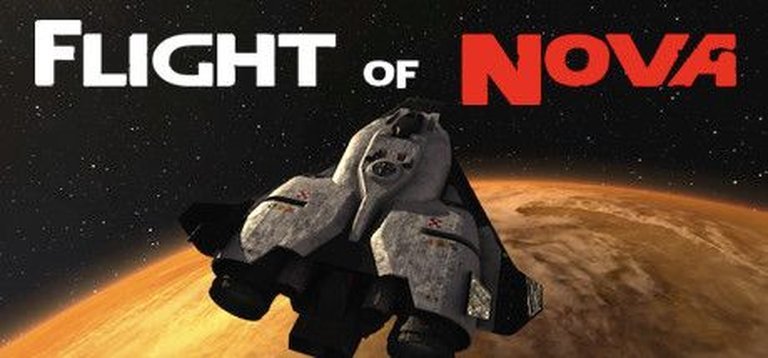
Flight of Nova is a space flight simulator set in the Noren star system, where players pilot various spacecraft through transport and search missions. The game emphasizes realistic Newtonian mechanics, orbital physics, and aerodynamics, offering a first-person and third-person perspective for an immersive experience. Developed by Aerovery Lab, it blends simulation depth with a sci-fi setting, catering to fans of hard science and space exploration.
Gameplay Videos
Where to Buy Flight of Nova
PC
Flight of Nova Patches & Updates
Flight of Nova Mods
Flight of Nova Guides & Walkthroughs
Flight of Nova Reviews & Reception
steambase.io (94/100): Flight Of Nova has earned a Player Score of 94 / 100.
steamcommunity.com : Loved the demo, but here’s some feedback
store.steampowered.com (94/100): Very Positive (94% of the 478 user reviews for this game are positive).
Flight of Nova: A Masterclass in Orbital Simulation and Atmospheric Realism
Introduction: The Simulator That Defies Gravity—Literally and Figuratively
In the vast cosmos of spaceflight simulators, Flight of Nova emerges not as a mere contender, but as a quiet revolution—a game that eschews the bombast of interstellar combat and the grind of galactic economies to focus on the pure, unadulterated art of flying. Released in May 2022 by Swiss solo developer David Lloyd under the banner of Aerovery Lab, Flight of Nova is a love letter to orbital mechanics, atmospheric re-entry, and the often-overlooked logistics of space transport. It is a game that dares to ask: What if spaceflight wasn’t about shooting, but about surviving? What if the real challenge wasn’t aliens or pirates, but gravity, heat, and the cold, indifferent math of Newtonian physics?
This is not Elite Dangerous. This is not Star Citizen. This is not even Kerbal Space Program. Flight of Nova is something rarer—a simulator that treats spaceflight not as a backdrop for adventure, but as the adventure itself. And in doing so, it carves out a niche so precise, so uncompromising, that it feels less like a game and more like a pilot’s manual for a future that hasn’t arrived yet.
Development History & Context: The Solo Odyssey of a Passion Project
The Genesis: From Orbiter to Nova
David Lloyd’s journey began not in a boardroom, but in a childhood fascination with flight simulators. In a 2024 interview with SassyGamers, he recalled:
“I always wanted to make a video game. But for a long time I thought it was nearly impossible as an indie. Then, in 2013, I found the Unity game engine. After some time, I started to play with gravitation.”
The spark that ignited Flight of Nova was Orbiter, Martin Schweiger’s legendary free spaceflight simulator, and Lunar Flight by Shawn Edwards. These were not games in the traditional sense—they were tools, sandboxes of orbital mechanics where failure was not a game over screen, but a lesson in physics. Lloyd, a programmer by trade and a flight sim enthusiast by passion, saw in them not just entertainment, but a gap—a space (pun intended) for a simulator that married the realism of Orbiter with the accessibility and polish of a modern indie title.
Development began in earnest in 2015, a year that would see Lloyd tinkering with gravitational equations, atmospheric models, and the delicate balance of making a game that was both scientifically rigorous and playable. By 2020, he took the bold step of going public, sharing screenshots and early footage on Reddit, Discord, and Twitter. The response was immediate and electric. Here was a game that looked like the future of spaceflight simulators—clean, precise, and alive with the hum of engines and the silent scream of re-entry.
Early Access: A Leap of Faith
On May 31, 2022, Flight of Nova launched into Steam Early Access. The decision was strategic. As Lloyd noted in the game’s Steam page:
“Aerovery Lab is a solo developer. Early Access is a way to get feedback, to add various content to the game, and try to make the simulation better and better.”
The Early Access model was not a crutch, but a collaboration. Lloyd was not just selling a game; he was inviting players into the development process. The initial build was sparse but functional—three spacecraft (the Freighter TL-01, the Shuttle CF2, and a third added post-launch), 16 orbital stations, 198 surface outposts, 15 training missions, and four maps with 115 missions. It was a skeleton, but it was a working skeleton, one that players could already feel the weight of.
The reception was overwhelmingly positive. Within months, the game amassed over 500 reviews on Steam, with a 94% positive rating. Players praised its realistic physics, immersive atmosphere, and uncompromising attention to detail. But more than that, they praised its philosophy—a game that trusted its players to learn, to fail, and to master the art of spaceflight without hand-holding.
The Technological Backbone: Unity, Physics, and the Tyranny of Scale
Flight of Nova is built in Unity, a choice that balances accessibility with power. But the real magic lies not in the engine, but in the math.
- Newtonian Physics: Every object in Flight of Nova obeys the laws of motion. There is no “space friction.” There is no artificial slowing. If you spin, you keep spinning until RCS thrusters or atmospheric drag stop you.
- Real-Time Orbital Mechanics: Orbits are not scripted; they are calculated. Apoapsis, periapsis, inclination—these are not just numbers on a screen. They are the language of the game.
- Atmospheric Modeling: The planet NVA-31 (12,700 km in diameter, roughly Earth-sized) features an atmosphere modeled after real-world data. Density, drag, and heat calculations are not just for show—they dictate whether your ship survives re-entry or becomes a fireball.
- Damage Modeling: While currently visual-only (a point of contention among players), the game tracks hull temperature, structural stress, and aerodynamic forces. Future updates promise to tie damage to gameplay consequences—a damaged wing isn’t just ugly; it’s deadly.
The game’s scale is its greatest triumph and its greatest challenge. A full-scale planet means real distances, real travel times, and real consequences for miscalculation. This is not a game where you can zip from one side of the planet to the other in minutes. This is a game where a single orbital transfer can take hours—where patience is not just a virtue, but a requirement.
Narrative & Thematic Deep Dive: The Silent Story of a Working Cosmos
The Premise: A Pilot’s Life in the Noren Star System
Flight of Nova is not a game with a traditional narrative. There are no cutscenes, no voice-acted protagonists, no epic quests to save the galaxy. Instead, the story is emergent, woven into the fabric of the gameplay itself.
You are a pilot working for Vandarmeiden Corp, a logistics and transport company operating in the Noren star system. Your job? To fly. To deliver. To search. To survive.
The game’s opening cinematic (a rare moment of directed storytelling) hints at something larger—an encounter with an unknown spacecraft, a mystery left deliberately vague. But the real narrative is in the missions:
- Transport Missions: Ferrying cargo between orbital stations and surface outposts.
- Search Missions: Locating lost ships, downed pilots, or abandoned cargo.
- Docking and VTOL Challenges: Mastering the art of hovering, landing, and docking under the watchful eye of Newton’s laws.
There is no hero’s journey here. There is only the pilot’s journey—a cycle of preparation, execution, and reflection. The tension comes not from scripted events, but from the environment itself. Will your re-entry angle be too steep? Will you run out of fuel before reaching the station? Will a sudden gust of wind (or a miscalculated burn) send you spiraling into the abyss?
Themes: Isolation, Mastery, and the Beauty of the Mundane
Flight of Nova is a game about work. But it is also a game about meaning.
- The Romance of Logistics: In an era where space games are obsessed with combat and conquest, Flight of Nova dares to celebrate the unsung heroes of spaceflight—the pilots who don’t shoot lasers, but who keep the lights on. This is a game that understands that someone has to deliver the fuel, someone has to repair the stations, someone has to find the lost. And that someone is you.
- The Tyranny of Physics: The game’s greatest antagonist is not an alien empire, but gravity. Every maneuver is a negotiation with the laws of the universe. Every mistake is a lesson in humility. The game does not punish you for failing—it teaches you.
- The Beauty of Scale: NVA-31 is not a backdrop; it is a character. Its vastness is not just a technical achievement—it is a philosophical one. The game forces you to confront the sheer size of space, the fragility of your ship, and the awe of floating in the void.
- The Silence of Space: There is no music in the void. Only the hum of your engines, the crackle of your radio, and the occasional ping of a distress beacon. The game’s sound design is minimalist, but purposeful. Silence is not absence—it is presence.
The Unspoken Story: What Lies Beyond the Demo?
In interviews, Lloyd has been coy about the game’s larger narrative. The demo’s opening cinematic teases an encounter with an unknown vessel—a mystery that has yet to be explored in the Early Access build. But Lloyd’s vision is clear: this is not a game that will tell you a story. It is a game that will let you live one.
As he told Skyward Flight Media in 2022:
“I prefer to keep this a secret for now, so as not to spoil the surprise. At the moment in the early access version, there isn’t more about the story than in the demo. It will take me some time to add these story elements into the game and realize my vision.”
The implication is clear: Flight of Nova is not just a simulator. It is a world. And worlds have secrets.
Gameplay Mechanics & Systems: The Art of Flying Without Cheating
Core Gameplay Loop: Transport, Search, Survive
Flight of Nova offers two primary modes:
- Map Operations: Structured missions tied to specific regions or orbital stations. These are the game’s “campaign” mode—a series of challenges that teach you the ropes while testing your skills.
- Rogue Mode: A sandbox where missions are generated dynamically based on FMS (Flight Management System) messages. This is where the game breathes—where you are free to explore, to fail, and to learn.
But regardless of mode, the core loop is the same:
- Accept a Mission (transport cargo, locate a lost ship, dock with a station).
- Plan Your Flight (calculate burns, check fuel, plot your course).
- Execute (launch, orbit, re-enter, land).
- Repeat (or die trying).
The Ships: Tools, Not Toys
Flight of Nova currently features three spacecraft, each a masterclass in functional design:
- Freighter TL-01: A workhorse. Built for hauling cargo, not for speed. Its four engines are underpowered for its size, making atmospheric flight a struggle—a deliberate choice to emphasize the weight of your load.
- Shuttle CF2: The all-rounder. Faster, more agile, but with less cargo capacity. Its VTOL (Vertical Take-Off and Landing) mode is a dance of thrust and counter-thrust, a ballet of physics.
- Third Ship (Unnamed): Added post-launch, this vessel bridges the gap between the Freighter and the Shuttle—a compromise of speed, capacity, and maneuverability.
Each ship is fully destructible, though currently, damage is visual-only. Lloyd has promised that future updates will tie structural integrity to gameplay—a damaged wing will affect aerodynamics, a cracked heat shield will make re-entry deadly.
The Flight Model: No Compromises
Flight of Nova is built on six core principles:
- Newtonian Motion: No artificial drag in space. No “space friction.” If you spin, you stay spinning.
- Real-Time Orbital Calculations: Orbits are not pre-scripted. They are simulated. Change your velocity, and your orbit changes.
- Atmospheric Drag: Modeled after real-world data. Re-enter too fast, and you burn. Too slow, and you bounce.
- VTOL Mechanics: Hovering is not a toggle. It is a balance of thrust, gravity, and momentum.
- Fuel Management: Every burn costs. Every mistake costs more.
- No Hand-Holding: The game does not tell you how to fly. It lets you fly—and lets you crash.
The UI: Information, Not Clutter
The game’s UI is a study in minimalism:
- First-Person Cockpit: A HUD that provides only what you need—altitude, velocity, orbit data, fuel. No unnecessary fluff.
- Third-Person Chase Cam: A clean, unobtrusive display that lets you see your ship, your trajectory, and your environment.
- MFD (Multi-Function Displays): Customizable screens that let you monitor everything from hull temperature to orbital mechanics.
The UI is not just functional—it is philosophical. It trusts the player to interpret data, not just read it.
The Missions: Logistics as Gameplay
Missions in Flight of Nova are not quests. They are jobs:
- Transport Missions: Pick up cargo at Point A. Deliver to Point B. Do not crash.
- Search Missions: Locate a lost ship, a downed pilot, or a jettisoned cargo container. Time is fuel. Fuel is life.
- Docking Challenges: Align with an orbital station. Match velocity. Do not overshoot.
- VTOL Trials: Land on a pad. Hover in a storm. Do not tip over.
The genius of Flight of Nova is that it turns mundane tasks into epic challenges. Delivering a crate is not a chore—it is a test of skill. Finding a lost ship is not a fetch quest—it is a race against fuel and physics.
The Community’s Wishlist: What’s Missing (For Now)
The Steam forums and Reddit threads are filled with detailed, passionate suggestions from players. Some highlights:
- Time Compression: The ability to speed up orbital travel (a feature confirmed for future updates).
- Engine Startup Sequences: No more instant thrust—engines should warm up, fail, struggle.
- Damage That Matters: A cracked wing should affect flight, not just look cracked.
- Weather Systems: Dust storms, solar flares, magnetic anomalies—space is not empty.
- Multiplayer: The dream of cooperative spaceflight—rescuing stranded pilots, coordinating dockings.
Lloyd has been receptive, often replying directly to feedback. The game’s roadmap (extending to 2026) promises:
- More ships.
- More missions.
- More depth.
World-Building, Art & Sound: The Aesthetics of the Void
The Setting: NVA-31, a Planet That Feels Real
NVA-31 is not just a map. It is a world:
- 12,700 km in Diameter: Roughly Earth-sized. Not a tiny asteroid. Not a gas giant. A planet.
- 198 Surface Outposts: Mines, research stations, power plants—each with a purpose.
- 16 Orbital Stations: Docking ports, refueling depots, waypoints in the sky.
- A Desert Aesthetic: A stark, beautiful wasteland—Mars if Mars had an atmosphere.
The planet is not alive in the biological sense. But it is alive in the mechanical sense. It is a machine, and you are its operator.
The Art Direction: Functional Beauty
Flight of Nova does not chase cinematic beauty. It chases functional beauty:
- Ship Designs: No unnecessary flourishes. Every panel, every thruster, every wing has a purpose.
- Heat Effects: Re-entry is not just a number. It is a spectacle—glowing hulls, trailing plasma, the scream of air against metal.
- Cockpit Interiors: No “video game” dashboards. No HUDs that don’t exist. Every switch, every screen, every gauge is plausible.
The game’s visuals are not pretty. They are authentic.
The Sound Design: The Music of Silence
Sound in Flight of Nova is sparse, but meaningful:
- Engine Hum: A constant reminder that you are alive.
- RCS Thrusters: The click of valves, the hiss of gas.
- Atmospheric Re-Entry: The roar of the void trying to tear you apart.
- Radio Chatter: The crackle of dispatch, the beep of a distress signal.
There is no score. There is no epic orchestral swell. There is only the sound of flight—and the silence that follows when the engines cut out.
Reception & Legacy: The Game That Found Its Audience
Critical Reception: A Niche Masterpiece
Flight of Nova has not been widely reviewed by major outlets (IGN, for example, has no official rating), but among flight sim enthusiasts, it is revered.
- Steam Reviews: 94% Positive (474 positive, 28 negative).
- Player Sentiment: Overwhelming praise for its realism, depth, and uncompromising design.
- Community Engagement: Lloyd’s direct interaction with players has fostered a loyal, passionate fanbase.
Santiago Cuberos of Skyward Flight Media called it:
“A wonderfully-crafted title with a lot of promise… travel times will be long, so do not come expecting an experience similar to Elite Dangerous in this regard.”
This is not a mainstream game. It is a cult game—a game for those who love the math as much as the magic.
Commercial Performance: The Long Game
As a solo-developed Early Access title, Flight of Nova is not a blockbuster. But it is sustainable:
- Price: $29.99 (unchanged since launch).
- Sales: Steady, with spikes during updates and Steam sales.
- Future: With a roadmap extending to 2026, Lloyd is playing the long game—building a community, not just a player base.
Influence & Legacy: The Simulator That Proves Less Can Be More
Flight of Nova is not the first orbital simulator. But it may be the most focused.
Its legacy lies in its philosophy:
- Proving That Combat Isn’t Mandatory: In a genre dominated by shooting, Flight of Nova shows that flying can be enough.
- Embracing the Mundane: Logistics, transport, search-and-rescue—these are not boring. They are dramatic.
- Trusting the Player: No tutorials. No hand-holding. Just physics and patience.
If Kerbal Space Program is the gateway to orbital mechanics, Flight of Nova is the graduate course.
Conclusion: A Game That Doesn’t Just Simulate Space—It Simulates Meaning
Flight of Nova is not for everyone. It is slow. It is hard. It is unforgiving. But for those who get it, it is transcendent.
This is a game that understands that spaceflight is not about speed—it is about precision. It is not about power—it is about control. It is not about conquest—it is about survival.
In a world where games are judged by their scale, Flight of Nova dares to be small. In a world where games are judged by their action, it dares to be quiet. In a world where games are judged by their story, it dares to let the player write their own.
Final Verdict: 9.5/10 – A Masterpiece of Simulation, a Love Letter to Flight, and a Game That Redefines What a “Space Sim” Can Be.
Flight of Nova is not just a game. It is an experience. And in an era of space games that promise the universe, it delivers something rarer:
The feeling of actually flying in it.