
- Release Year: 2015
- Platforms: Linux, Macintosh, Windows
- Publisher: Grizzly Wolf Games LLC
- Developer: Grizzly Wolf Games LLC
- Genre: Action, RPG
- Perspective: Diagonal-down
- Game Mode: Single-player
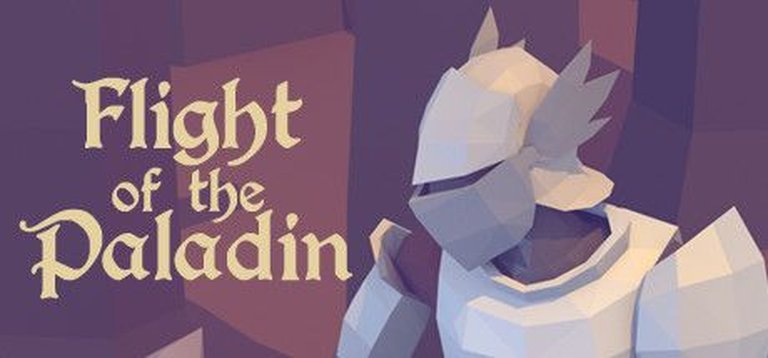
Description
Flight of the Paladin is a fast-paced, top-down shooter with RPG elements, where players embody a knight of valor battling nightmarish creatures in a 2D scrolling horror setting. The game features a Campaign Mode with escalating challenges and boss battles across environments like the Woods and Castle Ruins of Dracula, plus a Survival Mode for enduring waves of monsters, all inspired by classic arcade shooters.
Gameplay Videos
Where to Buy Flight of the Paladin
PC
Flight of the Paladin Cracks & Fixes
Flight of the Paladin Patches & Updates
Flight of the Paladin Guides & Walkthroughs
Flight of the Paladin: A Cautionary Tale of Ambitious minimalism and Unfulfilled Potential
Introduction: A Ghost in the Steam Library
In the vast, uncataloged archives of digital distribution, countless games flicker into existence and fade into obscurity, their digital graves marked only by a store page and a handful of user reviews. Flight of the Paladin (2015) is one such title—a spectral presence on Steam, developed and published by the near-anonymous Grizzly Wolf Games LLC. It promises a potent cocktail of genres: the frantic, pattern-based action of an arcade shooter (shmup), the progression hooks of an action-RPG, and the gothic atmosphere of horror. Its premise—a lone knight on an auto-running steed, firing a holy spear through legions of the night—evokes a minimalist, almost haiku-like distillation of classic gaming tropes. Yet, a deep dive into its reception and mechanics reveals not a forgotten masterpiece, but a profoundly conflicted artifact. This review argues that Flight of the Paladin is a fascinating failure, a game whose core design vision is constantly at war with its execution, resulting in an experience that oscillates between fleeting, challenging fun and enraging, repetitive frustration. It stands as a stark case study in the perils of minimalist design when core interactivity—controls, feedback, and progression—is not meticulously refined.
1. Development History & Context: The Lone Wolf of 2015
Flight of the Paladin exists in a vacuum of developmental history. There are no interviews with its creators, no “making of” features, and no public post-mortems. The studio, Grizzly Wolf Games LLC, is a ghost; MobyGames and other databases list it as the sole developer and publisher, with no credited individuals. This lack of authorship is the first critical context: the game is an entirely isolated, likely solo or micro-studio project.
Its release in October 2015 places it in a specific moment of indie maturation. The “golden age” of Steam’s experimental, often bizarre early indie catalog (circa 2010-2014) was giving way to a more curated, algorithm-driven storefront. Unity, its documented engine, was the democratizing tool of the era, allowing anyone toexport a game to Windows, Mac, and Linux (as this title did). The game’s description invokes “old school arcade-styled shooters,” directly channeling the legacy of Smash TV, Commando, or even Gunstar Heroes, but filtering it through a top-down, auto-scrolling perspective. It was a time when “retro” often meant “simple pixel art,” but Flight of the Paladin’s aesthetic, based on available screenshots, leans toward a cleaner, almost vector-like 2D style—a practical, low-overhead choice for a tiny team.
The game’s complete absence from Metacritic and the dearth of professional critic reviews (zero on MobyGames at the time of writing) are telling. It was not a title that secured press copies or generated buzz. It was a digital whisper, lost in the cacophony of Steam’s daily releases, relying entirely on its store page blurb and the occasional curious browser. Its entire lifecycle—a $1.99 commercial download, Steam Trading Cards, Achievements, and Leaderboards—fits the template of a low-cost “fill-in” title aiming for the long-tail of curious, bored, or discount-seeking players.
2. Narrative & Thematic Deep Dive: A Skeleton of a Story
The narrative of Flight of the Paladin is not merely simple; it is functionally skeletal, serving exclusively as a justification for its gameplay loop. The official description provides the entire canon: “you play as a knight of valor and light vanquishing the nightmarish creatures of darkness.” The campaign proceeds through three named environments: the “deep Woods,” the “Hollow Path,” and the “Castle Ruins of Dracula,” each culminating in a boss fight.
Thematic Exploration: The game’s title and setting invoke the archetypal “Paladin”—a holy warrior, a beacon against corruption. This sets up a classic Light vs. Dark morality, a theme perfectly suited to the binary, clear-cut world of arcade action. The enemies—ghosts, skeletons, gargoyles, and finally Dracula himself—are culled from a universal gothic horror lexicon. There is no subversion, no moral ambiguity. The Paladin is unambiguously good; the forces arrayed against him are unambiguously evil. This lack of narrative complexity is not a flaw in itself for the intended genre; * Robotron: 2084* has no story. The problem arises from the profound dissonance between the thematic weight of a “Paladin” and the gameplay’s triviality.
A “Paladin” implies a code, a struggle, perhaps even a narrative of temptation or sacrifice. The game offers none of this. There is no dialogue, no cutscenes, no textual lore beyond the stage names. The player’s only “story” is the escalating difficulty curve, a purely mechanical narrative of survival. The final confrontation with Dracula in his “Castle Ruins” feels less like a climactic battle with a dark lord and more like the third, slightly more complex timing pattern in a sequence. The theme of “valor” is ironically undermined by the core mechanic: the horse runs automatically. The Paladin does not choose to charge into danger; he is compelled by it. This removes agency, the very cornerstone of heroic narrative. The horror is not existential or atmospheric in a narrative sense; it is purely environmental—the horror of the next oncoming wave, the horror of a mis-timed jump into a tree.
3. Gameplay Mechanics & Systems: The Engine of Frustration
This is where Flight of the Paladin lives or dies, and the player consensus is clear: it dies, and often.
Core Loop & Perspective: The game employs a diagonal-down, 2D scrolling perspective. The Paladin and his horse are perpetually mounted and moving forward (up the screen) at a constant, unalterable speed. The player controls only the horizontal position (left/right) and the firing of the holy spear (a single, straight projectile). A melee attack is also available, presumably for close-range enemies. The goal in Campaign Mode is to survive the scrolling stage and defeat the boss at its end. Survival Mode throws continuous waves and random bosses.
The Auto-Run Controversy: This design choice is the game’s most defining and divisive feature. Proponents (a small minority in reviews) might argue it creates a tense, rhythm-action pressure, focusing player attention on dodging and shooting in a fixed space. The vast majority of players, however, decry it as a catastrophic control flaw. It removes the fundamental exploration and positioning agency expected in even the simplest top-down shooters. You cannot retreat, plan an approach, or navigate intelligently; you are on rails. This transforms environmental hazards—the “grey wall and a brown tree” famously cited in a Steam review—from tactical obstacles into insta-death traps. Death feels cheap, a punishment of the game’s geometry rather than the player’s skill.
Combat & Progression: Combat is rudimentary: aim and fire. There is no mention of weapon upgrades, power-ups, or special abilities in any source material. The “unleashing that power on your foes” from the store description is never mechanistically explained. Progression is purely stage-based. There is no character progression system: no leveling, no stat points, no persistent upgrades between runs. This aligns it with pure arcade roots but clashes with the “Role-playing (RPG)” tag applied on MobyGames. It offers no long-term attachment to the Paladin character; he is a disposable avatar.
User Interface & Flaws: The UI is presumably sparse, displaying score, perhaps distance. Critical systemic flaws, repeatedly mentioned in aggregated reviews, dominate the conversation:
* Poor Controls: Beyond the auto-run, input responsiveness, hitboxes for both player and enemies, and the feel of movement are frequently criticized.
* No Save Feature: As noted in the Steambase analysis, the inability to save progress makes the short Campaign mode (only 3 stages) a grueling, all-or-nothing endeavor. Quitting means starting from scratch, a design choice antithetical to modern PC gaming.
* Lack of Content: With only three distinct stages and a Survival Mode, the game’s substance is meager. The “random bosses” in Survival cannot compensate for a lack of diverse stage layouts, enemy types, or mechanics.
* Repetitive Mechanics: Without evolving systems or meaningful variation between runs, the core loop becomes monotonous. The “every second the path grows more treacherous” promised in the description likely just means more enemies on screen, not new mechanics.
Innovation? The only potential innovation is the fusion of auto-running shmup with a melee action-RPG toolkit on foot (albeit on a horse). However, this is executed without the polish or depth of a CyClones or Robotron. It feels like a novel but half-baked prototype.
4. World-Building, Art & Sound: A Tale of Two Senses
Visuals & Atmosphere: The game’s visual identity is minimalist 2D scrolling. Screenshots show a stark, dark color palette with simple, geometric shapes representing trees, walls, and enemies. The “Woods” and “Hollow Path” are evoked through background color shifts and basic sprite changes. This minimalist approach can be atmospheric in the way a foggy corridor in P.T. is—through suggestion and negative space. However, the execution appears to fail. The environmental hazards (walls, trees) are visually indistinct from safe ground, directly causing the “run into object” deaths players complain about. There is no compelling visual storytelling, no unique enemy designs that tell a story (beyond “skeleton”). The horror is not in the imagery but in the repetitive, overwhelming swarm. The “Anime” and “Retro” tags from user reviews seem generous; the art is more accurately described as utilitarian and sparse.
Sound Design & The Lifesaving Score: Here lies the game’s undisputed, celebrated strength. Multiple independent review analyses (Niklas Notes, Steam tags) highlight the “Great Soundtrack” as the primary positive. The store description confirms it uses “classical instrumental ‘disturbing’ melodies.” Players note the music’s familiarity, suggesting it may use royalty-free classical pieces (e.g., Bach, Beethoven, or Romantic era horror-tinged compositions). This is a brilliant, if low-cost, design choice. The soaring, dramatic, or ominous classical pieces create a profound dissonance with the crude, frustrating gameplay. The music elevates the experience, making the simple act of firing a spear feel momentous and tragic. It is the single element that transforms the game from a broken toy into something with pathos. The soundtrack does not match the visual horror; it matches the thematic horror—the tragic, doomed struggle of the Paladin against an endless night. It is the game’s soul, compensating for the body’s flaws.
5. Reception & Legacy: A Decisively Mixed Curtain Call
Flight of the Paladin’s reception is a masterclass in mediocrity, quantified by its Steam Player Score of approximately 51-52% (fluctuating between 205 positive and 192 negative reviews out of ~397 total as of early 2026). This is not a cult classic in the making; it is a game that polarizes exactly down the middle.
At Launch & Since: There is no record of launch critical reception (Metacritic has no critic reviews). Its initial sales are unknown, but its persistent presence at a $1.99 price point and inclusion in multiple “bundles” (like the “God Bundle” for $4.16) suggests it was a loss-leader or filler content. Its review timeline on Steambase shows a remarkably stable “Mixed” rating over years, indicating a consistent, unchanging player experience. The language breakdown from Steam reviews (predominantly Russian in the sampled quotes) suggests its primary audience may have been value-conscious players in certain regions.
Influence & Industry Impact: The game has zero discernible influence on the industry. It did not pioneer a mechanic, start a trend, or receive acclaim that inspired imitators. It is not cited in developer post-mortems or “greatest indie games” lists. Its legacy is purely as a data point and a cautionary example.
1. The “Asset Flip” or Micro-Studio Benchmark: For researchers studying the output of one-person Unity projects circa 2015, it is a perfect case study: a clear genre homage, minimal assets, basic systems, Steam Features integration (Achievements, Trading Cards), and a fatal inability to iterate on core gameplay feel.
2. The Soundtrack Paradox: It is a notable example of a game whose sole widely praised element is an external asset (the classical music), highlighting how audio can utterly dominate player perception of a project’s quality.
3. Failed Genre Fusion: It represents a failed attempt to blend the shmup and action-RPG genres without understanding the pacing and progression needs of either. The auto-run alienates shmup fans seeking control; the lack of RPG systems disappoints those seeking progression.
Its true legacy is in the Steam reviews themselves, which form a cohesive, brutal critique of fundamental game design. The top complaints—boring, repetitive, poor controls, no save, lack of content—are a checklist for what not to do when designing a compelling loop. It is a game that asked players to engage with its systems and was answered with a collective “why?”
6. Conclusion: The Paladin’s Lament
Flight of the Paladin is not a bad game because it is small, cheap, or made by an unknown team. It is a bad game because its central, defining mechanical choice—the forced auto-run—is fundamentally at odds with the kind of precise, skill-based, and fair challenge it seems to aspire to. That choice cascades into every other flaw: environmental hazards become unfair, repetition becomes tyranny, and the lack of progression systems becomes a glaring omission rather than a stylistic choice.
Yet, it is not without a ghost of nobility. Its atmospheric aspiration, channeled entirely through its magnificent classical soundtrack, creates moments of unintended beauty. The image of the silent, relentless Paladin, spurred ever forward by a haunting melody, is more poignant than any written story. It is the tragedy of a project that could have been a tight, 20-minute arcade vignette—a somber, rhythmic duel against darkness—but was instead stretched thin into a full, frustrating campaign.
In the grand tapestry of video game history, Flight of the Paladin is a single, frayed thread. It will be remembered not for its innovations, but for its failures. It is the textbook example of how a game can have a competent technical foundation (Unity, cross-platform, Steam integration) and a brilliant audio palette, yet still collapse under the weight of unpolished, unfun, and ultimately disrespectful core gameplay. It is a warning: no amount of thematic dressing or beautiful music can save a game that feels bad to play. The Paladin’s flight is not one of valor, but of an idea never given a fair chance to land.