
- Release Year: 2024
- Platforms: PlayStation 5, Windows Apps, Windows, Xbox Cloud Gaming, Xbox Series
- Publisher: Kepler Interactive Limited
- Developer: A44 Games
- Genre: Role-playing (RPG)
- Perspective: 3rd-person (Other)
- Game Mode: Single-player
- Gameplay: Action RPG, Hack and Slash, Open World, Sandbox
- Setting: Fantasy
- Average Score: 71/100
Description
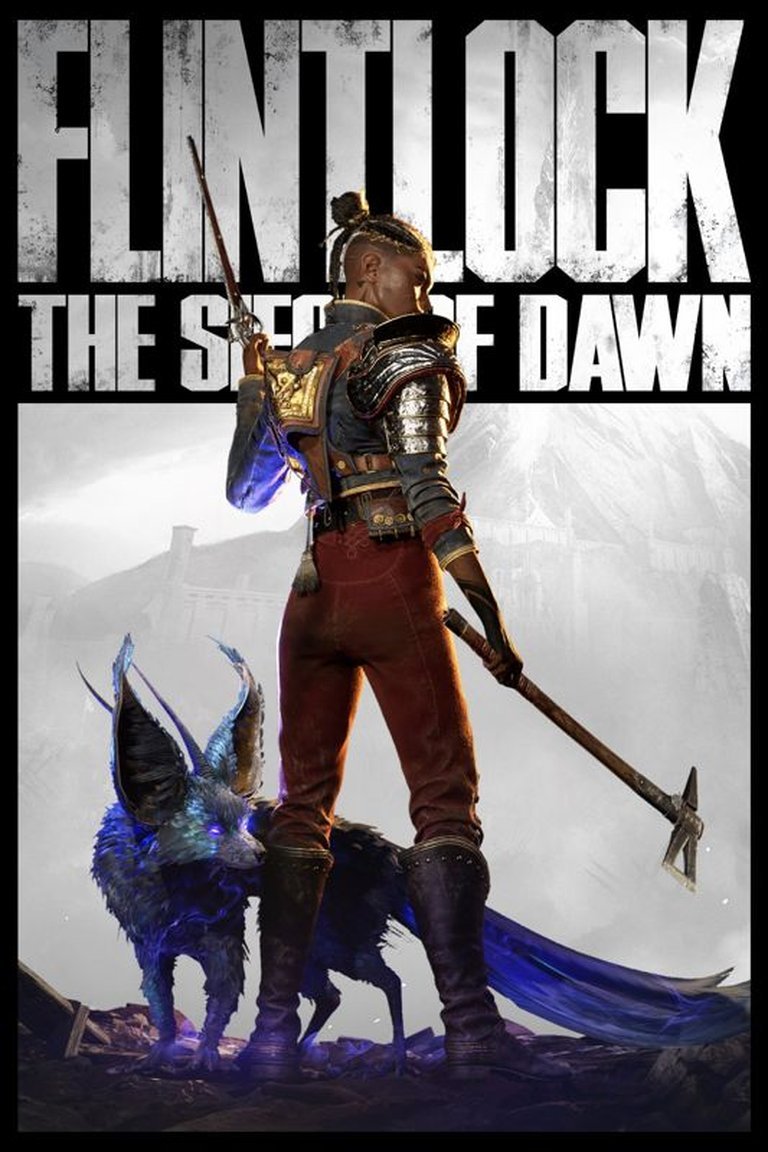
Flintlock: The Siege of Dawn is a fantasy action RPG set in an open-world environment, featuring third-person hack-and-slash gameplay where players control a black female protagonist wielding melee weapons and flintlock firearms in challenging Souls-like battles against formidable foes, including bosses, in a richly detailed world blending magic and gunpowder-era technology.
Gameplay Videos
Where to Buy Flintlock: The Siege of Dawn
PC
Flintlock: The Siege of Dawn Free Download
Flintlock: The Siege of Dawn Cracks & Fixes
Flintlock: The Siege of Dawn Guides & Walkthroughs
Flintlock: The Siege of Dawn Reviews & Reception
metacritic.com (70/100): Mixed or Average
ign.com : Flintlock still continuously found ways to entertain me with flashy combat and swift movement.
opencritic.com (69/100): ranked in the 40th percentile of games scored on OpenCritic.
rockpapershotgun.com : a trim and sturdy Soulslite that’s best enjoyed in the air
steambase.io (75/100): Mostly Positive
Flintlock: The Siege of Dawn: Review
Introduction
In a gaming landscape saturated with punishing Soulslikes where every misstep invites oblivion, Flintlock: The Siege of Dawn bursts onto the scene like a powder keg primed for ignition—offering a “Souls-lite” revolution that marries Napoleonic-era flintlock firearms with Mesopotamian gods and undead hordes. Developed by New Zealand’s A44 Games, the studio behind the cooperative gem Ashen, this 2024 action RPG arrives as a bold pivot: a 15-27 hour odyssey of gunpowder-fueled vengeance that prioritizes rhythmic accessibility over masochistic endurance. As a game historian, I see Flintlock as a pivotal experiment in genre democratization, blending God of War‘s cinematic companionship with Elden Ring‘s open-world sprawl, yet tempered for broader appeal. My thesis: while its explosive combat and unique “flintlock fantasy” setting ignite moments of pure exhilaration, Flintlock fizzles under repetitive design and underdeveloped narrative, securing a respectable foothold as an approachable gateway rather than a pantheon-defining masterpiece.
Development History & Context
A44 Games, founded in 2013 and best known for 2018’s Ashen—a minimalist Soulslike emphasizing co-op exploration—entered Flintlock‘s development with around 60 team members, marking their most ambitious project. Directed by Derek Bradley and helmed artistically by Robert Bruce, the game was unveiled in March 2022 via a cinematic trailer, positioning it as an “untapped subgenre” of fantasy: flintlock guns rivaling divine magic in a world evoking Shadow and Bone‘s grit. Published by Kepler Interactive (a cooperative label backed by indie studios like A44), it faced two delays—from 2023 to July 18, 2024—allowing polish on Unreal Engine 4, PhysX physics, and Wwise audio.
Technological constraints were pragmatic: UE4 enabled rapid MetaHuman character creation (freeing time for combat refinement), but the New Zealand-based team grappled with a mid-tier budget in an era dominated by AAA behemoths like Elden Ring (2022). Inspirations drew from Napoleonic trenches (uniforms, siege warfare), Mesopotamian underworlds (gods like Uru as lammasu guardians), and local landscapes, creating a “Gods vs. Guns” ethos where black powder disrupts divine order. Released amid a Soulslike boom (Lies of P, Wo Long: Fallen Dynasty), Flintlock targeted “summer Soulslites”—bite-sized alternatives to 50+ hour epics—via day-one Game Pass access, Xbox Cloud Gaming, and a $40 price point. This context framed it as A44’s bid for mainstream viability, echoing Ashen‘s co-op innovation but solo-focused, with photo mode and no live-service bloat.
Narrative & Thematic Deep Dive
Flintlock‘s plot unfolds in Kian, a realm shattered a decade prior when the Door to the Great Below yawned open, unleashing undead legions and rogue gods like Rammuha (order-manipulating piety predator), Dukmar (armored knowledge-hoarder echoing Marduk), Inaya (life-enforcing body horror), and Uru (Door guardian, lammasu-inspired ravager). Protagonist Nor Vanek, a Black female explosives expert and Blackstream Sappers leader, survives Dawn’s siege, forging an uneasy alliance with Enki—a “fox-like thing with monkey paws and bird feet,” greedy yet charismatic god of wisdom, creation, and freshwater (nodding to Mesopotamian Enki’s humanism).
Their dynamic, inspired by Kratos and Atreus, drives the tale: Nor’s vengeful fury clashes with Enki’s puppet-master origins, evolving into mutual respect amid philosophical banter on mortality, zealotry, and godhood’s fragility. Dialogue crackles—punchy, voice-acted with sprightliness—but quests feel fetch-heavy, NPCs terse (e.g., multi-limbed baristas in coffee shops). Cutscenes minimalist, lore via collectible notes/flags reveals a “Guns vs. Gods” theme: humanity’s black powder enlightenment shattering superstition, only for Below’s shadows to reclaim order. Twists probe faith’s blindness (Rammuha’s knights) and life’s dull afterlife (Mesopotamian echoes of shadowy existence).
Thematically, Flintlock interrogates hubris—mortals meddling with doors, gods rampaging post-exile—and anti-Quixotic wonder (Enki’s windmill awe). Yet, it rushes: prologue hurls players into war sans investment, mid-game meanders, companions forgettable beyond upgrades. No profound twists rival God of War‘s pathos; it’s serviceable cinematic Souls-lite storytelling, prioritizing rhythm over enigma.
Gameplay Mechanics & Systems
At its core, Flintlock loops exploration-combat-progression in three semi-open regions (loading-screen divided, bite-sized vs. seamless giants). Rest at Coalition Camps (bonfire analogs: respawn foes, bank Reputation) or liberate settlements for hubs/flasks. Traverse via double-jump, air-dash, Enki’s portals/skull-activated rift-chains—exhilarating aerial highways rewarding verticality.
Combat deconstructs Souls rhythms into a “dance”: melee (axes/hammers refill powder), pistol (interrupt unblockables, prime armor bar for executions), rifles/grenades (ranged prune), Enki’s curses (stun/restrain/knockdown, charge Witherings like storms/beams). No stamina/blocking emphasizes dodge/parry windows (generous, inconsistent). Multipliers (Devil May Cry-style) reward flawless chains (170% peaks), lost on hit—risk/reward amplifies farming. Builds via 3 reversible skill trees (melee/gun/magic), 17th-century gear synergies (e.g., Irregular set’s Bloodrage knockback), boss-skill acquisition. UI crisp: radial menus, photo mode, Possessed Mode sliders.
Innovations shine—powder scarcity forces swaps, Enki’s autonomy clears mobs—but flaws mar: floaty movement/jank (animation locks, tracking dodges), enemy uniformity, repetitive foes (undead hordes). Sidequests formulaic (fetch/liberate), Sebo minigame (Tic-Tac-Toe Blackjack hybrid) diverting. Progression gated by Reputation (lost/droppable on death, recoverable), caravan upgrades. Accessible (3 difficulties, pause-anywhere), yet vets crave depth; 20-40 hours suffice, no co-op.
World-Building, Art & Sound
Kian’s “flintlock fantasy” mesmerizes: Napoleonic trenches encircle Dawn, New Zealand vistas twist into bone-white palaces/mineral tumors, Below’s foreboding shadows (dull afterlife) bleed undead. Regions—trench-sieged wilds, spider-infested mines, god-ravaged peaks—brim detail: cracked murals, copper ladles, zealot camps. Liberating villages dynamically repopulates (quests unlock), caravan as mobile hub fosters progression.
Visuals blend realism-fantasy: UE4’s lush forests/ruins pop, iridescent Enki gleams, god designs (regal Rammuha, angular Dukmar) evoke myth. Character models (MetaHuman Nor: cheekbones critiqued) enable fluid animations, though jank persists. Sound excels: Wwise-driven rhythmic score (Spotify OST), powder blasts/impacts visceral, Enki’s melodious quips charming (non-intrusive vs. Forspoken). Atmosphere immersive—gunfire punctuates god-roars—elevating scrappy fights to spectacle.
Reception & Legacy
Launch reception mixed: Metacritic 70 (PC/PS5/Xbox), OpenCritic 69th percentile, MobyGames 6.3/10 (critics 69%, players 2.1/5). Praises: accessible combat (GameStar 81%: “excellent Souls entry”), setting (PC Gamer: “serviceable”), brevity (Edge 70%: “15 hours”). Critiques: forgettable narrative (RPG Site 70%), jank/bugs (Video Chums 43%: “Game Pass filler”), repetition (HCL.hr 68%). Steam 75% Mostly Positive (1,441 reviews), sales buoyed by Game Pass ($40 base, Deluxe upgrades).
Post-launch: Patches addressed stutters/demo bugs; reputation evolved from “overhated” (user defenses vs. DEI backlash) to cult “Souls-lite” pick. Influences nascent—pioneers guns-magic parity, multipliers in accessibles (Black Myth: Wukong echoes rhythm)—but no seismic shift. As Ashen‘s successor, it cements A44’s indie-Souls niche, inspiring “flintlock fantasy” (e.g., Powder Mage nods), yet lacks Nioh‘s depth for endurance.
Conclusion
Flintlock: The Siege of Dawn synthesizes Soulslike tension, God of War companionship, and flintlock flair into an explosive, approachable romp—its rhythmic combat, aerial traversal, and mythic world igniting joy amid jank and shallowness. Nor and Enki’s bond charms, Kian’s scars enthrall, yet narrative cliches, repetitive loops, and unpolished edges prevent godslaying glory. In video game history, it carves a niche as the quintessential Souls-lite gateway: essential for newcomers daunted by FromSoftware’s abyss, skippable for veterans, but a testament to indies democratizing challenge. Verdict: Recommended (7.5/10)—a scrappy siege worth storming, priming sequels to truly kill all gods.