
- Release Year: 2024
- Platforms: PlayStation 5, Windows Apps, Windows, Xbox Cloud Gaming, Xbox Series
- Publisher: Kepler Interactive Limited
- Genre: Compilation
Description
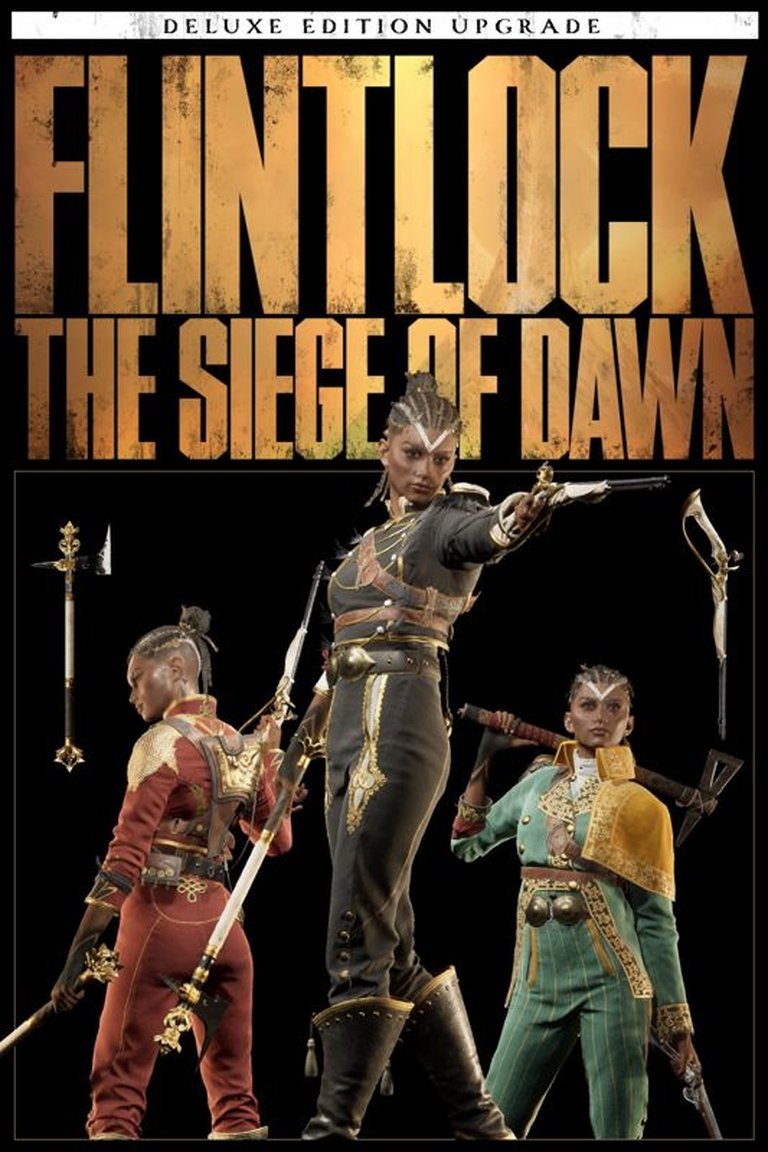
Flintlock: The Siege of Dawn – Deluxe Edition is an action role-playing game set in a dark fantasy world where humanity faces extinction at the hands of ancient gods. Players control Nor Vanek, a warrior leading a coalition on a desperate quest to save mankind, exploring an open world divided into three regions filled with dynamic side activities, perilous enemies, and mystical challenges. Accompanied by the fox-like companion Enki, players utilize a blend of melee and flintlock combat while recruiting NPCs to their caravan hub, uncovering secrets to defeat the old gods and restore hope to a crumbling civilization.
Flintlock: The Siege of Dawn – Deluxe Edition Free Download
Flintlock: The Siege of Dawn – Deluxe Edition Mods
Flintlock: The Siege of Dawn – Deluxe Edition Guides & Walkthroughs
Flintlock: The Siege of Dawn – Deluxe Edition Reviews & Reception
ign.com : Combat is fast and flows extremely well, chaining attacks with easy.
Flintlock: The Siege of Dawn – Deluxe Edition Cheats & Codes
Steam
Activate cheats using the hotkeys below while the trainer is running.
| Code | Effect |
|---|---|
| Num 1 | God Mode/Ignore Hits |
| Num 2 | Infinite Health |
| Num 3 | Infinite Enki Charges |
| Num 4 | Infinite Witherings |
| Num 5 | Infinite Primary Firearm Ammo |
| Num 6 | Infinite Secondary Firearm Ammo |
| Num 7 | Rapid Fire |
| Num 8 | Stealth Mode |
| Num 9 | No Fall Damage |
| Num 0 | Super Damage/One Hit Kills |
| Num . | Damage Multiplier |
| Num + | Defense Multiplier |
| Ctrl+Num 1 | Edit Reputation |
| Ctrl+Num 2 | Reputation Multiplier |
| Ctrl+Num 3 | No Reputation Loss On Death |
| Ctrl+Num 4 | Infinite Potions |
| Ctrl+Num 5 | Edit Wood |
| Ctrl+Num 6 | Edit Iron |
| Ctrl+Num 7 | Edit Sulfur |
| Ctrl+Num 8 | Set Game Speed |
| Ctrl+Num 9 | Set Movement Speed |
| Ctrl+Num 0 | Infinite Jumps |
Xbox/Game Pass
Activate cheats using the hotkeys below while the trainer is running.
| Code | Effect |
|---|---|
| Num 1 | God Mode/Ignore Hits |
| Num 2 | Infinite Health |
| Num 3 | Infinite Enki Charges |
| Num 4 | Infinite Witherings |
| Num 5 | Infinite Primary Firearm Ammo |
| Num 6 | Infinite Secondary Firearm Ammo |
| Num 7 | Rapid Fire |
| Num 8 | Stealth Mode |
| Num 9 | No Fall Damage |
| Num 0 | Super Damage/One Hit Kills |
| Num . | Damage Multiplier |
| Num + | Defense Multiplier |
| Ctrl+Num 1 | Edit Reputation |
| Ctrl+Num 2 | Reputation Multiplier |
| Ctrl+Num 3 | No Reputation Loss On Death |
| Ctrl+Num 4 | Infinite Potions |
| Ctrl+Num 5 | Edit Wood |
| Ctrl+Num 6 | Edit Iron |
| Ctrl+Num 7 | Edit Sulfur |
| Ctrl+Num 8 | Set Game Speed |
| Ctrl+Num 9 | Set Movement Speed |
| Ctrl+Num 0 | Infinite Jumps |
Flintlock: The Siege of Dawn – Deluxe Edition: Review
Introduction
In the crowded pantheon of action role-playing games, few subgenres have seen as much innovation and imitation as the Soulslike. Yet, every so often, a title emerges that, while not a revolution, offers a compelling synthesis of established ideas with its own unique flair. Flintlock: The Siege of Dawn – Deluxe Edition, developed by A44 Games and published by Kepler Interactive, stands as a testament to this creative fusion. Released on July 18, 2024, for PlayStation 5, Windows, and Xbox Series X/S, this Deluxe Edition bundles the base game with cosmetic upgrades, positioning itself as an accessible yet challenging entry in the genre. Drawing inspiration from the studio’s previous work, Ashen, and blending elements from God of War, Elden Ring, and even Forspoken, Flintlock promises a journey through a world where gunpowder and magic collide in a battle for humanity’s survival. This review will delve deep into the game’s development, narrative, gameplay, world-building, and legacy to determine whether it carves out a memorable niche in the annals of gaming history.
Development History & Context
Flintlock: The Siege of Dawn is the sophomore effort from A44 Games, a New Zealand-based developer that cut its teeth with the well-received Ashen in 2018. Under the direction of Derek Bradley and artistic vision of Robert Bruce, a team of approximately 60 set out to create an experience that would stand apart in a burgeoning market. The game was officially announced on March 14, 2022, with a cinematic trailer that immediately signaled its unique premise: a “flintlock fantasy,” a subgenre the team felt was “untapped” in interactive media. Art director Robert Bruce compared the setting to Shadow and Bone, emphasizing its blend of 19th-century Napoleonic aesthetics with fantastical elements. The visual style was heavily influenced by New Zealand’s landscapes and wildlife, while the pantheon of gods drew inspiration from Mesopotamian mythology, a refreshing departure from the typical European medieval tropes.
Technically, the game leveraged Unreal Engine 4, utilizing MetaHuman for character creation to expedite development and allow the team to focus on gameplay refinement. This engine choice, combined with a deliberate artistic direction, resulted in a cohesive and visually striking world. A44 described Flintlock‘s design as “somewhere in the middle” of God of War‘s cinematic storytelling and Elden Ring’s intricate combat, aiming for a balance of accessibility and depth. The combat, in particular, was envisioned as a “dance,” encouraging rhythmic, stylish play through mechanics like a scoring system reminiscent of Tony Hawk’s games. To broaden its appeal, the studio implemented “Possessed Mode,” a flexible difficulty system allowing players to adjust parameters manually.
However, the development journey was not without setbacks. The game was delayed twice, first from a 2022 to a 2023 release, and then again to 2024, a move attributed to the desire to “make it the most impressive and unforgettable it can be.” This period of refinement allowed the team to polish the experience, though it also placed the game in a highly competitive 2024 release window. Published under Kepler Interactive, a collective of independent developers, Flintlock represents a significant step up in scale for A44, showcasing their ambition to deliver a AAA-quality experience while retaining the creative freedom of an indie studio.
Narrative & Thematic Deep Dive
At its core, Flintlock: The Siege of Dawn presents a familiar yet serviceable narrative of revenge and survival. The premise is established swiftly: the Door to the Great Below has been breached, unleashing ancient gods and their undead hordes upon the world of Kian. As humanity teeters on the brink of extinction, the Coalition army forms its last line of defense. Players step into the boots of Nor Vanek, a skilled explosives expert and leader of the Blackstream Sappers, who is driven by a burning vengeance against the divine entities responsible for the cataclysm. Her quest is to rally allies, traverse the war-torn landscape, and ultimately close the Door to prevent the apocalypse.
Nor is joined by Enki, a mysterious fox-like creature of immense magical power, who serves as both guide and companion. Their relationship, inspired by Kratos and Atreus from God of War (2018), forms the emotional backbone of the story. Enki is initially portrayed as a “greedy” and “charismatic” entity who views Nor as a puppet, but their dynamic evolves into a “strong bond” as the narrative progresses. Enki’s backstory—his seclusion from the world and curiosity about the mortal realm—adds layers to his character, making his journey alongside Nor one of mutual growth and discovery. The dialogue, as noted in previews, is believable and thoughtfully acted, with ambient conversations fleshing out the world. However, the narrative is not without its flaws. Nor’s tale occasionally succumbs to clichés, and the minimalist cutscenes, which follow an unnamed NPC traveling between locations, often feel disjointed, leaving narrative gaps that can be frustrating.
The supporting cast, while memorable in moments, is uneven. Four NPCs eventually join Nor’s caravan, offering weapon upgrades and side quests, but beyond one quest chain involving a brother and sister, they remain largely forgettable. In contrast, side-quest characters such as the brothers running an arena or the enigmatic potion vendor provide more engaging interactions. The overarching themes of sacrifice, redemption, and the cyclical nature of war are present but underdeveloped, with the game missing opportunities to explore them more deeply. The gods, while visually imposing, lack significant depth, serving more as obstacles than complex antagonists. Despite these shortcomings, the bond between Nor and Enki provides a compelling emotional core, and the game’s conclusion, while abrupt, leaves room for a sequel that could further explore their evolving relationship and the broader lore of Kian.
Gameplay Mechanics & Systems
Flintlock: The Siege of Dawn positions itself as a “Souls-lite,” a term that aptly describes its approach to blending the challenging, methodical combat of FromSoftware’s titles with more accessible, fluid mechanics. The gameplay loop is built around three core pillars: melee combat, gunplay, and magic, all orchestrated through the rhythm of battle. Players control Nor Vanek from a third-person perspective, wielding a versatile arsenal that includes axes, hammers, rifles, and grenades. Ammunition is scarce, encouraging strategic use of firearms, primarily to interrupt enemy attacks or deal with armored foes. The combat system emphasizes a “dance” of parries, dodges, and attacks, with a unique armor bar mechanic. As Nor lands hits or successfully parries, she fills an enemy’s armor gauge. Once full, a devastating finishing move can be unleashed, instantly killing lesser foes or significantly weakening bosses. This mechanic creates a satisfying risk-reward cycle, as players must manage their offense and defense to open up these critical moments.
Enki, Nor’s fox-like companion, is integral to the combat experience. He can be commanded to curse enemies, stunning them and priming them for Nor’s finishers. As Enki’s abilities are upgraded, he gains additional functions: restraining, knocking down, and even attacking independently. In practice, Enki can sometimes feel overpowered, capable of clearing entire enemy groups when players invest in certain builds, which can trivialize encounters but also provides a strategic outlet. Defeating bosses grants Nor access to their special skills, adding a layer of progression and build variety. The game features three interconnected skill trees for gun, magic, and melee damage, allowing players to bypass lower-tier abilities to access high-tier ones, promoting flexible build crafting. A notable addition is the Reputation multiplier system, reminiscent of character action games like Devil May Cry. By fighting without taking damage and utilizing varied attacks, players can accumulate a multiplier that boosts Reputation (the game’s experience/currency) gains. This encourages aggressive and stylish play, though it can be disrupted by unpredictable enemy hit detection.
Progression is tied to Reputation, which is lost upon death and must be retrieved from the point of death. This creates tension but is mitigated by generous shortcuts and rift travel—energy portals that allow rapid traversal across the map. The open world is divided into three distinct regions, each offering side quests and activities. Liberating Hamlets (enemy outposts) restores villages and unlocks services like coffee shops for quests and rest. Exploration is rewarded with secrets, weapons, and health upgrades, and the game avoids the bloat of excessive collectibles, focusing instead on meaningful rewards. A unique minigame, Sebo, involves moving coins to form a triangle, offering Reputation bonuses and adding a light, strategic diversion.
Despite its strengths, Flintlock is not without flaws. The early game can feel restrictive, with limited combat options making encounters shallower than intended. Enemy variety, particularly among bosses, is lacking, with many encounters feeling repetitive. Technical issues such as inconsistent parry timing and erratic enemy tracking can mar the experience. However, as players unlock more abilities and weapons, the combat deepens significantly, revealing a system that is both accessible and deeply engaging for those willing to invest the time.
World-Building, Art & Sound
The world of Flintlock: The Siege of Dawn is a character in its own right, a landscape ravaged by divine wrath and brimming with atmosphere. Kian is a realm of stark contrasts: vast, sandy deserts stretch under a melancholic sky, punctuated by the soaring, ancient architecture of the City of Dawn and the haunting ruins of fallen civilizations. The setting, inspired by New Zealand’s diverse geography, feels lived-in and detailed, from the crumbling stone structures to the overgrown vegetation reclaiming man-made sites. The three primary regions—desolate plains, mountainous terrain, and the besieged capital—each possess a distinct identity, contributing to a cohesive sense of place.
Artistically, the game adopts a dark, painterly style, with a color palette dominated by earthy browns, deep reds, and muted blues, punctuated by the fiery explosions of gunpowder and the ethereal glow of magic. Character models, created with Unreal Engine 4’s MetaHuman tool, are expressive and detailed, particularly Nor and Enki, whose animations convey personality and weight. The gods, towering and grotesque, are designed with a Mesopotamian influence, featuring ornate, otherworldly designs that set them apart from typical fantasy fare. Environmental storytelling is strong, with scattered notes, signs, and visual cues piecing together the history of Kian and the nature of the conflict. The world’s dynamic elements, such as Hamlets that can be liberated and repopulated, add a layer of interactivity, making the player’s actions feel impactful.
Sound design is a cornerstone of the game’s immersion, with a dynamic soundtrack that shifts from haunting melodies to thunderous percussion during combat. The use of traditional instruments and ambient soundscape effectively underscores the game’s themes of loss and resilience. Voice acting is a mixed bag; while Nor and Enki’s performances are strong, some NPCs feel underdeveloped. The sound of gunshots, clashing steel, and magical incantations is crisp and impactful, though some players have reported audio mixing issues that can make dialogue hard to hear amidst the action. Overall, the world-building, art, and sound combine to create an evocative and memorable setting that, despite its familiar elements, has its own distinct identity.
Reception & Legacy
Upon release, Flintlock: The Siege of Dawn received a mixed-to-average reception from critics, reflected in a Metacritic score of 70 based on 27 reviews. Critics praised its fluid combat, stylish presentation, and the engaging dynamic between Nor and Enki. GameGrin awarded it 90, lauding its innovative mechanics and narrative integration, while Wccftech highlighted its accessibility and exciting setting. However, many reviews pointed out the game’s shortcomings: PC Gamer called it a “serviceable slice of Soulslike fantasy that doesn’t do enough to stand out,” and RPG Site criticized its forgettable narrative and limited enemy variety. The IGN review, while giving a “Good” score of 7, noted that the story meanders and the early hours are rough.
Commercial performance data is not publicly available, but the game’s user reviews on platforms like Steam are telling. With a “Mostly Positive” rating (75%) from over 1,000 reviews, many players enjoyed the combat and world design, citing it as a “surprise hit” and a great bridge between Soulslikes and action-adventures. However, a significant portion of users (43% on Metacritic) were unfavorable, citing technical issues, a shallow story, and inconsistent enemy AI. Despite these criticisms, Flintlock has found a niche audience, particularly among those seeking a less punishing Soulslike experience.
In terms of legacy, Flintlock is unlikely to be remembered as a genre-defining title, but it has made its mark. Its successful synthesis of accessibility and challenge, along with its unique setting, could influence future “Souls-lite” games to embrace more diverse cultural and historical influences. The game’s emphasis on companion dynamics and vertical combat may also serve as a blueprint for other developers. As a product of Kepler Interactive, it represents the potential for indie collaborations to deliver AAA-quality experiences. While Flintlock may not reach the heights of its peers, it stands as a solid, enjoyable entry in the action-RPG genre, with a foundation that could be built upon in a sequel.
Conclusion
Flintlock: The Siege of Dawn – Deluxe Edition is a game of two halves: a title that begins with promise but struggles to fully capitalize on its potential, yet ultimately delivers a satisfying and memorable experience. Its greatest strengths lie in its combat system, which masterfully blends the methodical depth of Soulslikes with the fluidity of character action games. The rhythm of battle, the synergy between Nor and Enki, and the stylish finishers create an engaging loop that grows more rewarding as players unlock new abilities. The world of Kian, with its striking visuals and dynamic elements, provides a compelling backdrop for this journey, even if its narrative and characters are not as fully realized.
The Deluxe Edition, while primarily offering cosmetic outfits, is a worthwhile package for those looking to dive into Flintlock’s world. However, the game is not without its flaws: a sometimes clunky early game, limited enemy variety, and a narrative that fails to leave a lasting impression prevent it from achieving greatness. Nevertheless, Flintlock earns its place as a solid, enjoyable action-RPG that respects the player’s time and encourages exploration and experimentation.
For fans of the genre, particularly those seeking a more accessible entry point, Flintlock is highly recommended. Its unique setting and combat mechanics offer a fresh take on familiar formulas, and the bond between Nor and Enki provides an emotional anchor that makes the journey worthwhile. While it may not revolutionize the industry, Flintlock: The Siege of Dawn is a testament to the power of creative synthesis and a promising foundation for future endeavors from A44 Games. In the ever-expanding library of action RPGs, this is a title that, while flawed, is well worth your time.