
- Release Year: 2021
- Platforms: Quest, Windows
- Publisher: Turbo Button, Inc.
- Developer: Turbo Button, Inc.
- Genre: Adventure
- Perspective: 1st-person
- Game Mode: Single-player
- Gameplay: Graphic adventure, Puzzle elements
- Setting: Fantasy
- Average Score: 80/100
- VR Support: Yes
Description
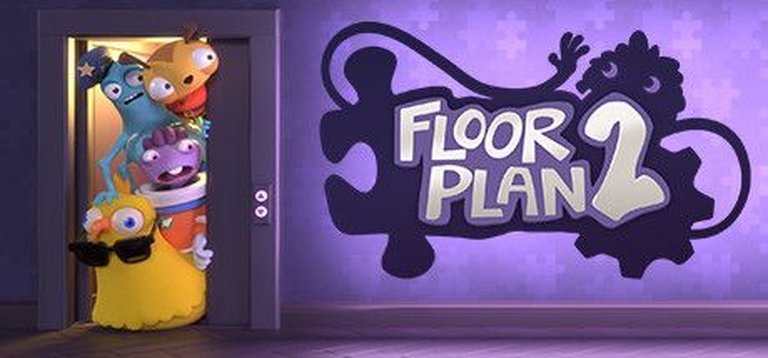
Floor Plan 2 is a first-person VR puzzle adventure where players work as a new hire tasked with retrieving a lost treasure hidden within a fantastical, multi-dimensional office building. Each elevator floor transports you to surreal new worlds filled with clever puzzles, language barriers, and fluidly shifting environments. Developed by Turbo Button, Inc., the game leverages motion controls to challenge players with tactile problem-solving across whimsical landscapes, improving upon its predecessor with expanded content and an immersive mode for Quest and PC players.
Gameplay Videos
Where to Buy Floor Plan 2
PC
Floor Plan 2 Guides & Walkthroughs
Floor Plan 2 Reviews & Reception
metacritic.com (80/100): Floor Plan 2 feels like a VR episode of The Muppet Show, not just in the hilarious absurdity of its world but also in the constant, invigorating ingenuity of its puzzles.
uploadvr.com : Floor Plan 2’s warm humor, playful puzzles and moments of genius offset its sometimes obscure puzzling.
store.steampowered.com : This is one of the best puzzle games in VR.
useapotion.com : Floor Plan 2’s greatest strength lies in its puzzles, with each enigma not only proving to be very clever in design but also defying what players would consider ‘typical’ logic.
Floor Plan 2: Review
Introduction
In an era where virtual reality often chases photorealism or visceral action, Floor Plan 2 (2021) arrives like a whimsical breath of fresh air—or perhaps the ding of an elevator door reopening with renewed purpose. A sequel to Turbo Button’s cult 2016 puzzler, this VR-exclusive adventure refines its predecessor’s elevator-based escapades into a madcap odyssey through interconnected escape rooms, each more absurd than the last. Underneath its cartoonish veneer lies a meticulously crafted puzzle experience that marries surreal humor with tactile ingenuity, earning acclaim as one of VR’s most inventive and charming titles. This review argues that Floor Plan 2 not only perfects its franchise’s formula but stands as a testament to how VR can elevate playful, nonviolent storytelling into an essential interactive experience.
Development History & Context
Studio Vision & Technological Constraints
Developed by Los Angeles-based Turbo Button, Floor Plan 2 emerged from a desire to expand the scope of their debut title while staying true to VR’s core strength: embodied interaction. Founders Holden Link and Nic Vasconcellos, veterans of studios like Insomniac and High Impact Games, prioritized accessibility and comfort, designing for standalone headsets like the Quest 2 while ensuring PC VR parity. The studio’s small size (44 developers credited) necessitated creative solutions—Unity’s engine powered the game’s stylized visuals, while motion-controlled interactions were streamlined to avoid nausea-inducing locomotion.
Gaming Landscape & Influences
Released April 1, 2021, amid a surge in VR adoption driven by pandemic-era isolation, Floor Plan 2 entered a market hungry for lighthearted escapism. It drew inspiration from classic point-and-click adventures (Monkey Island, Grim Fandango) and escape room designs but reimagined them through VR’s spatial possibilities. Unlike contemporaries chasing “AAA” realism (Half-Life: Alyx), Turbo Button doubled down on quirky minimalism, leveraging VR’s intimacy to create a game that felt both nostalgic and radically contemporary.
Narrative & Thematic Deep Dive
Plot & Characters
Players assume the role of a new employee at Puzzl Corporation, a bankrupt firm whose salvation hinges on retrieving four mystical artifacts hidden within a multidimensional office tower. The elevator serves as a portal to self-contained, often nonsensical floors—a caveman’s museum, a disco run by chickens, a zero-gravity hive of sentient bees—each inhabited by Muppet-like NPCs who communicate in Simlish-like gibberish. Dialogue choices (expressed via thumbs-up/thumbs-down gestures) subtly shape interactions, though the narrative prioritizes environmental storytelling over plot depth.
Themes & Subtext
Beneath the slapstick lies a satire of corporate drudgery and bureaucratic absurdity: Puzzl’s mission to “solve problems” is rendered futile by the very chaos players embrace. Themes of connection—between floors, items, and characters—underscore the puzzles, while the artifact hunt metaphorizes the human desire to impose order on chaos. The lack of spoken dialogue universalizes the experience, leaning on visual humor and physical comedy reminiscent of silent-film-era clowns.
Gameplay Mechanics & Systems
Core Loop & Puzzle Design
The game’s brilliance lies in its nested puzzles. Players teleport between elevator stops and fixed nodes within floors, manipulating objects (e.g., stealing a DJ chicken’s sunglasses, bribing a frog with flies) to unlock artifacts. Items carry across floors—a buttered finger trap from a cave aids a spaceship repair—encouraging lateral thinking. Progression demands revisiting earlier floors with new items, a structure evoking Metroidvanias but condensed into 6-8 hours.
Innovations & Flaws
– Inventory System: A fanny pack accessed by hip-grabbing allows three-item storage, stretchable via VR physics—a tactile delight.
– Hint System: Two-tiered hints via an elevator phone prevent frustration without spoiling solutions.
– Hand Presents: Collectible “Red Harrys” critters unlock cosmetic hand transformations (e.g., farting gloves), adding replayability.
– Overtime Mode: Post-campaign remixed puzzles and collectible hunts extend playtime.
Critiques:
– Locomotion Limitations: Teleport-only movement and frequent “center drift” frustrate seated players (per The VR Grid), requiring physical repositioning.
– Moon Logic: Some puzzles (e.g., breaking a “solved” machine) defy intuition, risking player burnout.
– Controller Compatibility: Vive Cosmos support issues noted at launch.
UI/UX
Tailored for comfort: snap/smooth turning options, adjustable speeds, and “giant mode” rescale interactions for accessibility. The minimalist UI keeps focus on diegetic elements—buttons, notes, and environmental cues.
World-Building, Art & Sound
Visual Design & Atmosphere
Turbo Button’s art team (led by Ralph Bull and Nathan Ayres) crafts a puppet-theater aesthetic—characters resemble Sesame Street rejects, while environments balance simplicity with vibrant, diorama-like detail. Floors riff on pop-culture archetypes (a disco’s neon grids, a spaceship’s sterile panels) without overwhelming VR performance. Though textures lack realism (Gamepressure noted “mobile VR” roots), the stylized approach aged gracefully, evoking stop-motion charm.
Soundscape
Sean Beeson’s score shifts between elevator muzak, thumping club beats, and ambient sci-fi synths, enhancing each floor’s personality. Sound design—squishy interactions, creature chatter—prioritizes whimsy, while voice acting (Michael Wilga et al.) uses garbled speech to comic effect. The absence of dialogue avoids localization hurdles, reinforcing universal physical comedy.
Reception & Legacy
Launch & Reviews
Floor Plan 2 debuted to 80% aggregate critical acclaim (MobyGames) and “Very Positive” Steam reviews (90% of 76). Critics praised its:
– “Muppet Show-esque absurdity” (UploadVR, 4/5)
– “Charming-as-heck world” (The Escape Roomer, 4.8/5)
– “Ingenious VR-centric mechanics” (A Wolf in VR)
Consensus noted its superiority to the original, though Gameplay Benelux (74%) critiqued VR’s “limited added value” for non-enthusiasts.
Commercial Impact & Influence
While sales figures remain undisclosed, its Meta Quest 2 prominence and Backside Story (2023 free expansion) cemented its longevity. Nominated for multiple “VR GOTY” awards, it influenced lighter VR puzzlers like Virtual Virtual Reality 2 and Cosmonious High, proving that nonviolent, family-friendly VR could thrive. Turbo Button’s elevator concept became a franchise staple, with Floor Plan: Remastered (2023) revisiting the original.
Conclusion
Floor Plan 2 is a masterclass in VR design, leveraging the medium’s physicality to deliver a puzzle-adventure brimming with personality. Its flaws—uneven difficulty, locomotion hiccups—fade against triumphs: ingenious puzzles, a world oozing charm, and an unshakeable commitment to joy. By embracing absurdity without sacrificing depth, Turbo Button crafted not just a standout VR title but a timeless homage to the golden age of adventure games. In the pantheon of VR classics, Floor Plan 2 earns its place as a Willy Wonka-esque wonder—a ride worth revisiting, floor by delightful floor.
Final Verdict: A must-play for VR enthusiasts and puzzle fans alike; a quirky gem that reshapes escapism. ★★★★☆ (4.5/5).