
- Release Year: 2017
- Platforms: Windows
- Publisher: Amaterasu Software j.d.o.o.
- Developer: Amaterasu Software j.d.o.o.
- Genre: Action
- Perspective: Side view
- Game Mode: Hotseat, Single-player
- Gameplay: Platform, Puzzle elements
- Average Score: 51/100
Description
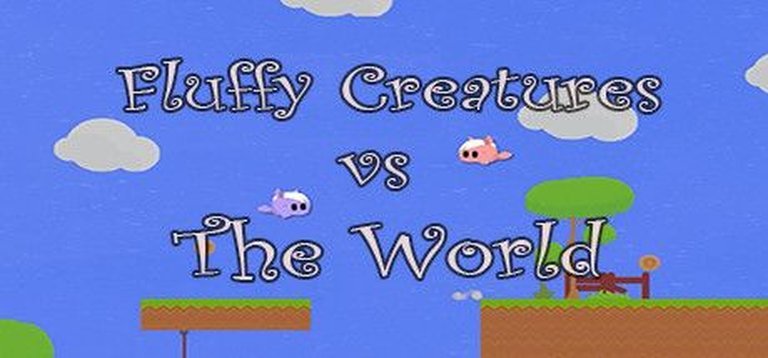
Fluffy Creatures vs The World is a charming 2D platformer where players take on the role of Fluffy McCuddleston, a member of a peaceful, intellectual race. After being captured by the villainous Dr. Sadisto and strapped with a timed explosive, Fluffy must navigate through treacherous levels to collect rare candy gold, rescue his partner Snuggly Von Purpleton, and ultimately thwart the doctor’s evil plans to save Fluffyland. The game features both single-player and local multiplayer modes, blending action, puzzle elements, and lighthearted adventure in a side-scrolling, direct-control interface.
Gameplay Videos
Where to Buy Fluffy Creatures vs The World
PC
Fluffy Creatures vs The World Guides & Walkthroughs
Fluffy Creatures vs The World Reviews & Reception
steambase.io (45/100): Fluffy Creatures VS The World has earned a Player Score of 45 / 100.
store.steampowered.com (66/100): A simple platforming indie game that puts the player in control of Fluffy McCuddleston.
steamcommunity.com : A waste of time.
niklasnotes.com (44/100): The reviews for ‘Fluffy Creatures VS The World’ reveal a strong sentiment against its controls, physics, and overall design, with many players expressing frustration.
Fluffy Creatures vs The World: A Cautionary Tale of Unfulfilled Potential
Introduction: The Allure of the Fluffy and the Peril of the Unpolished
In the vast, often overwhelming landscape of indie games, Fluffy Creatures vs The World (2017) emerges as a curious artifact—a game that, at first glance, promises a whimsical, lighthearted platforming adventure but ultimately stumbles under the weight of its own technical and design shortcomings. Developed and published by the obscure Amaterasu Software, this title is a study in contrasts: its charming aesthetic and simple premise are undercut by frustrating mechanics, a lack of polish, and a perplexing absence of basic quality-of-life features. This review seeks to dissect Fluffy Creatures vs The World in its entirety, exploring its development context, narrative ambitions, gameplay systems, and the broader implications of its reception. In doing so, we will uncover why this game, despite its endearing surface, remains a cautionary tale about the pitfalls of indie game development in an era where player expectations are higher than ever.
Development History & Context: The Rise and Stumble of Amaterasu Software
The Studio Behind the Fluff
Amaterasu Software, the Croatian studio responsible for Fluffy Creatures vs The World, is a relatively unknown entity in the gaming industry. Founded in the mid-2010s, the studio has primarily focused on small-scale, budget-friendly titles, often leveraging simple mechanics and cutesy aesthetics to appeal to casual audiences. Their portfolio includes a series of “Fluffy” games—Fluffy Birds (2010), Fluffy Horde (2018), and Fluffy Cubed (2021)—each attempting to carve out a niche in the oversaturated indie market. However, none of these titles have achieved significant commercial or critical success, and Fluffy Creatures vs The World is no exception.
The game was released on April 9, 2017, exclusively for Windows via Steam, with a price point of just $0.99 (later reduced to $0.49). This aggressive pricing strategy suggests a conscious effort to attract impulse buyers, a common tactic among indie developers seeking visibility in Steam’s crowded marketplace. However, the game’s lack of marketing, minimal press coverage, and absence of post-launch support ultimately relegated it to obscurity.
Technological Constraints and Design Philosophy
Fluffy Creatures vs The World was developed using what appears to be a basic 2D game engine, likely leveraging tools such as Unity or GameMaker. The game’s technical specifications are modest, requiring only a DirectX 9-compatible graphics card and 1GB of RAM, making it accessible to even the most outdated systems. This low barrier to entry aligns with the studio’s apparent philosophy of creating games that are easy to run but, unfortunately, also easy to forget.
The development cycle for Fluffy Creatures vs The World was likely short, given its simplicity and the studio’s limited resources. The game’s 25 stages, while gradually increasing in difficulty, are brief and repetitive, suggesting a rushed or underfunded production process. The absence of a save system—a glaring omission in modern gaming—further indicates that the developers either lacked the time, expertise, or inclination to implement basic features that players have come to expect.
The Gaming Landscape of 2017
The year 2017 was a pivotal one for indie games. Titles like Cuphead, Hollow Knight, and Stardew Valley demonstrated that indie developers could achieve both critical acclaim and commercial success by combining innovative gameplay with polished presentation. Meanwhile, platforms like Steam Greenlight (which transitioned to Steam Direct in 2017) made it easier than ever for small studios to publish their games, leading to an explosion of indie titles—many of which struggled to stand out.
Fluffy Creatures vs The World entered this competitive landscape with little to differentiate itself. Its cutesy aesthetic and simple platforming mechanics were not enough to capture the attention of players who had grown accustomed to more refined experiences. The game’s lack of a compelling hook—whether in storytelling, gameplay innovation, or technical prowess—doomed it to obscurity from the outset.
Narrative & Thematic Deep Dive: A Thin Veneer of Whimsy
Plot Summary: A Tale of Kidnapping and Candy Gold
The narrative of Fluffy Creatures vs The World is as straightforward as its gameplay. Players assume the role of Fluffy McCuddleston, a member of a peaceful, intellectual race of fluffy creatures. The idyllic existence of Fluffyland is disrupted when the nefarious Dr. Sadisto invades, kidnapping Fluffy and his partner, Snuggly Von Purpleton. The villainous doctor straps the duo with timed explosive devices, threatening to detonate them unless they collect a rare substance known as “candy gold” for his sinister purposes.
The premise, while simple, is not without potential. The idea of a villain forcing protagonists into a deadly game is a tried-and-true trope, evoking comparisons to classics like Bomb Jack or The Legend of Zelda: Majora’s Mask. However, Fluffy Creatures vs The World fails to capitalize on this premise, offering little in the way of character development, world-building, or thematic depth.
Characters: One-Dimensional Fluff
The game’s cast is limited to three characters:
1. Fluffy McCuddleston: The protagonist, whose name is as cumbersome as his movement mechanics. Fluffy is a blank slate, devoid of personality or motivation beyond the basic desire to survive.
2. Snuggly Von Purpleton: Fluffy’s partner, who serves as the second player in cooperative mode. Like Fluffy, Snuggly is a non-entity, existing solely as a mechanical extension of the gameplay.
3. Dr. Sadisto: The game’s antagonist, whose name is a heavy-handed attempt at conveying villainy. Sadisto is a cartoonishly evil scientist, but his motivations—beyond a generic desire for candy gold—are never explored.
The lack of dialogue, cutscenes, or even basic exposition means that the game’s narrative is conveyed almost entirely through its Steam store description. Players who do not read this text before diving in will be left with no context for their actions, reducing the story to a mere backdrop for the platforming mechanics.
Themes: A Missed Opportunity for Satire or Substance
At its core, Fluffy Creatures vs The World could have been a satire of capitalism, exploring themes of exploitation and forced labor. The idea of a villain compelling innocent creatures to harvest a rare resource under the threat of death is ripe for commentary on labor practices, consumerism, or even environmental destruction. However, the game makes no attempt to engage with these themes, instead treating its premise as little more than a justification for its gameplay loop.
Alternatively, the game could have leaned into its whimsical aesthetic, crafting a lighthearted, humorous narrative in the vein of Katamari Damacy or Earthworm Jim. Yet, the absence of any meaningful writing or character interaction ensures that the game’s tone remains flat and unremarkable.
The Absence of Storytelling in Gameplay
One of the most glaring issues with Fluffy Creatures vs The World is its failure to integrate its narrative into the gameplay experience. There are no cutscenes, no environmental storytelling, and no dialogue to speak of. The game’s stages are generic obstacle courses, devoid of any connection to the overarching plot. Even the final confrontation with Dr. Sadisto is anticlimactic, offering no resolution or payoff for the player’s efforts.
This disconnect between narrative and gameplay is a critical flaw. In an era where even the simplest indie games strive to create immersive, cohesive experiences, Fluffy Creatures vs The World feels like a relic of a bygone era—a time when games could afford to be mechanically focused without any narrative ambition.
Gameplay Mechanics & Systems: A Study in Frustration
Core Gameplay Loop: Collect, Survive, Repeat
Fluffy Creatures vs The World is, at its heart, a time-limited platformer. The player’s objective in each of the game’s 25 stages is to collect as many candy gold coins as possible while navigating a series of obstacles. Each coin collected extends the time limit, creating a risk-reward dynamic where players must balance speed and caution.
On paper, this mechanic is not inherently flawed. Games like Super Mario Bros. and Sonic the Hedgehog have long used time limits to create tension. However, Fluffy Creatures vs The World falters in its execution, primarily due to its poor controls, inconsistent physics, and punishing difficulty spikes.
Controls and Physics: A Recipe for Frustration
The most commonly cited issue in player reviews is the game’s unresponsive controls. Fluffy McCuddleston moves with a sluggish, imprecise gait, making even basic platforming a chore. Jumps feel floaty and unpredictable, and the hitboxes for obstacles are often inconsistent, leading to cheap deaths.
The game’s physics engine is equally problematic. Objects like falling rocks and moving platforms behave erratically, often defying logical expectations. This unpredictability is exacerbated by the game’s lack of a save system, forcing players to restart from the beginning if they fail to complete the game in one sitting.
Level Design: Repetitive and Uninspired
The game’s 25 stages are divided into three worlds, each with its own aesthetic theme (e.g., forests, caves, factories). However, the level design is repetitive and uninspired, with little variation in obstacles or mechanics. Most stages consist of:
– Moving platforms that require precise timing.
– Spikes and saws that insta-kill the player.
– Falling rocks that must be avoided.
– Conveyor belts that alter movement speed.
While these elements are staples of the platformer genre, their implementation in Fluffy Creatures vs The World feels lazy and unpolished. There is little in the way of creative puzzle-solving or innovative mechanics, and the difficulty curve is inconsistent, with later stages introducing punishing challenges without adequate preparation.
Multiplayer Mode: A Missed Opportunity
The game’s cooperative multiplayer mode allows a second player to control Snuggly Von Purpleton, with both characters sharing the screen. However, this mode is hampered by poor camera mechanics—the screen follows only the first player, leaving the second player at a disadvantage if they fall behind. This design flaw makes cooperative play more frustrating than fun, undermining what could have been a redeeming feature.
Achievements and Progression: A Hollow Reward
Fluffy Creatures vs The World features a mere three Steam achievements, each tied to completing specific stages. These achievements are uninspired and perfunctory, offering little incentive for replayability. The lack of additional unlockables, secret levels, or meaningful progression systems further diminishes the game’s longevity.
The Absence of a Save System: A Cardinal Sin
Perhaps the most egregious oversight in Fluffy Creatures vs The World is its lack of a save system. In an era where even the most basic mobile games offer checkpoint saves, this omission is inexcusable. Players are forced to complete the game’s 25 stages in a single sitting—a task that, given the game’s punishing difficulty, is both unreasonable and frustrating.
This design choice is particularly baffling given the game’s short length (most players complete it in under 4 hours). The absence of a save system suggests either negligence on the part of the developers or a deliberate attempt to artificially inflate playtime—a tactic that ultimately backfires, as it alienates players rather than engaging them.
World-Building, Art & Sound: Aesthetic Charms Cannot Save Flawed Gameplay
Visual Design: Cute but Unremarkable
Fluffy Creatures vs The World employs a bright, colorful aesthetic, with pastel hues and rounded character designs that evoke a sense of whimsy. The fluffy creatures themselves are undeniably cute, with their large eyes and soft textures, and the game’s environments—while simple—are pleasant to look at.
However, the visual design is largely unoriginal, drawing heavily from established indie platformers like Rayman or LittleBigPlanet. The game’s art style lacks the distinctiveness of titles like Cuphead or Hollow Knight, which use their visuals to create memorable, immersive worlds. Instead, Fluffy Creatures vs The World feels generic and forgettable, its charm undermined by its lack of innovation.
Sound Design: A Mixed Bag
The game’s audio design is similarly unremarkable. The soundtrack consists of upbeat, chiptune-inspired tracks that fit the game’s lighthearted tone but fail to leave a lasting impression. The sound effects—jumps, coin collections, and explosions—are functional but lack the polish of more refined indie titles.
One notable aspect of the sound design is its use of music to mitigate frustration. Several player reviews mention that the game’s cute, upbeat music helps to soften the blow of its frustrating mechanics. While this is a minor positive, it is not enough to compensate for the game’s myriad flaws.
Atmosphere: A Disconnect Between Aesthetic and Gameplay
The game’s whimsical aesthetic and dark premise create a jarring disconnect. The idea of adorable creatures being forced into deadly labor by a sadistic villain is inherently grim, yet the game’s visual and auditory presentation leans heavily into childlike innocence. This tonal inconsistency undermines the game’s potential for either satirical commentary or lighthearted fun, leaving it in an awkward middle ground where neither approach is fully realized.
Reception & Legacy: A Game Quickly Forgotten
Critical Reception: A Lack of Attention
Fluffy Creatures vs The World received virtually no critical coverage upon its release. Major gaming outlets ignored it, and it has no entries on review aggregators like Metacritic beyond a basic listing. This lack of attention is not surprising given the game’s low profile, minimal marketing, and unremarkable presentation.
Player Reception: Mixed but Overwhelmingly Negative
On Steam, the game holds a Mixed rating, with 66% of its 74 user reviews being positive. However, this statistic is misleading. A deeper dive into player feedback reveals a strong undercurrent of frustration, with common complaints including:
– Poor controls (cited in ~9% of reviews).
– Bad physics (~5%).
– Lack of a save system (~5%).
– Uninspired design (~4%).
Positive reviews tend to focus on the game’s cute graphics, short length, and achievements, suggesting that its appeal is largely limited to completionists and casual players who are willing to overlook its flaws for a quick, cheap experience.
Commercial Performance: A Budget Title with Budget Results
Given its $0.49 price point, Fluffy Creatures vs The World was likely never intended to be a major commercial success. However, its lack of visibility and poor reception ensured that it remained a niche product, appealing only to the most undiscerning or curious players.
Legacy: A Footnote in Indie Gaming History
Fluffy Creatures vs The World has had no discernible influence on the platformer genre or indie gaming as a whole. It is neither innovative enough to inspire imitators nor polished enough to serve as a benchmark for quality. Instead, it stands as a cautionary example of how even the most charming aesthetic cannot compensate for poor gameplay design and a lack of polish.
Conclusion: A Game That Fails to Live Up to Its Potential
Fluffy Creatures vs The World is a game of squandered potential. Its premise—a whimsical yet dark tale of forced labor and survival—could have been the foundation for a clever satire, a charming adventure, or a tight, challenging platformer. Instead, it is a shallow, frustrating experience that fails to deliver on any of these fronts.
The game’s cute visuals and upbeat music are its sole redeeming qualities, but they are not enough to overcome its poor controls, inconsistent physics, punishing difficulty, and glaring omissions (such as the lack of a save system). While it may appeal to completionists seeking an easy set of achievements or casual players looking for a brief distraction, it offers little of substance to anyone seeking a meaningful or enjoyable gaming experience.
In the grand tapestry of indie gaming, Fluffy Creatures vs The World is a footnote—a reminder that charm alone cannot save a game from its own flaws. It serves as a lesson to aspiring developers: no matter how cute your characters or how catchy your music, gameplay must always come first.
Final Verdict: 3/10 – A Cute but Broken Experiment
Fluffy Creatures vs The World is not without its charms, but its fundamental flaws make it difficult to recommend. Players who are desperate for a cheap, short platformer may find some fleeting enjoyment, but most will be left frustrated by its unresponsive controls, lack of polish, and absence of basic features. In a market flooded with superior indie platformers, this game is easily forgotten—and for good reason.
For those who still wish to experience it, Fluffy Creatures vs The World is available on Steam for $0.49—a price that, while low, may still be too high for what it offers. Proceed with caution, and temper your expectations accordingly.