
- Release Year: 2022
- Platforms: Windows
- Publisher: Atomic Fabrik
- Developer: Atomic Fabrik
- Genre: Action
- Perspective: Side view
- Game Mode: Single-player
- Gameplay: Direct control, Flight, Scrolling
- Average Score: 63/100
Description
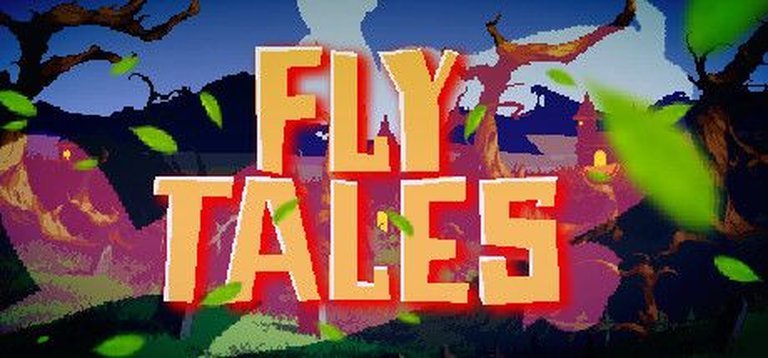
Fly Tales is a casual action game where players assume the role of an aircraft tester who becomes trapped in an endless timeline filled with destructive obstacles. The game challenges players to pilot their plane through a hazardous environment featuring air spiders, spiked ledges, stone shifts, and flying bombs while collecting gold to survive. With a modifiable world and progressively increasing difficulty, the test of reflexes and maneuvering skills intensifies as players strive to endure the relentless threats.
Where to Buy Fly Tales
PC
Fly Tales Guides & Walkthroughs
Fly Tales Reviews & Reception
steambase.io (63/100): Mixed reviews with both positive and negative feedback.
Fly Tales: Review
Introduction
In the vast and often overwhelming landscape of indie game development, some titles emerge not with a thunderous roar but with the quiet hum of ambition and simplicity. Fly Tales, released on August 19, 2022, by the enigmatic Atomic Fabrik and published under Pip Plop Studios, is precisely such a game. A humble 2D scrolling flight simulator that flies under the radar of mainstream acclaim, it embodies the indie ethos: accessible, mechanically straightforward, yet imbued with a curious charm. Its premise is deceptively simple: pilot a plane through an endless obstacle course, collecting gold while evading bizarre adversaries like air spiders and flying bombs. Yet, beneath this veneer of casual play lies a surprisingly poignant narrative about transformation, endurance, and the cyclical nature of existence. This review will delve into the game’s development context, dissect its narrative layers, analyze its core mechanics, and evaluate its artistic and sonic presentation before assessing its reception and legacy to determine whether Fly Tales is a hidden gem or a fleeting footnote in gaming history.
Development History & Context
Fly Tales emerged from Atomic Fabrik, a developer with minimal public footprint, utilizing the versatile GameMaker engine—a tool known for democratizing game development but often criticized for producing visually homogenous outputs. The game’s release occurred in a saturated market dominated by AAA titles and high-budget indies, positioning it as a budget-friendly curiosity priced at $4.99 on Steam. Its development context reveals a deliberate choice to prioritize accessibility over spectacle. The creators’ vision, articulated in the Steam store description, was to craft a “casual” experience where “carefree flight” becomes a metaphor for life-altering challenges. Technologically, GameMaker enabled rapid prototyping but likely constrained the game’s graphical fidelity and complexity, aligning with its minimalist aesthetic. The gaming landscape of 2022 saw a resurgence of “endless runner” and “survival” genres, with titles like Helldivers and Going Under blending accessibility with thematic depth. Fly Tales entered this arena not as an innovator but as a philosophical cousin—using simple mechanics to explore existential ideas, albeit with significantly smaller resources and ambitions.
Narrative & Thematic Deep Dive
At first glance, Fly Tales presents a minimalist narrative: a test pilot’s routine flight spirals into an “endless timeline” that threatens to “destroy and absorb him,” forcing him to rely on his plane’s “successful” design to survive. Yet, this setup belies profound thematic undercurrents. The pilot’s transformation from “carefree” tester to a figure trapped in a temporal loop evokes themes of existential dread and resilience. The “endless timeline” functions as a liminal space—a purgatorial arena where the protagonist must endlessly reapply his skills, mirroring Sisyphean struggles in myth and literature. The absence of explicit dialogue or traditional storytelling forces players to infer the narrative through gameplay repetition, creating a silent allegory about perseverance against overwhelming odds. The “endless timeline” also suggests cyclical time, where survival is not an endpoint but a continuous act of defiance. The game’s antagonists—air spiders, stone shifts, flying bombs—symbolize chaotic, uncontrollable forces that the pilot must navigate, representing life’s unforeseen obstacles. This abstraction elevates Fly Tales beyond a mere obstacle course, framing it as a meditation on human endurance in a hostile, unchanging universe.
Gameplay Mechanics & Systems
Core gameplay revolves around deceptively simple controls: direct manipulation of the aircraft in a side-scrolling perspective. Players navigate procedurally generated obstacles, collecting gold coins that serve as both currency and a score metric. The “modifiable world” feature, while vaguely described, implies subtle environmental changes—perhaps shifting terrain or obstacle patterns—adding unpredictability. Three systems anchor the experience:
1. Survival Loop: The primary objective is survival, with the screen displaying accumulated gold as a testament to distance traveled. This creates an addictive, high-score-driven loop, reminiscent of classic arcade games.
2. Progressive Difficulty: The game explicitly states that “difficulty increases as you spend more time in the game,” scaling obstacle frequency, speed, and complexity. This ensures engagement but risks becoming punishingly unfair, a common pitfall in endless-genre titles.
3. Bonuses: Gold coins act as power-ups, likely offering temporary invincibility or speed boosts—though details are scarce. Their scarcity necessitates risk-taking, heightening tension.
Combat is minimal; the pilot lacks offensive capabilities, positioning Fly Tales as a non-violent survival simulator. The UI is clean, displaying distance, gold count, and health (implied by collision-based failure). While “modifiable world” hints at innovation, its implementation remains ambiguous, potentially limiting depth. The game’s reliance on reflexes over strategy alienates players seeking narrative or mechanical complexity, making it a niche experience despite its accessible entry point.
World-Building, Art & Sound
Fly Tales eschews traditional world-building for an abstract, dreamlike environment. The “endless timeline” manifests as a surreal skiescape populated by impossible hazards: floating spikes resembling geological formations, arachnoid entities drifting through the void, and explosive projectiles that defy physics. This absence of grounded lore—no cities, societies, or backstories—amplifies the game’s existential tone, reducing the setting to a canvas for the pilot’s solitary struggle.
Artistically, the game adopts a “cartoony” and “stylized” 2D aesthetic, with vibrant colors and smooth animations. MobyGames and Steam tags like “Colorful” and “Cute” suggest a deliberately whimsical visual design, contrasting sharply with the game’s darker themes. This dissonance—playful art against a narrative of entrapment—creates a unique tension, as if the pilot’s ordeal unfolds within a children’s book illustration. Sound design remains undocumented in the sources, but the absence of audio cues beyond engine whirs and collision impacts would align with the minimalist approach. If implemented, atmospheric music could underscore the cyclical dread, while silence might amplify the isolating void of the “endless timeline.” The art and sound, in their ambiguity, serve the game’s themes: a facade of simplicity masking a profound, unsettling reality.
Reception & Legacy
At launch, Fly Tales garnered modest attention, with a “Mixed” player score (63/100) on Steambase based on 32 reviews. Steam reviews highlight a divided audience: positive comments praise its accessibility and “cute” aesthetic, while criticism targets its repetitive mechanics and perceived lack of depth. One Steam review quips, “is Plip Plop actually Hede? clearly not a 58 dollar game,” referencing a pricing controversy and suggesting perceived value mismatch. Critically, the game flew under the radar; Metacritic lists no critic reviews, and major outlets overlooked it. Commercially, its budget pricing ($4.99) likely limited revenue potential, though it achieved a niche following on platforms like Steam.
Legacy-wise, Fly Tales’ influence is subtle but discernible. Its fusion of minimalist gameplay with existential themes echoes in titles like Relax Fly (2021) and Fly Fly Tuk Tuk (2022), which similarly use flight as a metaphor for life’s struggles. The game’s emphasis on “endless” survival also resonates with the enduring popularity of roguelike and auto-battler genres. However, its generic presentation and lack of innovation prevent it from being a landmark. Instead, it stands as a cult curiosity—a testament to how small-scale indies can distill complex ideas into bite-sized experiences, even if they fail to leave a lasting imprint.
Conclusion
Fly Tales is a paradox: a game of profound simplicity that gestures toward complexity, wrapped in charming artistry yet burdened by repetitive execution. Its narrative—though abstract—offers a compelling allegory for perseverance, while its mechanics provide accessible, if shallow, thrills. The “endless timeline” is both a gameplay mechanic and a thematic masterstroke, transforming a casual flight simulator into a meditation on eternal struggle. Yet, its reliance on reflexes over depth and its underdeveloped “modifiable world” prevent it from soaring beyond its niche. As a piece of interactive art, Fly Tales succeeds in evoking emotion; as a game, it remains a fleeting diversion. In the pantheon of indie games, it occupies a humble but noteworthy space—a quiet, colorful bird in a sky dominated by louder, more ambitious species. For players seeking a brief, philosophical flight, it offers a worthwhile journey; for those craving mechanical innovation or narrative grandeur, it remains grounded. Ultimately, Fly Tales is not a classic, but it is a poignant reminder that even the smallest wings can carry the weight of existence.