
- Release Year: 2015
- Platforms: Windows, Xbox One
- Publisher: Ace Maddox AB
- Developer: Ace Maddox AB
- Genre: Action, Simulation
- Perspective: 1st-person, Behind view
- Game Mode: Online PVP, Single-player
- Gameplay: Aviation, Flight, Shooter
- Setting: Asia, World War II
- Average Score: 69/100
Description
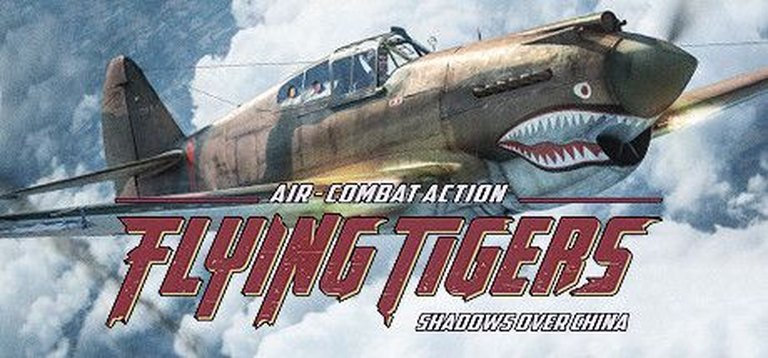
Set during World War II’s China-Burma-India theater, ‘Flying Tigers: Shadows over China’ is an arcade-style flight combat game focusing on the exploits of the American Volunteer Group—the famed Flying Tigers—who defended China against Japanese forces. Players engage in aerial dogfights, bomber escort missions, and ground attacks across diverse scenarios, blending historical context with accessible arcade gameplay. While the campaign offers a condensed look at this lesser-known front, the game compensates with varied modes and intense aerial combat, presented at a budget-friendly price point.
Gameplay Videos
Where to Buy Flying Tigers: Shadows over China
PC
Flying Tigers: Shadows over China Free Download
Flying Tigers: Shadows over China Cracks & Fixes
Flying Tigers: Shadows over China Reviews & Reception
opencritic.com (69/100): A failed attempt on an almost forgotten genre that it’s not fun to play or to be seen.
metacritic.com (67/100): Flying Tigers: Shadows Over China may have proven to be a bit of a let down with its campaign, but that doesn’t detract from the fact that the combat is rather enjoyable.
gamechronicles.com : I have been completely captivated by this title that just keeps getting better and better with each new update leading up to its official release.
Flying Tigers: Shadows over China Cheats & Codes
PC
To activate cheat mode, type “OCELLARIS” while playing. To use it, type any of the following while playing:
| Code | Effect |
|---|---|
| OCELLARIS | Activates cheat mode |
| 1q | Change levels; use up/down arrow to change level |
| 1l | Player 1 extra life |
| 1h | Extra health |
| 1f | Fireball shots |
| 1z | Laser shots |
| 1n | Napalm shots |
| 1m | Missile shots |
| 1s | One shield |
| 1c | One C-bomb shot |
| 2s | Add a shield to player 2 |
Flying Tigers: Shadows Over China: Review
Introduction
In the crowded skies of World War II flight simulators, Flying Tigers: Shadows Over China (2015) carves out a niche by spotlighting the oft-overlooked China-Burma-India Theater. Developed by Sweden’s Ace Maddox, this arcade-style combat flight simulator balances historical reverence with accessible gameplay, even as it stumbles under the weight of technical limitations and narrative shallowness. This review argues that while Flying Tigers doesn’t soar to the heights of genre giants like Ace Combat, its earnest depiction of a forgotten battlefield and inventive mechanics make it a compelling curiosity for aviation enthusiasts and history buffs alike.
Development History & Context
Ace Maddox, a small studio led by director Björn Larsson, sought to resurrect a fading genre with Flying Tigers. Released during a drought of console-compatible flight simulators, the game entered Steam Early Access in 2015 before its full launch in 2017 (Windows) and 2018 (Xbox One). The team faced budgetary constraints, evident in its reliance on outsourcing for asset creation (Retrostyle Games handled aircraft modeling) and a modest score by composers Magnus Ringblom and Simone Cicconi.
At the time of release, the gaming landscape was dominated by hyper-realistic military shooters and open-world epics, leaving little room for mid-tier flight combat titles. Yet Flying Tigers leveraged its unique historical angle—the Flying Tigers, a U.S. volunteer squadron aiding China against Japan—to stand out. However, its blend of arcade action and light simulation struggled to compete with AAA polish, earning mixed reviews that praised its ambition but critiqued its execution.
Narrative & Thematic Deep Dive
The game’s narrative orbits the Flying Tigers’ covert operations, spanning battles like the Bombing of Rangoon and the Salween Gorge campaign. While the premise is rich with historical potential, the storytelling is perfunctory. Mission briefings and战后 summaries provide context, but characters lack depth, relegated to radio chatter and generic voice-acting that oscillates between stiff and unintentionally campy.
Thematically, Flying Tigers grapples with the tension between historical accuracy and arcade theatrics. Missions switch perspectives between fighter pilots, bombers, and gunners, emphasizing the squadron’s versatility. Yet the lack of character development undermines the human drama of these volunteer soldiers. Brief nods to the geopolitical stakes—such as China’s desperation and Japan’s imperial aggression—feel undercooked, leaving the story as a mere scaffold for action.
Gameplay Mechanics & Systems
At its core, Flying Tigers is an arcade shooter with sim-lite trappings. The controls are streamlined for accessibility: triggers manage throttle, while shoulder buttons handle rudder adjustments. A standout feature is TrazerTime, a bullet-time mechanic that slows combat for precision shooting—a clever concession to the era’s lack of guided missiles.
The 12-mission campaign offers variety, from dogfights to bombing runs and coastal defense sorties. However, objectives often repeat, and mission pacing suffers from uneven difficulty spikes. Outside the campaign, modes like Dogfight, Free Flight, and Challenge Mode (featuring capture-the-flag and survival scenarios) add longevity, though the online multiplayer—supporting 16 players in team battles—faltered due to low population.
Critics praised the tactile joy of aerial combat but lamented clunky UI elements and inconsistent hit detection. The Xbox version’s lack of HOTAS support further alienated hardcore sim fans, while mouse-and-keyboard players on PC found the experience more intuitive.
World-Building, Art & Sound
Flying Tigers excels in rendering its Southeast Asian theaters, using photorealistic skyboxes and dense jungles to evoke the region’s beauty. Aircraft models, particularly the P-40 Warhawk and Japanese Zeros, are meticulously detailed, with functional cockpits and realistic damage effects. However, ground textures and environmental objects (buildings, trees) betray the game’s budget, appearing dated even for 2015.
Sound design is a mixed bag. The orchestral score heightens tension during combat, but engine roars and explosions lack punch. Voice acting, hamstrung by stiff dialogue and uneven accents, undermines immersion, though subtitles mitigate this.
Reception & Legacy
Flying Tigers garnered a 66% average on MobyGames and 67/100 on Metacritic, with critics split. Praise centered on its historical focus and addictive combat (Generación Xbox called it “a love letter to aerial combat fans”), while pans targeted its repetitive missions and technical hiccups (IGN Spain deemed it “a failed attempt”). The Steam community awarded it a “Mostly Positive” rating, with players applauding its value-for-money.
Commercially, the game found a niche, with 78,750 flight hours logged on Xbox by 2019. Its legacy lies in preserving the CBI Theater’s history, inspiring later titles like IL-2 Sturmovik: Battle of Bodenplatte to explore lesser-known fronts. However, its lack of lasting multiplayer engagement and middling graphical fidelity limited its cultural footprint.
Conclusion
Flying Tigers: Shadows Over China is a flawed but fascinating artifact—a budget title with AAA aspirations. Its historical ambition and inventive mechanics make it worthwhile for genre devotees, even as its technical shortcomings and narrative thinness hold it back. While not a masterpiece, it’s a vital reminder of gaming’s power to illuminate forgotten corners of history. For players craving a breezy, history-infused aerial romp, Flying Tigers earns its wings. For others, it remains a curious footnote in the annals of combat flight simulators.
Final Verdict: A commendable mid-tier flight combat experience that soars when it embraces its arcade roots but crashes under the weight of unrealized potential.