
- Release Year: 2024
- Platforms: Android, iPad, iPhone, Macintosh, Windows
- Publisher: Second Maze B.V.
- Developer: HiKing Mind Studio
- Genre: Adventure
- Perspective: Side view
- Game Mode: Single-player
- Gameplay: Graphic adventure, Point and select, Puzzle elements
- Setting: Detective, Mystery
- Average Score: 83/100
Description
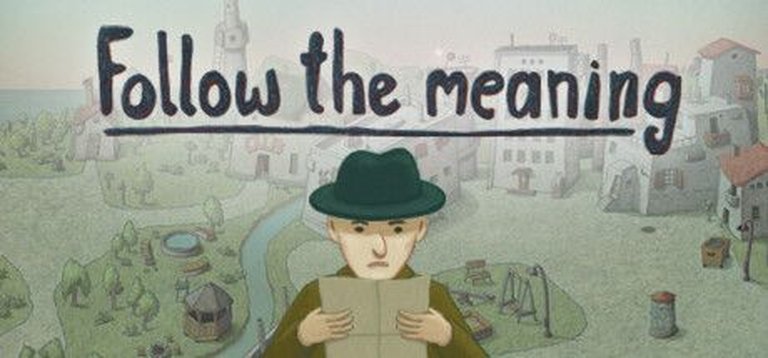
Follow the Meaning is a surreal, 2D graphic adventure game with puzzle elements, set in a whimsical world where players explore a unique environment filled with quirky characters and enigmatic mysteries. Developed by HiKing Mind Studio and published by Second Maze B.V., the game offers a short but engaging experience, blending point-and-click mechanics with a side-view perspective. Its distinctive art style and cryptic narrative draw comparisons to titles like Rusty Lake and Amanita Design, making it a standout choice for fans of unconventional detective-style adventures.
Gameplay Videos
Where to Buy Follow the Meaning
Follow the Meaning Patches & Updates
Follow the Meaning Guides & Walkthroughs
Follow the Meaning Reviews & Reception
opencritic.com (85/100): A delightful yet haunting adventure that showcases the strength of its art and atmosphere.
monstervine.com (70/100): If you’re looking for something straightforward or with a long, detailed story, this isn’t the game for you. But if you want a short, surreal sequence of puzzles in an adventure game format, Follow the Meaning should get you thinking.
steambase.io (94/100): Follow the meaning has earned a Player Score of 94 / 100.
thebigbois.com (85/100): A hand-drawn, surreal point-and-click puzzle adventure that invites players into a peculiar island town where mystery and conspiracy are hidden beneath a whimsical facade.
Follow the Meaning: A Surreal Journey Through Puzzle and Mystery
Introduction: A Detective’s Descent into the Uncanny
Follow the Meaning is a game that lingers in the mind long after the credits roll—a brief but haunting point-and-click adventure that blends the whimsy of Samorost with the psychological unease of Shutter Island. Developed by HiKing Mind Studio and published by Second Maze, this 2024 release is a love letter to classic adventure games, wrapped in a hand-drawn aesthetic that feels both nostalgic and fresh. With a runtime of just 1.5 hours, it’s a game that doesn’t overstay its welcome, yet its surreal narrative and clever puzzles leave a lasting impression.
At its core, Follow the Meaning is a mystery. Players step into the shoes of Detective Paul Trilby, summoned to a walled-off island town where the local Hospital holds an ominous grip over its citizens. People enter its gates and return memoryless, their identities erased. The game’s premise is simple but effective: uncover the truth behind the Hospital’s operations while navigating a world that grows increasingly strange. What begins as a straightforward detective story quickly spirals into something far more abstract, challenging players to question not just the game’s reality, but their own perceptions.
This review will dissect Follow the Meaning in exhaustive detail, exploring its development history, narrative depth, gameplay mechanics, artistic direction, and cultural impact. By the end, we’ll determine whether this surreal adventure is a fleeting oddity or a modern classic in the making.
Development History & Context: From Escape Rooms to Digital Mysteries
The Birth of HiKing Mind Studio
Follow the Meaning is the debut title from HiKing Mind Studio, a Polish indie team founded by brothers Marcin and Jakub Malinowski. Their journey into game development is as unconventional as the game itself. Before venturing into digital worlds, the duo ran an escape room business in their hometown of Toruń, Poland, under the name “Clock.” Their two rooms—“The Mad Artist” (a dark, mature experience) and “The Child’s Birthday” (a family-friendly puzzle)—proved popular, but the brothers yearned for a broader creative canvas.
Video games offered that opportunity. As Marcin noted in a devlog, their escape room success taught them the value of direct player feedback and the joy of crafting immersive experiences. The transition to game development was natural, allowing them to blend storytelling, puzzle design, and visual artistry in a way that escape rooms couldn’t.
Inspirations and Influences
The Malinowski brothers cite a wide range of influences, from classic point-and-click adventures like The Neverhood and Machinarium to modern indie darlings like the Rusty Lake series. Films such as Shutter Island and The Truman Show also left their mark, inspiring the game’s themes of perception, memory, and institutional control.
The visual style, however, is uniquely their own. Described as a fusion of “old children’s book illustrations” and “slightly unsettling storytelling,” the art direction evokes a dreamlike quality—soft linework, muted colors, and a touch of impressionism that recalls Van Gogh’s swirling skies. This aesthetic choice was deliberate, aiming to create a world that feels both inviting and vaguely sinister.
Technical Foundations and Publisher Partnership
Follow the Meaning was built in Unity, a engine well-suited for 2D games and accessible enough for a small team. The artwork was hand-drawn in Photoshop, with custom scripts used to animate the illustrations while preserving their handcrafted feel. This approach ensured that the game retained a tactile, almost analog charm despite its digital medium.
The partnership with Second Maze, the publishing arm of Rusty Lake, was pivotal. After discovering that The White Door (a Rusty Lake spin-off) was published under Second Maze’s banner, the Malinowski brothers reached out. The collaboration provided not just financial support but also creative guidance, helping refine the game’s puzzles and narrative. Second Maze also facilitated connections with industry veterans, including composer Victor Butzelaar (Rusty Lake Hotel, Cube Escape) and sound designers Jorick Bronius and Giliam Spliethoff of Driftwood Audio.
The Indie Showcase and Critical Reception
Follow the Meaning made its public debut at the Indie Showcase in Amsterdam, where it garnered attention for its unique blend of surrealism and detective storytelling. Subsequent appearances at Digital Dragons (where it won the Audience Award and 2nd Place for Best Indie Game) and Gamescom further solidified its reputation. These events provided invaluable feedback, leading to refinements in puzzle design, localization (the game supports 21 languages), and optimization.
The game’s November 22, 2024, release on Steam was met with enthusiasm, earning a “Very Positive” rating from over 888 user reviews. Critics praised its artistry and atmosphere, though some noted its brevity as a double-edged sword—a strength in its tight pacing, but a weakness in its lack of depth.
Narrative & Thematic Deep Dive: A Mystery Wrapped in a Riddle
Plot Summary: The Hospital’s Shadow
The game opens with Detective Paul Trilby receiving a cryptic letter urging him to investigate the goings-on in a secluded island town. The town is divided by a towering wall, with the Hospital looming over its citizens like a silent overseer. Patients enter its gates and emerge with their memories wiped, their personalities altered. The townsfolk whisper of conspiracies, but no one dares to challenge the Hospital’s authority.
Trilby’s investigation begins with mundane tasks—questioning locals, gathering clues—but soon takes a surreal turn. The game’s narrative is delivered through a mix of environmental storytelling, dialogue snippets, and fourth-wall-breaking moments that blur the line between player and protagonist. The Hospital isn’t just a physical location; it’s a metaphor for institutional control, memory manipulation, and the fragility of human perception.
Themes: Memory, Control, and the Illusion of Choice
Follow the Meaning explores several interconnected themes:
- Memory and Identity: The Hospital’s ability to erase memories raises questions about what makes us who we are. Are we the sum of our experiences, or is there something deeper that persists even when those experiences are stripped away?
- Institutional Power: The Hospital represents unchecked authority, a faceless entity that dictates the lives of the townsfolk. The game’s setting—a walled-off town—mirrors real-world systems of control, from psychiatric institutions to authoritarian regimes.
- Perception vs. Reality: The game’s surreal puzzles and meta-narrative moments force players to question what’s real. Is Trilby uncovering a conspiracy, or is he trapped in a constructed reality?
- The Unreliable Narrator: The story’s ambiguity leaves room for interpretation. Are the townsfolk victims of the Hospital, or are they complicit in its operations? The game’s multiple endings further complicate this, offering no definitive answers.
Characters: A Cast of Eccentrics
The townsfolk of Follow the Meaning are a motley crew of oddballs, each with their own quirks and secrets:
- Paul Trilby: The protagonist, a detective with a dry wit and a knack for lateral thinking. His journey mirrors the player’s, as both uncover the town’s mysteries.
- The Hospital Staff: Faceless figures who enforce the institution’s will. Their lack of individuality underscores the game’s themes of dehumanization.
- The Cat Lady: A recurring character who has lost her eight cats, serving as both comic relief and a metaphor for the town’s fragmented state.
- The Fisherman: A cryptic figure who spouts philosophical musings, hinting at deeper truths beneath the surface.
Dialogue and Writing: Less Is More
The game’s writing is sparse but effective. Dialogue is often cryptic, leaving players to piece together meaning from context. This minimalist approach suits the surreal tone, though it may frustrate those seeking a more straightforward narrative. The game’s humor—dry, absurdist, and occasionally dark—adds levity to its otherwise somber themes.
Multiple Endings and Replayability
Follow the Meaning features multiple endings, each offering a different perspective on the Hospital’s true nature. Some are bleak, others ambiguous, and a few downright bizarre. This encourages replayability, though the game’s short length means most players will experience all endings in a single sitting.
Gameplay Mechanics & Systems: Puzzles, Progression, and Player Agency
Core Gameplay Loop: Click, Solve, Repeat
Follow the Meaning is a classic point-and-click adventure at heart. Players explore the town, interact with objects and characters, and solve puzzles to progress. The gameplay is divided into several key mechanics:
- Inventory-Based Puzzles: The bread and butter of the genre. Players collect items (e.g., oars, keys, cryptic notes) and use them in the environment to overcome obstacles.
- Environmental Interaction: Clicking on objects triggers animations or dialogue, often revealing hidden clues or advancing the plot.
- Logic and Pattern Puzzles: These range from simple (matching symbols) to abstract (interpreting surreal imagery). The game’s hint system—a lightbulb icon that highlights interactable objects—helps mitigate frustration.
- Hidden Object Challenges: Some puzzles require players to find specific items in cluttered scenes, a nod to games like Mystery Case Files.
Puzzle Design: Clever but Occasionally Obscure
The puzzles in Follow the Meaning are well-crafted, striking a balance between accessibility and challenge. Early puzzles ease players in, while later ones require more lateral thinking. However, the game’s surreal tone means some solutions defy real-world logic. For example, one puzzle involves interpreting a nonsensical riddle that only makes sense within the game’s dreamlike context.
This approach will delight fans of abstract puzzles but may alienate those who prefer straightforward challenges. The lack of a traditional walking animation (players instantly teleport to interaction points) streamlines the experience but removes some immersion.
UI and Accessibility
The game’s UI is clean and intuitive, with a minimalist design that doesn’t distract from the artwork. The hint system is optional, allowing players to toggle it on or off depending on their preference. A built-in walkthrough is also available, though using it disables achievements—a clever way to encourage organic problem-solving.
Progression and Pacing
Follow the Meaning is a short game, with most players completing it in 1.5 to 2 hours. This brevity is both a strength and a weakness. On one hand, the tight pacing ensures no filler; every puzzle and interaction serves the narrative. On the other, the game’s intriguing premise could have supported a longer experience. The lack of significant gameplay variety—most interactions follow the same click-and-solve formula—may leave some wanting more.
Side Content: The Case of the Missing Cats
For those seeking extra challenge, the game includes an optional side quest: finding eight hidden cats scattered throughout the town. Each cat grants an achievement, adding a layer of replayability. However, the cats are easy to miss, and there’s no way to revisit areas post-completion without restarting the game—a minor but notable oversight.
World-Building, Art & Sound: Crafting a Surreal Dreamscape
Setting: A Town Out of Time
The game’s island town is a character in its own right. Divided by a towering wall, it’s a place where reality bends at the edges. The Hospital looms in the background, its gothic architecture contrasting with the town’s quaint, almost storybook aesthetic. The juxtaposition of whimsy and dread is masterful, creating a world that feels both familiar and deeply unsettling.
Art Direction: Hand-Drawn Dreams
The hand-drawn visuals are Follow the Meaning’s standout feature. The art style is soft yet detailed, with a color palette dominated by muted blues, greens, and browns. The impressionistic touches—visible brushstrokes, swirling patterns—give the game a painterly quality, as if each scene were lifted from a children’s book left out in the rain.
Character designs are equally striking. The townsfolk are exaggerated caricatures, their expressions ranging from bemused to downright unnerving. The Hospital staff, with their blank faces and stiff movements, evoke a sense of cold, clinical detachment.
Sound Design: A Haunting Score
Victor Butzelaar’s soundtrack is a perfect complement to the visuals. The music shifts seamlessly between lighthearted jazz, eerie ambient tones, and dramatic crescendos, mirroring the game’s tonal whiplash. The sound effects—creaking doors, distant whispers, the meows of hidden cats—add depth to the atmosphere, making the town feel alive (or perhaps too alive).
Atmosphere: Cozy Yet Unsettling
Follow the Meaning excels in creating a mood that’s hard to pin down. One moment, you’re solving a puzzle in a cheerful marketplace; the next, you’re staring down a corridor in the Hospital, the air thick with tension. This push-and-pull between comfort and unease is the game’s greatest achievement, ensuring that players are never quite at ease.
Reception & Legacy: A Cult Classic in the Making?
Critical Reception: Praise for Artistry, Criticism for Brevity
Follow the Meaning has been warmly received by critics, with an average score of 77% based on early reviews. Praise has centered on its art direction, atmospheric soundtrack, and clever puzzle design. Critics like Thumb Culture and TheBigBois highlighted its uniqueness, with the latter calling it “a must-play for fans of point-and-click games looking for a quick, engaging mystery.”
However, the game’s short runtime has been a point of contention. MonsterVine’s review noted that while the experience is satisfying, it’s “not for everyone,” particularly those seeking a longer, more detailed narrative. The lack of gameplay variety was also mentioned, with some critics arguing that the puzzles, while well-designed, don’t break enough new ground.
Player Reception: A Steam Darling
On Steam, Follow the Meaning has been a hit, with a “Very Positive” rating from over 888 reviews. Players have praised its charm, creativity, and the sheer joy of unraveling its mysteries. The game’s surreal tone has resonated particularly well with fans of Rusty Lake and Amanita Design titles, who appreciate its blend of whimsy and psychological depth.
Legacy and Influence
While it’s too early to gauge Follow the Meaning’s long-term impact, its success suggests a bright future for HiKing Mind Studio. The game’s unique art style and narrative ambition have already drawn comparisons to indie classics, and its strong reception may inspire other developers to explore similarly surreal themes.
If there’s one area where Follow the Meaning could leave a lasting mark, it’s in its approach to storytelling. By blending detective tropes with meta-narrative elements, it offers a fresh take on the point-and-click genre—one that prioritizes atmosphere and player interpretation over rigid plot structures.
Conclusion: A Surreal Gem with Room to Grow
Follow the Meaning is a triumph of atmosphere and artistry, a game that lingers in the mind like a half-remembered dream. Its hand-drawn visuals, haunting soundtrack, and clever puzzles create an experience that’s as unsettling as it is enchanting. For fans of surreal storytelling and classic adventure games, it’s a must-play—a brief but unforgettable journey into the unknown.
However, its brevity and lack of gameplay variety may leave some wanting more. The game’s intriguing premise and rich world-building could easily support a longer experience, and its puzzles, while well-crafted, don’t always push the genre forward. Still, as a debut title from HiKing Mind Studio, Follow the Meaning is an impressive achievement—one that hints at even greater things to come.
Final Verdict: 8.5/10 – A surreal masterpiece that’s as brief as it is brilliant.
For those with an hour to spare and a love for the strange, Follow the Meaning is well worth the journey. And if this is just the beginning for Detective Paul Trilby, the future looks deliciously uncertain.