
- Release Year: 2003
- Platforms: PlayStation 2, PlayStation 3, Windows
- Publisher: 1C Company, Comgame 576 Ltd., FX Interactive, S.L., Midas Interactive Entertainment Ltd., Sony Computer Entertainment Europe Ltd., Take-Two Interactive Software, Inc., Ubisoft Entertainment SA
- Developer: Trecision S.p.A.
- Genre: Sports
- Perspective: 3rd-person
- Game Mode: Single-player
- Gameplay: Custom competition, League, Team Management, Tournament
- Setting: Football (European), Soccer, Sports
- Average Score: 86/100
Description
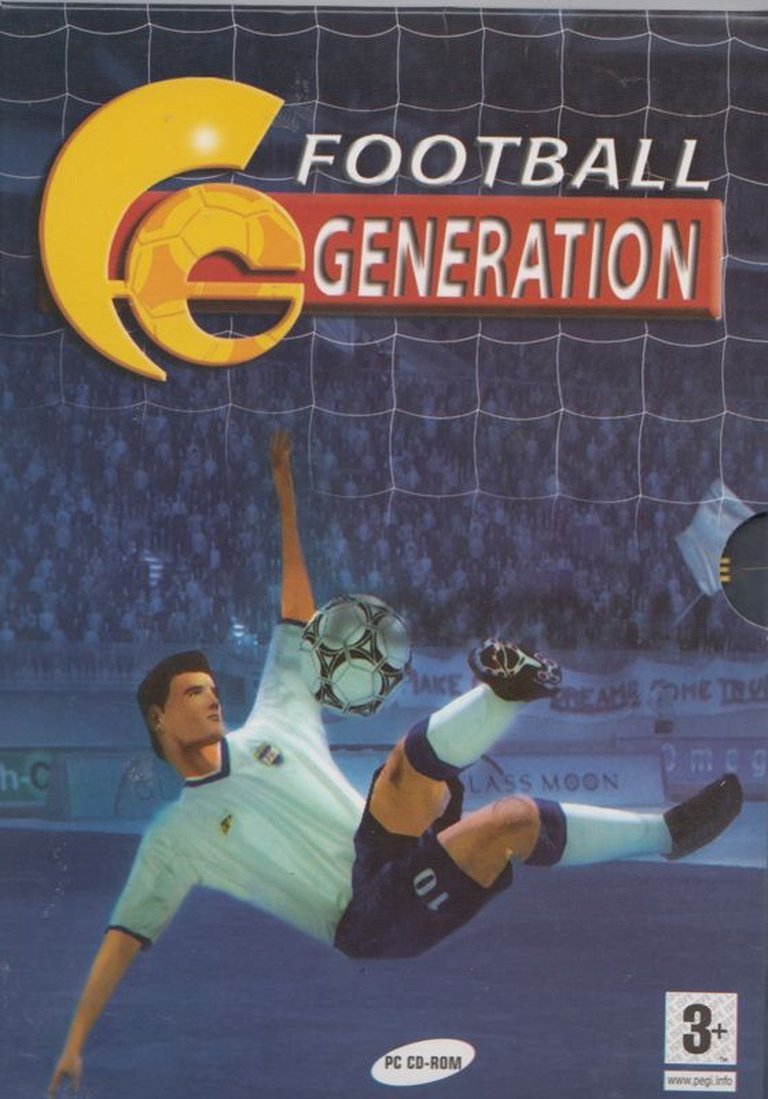
Football Generation is a soccer simulation game featuring 44 international and 33 major club teams, offering various game modes including quick matches, cups, leagues, and custom competitions. Developed using the Renderware engine and FMOD sound system, the game boasts detailed 3D stadiums, realistic weather effects, and multiple camera angles. Originally tied to Zinedine Zidane, the game was rebranded and released in 2003 after development delays, with a limited launch excluding North America and Western Europe.
Gameplay Videos
Football Generation Free Download
Football Generation Mods
Football Generation Guides & Walkthroughs
Football Generation Reviews & Reception
myabandonware.com (86/100): It took me a while in order to install this, it was kinda tricky.
Football Generation Cheats & Codes
PlayStation 2
Enter the following codes on the Main Menu screen:
| Code | Effect |
|---|---|
| Right, Right, Right, Left, Up, Up, Up | Unlimited Money for Every Season |
| Up, Up, Down, Left, Right, L1 | Unlimited Money for One Season |
| Up, Up, R1, L2, Up, L1 | Unlimited Skill for Custom Teams |
| L1, R1, R2, L2, Up, Down, Left, Right | Unlock Bonus Teams and Stadia |
| L1, L1, L2, R2, R2, R1 | Unlock Circus Sounds |
| L2, L1, L1, L2, L2 | Unlock Credits |
| L2, L1, R2, Up, Down, Right | Unlock Farmyard Sounds |
| L2, L1 (x3), L2, L2 | Unlock FMV Sequences |
| L1, R2, R2, Up, Down, Right | Unlock Jungle Pitch Stadium |
| L2, L1, R1, L1, L2, L2 | Unlock School Pitch Stadium |
| Up, Up, Up, Left, Right, R2 | Unlock School Playing Fields stadium |
| R2, L1, L1, Up, Up, Right | Unlock Secret Teams |
| Up, Down, R2, L2, Up, L2 | Unlock Timewarp Teams Set 1 |
| Up, Down, R2, L2, Up, L1 | Unlock Timewarp Teams Set 2 |
PlayStation 2
At the main menu, press the following sequences:
| Code | Effect |
|---|---|
| L1(2), R2, Up, Down, Right | Farm sounds |
| L1(2), L2, R2(2), R1 | Clown sounds |
| L2, R2, R1, R2, L2, R2 | Fast announcers |
| L2, L1(3), L2(2) | FMV sequences |
| L2, L1(2), L2(3) | View credits |
Football Generation: A Forgotten Gem in the Shadow of Giants
Introduction
In the early 2000s, the football (soccer) video game market was dominated by titans like FIFA and Pro Evolution Soccer. Amidst this fierce competition, Football Generation (2003) emerged as a curious underdog—a game that, despite its ambitious features and unique development history, faded into obscurity. Developed by Italian studio Trecision and published by a consortium of companies including Ubisoft and Take-Two Interactive, Football Generation attempted to carve out its niche with a blend of licensed teams, scenario-based gameplay, and a troubled yet fascinating backstory. This review delves deep into the game’s development, mechanics, and legacy, exploring why it remains a cult favorite among retro gaming enthusiasts despite its commercial struggles.
Development History & Context
A Game Born from Turmoil
Football Generation’s development began in 2001 under the title Zidane Football Generation, a project that initially sought to capitalize on the star power of French football legend Zinedine Zidane. The game was slated for publication by Cryo Interactive, a French publisher known for adventure games like Atlantis: The Lost Tales. However, Cryo’s financial collapse in 2002 left the project in limbo. Trecision, the Italian developer, reacquired the rights and rebranded the game, stripping it of Zidane’s endorsement and releasing it as Football Generation in January 2003.
The game’s troubled development is evident in its limited release. Unlike its competitors, Football Generation never saw a North American or Western European launch, instead finding its way to markets like Russia, Spain, and Italy. In 2004, it was even bundled as a freebie with products like CD-R packs in Belgium and the Netherlands, a far cry from the premium marketing of FIFA or PES.
Technological Foundations
Football Generation was built using Criterion’s RenderWare engine, a popular middleware solution at the time that powered games like Burnout and Grand Theft Auto III. This engine allowed for detailed 3D stadiums, player models, and dynamic weather effects—features that were cutting-edge for a sports game in 2003. The sound design relied on Firelight’s FMOD engine, which delivered immersive crowd noises and commentary, though the latter was notably unlicensed.
The game’s technical ambitions were hampered by the hardware limitations of the era. With minimum requirements calling for a Pentium II 400 MHz processor and 128 MB of RAM, Football Generation was accessible to most PC gamers but lacked the polish of its competitors. Its later ports to PlayStation 2 (2006) and PlayStation 3 (2012) did little to revitalize its reputation, arriving long after the game’s relevance had waned.
Narrative & Thematic Deep Dive
A Game Without a Story
Unlike narrative-driven sports games like FIFA Street or NBA 2K’s career modes, Football Generation eschewed storytelling in favor of pure gameplay. There are no player arcs, no dramatic underdog tales—just the raw, unfiltered experience of managing and playing matches. This minimalist approach was both a strength and a weakness. On one hand, it allowed players to focus on the tactical depth of the game. On the other, it left Football Generation feeling sterile compared to the cinematic flair of its rivals.
Thematic Focus: Realism Over Spectacle
The game’s themes revolved around authenticity and customization. With 44 international teams and 33 club teams, Football Generation offered a broad (if unlicensed) roster of players and competitions. The “Scenario Mode” was its most innovative feature, allowing players to step into specific match situations—such as leading a team to victory in the final minutes of a cup tie. This mode emphasized the game’s tactical depth, forcing players to adapt to high-pressure scenarios rather than relying on brute-force gameplay.
However, the lack of licensed player names and commentary muted the game’s immersion. While competitors like FIFA boasted real-life player likenesses and commentary from legends like John Motson, Football Generation’s generic roster and anonymous announcers made it feel like a budget alternative.
Gameplay Mechanics & Systems
Core Gameplay Loop
Football Generation’s gameplay was structured around five primary modes:
- Quick Match: A straightforward exhibition match between any two teams.
- Clubs Cup: A tournament mode with realistic rules, including away goals and golden goal overtime.
- Clubs League: A full league season culminating in a championship.
- Custom Competition: A sandbox mode where players could configure their own tournaments.
- Scenario Mode: The game’s standout feature, offering scripted challenges like comeback victories or penalty shootouts.
The controls were simple by modern standards, with keyboard and mouse support and optional controller input. The AI, designed by Luigi Fumero, was competent but lacked the nuanced behaviors of PES’s AI, often leading to predictable opponent movements.
Innovations and Flaws
Football Generation’s most notable innovation was its Scenario Mode, which predated similar features in later FIFA and PES titles. This mode added a layer of replayability, as players could test their skills in curated challenges rather than grinding through full seasons.
However, the game suffered from several technical flaws:
– Limited Animations: Player movements were stiff, with repetitive animations for tackles, shots, and celebrations.
– Clunky UI: The interface, designed by Daniele Antona and Agostino Simonetta, was functional but lacked the polish of competitors.
– Performance Issues: On modern systems, the game struggles with compatibility, requiring workarounds like DirectSound wrappers to run on Windows 11.
World-Building, Art & Sound
Visual Design: A Mixed Bag
Football Generation’s visuals were a product of its time. The RenderWare engine allowed for detailed stadiums and player models, but the textures were muddy, and the animations lacked fluidity. The game offered four camera angles, including a dynamic “TV-style” view, but none of them matched the cinematic quality of FIFA’s broadcasts.
The art direction, led by Elisabetta Stoinich and Paolo Calloni, was serviceable but unremarkable. Player models were generic, and the lack of licensed likenesses made the game feel like a knockoff. The stadiums, while detailed, lacked the atmosphere of real-world venues.
Sound Design: A Missed Opportunity
The FMOD engine delivered decent crowd noises and ambient sounds, but the commentary was a letdown. Without licensed announcers, the game’s audio felt hollow. The soundtrack, composed by Francesco Silvestri and Nicola Tomljanovich, was forgettable, lacking the anthemic tracks that defined FIFA’s presentations.
Reception & Legacy
Critical and Commercial Reception
Football Generation received little critical attention upon release. With an average player score of 2.2/5 on MobyGames (based on 8 ratings), it was largely dismissed as a budget alternative to FIFA and PES. Its limited release and lack of marketing ensured it remained a niche product, remembered only by retro gaming enthusiasts.
Influence and Legacy
Despite its obscurity, Football Generation holds a unique place in gaming history. Its Scenario Mode was ahead of its time, influencing later sports games to include similar challenge-based modes. The game’s troubled development also serves as a cautionary tale about the risks of over-reliance on celebrity endorsements and publisher stability.
Today, Football Generation is a curiosity—a relic of an era when sports games were still experimenting with form and function. While it never achieved the acclaim of its competitors, its ambition and innovation make it worthy of rediscovery.
Conclusion
Football Generation is a flawed but fascinating artifact of early 2000s sports gaming. Its development history, innovative Scenario Mode, and underdog status make it a compelling case study in what could have been. While it lacks the polish and prestige of FIFA or PES, its tactical depth and customization options offer a unique experience for those willing to look past its rough edges.
Final Verdict: A cult classic for retro enthusiasts, but a footnote in the broader history of football games. 6.5/10 – Worth a try for its historical significance, but not a must-play.