
- Release Year: 2013
- Platforms: Linux, Macintosh, Windows
- Publisher: SEGA Corporation, SEGA Europe Ltd.
- Developer: Sports Interactive Limited
- Genre: Simulation, Sports, Strategy, Tactics
- Perspective: Diagonal-down
- Game Mode: Single-player
- Gameplay: Business simulation, Managerial
- Setting: 2010s
- Average Score: 87/100
Description
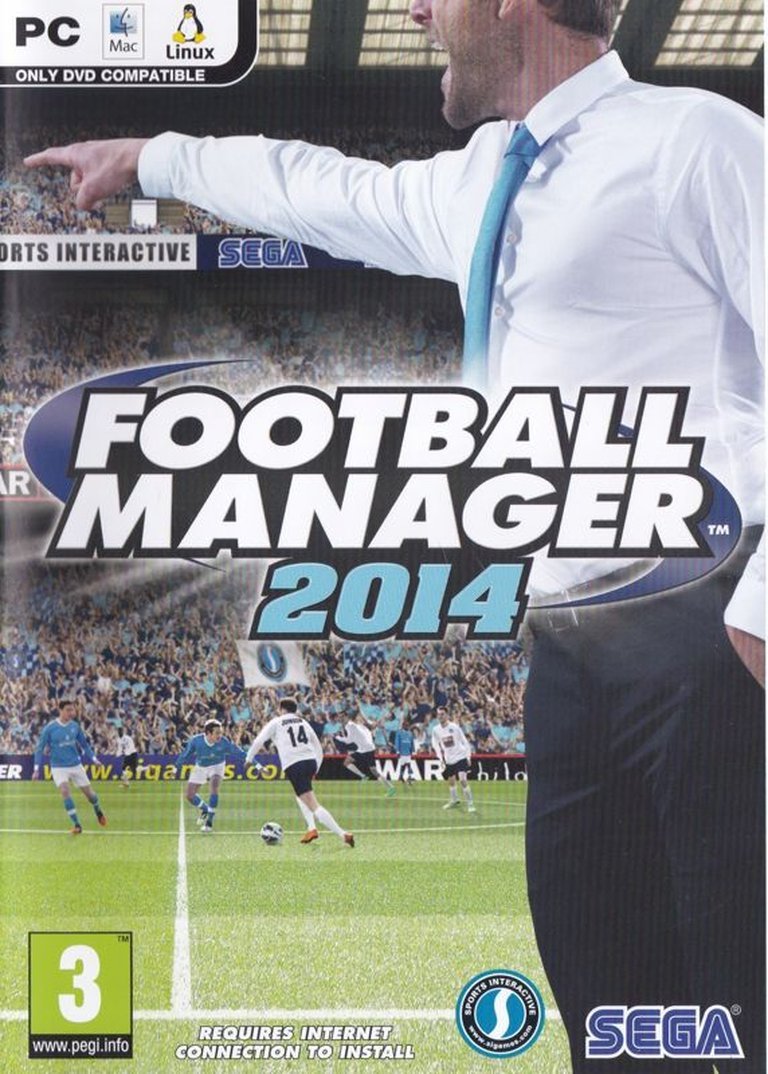
Football Manager 2014, the tenth installment in Sports Interactive’s renowned series, immerses players in the role of a professional soccer manager, handling team tactics, transfers, training, staff management, and media interactions within a detailed simulation of modern football. Featuring native Linux support, Steam Cloud and Workshop integration, an overhauled tactics system, improved AI and match engine, more realistic transfers, and expanded communication options, it delivers a deeply engaging managerial experience set in the 2013-2014 soccer world.
Gameplay Videos
Football Manager 2014 Cracks & Fixes
Football Manager 2014 Mods
Football Manager 2014 Guides & Walkthroughs
Football Manager 2014 Reviews & Reception
metacritic.com (85/100): making Football Manager 2014 the almost-perfect game for all the Ferguson wannabes out there.
ign.com : On a winning streak.
pcgamer.com : Deep, exciting and, for the first time, as human as real football, Football Manager 2014 has hit the back of the net.
steambase.io (92/100): Very Positive
monstercritic.com (85/100): the further depth and complexity added to the core experience.
Football Manager 2014: Review
Introduction
Imagine inheriting a ragtag squad from a relegation-threatened club, haggling with shrewd agents over transfer clauses, and meticulously tweaking tactics to outfox a rival manager—all while the weight of board expectations, media scrutiny, and fan passion bears down. This is the intoxicating allure of Football Manager 2014 (FM14), the tenth annual installment in Sports Interactive’s storied series, which has entranced armchair tacticians since its roots in the 1980s Football Manager titles. Released in late 2013, FM14 builds on a legacy of unparalleled depth in sports simulation, evolving from spreadsheet-bound number-crunching into a holistic management epic. My thesis: FM14 marks a pivotal refinement in the series, introducing accessibility enhancements like Steam Workshop integration and an overhauled interface without diluting its obsessive realism, cementing it as the gold standard for football management games and a bridge to modern, community-driven sims.
Development History & Context
Sports Interactive (SI), a London-based studio founded in 1994 and acquired by Sega in 2004, has been the custodians of the Football Manager franchise since rebranding from Championship Manager schisms in the early 2000s. Under producer Miles Jacobson, FM14 was announced on August 14, 2013, via the official site, with a beta for pre-orders two weeks pre-launch—a savvy move to build hype amid annual release pressures. The vision was clear: evolve the series toward greater realism and inclusivity, addressing fan feedback on UI clutter and tactical rigidity from FM13.
Technologically, 2013 was a transitional era. PCs dominated, but Steam’s ecosystem was exploding; FM14 debuted native Linux support, Steam Cloud saves for cross-device play, and Workshop integration for user-shared tactics, skins, logos, and databases—the first in the series. This tapped into modding communities, foreshadowing FM’s social evolution. The gaming landscape featured FIFA’s arcade dominance and PES’s simulation leanings, but management sims were niche; SI’s 1,844-person credit list (1,664 developers) underscored their database obsession, with over 500,000 real players licensed across 117 leagues in 51 nations. Constraints like annual cycles meant iterative upgrades—roster updates, AI tweaks—but FM14’s full tactics revamp and match engine optimizations shone, despite beta bugs like erratic AI team selection and MLS trade imbalances fixed post-launch. Sega’s publishing muscle ensured global reach, including handheld variants like Football Manager Handheld 2014 (iOS/Android) and Classic 2014 (Vita with 3D engine).
Narrative & Thematic Deep Dive
FM14 eschews linear plots for emergent storytelling, where “narrative” emerges from simulated football lifecycles—triumphs, scandals, and sagas scripted by procedural depth. No scripted characters exist; instead, thousands of real-world footballers (e.g., Messi, Ronaldo) and generated personalities breathe via expanded traits, morale cycles, and interactions. Dialogue shines in overhauled communications: board meetings demand visions (e.g., “youth-focused” vs. “trophy now”), staff provide youth/reserve feedback, and media interviews test diplomacy. New scenarios like end-of-season squad meetings let you praise/criticize, fostering themes of leadership and motivation—ask a star like Gerrard to rally an unhappy teammate, risking cliques.
Underlying themes probe football’s business underbelly: ambition vs. reality, as testimonial matches honor retiring legends after loyalty thresholds; power dynamics, with boards renegotiating budgets amid rival job offers; humanity in simulation, as “moral-form Teufelskreise” (vicious cycles) from German reviews capture player slumps from poor form or agent haggling. Realism permeates—transfers mimic life with loan-back clauses, sub-bench fees, or cash-plus-player bids. Rock, Paper, Shotgun noted the shift “from manipulating statistics to managing people,” with retiring referees spawning new ones for a “fully simulated world.” Themes of persistence resonate: Czech Gamer called it a “quality relaxation” via strategy study, but 4Players.de praised “new dimension” in player personalities emerging from data. Flaws? Text-heavy “dialogue” can feel scripted, yet this authenticity—news inbox color-coded by urgency—crafts personal epics, like turning a non-league minnow into champions over decades.
Gameplay Mechanics & Systems
FM14’s core loop—scout, transfer, train, tactify, match, repeat—is a masterpiece of managerial simulation, deconstructed via text-spreadsheet interfaces (menu-driven, diagonal-down match views). Core progression: Start unemployed or at any of 2,500+ clubs; progress via promotions, trophies, reputation. No combat; “battles” are 3D matches with enhanced AI, lighting, animations, and reactions (e.g., realistic incident responses).
Tactics overhaul is revolutionary: Ditch sliders for intuitive roles/instructions (e.g., “Inverted Winger”), team strategies, and rival AI adaptations—rival managers now counter mid-game, per beta notes. Transfers innovate with live negotiations (vs. turn-based), real clauses (loan-back, bench fees), and agent realism—GameQuarter lauded “irritating agents” for immersion. Character progression: Training emphasizes development; new staff feedback highlights youth stars. UI refinements—redone news inbox (scout reports as items, shortlists direct)—and board/staff/media expansions (e.g., key-player interventions) streamline without simplifying.
Flaws persist: Spreadsheet density daunts newcomers (4Players.de: “spröde” tables scare noobs); match engine “passable” but tinny sound/UI frustrations noted (Games TM). Beta issues (goalkeeper errors, back-passes) patched, but 3D engine lags behind FIFA visuals. Multiplayer via Steam; innovations like Workshop tactics elevate replayability. Loop addictiveness? Sector: “best management title,” with hundreds of hours via Classic mode for speedruns.
| Key Mechanics | Strengths | Weaknesses |
|---|---|---|
| Tactics | Role-based simplicity, adaptive AI | Mid-match tweaks fiddly |
| Transfers | Live haggling, real clauses | Agent frustration realistic but grindy |
| Matches | Improved AI/animations | Sound/UI dated |
| UI/Progression | Inbox overhaul, Steam tools | Spreadsheet overload for casuals |
World-Building, Art & Sound
FM14’s “world” is a meticulously simulated global football ecosystem—51 nations, 117 leagues (editable for customs), dynamic reputations, and evolving narratives (e.g., testimonial events). Atmosphere builds via inbox drama: color-coded news (scouting hits, injury alerts) immerses like a living inbox. Setting spans 2010s stadiums (diagonal-down 3D views), with weather, kits, crowds fostering tension—Gamesite.sk praised clarity drawing newbies.
Visuals: Text/spreadsheet core, but 3D engine upgrades (lighting, models, physics) make matches “passable” (Games TM); individual kits/characters add flair. UI modernization—intuitive menus—enhances flow, though “text-flooded screens” persist. Sound: Minimalist; crowd roars, commentary tinny/weak (universal critique: mute for playlists). Contributions? Engine’s realism elevates highs (goal-line tension), but art prioritizes function—spreadsheets evoke accountant’s desk, amplifying isolation/obsession themes. Vita’s Classic adds portable 3D, quicker progression.
Reception & Legacy
FM14 launched to acclaim: MobyGames 8.1/10 (#661 Windows), critics 87% (Gamesite.sk 93%: “much better than predecessor”; 4Players.de 90%: “new dimension”; Games TM 90%). Metacritic PC 85/100 (BAFTA nominee), Vita 67/100. Players: 4.3/5. Sales: 790k EU/NA by March 2014, 1M+ by 2017—fifth straight million-seller.
Reputation evolved positively: Hrej! (80%): “addictive, refined engine”; Games.cz (80%): “hundreds of proklikaných hours.” Influence profound—Workshop debut spurred modding (facepacks, challenges), Linux/Cloud expanded access; tactics/transfers blueprint for FM15+. Sectorified annual iterations, inspiring data-driven sims (e.g., NBA 2K leagues). Legacy: Refined FM’s “hardest job in football” (Games TM), influencing genre toward simulation depth over flash.
Conclusion
Football Manager 2014 distills a decade of iteration into a compulsively realistic sim, overhauling tactics, transfers, and interactions while debuting era-defining tools like Steam Workshop. Minor gripes—dated sound/UI, newbie barriers—pale against addictive loops and emergent depth, earning its 85+ scores and million sales. In video game history, FM14 bridges FM13’s complexity and FM15’s polish, embodying SI’s quest for ultimate simulation. Verdict: Essential masterpiece (9.2/10), eternally replayable for historians and tacticians—your dynasty awaits.