
- Release Year: 2017
- Platforms: PlayStation 4, Windows, Xbox One
- Publisher: Ubisoft, Inc.
- Genre: Special edition
- Average Score: 73/100
Description
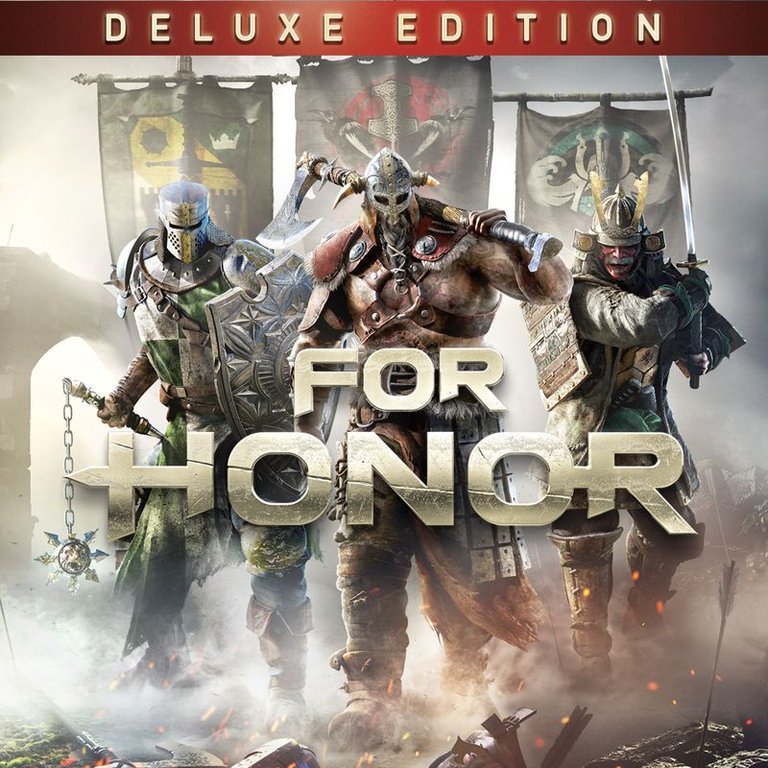
For Honor (Deluxe Edition) is a competitive third-person melee fighting game set in a brutal, medieval-inspired world where Vikings, Knights, and Samurai clash in visceral close-range combat. The game features an innovative ‘Art of Battle’ system, blending speed, strategy, and team play, with motion-captured martial arts for realistic duels. Players can engage in a story campaign (solo or co-op) or multiplayer modes, mastering stances, feints, and faction-specific heroes across dynamic battlefields.
For Honor (Deluxe Edition) Guides & Walkthroughs
For Honor (Deluxe Edition) Reviews & Reception
metacritic.com (78/100): An excellent hybrid between a tactical fencing action and a fighting game, which wins thanks to a complex fighting system and balanced characters.
ign.com : One of the most complete and flexible melee combat systems I’ve ever experienced.
steambase.io (69/100): FOR HONOR™ has earned a Player Score of 69 / 100.
For Honor (Deluxe Edition): A Clash of Steel and Legacy
Introduction: The Weight of a Thousand Battles
For Honor (Deluxe Edition) is not just a game—it is a brutal, visceral symphony of clashing steel, a testament to Ubisoft Montreal’s ambition to craft a melee combat experience unlike any other. Released in 2017, it dared to blend the precision of fighting games with the chaos of multiplayer battle arenas, all while wrapping its mechanics in a thin, albeit flawed, veneer of narrative and lore. The Deluxe Edition, with its exclusive armor sets and early access to post-launch content, offered players a premium entry point into a world where Knights, Vikings, Samurai, and later the Wu Lin and Outlanders, carved their legends into the blood-soaked earth of Heathmoor.
Yet, For Honor is a game of contradictions. Its combat system, the “Art of Battle,” is a masterclass in tactical depth, demanding patience, reflexes, and psychological warfare. Meanwhile, its story campaign—a rushed, disjointed affair—feels like an afterthought, a mere tutorial for the real spectacle: the multiplayer faction war. This review dissects For Honor in its entirety, from its tumultuous development to its lasting impact on the fighting game genre, and asks: Does its brilliance in combat outweigh its narrative and structural shortcomings?
Development History & Context: Forging a New Blade
The Vision: A Fighter’s Paradise
For Honor was born from the mind of Jason Vandenberghe, Ubisoft’s creative director, who sought to create a game that captured the cinematic intensity of sword fights in films like Gladiator and The Last Samurai. Announced at E3 2015, the game was positioned as a revolutionary hybrid: a third-person action game with the depth of a fighting game and the scale of a multiplayer online battle arena (MOBA). The core idea was simple yet audacious—what if players could engage in realistic, skill-based melee combat without the button-mashing chaos of traditional hack-and-slash titles?
To achieve this, Ubisoft Montreal developed the “Art of Battle” system, a mechanics-heavy duel framework that emphasized stance-based blocking, feints, and counterattacks. Motion capture sessions with martial artists and stunt performers ensured that every swing, parry, and execution felt weighty and authentic. The game’s engine, AnvilNext 2.0, was pushed to its limits to render the clang of metal, the spray of blood, and the dynamic destruction of battlefields with cinematic flair.
The Challenges: Balancing Ambition and Reality
Development was not without its hurdles. The game’s network infrastructure struggled to handle the precision required for online duels, leading to persistent connection issues and desync problems at launch. Additionally, the faction war meta-game, a persistent online conflict where players’ performances influenced territorial control, was an ambitious but flawed experiment in live-service storytelling.
The Deluxe Edition, priced at $69.99, included:
– Three exclusive armor sets (one per faction)
– Day One content (cosmetic items)
– A 30-day “Champion Status” boost (XP and currency bonuses)
This edition was part of Ubisoft’s broader monetization strategy, which included microtransactions for cosmetic gear—a decision that would later draw criticism for its grind-heavy progression system.
The Gaming Landscape: A Crowded Arena
For Honor entered a market dominated by competitive shooters (Overwatch, Battlefield 1) and open-world RPGs (The Witcher 3, Dark Souls III). Its closest contemporaries were:
– Chivalry: Medieval Warfare (2012) – A first-person slasher with chaotic, physics-based combat.
– Mount & Blade (2008) – A niche RPG with deep melee mechanics but clunky controls.
– Dark Souls PvP – A slower, more methodical duel system with a focus on stamina management.
For Honor distinguished itself by stripping away the RPG elements and focusing purely on skill-based, 1v1, 2v2, and 4v4 combat. It was, in many ways, the first mainstream attempt to make melee combat as precise and competitive as a fighting game like Street Fighter.
Narrative & Thematic Deep Dive: A Tale of War Without Purpose
The Premise: Apollyon’s Gambit
The game’s story is set in Heathmoor, a fictional world ravaged by a cataclysmic event that forced three warrior cultures—Knights (Iron Legion), Vikings (Warborn), and Samurai (Dawn Empire)—into a brutal, centuries-long war. The narrative follows three protagonists:
1. The Warden (Knights) – A disillusioned Blackstone Legion warrior who rebels against the warmonger Apollyon.
2. The Raider (Vikings) – A mountain-dwelling brute who unites the Warborn clans.
3. The Orochi (Samurai) – The Emperor’s Champion, freed from imprisonment to defend the Dawn Empire.
The central antagonist, Apollyon, is a Machiavellian warlord who believes that only through endless war can humanity evolve. Her philosophy is a twisted Darwinism: “The weak must be culled so the strong may rule.” She manipulates all three factions into conflict, ensuring that no peace can last.
The Flaws: A Story of Missed Potential
The campaign suffers from three critical failures:
1. Lack of Cohesion – The three storylines (Knights, Vikings, Samurai) are told in isolation, with minimal overlap until the final act. Players switch perspectives abruptly, leading to whiplash and emotional detachment.
2. Underdeveloped Characters – Beyond Apollyon, most characters are one-dimensional archetypes. The Warden has no name or backstory, the Raider is a generic berserker, and the Orochi’s imprisonment is never explained.
3. A Pointless Ending – After defeating Apollyon, the factions immediately turn on each other, rendering the entire campaign narratively hollow. The post-credits scene, where faction leaders acknowledge the futility of war but do nothing to stop it, is a frustrating anti-climax.
Themes: War as a Self-Perpetuating Cycle
Despite its flaws, For Honor’s story explores dark, cyclical themes:
– The Futility of War – No matter who wins, the conflict never ends. Apollyon’s death changes nothing.
– The Corruption of Power – Leaders like Holden Cross (Knights), Stigandr (Vikings), and Ayu (Samurai) seek peace but are trapped by their factions’ bloodlust.
– The Myth of Honor – The title itself is ironic. There is no honor in this war, only survival.
The Deluxe Edition does nothing to expand the narrative, focusing instead on cosmetic enhancements. Later DLCs (Marching Fire, Year of the Harbinger) introduced new factions (Wu Lin, Outlanders) and lore expansions, but the core story remained unresolved.
Gameplay Mechanics & Systems: The Art of Battle
The Combat: A Dance of Death
The “Art of Battle” system is For Honor’s crowning achievement. It revolves around:
– Stance-Based Guarding – Players must manually position their guard (top, left, right) to block incoming attacks.
– Feints & Parries – Attacks can be cancelled mid-swing to bait opponents, while well-timed parries allow for devastating counterattacks.
– Guardbreaks & Counters – A rock-paper-scissors mechanic where guardbreaks beat blocks, counters beat guardbreaks, and attacks beat counters.
– Stamina Management – Every action (attacking, dodging, blocking) drains stamina, forcing strategic pacing.
This system creates high-skill-ceiling duels where mind games and reflexes decide victories. However, it also has glaring issues:
– Unreactable Attacks – Some heroes (e.g., Orochi, Peacekeeper) have 400ms light attacks, which are physically impossible to react to on a standard monitor.
– Turtling Meta – Defensive play dominates, as blocking and countering is often safer than attacking.
– Hero Imbalance – At launch, Warlord and Conqueror were overpowered, while Assassins struggled in team fights.
Heroes & Classes: A Roster of Warriors
The game launched with 12 heroes, divided into four classes per faction:
| Class | Role | Examples |
|---|---|---|
| Vanguard | Balanced, jack-of-all-trades | Warden, Raider, Kensei |
| Assassin | Fast, high damage, low health | Peacekeeper, Berserker, Orochi |
| Heavy | Tanky, slow, high damage | Conqueror, Warlord, Shugoki |
| Hybrid | Unique mechanics, versatile | Lawbringer, Nobushi, Valkyrie |
Post-launch DLCs added 25 more heroes, including:
– Wu Lin (Marching Fire) – Tiandi, Nuxia, Jiang Jun, Shaolin
– Outlanders (Year 5) – Pirate, Gryphon, Warmonger
Each hero has:
– Unique move sets (e.g., Shugoki’s super armor, Nobushi’s bleed attacks)
– Customizable gear (affecting stats like attack/defense)
– Executives (brutal finishing moves)
Multiplayer Modes: Where the Real War Begins
The Deluxe Edition includes access to all PvP modes:
1. Duel (1v1) – The purest test of skill.
2. Brawl (2v2) – Teamwork and coordination are key.
3. Dominion (4v4) – Objective-based, with minions and zone control.
4. Elimination (4v4) – Last team standing wins.
5. Skirmish (4v4) – Team deathmatch with respawns.
6. Tribute (4v4) – Capture and hold relics.
7. Breach (4v4) – Asymmetrical siege mode (attackers vs. defenders).
Faction War – A persistent meta-game where players’ performances influence territorial control. Winning matches earns War Assets, which are deployed to conquer regions. The winning faction at the end of a 10-week season receives exclusive cosmetic rewards.
Progression & Customization: The Grind for Steel
- XP & Gear – Earned through matches, used to unlock new abilities and cosmetics.
- Steel (Premium Currency) – Used to buy hero outfits, executions, and emotes. Can be earned slowly or purchased with real money.
- Scavenger Crates – Loot boxes containing random gear (a controversial monetization tactic).
The Deluxe Edition provides early access to DLC heroes and exclusive scavenger crates, but the grind for Steel remains punishingly slow, pushing players toward microtransactions.
World-Building, Art & Sound: A Realm Forged in Blood and Fire
The Setting: Heathmoor’s Ruined Beauty
For Honor’s world is a post-apocalyptic medieval fantasy, where:
– Ashfeld (Knights) – A gothic wasteland of crumbling castles and war-torn villages.
– Valkenheim (Vikings) – A frozen, Norse-inspired wilderness with towering cliffs and Viking longhouses.
– The Myre (Samurai) – A swampy, bamboo-filled marshland reminiscent of feudal Japan.
– Wu Lin Territories (DLC) – Imperial Chinese palaces and war-torn fortresses.
The art direction is striking but repetitive. Maps like Sanctuary Bridge (Ashfeld), Overwatch (Valkenheim), and River Fort (Myre) are visually distinct but lack interactive depth.
Sound Design: The Symphony of War
- Weapon Clangs – Each sword, axe, and spear has a unique metallic resonance.
- Battle Cries – Heroes shout faction-specific taunts (e.g., “Deus Vult!” (Knights), “For Valkenheim!” (Vikings)).
- Ambient Noise – The howling wind in Valkenheim, the croaking frogs in The Myre immerse players in the world.
- Music – Composed by Danny Bensi and Saunder Jurriaans, the score blends orchestral grandeur with tribal percussion, heightening the epic scale of battles.
Atmosphere: A World Without Hope
The game’s bleak tone is reinforced by:
– No Innocent Civilians – The world is populated solely by warriors; there are no towns, no children, no peace.
– Endless War – The Faction War ensures that conflict is perpetual, mirroring Apollyon’s vision.
– Grisly Executions – Decapitations, impalements, and dismemberments are commonplace, reinforcing the brutality of the setting.
Reception & Legacy: A Flawed Masterpiece
Critical Reception: Praise for Combat, Scorn for the Rest
| Publication | Score | Verdict |
|---|---|---|
| IGN | 8/10 | “A tense, tactical medieval brawler that rewards mastery.” |
| GameSpot | 8/10 | “The combat is brilliant, but the story is forgettable.” |
| Destructoid | 5.5/10 | “A disposable campaign and unstable multiplayer.” |
| PC Gamer | 74/100 | “A fighting game disguised as an action game.” |
| Metacritic (PS4) | 78/100 | Generally Favorable |
Common Praise:
✅ Best-in-class melee combat
✅ Deep customization and progression
✅ Unique faction identity
Common Criticisms:
❌ Shallow, rushed story campaign
❌ Connection issues and desyncs
❌ Grindy monetization (Steel economy)
Commercial Success & Player Base
- Launch Sales – Topped charts in the US, UK, and Japan (40,062 copies sold in Japan in its first week).
- Player Retention – Struggled due to connection problems and balance issues, but dedicated fighting game communities kept it alive.
- Esports Attempts – For Honor World Cup (2017-2018) failed to gain traction due to unbalanced heroes and netcode issues.
Post-Launch Evolution: From Disaster to Redemption
Ubisoft’s commitment to post-launch support saved For Honor from obscurity:
– Year 1 (2017) – Six new heroes (Centurion, Shinobi, Gladiator, etc.), dedicated servers, and balance patches.
– Year 2 (2018) – Marching Fire – Wu Lin faction, Breach mode, and a graphical overhaul.
– Year 3-6 (2019-2022) – New heroes (Pirate, Gryphon), lore expansions (Horkos vs. Chimera), and seasonal events.
By 2023, For Honor had over 30 heroes, 20+ maps, and a thriving (if niche) competitive scene.
Influence on the Genre
For Honor’s legacy lies in proving that melee combat can be as deep as a fighting game. It influenced:
– Chivalry 2 (2021) – Adopted stance-based blocking but kept a more chaotic, physics-driven approach.
– Mordhau (2019) – A hardcore medieval slasher with similar duel mechanics.
– Elden Ring (2022) – Borrowed parry timing and stamina management for its PvP.
However, no game has fully replicated For Honor’s precision-based duel system, making it a unique (if flawed) experiment.
Conclusion: A Game of Blood, Steel, and Missed Opportunities
For Honor (Deluxe Edition) is a game of extremes:
– Its combat is a masterpiece—a deep, rewarding system that demands skill, patience, and adaptability.
– Its story is a mess—a rushed, disjointed campaign that fails to justify its world.
– Its multiplayer is addictive but flawed—connection issues, hero imbalance, and grind-heavy progression mar the experience.
Final Verdict: 8.5/10 – A Flawed Gem
For Honor is not for the casual player. It is a hardcore fighter’s game, a test of reflexes and strategy that rewards dedication above all else. The Deluxe Edition is worth it for serious players who want early access to heroes and cosmetics, but the base game’s combat alone is enough to justify its place in gaming history.
Where It Excels:
✔ Best melee combat system in gaming
✔ Deep hero customization and progression
✔ Unique faction identity and persistent war meta
Where It Fails:
✖ Narrative is shallow and unsatisfying
✖ Multiplayer suffers from connection issues
✖ Monetization feels predatory
Legacy:
For Honor will be remembered as the game that proved melee combat could be competitive. It is not perfect, but it is unlike anything else—a bloody, brutal, and beautiful experiment that carved its own path in the fighting game genre.
For those willing to master its blade, For Honor offers a duel unlike any other. 🗡️🔥