
- Release Year: 2013
- Platforms: Windows
- Developer: Vincent Wesselmann
- Genre: Adventure
- Perspective: 1st-person
- Game Mode: Single-player
- Gameplay: Graphic adventure
- Average Score: 89/100
Description
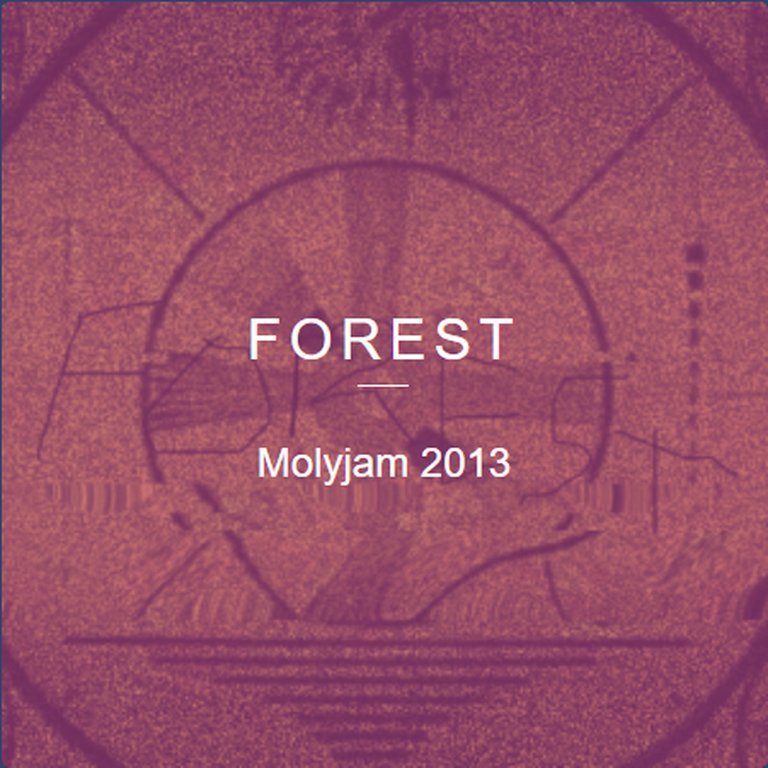
Forest is a first-person graphic adventure game created in 48 hours for Molyjam 2013. Set in a mysterious woodland, the game features live-action cutscenes and a spooky atmosphere, with players navigating through an eerie environment while encountering unsettling elements. Developed by Vincent Wesselmann (Vince Twelve) and others, it uses the Adventure Game Studio (AGS) engine and includes contributions from actors and sound designers to enhance its immersive, short-but-memorable experience.
Gameplay Videos
Where to Buy Forest
PC
Forest Cracks & Fixes
Forest Mods
Forest Guides & Walkthroughs
Forest Reviews & Reception
metacritic.com (83/100): The Forest is an awkward open-world survival game. It’s thrilling to play because of the intense atmosphere, but confusing maps and annoying enemies make it really hard for me to immerse into the game.
ign.com : The Forest’s greatest triumph is the convincing self-preservation of the AI that governs their behavior.
steambase.io (96/100): The Forest has earned a Player Score of 96 / 100.
Forest Cheats & Codes
PC
Type ‘developermodeon’ in the main menu to enable console commands. Press F1 to open the console and enter the codes.
| Code | Effect |
|---|---|
| developermodeon | Enables the developer console for entering cheat codes. |
| addallitems | Adds all non-story items to your inventory. |
| addallstoryitems | Adds all story-related items to your inventory. |
| buildermode on | Turns on builder mode (god mode, no survival needs, all items, no enemies). |
| buildhack on | Allows building without materials. |
| cavelight on | Makes caves fully lit. |
| godmode on | Grants unlimited health, stamina, fullness, and water. |
| cancelallghosts | Removes all ghost blueprints. |
| buildallghosts | Completes all ghost blueprints instantly. |
| itemhack on | Prevents items from running out. |
| survival off | Disables hunger and thirst. |
| save | Saves the game at any location. |
| speedyrun on | Enables super-fast running. |
| killallenemies | Despawns all nearby enemies. |
| enemies off | Disables enemy spawning. |
| forcerain heavy | Forces heavy rain. |
| forcerain sunny | Forces sunny weather. |
| unlimitedHairspray on | Grants unlimited hairspray fuel. |
| additem 83 | Adds an Arrow to inventory. |
| additem 29 | Adds a Bomb to inventory. |
| additem 261 | Adds a Chainsaw to inventory. |
| additem 288 | Adds a Chainsaw with Torch to inventory. |
| additem 138 | Adds a Climbing Axe to inventory. |
| additem 96 | Adds a Club to inventory. |
| additem 87 | Adds a Crafted Axe to inventory. |
| additem 79 | Adds a Crafted Bow to inventory. |
| additem 283 | Adds a Crafted Bow with Torch to inventory. |
| ironforest | Makes structures indestructible. |
| meatmode | Disables all cheats. |
| rawmeatmode | Enables permadeath (save deleted on death). |
| regrowmode | Trees regrow 10% when you sleep. |
| woodpaste | Resets holes made by the cutter. |
| veganmode | Enemies spawn only in caves. |
| vegetarianmode | Enemies spawn only at night. |
| invisible on | Makes the player invisible to enemies. |
| killallenemiesInstantly | Kills all enemies instantly. |
| faststart on | Skips the opening scene. |
| revealcavemap | Reveals the entire cave map. |
| energyhack on | Grants infinite energy and stamina. |
| killlocalplayer | Kills the player in multiplayer. |
| revivelocalplayer | Revives the player in multiplayer. |
| killmefast | Kills the player in local mode. |
| fakehitplayer | Simulates a hit on the player. |
PS4
Requires a USB keyboard. Type ‘developermodeon’ in the main menu to enable console commands. Press F1 to open the console and enter the codes.
| Code | Effect |
|---|---|
| ironforest | Makes structures indestructible. |
| meatmode | Disables all cheats. |
| rawmeatmode | Enables permadeath (save deleted on death). |
| regrowmode | Trees regrow 10% when you sleep. |
| woodpaste | Resets holes made by the cutter. |
| veganmode | Enemies spawn only in caves. |
| vegetarianmode | Enemies spawn only at night. |
The Forest: A Masterclass in Survival Horror and Narrative Depth
Introduction
The Forest is not just a survival game—it is a harrowing descent into the human psyche, a brutal exploration of morality, and a technical marvel in AI-driven horror. Released in 2018 by Endnight Games after a four-year early access period, The Forest redefined the survival horror genre by blending open-world exploration, base-building, and a deeply unsettling narrative into a cohesive, terrifying experience. Its legacy is twofold: as a commercial juggernaut (selling over 5.3 million copies by 2018) and as a cultural touchstone that influenced subsequent titles like Sons of the Forest and Valheim. This review dissects The Forest in exhaustive detail, examining its development, narrative, gameplay, world-building, and enduring impact on gaming.
Development History & Context
The Studio and Vision
Endnight Games, a Canadian indie studio founded by film visual effects veterans (with credits on The Amazing Spider-Man 2 and Tron: Legacy), brought a cinematic sensibility to The Forest. The team’s background in VFX is evident in the game’s atmospheric lighting, grotesque creature design, and the eerie, lived-in feel of the peninsula. Inspired by cult films like Cannibal Holocaust and The Descent, as well as survival games like Don’t Starve, the developers sought to create a game that was “not entirely dark and depressing” (a nod to Disney’s storytelling balance) while still delivering visceral horror.
Technological Constraints and Innovations
- Engine: Built in Unity, The Forest leveraged the engine’s flexibility to create a dense, interactive world. The 2015 upgrade to Unity 5 improved visual fidelity and performance.
- AI Systems: The cannibals’ behavior was a breakthrough. Unlike scripted enemies, they exhibit dynamic reactions—patrolling, observing, retaliating, and even surrendering based on player actions. This was achieved through a complex AI director system that tracks player aggression, base location, and resource gathering.
- Early Access: The game’s four-year early access phase (2014–2018) allowed iterative refinement. Community feedback shaped mechanics like the sanity system, crafting balance, and the addition of VR support (Oculus Rift, HTC Vive, and Valve Index).
The Gaming Landscape
The Forest emerged alongside titles like Rust and DayZ, but it distinguished itself by rejecting the “massive multiplayer” trend. Instead, it focused on a tightly designed single-player (or small co-op) experience with a narrative backbone—a rarity in the survival genre at the time.
Narrative & Thematic Deep Dive
Plot Summary
The game opens with Eric LeBlanc, a survivalist TV personality, and his son Timmy aboard a plane that crashes on a remote peninsula. Timmy is kidnapped by a red-painted figure (later revealed to be Dr. Matthew Cross), and Eric must survive the wilderness while uncovering the island’s horrors. The story unfolds through environmental storytelling, collectible notes, and disturbing discoveries in the underground Sahara Therapeutics lab.
Key Themes
-
The Cycle of Violence and Sacrifice:
- The peninsula’s history is a tapestry of exploitation. The Ancient Ones (a Lovecraftian precursor race) used obelisks to resurrect the dead through child sacrifice, creating mutants. Sahara Therapeutics repeated this cycle, abducting children for experiments.
- Eric’s journey mirrors Dr. Cross’s: both lose a child and resort to extreme measures to revive them. The game forces players to confront whether Eric’s love for Timmy justifies his actions (shooting down a plane, kidnapping another child).
-
Colonialism and Indigenous Erasure:
- The cannibals are not mindless monsters but a mutated indigenous people with their own culture (effigies, pilgrimages, familial bonds). Their blackened eyes and violent behavior are symptoms of the obelisks’ corruption, not inherent savagery.
- The game critiques the “civilized” world’s intrusion (Sahara’s experiments, Eric’s survivalist dominance) as equally destructive.
-
Sanity and Moral Decay:
- The sanity meter (affected by cannibalism, cave exploration, and violence) reflects Eric’s psychological unraveling. Low sanity unlocks the ability to craft effigies—a dark parody of the cannibals’ rituals.
- The ending where Timmy mutates suggests that resurrection is not salvation but a continuation of suffering.
Character Analysis
- Eric LeBlanc: A flawed protagonist whose survival skills mask his emotional vulnerability. His love for Timmy is genuine, but his methods are morally ambiguous.
- Dr. Matthew Cross: A tragic villain. His daughter Megan’s death drives him to madness, culminating in his use of the Power Obelisk to crash Eric’s plane. His corpse, impaled with crayons, hints at Megan’s betrayal.
- Megan Cross: The final boss, a mutated child who embodies the game’s central horror—innocence corrupted by resurrection. Her boss fight is a grotesque ballet of limbs and screams.
Endings and Interpretations
- Canonical Ending (Sacrifice): Eric crashes another plane, kidnaps a child, and resurrects Timmy. The epilogue shows Timmy’s mutations, implying the cycle continues.
- Alternate Ending (Acceptance): Eric shuts down the Power Obelisk, burns Timmy’s photo, and remains on the island—a bittersweet rejection of the cycle.
Gameplay Mechanics & Systems
Core Gameplay Loop
The Forest’s loop is a delicate balance of survival, exploration, and combat:
1. Gathering: Resources (sticks, rocks, animals) are plentiful but must be managed. The “Fertile Lands” biome offers a safe early-game haven.
2. Crafting: The survival guide’s blueprint system simplifies crafting (e.g., combining a stick, rock, and rope to make an axe). Advanced items (bone armor, the katana) require cave exploration.
3. Base-Building: Structures range from simple shelters to fortified treehouses. Defenses (spike walls, traps) are essential as cannibal aggression escalates.
4. Combat: Melee weapons (axes, spears) and improvised tools (Molotovs, flamethrowers) are viable. The flintlock pistol is a late-game power fantasy but requires rare ammo.
AI and Enemy Behavior
The cannibals’ AI is the game’s standout feature:
– Tribal Dynamics: Different tribes exhibit distinct behaviors. Some patrol, others ambush. They communicate through effigies and react to player aggression (e.g., dragging wounded comrades to safety).
– Fear and Fire: Cannibals fear fire and red paint (a callback to Dr. Cross’s disguise). They can be intimidated or lured into traps.
– Mutants: Armsy (octopus-like) and Virginia (spider-like) mutants are terrifying boss encounters. Their erratic movements and environmental interactions (Armsy knocking down trees) create unpredictable combat.
Progression and Systems
- Inventory and Crafting: The crafting system is intuitive but lacks depth in late-game variety. The “quick-select” wheel streamlines combat.
- Sanity and Insanity: Low sanity unlocks effigy crafting but has minimal gameplay impact—a missed opportunity for deeper psychological mechanics.
- Multiplayer: Co-op (up to 8 players) shifts the tone from horror to horde survival. Dedicated servers were initially buggy but improved post-launch.
Flaws and Frustrations
- Darkness and Navigation: Caves are pitch-black, and the lighter’s unreliable flickering can be frustrating. No gamma settings exacerbate this issue.
- Checkpoint Starvation: The final dungeon (Sahara lab) lacks save points, making deaths punishing.
- Repetition: Late-game combat can feel repetitive, especially in horde scenarios.
World-Building, Art & Sound
The Peninsula: A Character in Itself
The island is a meticulously crafted ecosystem:
– Biomes: From the lush Fertile Lands to the eerie caves, each area tells a story. The yacht wreck hints at past visitors; the sinkhole foreshadows the lab’s horrors.
– Environmental Storytelling: Abandoned camps (missionaries, film crews) and mutant corpses imply a long history of suffering. The obelisks’ Lovecraftian design suggests ancient, alien origins.
Visual Design
- Lighting and Atmosphere: Daytime is deceptively peaceful, while nights are oppressive. The lack of a musical score amplifies the tension—only ambient sounds (wind, distant screams) accompany the player.
- Creature Design: The mutants are body horror masterpieces. Armsy’s conjoined limbs and Virginia’s spider-like gait are unsettling yet tragic.
Sound Design
- Ambience: The forest’s silence is broken by snapping twigs, cannibal chants, and the distant hum of the obelisks. The caves’ echoing drips and mutant growls create a claustrophobic dread.
- Voice Acting: Minimal but effective. Timmy’s crayon drawings and Megan’s childish giggles (before her mutation) are haunting.
Reception & Legacy
Critical Reception
- Metacritic: 83/100 (PC), 78/100 (PS4). Critics praised the AI, atmosphere, and story but criticized the darkness and lack of polish in some systems.
- IGN (8.4/10): Called it a “memorable survival horror experience,” highlighting the enemy AI and narrative depth.
- Rock Paper Shotgun: Ranked it among the best survival games, noting its “brutal but brilliant” design.
Commercial Success
- Sold over 5.3 million copies by 2018, proving that indie horror could compete with AAA titles.
- VR support expanded its audience, though the lack of motion controls limited immersion.
Influence and Sequels
- Sons of the Forest (2023): Expanded on the original’s mechanics with improved AI, a larger world, and deeper lore ties (Timmy’s fate, Site 2).
- Industry Impact: Inspired games like Valheim (base-building) and Green Hell (survival realism). Its AI systems set a new standard for enemy behavior in horror games.
Conclusion: A Landmark in Survival Horror
The Forest is a masterpiece of atmospheric horror, narrative ambiguity, and emergent gameplay. Its strengths—dynamic AI, environmental storytelling, and moral complexity—outweigh its flaws (darkness, repetition). It is not merely a game about survival but a meditation on grief, violence, and the cyclical nature of human cruelty.
Final Verdict: 9.5/10 – A genre-defining experience that lingers long after the credits roll. Its influence is undeniable, and its themes remain relevant in an era of survival games that often prioritize mechanics over meaning. The Forest is essential playing for fans of horror, storytelling, and the darker corners of the human soul.
Post-Script: The game’s legacy is cemented by its community, which continues to mod, theorize, and debate its lore. From Reddit deep dives to YouTube analyses, The Forest proves that the best horror games are those that haunt the player’s mind as much as the screen.