
- Release Year: 2017
- Platforms: Wii U, Windows Apps, Windows, Xbox One
- Publisher: 38,9_Degrees
- Developer: 38,9_Degrees
- Genre: Action, Auto-run platformer
- Perspective: 1st-person
- Game Mode: Single-player
Description
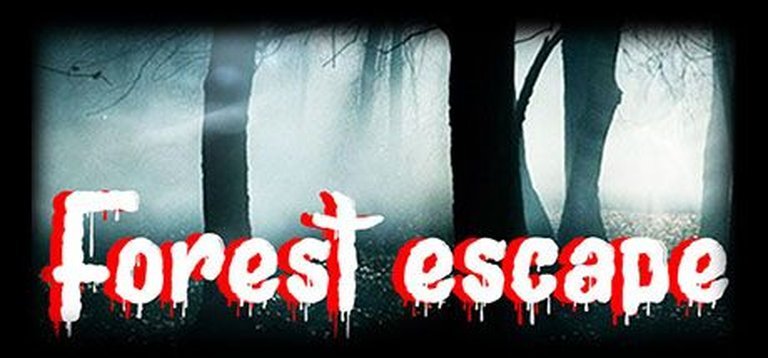
Forest Escape is an action-packed auto-run platformer set in a mysterious forest environment. Players navigate through dense woodlands, overcoming obstacles and evading hazards in a first-person perspective. The game emphasizes fast-paced gameplay and reflex-based challenges as the protagonist attempts to escape the treacherous forest, with releases across multiple platforms including Windows, Xbox One, and Wii U.
Forest Escape Free Download
Forest Escape Guides & Walkthroughs
Forest Escape Cheats & Codes
PC
Type ‘developermodeon’ at the main menu to enable console commands. Press F1 to open the console.
| Code | Effect |
|---|---|
| addallitems | Adds all items to your inventory as long as they aren’t part of the main story. |
| addallstoryitems | Adds all story-related items to your inventory. |
| buildermode on | Turns on the ability to complete the building of items without needing materials to construct them, turns on god mode, turns off survival mode, adds all non-story items to inventory, and turns off all enemies. |
| buildhack on | Turns on the ability to complete the building of items without needing materials to construct them. |
| cavelight on | Makes it daylight inside the cave allowing you to see without a flashlight or torch. |
| godmode on | Unlimited health, unlimited stamina, unlimited fullness, unlimited water. |
| cancelallghosts | Cancels all the ghost blueprints you currently have. |
| buildallghosts | Completes all the ghost building blueprints instantly. |
| itemhack on | As long as you have an item in your inventory, you’ll never run out of it. |
| survival off | Removes the need to eat and drink, your stamina will still deplete. |
| save | Allows you to save the game no matter where you are. |
| speedyrun on | Allows for a super-fast run. |
| killallenemies | Despawns all enemies that are around the player. |
| enemies off | Turns all enemies off. |
| forcerain heavy | Makes it rain heavily, allowing you to fill up your water collectors easily. |
| forcerain sunny | Changes the weather to a clear and sunny day. |
| unlimitedHairspray on | Gives you unlimited fuel for the hair spray can. |
| additem 83 | Adds an Arrow to your inventory. |
| additem 29 | Adds a Bomb to your inventory. |
| additem 261 | Adds a Chainsaw to your inventory. |
| additem 288 | Adds a Chainsaw with Torch to your inventory. |
| additem 138 | Adds a Climbing Axe to your inventory. |
| additem 96 | Adds a Club to your inventory. |
| additem 87 | Adds a Crafted Axe to your inventory. |
| additem 79 | Adds a Crafted Bow to your inventory. |
| additem 283 | Adds a Crafted Bow with Torch to your inventory. |
| ironforest | Makes structures indestructible. |
| meatmode | Disables cheats. |
| rawmeatmode | Permadeath when you die. |
| regrowmode | Trees grow 10% when you sleep. |
| woodpaste | Resets holes made by cutter. |
| veganmode | Enemies spawn only in caves. |
| vegetarianmode | Enemies spawn only at night. |
| goto [location name/coordinates] | Teleport to coordinates you type. |
| placebuiltobjects [object id] [quantity] | Place object of the ID you typed. |
| faststart on | Skip the opening scene. |
| invisible on | Unaffected by camera effects. |
| killallenemiesInstantly | Kill all enemies in game. |
| terrainrender on | Enables terrain rendering. |
| lightingtimeofdayoverride [lighting name] | Reset time of day. |
| cutdowntrees [amount/%] | Change % of trees. |
| cutgrass [radius] | Cut grass with radius you typed. |
| pmactivestatelabels on | Show NPC stats. |
| setstat [stat] [value] | Set player stats. |
| setskill [skill] [value] | Set player skills. |
| addclothingid [clothing id] | Add clothing you typed. |
| killallanimals | Kill all animals. |
| killclosestanimal | Kill the closest animal. |
| animals off | Disable animals. |
| birds off | Disable birds. |
| spawnitem [item id] | Spawn item in front of you. |
| removeitem [item id] | Remove item you typed from inventory. |
| spawnanimalquietSpawns | Animal you typed will appear in the nearest trap. |
| restall | Rest all. |
PS4
Hook up a keyboard to input these codes. Enable cheats in Options > Gameplay > Allow Cheats to On. Type ‘developermodeon’ at the main menu to enable console commands.
| Code | Effect |
|---|---|
| ironforest | Makes structures indestructible. |
| meatmode | Disables cheats. |
| rawmeatmode | Permadeath when you die. |
| regrowmode | Trees grow 10% when you sleep. |
| woodpaste | Resets holes made by cutter. |
| veganmode | Enemies spawn only in caves. |
| vegetarianmode | Enemies spawn only at night. |
| additem [item id] | Add an item with item ID. |
| spawnanimal [animal name] | Spawn the animal you type in front of character. |
| goto [location name/coordinates] | Teleport to coordinates you type. |
| placebuiltobjects [object id] [quantity] | Place object of the ID you typed. |
| cavelight on | Choose light or darkness in cave. |
| buildermode on | Turn on/off mode. |
| faststart on | Skip the opening scene. |
| godmode on | Enable/disable God mode. |
| buildhack on | Enable/disable buildhack. |
| cancelallghosts | Remove every blueprint. |
| addallitems | Add one of each item to inventory. |
| addallstoryitems | Add one of each story item. |
| itemhack on | Enable/disable infinite items. |
| survival off | When disabled, hydration and hunger not affected. |
| speedyrun on | Run at high speed. |
| invisible on | Unaffected by camera effects. |
| killallenemiesInstantly | Kill all enemies in game. |
| enemies off | Enables/disables enemy spawns. |
| terrainrender on | Enables/terrain rendering. |
| lightingtimeofdayoverride off | Reset time of day. |
| forcerain [weather] | Change weather. |
| cutdowntrees [amount/%] | Change % of trees. |
| cutgrass [radius] | Cut grass with radius you typed. |
| pmactivestatelabels on | Show NPC stats. |
| setstat [stat] [value] | Set player stats. |
| setskill [skill] [value] | Set player skills. |
| addclothingid [clothing id] | Add clothing you typed. |
| killallanimals | Kill all animals. |
| killclosestanimal | Kill the closest animal. |
| animals off | Enable/disable animals. |
| birds off | Enable/disable birds. |
| spawnitem [item id] | Spawn item in front of you. |
| removeitem [item id] | Remove item you typed from inventory. |
| spawnanimalquietSpawns | Animal you typed will appear in the nearest trap. |
| restall | Rest all. |
Forest Escape: A Minimalist Horror Experience in the Shadows of Survival Games
Introduction: The Enigma of Forest Escape
Forest Escape (2017), developed by the obscure studio 38,9_Degrees, is a curious artifact in the landscape of survival horror—a genre dominated by sprawling narratives, complex mechanics, and atmospheric depth. At first glance, Forest Escape appears to be a stripped-down, almost skeletal interpretation of the survival horror experience, reducing the genre to its most basic elements: fear, flight, and the unknown. Yet, its existence raises fascinating questions about the boundaries of horror in gaming, the role of minimalism in evoking dread, and the ways in which indie developers reinterpret established tropes.
This review seeks to unpack Forest Escape not just as a game, but as a cultural and artistic statement—a deliberate counterpoint to the bloated, narrative-heavy survival horror titles of its era. By examining its development, mechanics, and reception (or lack thereof), we can better understand its place in the broader tapestry of horror gaming.
Development History & Context: A Game Born in Obscurity
The Studio Behind the Shadows
38,9Degrees is a studio that has left virtually no footprint in the gaming industry beyond *Forest Escape*. There are no interviews, no developer diaries, and no post-mortems detailing the game’s creation. This anonymity is unusual even for indie developers, many of whom rely on personal branding and community engagement to market their games. The studio’s name itself—38,9Degrees—is cryptic, possibly a reference to body temperature (38.9°C is slightly above normal, hinting at fever or illness), which aligns with the game’s themes of discomfort and unease.
The lack of information about the developers forces us to interpret Forest Escape through the lens of its design and the broader gaming landscape of 2017. That year was a golden age for survival horror, with titles like Resident Evil 7, Outlast 2, and The Evil Within 2 dominating the conversation. Even Darkwood, a top-down survival horror game with a focus on psychological dread, had just released to critical acclaim. Forest Escape, by contrast, arrived with no fanfare, no marketing, and no clear ambition beyond its barebones premise.
Technological Constraints and Design Philosophy
Forest Escape is an auto-run platformer, a subgenre that prioritizes reflexes and memorization over exploration or narrative. The game’s Steam description is telling:
“Run, run away. You have to escape from this dangerous, terrible forest. Danger breathes in your back and it’s gaining speed, it will soon catch you up, run faster. Just don’t hit the tree!”
This minimalist approach suggests a deliberate rejection of the complexity that defined survival horror in 2017. Where games like The Forest and Darkwood offered deep crafting systems, branching narratives, and open-world exploration, Forest Escape distills horror into a single, unrelenting mechanic: running. There are no weapons, no inventory, no dialogue—just the player, a forest, and an unseen pursuer.
The game’s first-person perspective is another point of interest. First-person is a staple of horror, but Forest Escape uses it not to immerse the player in a richly detailed world, but to create a sense of claustrophobia and disorientation. The forest is procedurally generated, with trees appearing at random intervals, forcing the player to react quickly or collide with them. The “danger” chasing the player is never seen, only heard—a disembodied, accelerating force that grows louder as it closes in.
The Gaming Landscape of 2017
2017 was a year of excess in horror gaming. Resident Evil 7 brought the franchise back to its survival horror roots with a first-person perspective and a claustrophobic, Southern Gothic setting. Outlast 2 expanded on the found-footage horror of its predecessor, while The Evil Within 2 offered a mix of psychological and body horror. Even indie titles like Darkwood and Little Nightmares provided rich, atmospheric experiences with deep lore and environmental storytelling.
Forest Escape stands in stark contrast to these games. It is not trying to compete with them in scope or ambition. Instead, it feels like an experiment—a question posed to the player: Can horror exist without narrative, without visual detail, without even a clear threat? The answer, as we’ll explore, is a resounding yes, but not in the way one might expect.
Narrative & Thematic Deep Dive: The Horror of the Unseen
The Absence of Story
Forest Escape has no plot. There are no characters, no dialogue, no cutscenes, and no lore. The game begins with the player already running, and it ends when the player either escapes (an abstract concept, as there is no clear exit) or is caught by the unseen pursuer. This absence of narrative is not a flaw but a deliberate choice. The game’s horror derives entirely from its mechanics and atmosphere, forcing the player to fill in the gaps with their imagination.
This approach aligns with the theories of horror pioneered by H.P. Lovecraft, who argued that the unknown is far more terrifying than the known. In Forest Escape, the player never sees their pursuer, never understands its motives, and never knows if escape is even possible. The forest itself is a labyrinth with no discernible landmarks, reinforcing the sense of helplessness and disorientation.
Themes: Isolation, Pursuit, and the Futility of Escape
While Forest Escape lacks a traditional narrative, it is rich in thematic content. The game explores:
1. Isolation: The player is alone in the forest, with no allies, no tools, and no clear goal beyond survival. The first-person perspective enhances this isolation, as the player’s vision is limited to what is directly in front of them.
2. Pursuit: The unseen entity chasing the player is relentless, its presence signaled only by an ominous sound that grows louder as it closes in. This creates a sense of inevitable doom, as the player knows they cannot outrun the pursuer forever.
3. Futility: The game’s endless nature (there is no true “end”) suggests that escape is impossible. The player is trapped in a cycle of running and colliding, with no hope of resolution. This mirrors the existential horror of being pursued by an unstoppable force.
The Power of Minimalism
Forest Escape demonstrates how minimalism can be a powerful tool in horror. By stripping away everything but the core mechanics of flight and collision, the game forces the player to confront their own fears. The lack of visual detail means the player’s imagination fills in the gaps, making the unseen pursuer far more terrifying than any rendered monster could be.
This approach is reminiscent of early survival horror games like Alone in the Dark (1992), which relied on limited graphics and sound to create tension. However, Forest Escape takes this philosophy to its extreme, removing even the pretense of a story or setting. The forest is not a place with history or meaning—it is simply a maze, and the player is simply prey.
Gameplay Mechanics & Systems: The Art of Running and Dying
Core Gameplay Loop
Forest Escape is an auto-run platformer, meaning the player character moves forward automatically, and the player’s only input is to steer left or right to avoid obstacles (in this case, trees). The game’s mechanics are as follows:
– Movement: The player uses the WASD keys or arrow keys to steer. There is no jumping, crouching, or interacting with objects.
– Obstacles: Trees appear at random intervals, and the player must navigate between them. Colliding with a tree slows the player down, making them more vulnerable to the pursuer.
– Pursuer: An unseen entity chases the player, its presence indicated by a growing sound effect. If it catches the player, the game ends.
– Scoring: The game tracks the player’s distance traveled, encouraging replayability through high-score chasing.
The Illusion of Control
The game’s simplicity creates an illusion of control. The player believes they can escape if they are skilled enough, but the random generation of trees and the relentless pursuer ensure that failure is inevitable. This tension between perceived agency and actual helplessness is a key source of the game’s horror.
UI and Feedback
The UI is minimal, with only a score counter and a health bar (which depletes when the player collides with trees). There are no maps, no objectives, and no hints. The player is left to interpret the game’s rules through trial and error, which reinforces the sense of disorientation.
Innovations and Flaws
Forest Escape is not an innovative game in the traditional sense. It does not introduce new mechanics or push the boundaries of game design. However, its minimalism is itself a form of innovation—a rejection of the complexity that dominated survival horror in 2017.
The game’s biggest flaw is its lack of depth. While the core mechanics are effective at creating tension, there is little to keep players engaged beyond a few playthroughs. The absence of narrative, visual variety, or progression systems means the game quickly becomes repetitive.
World-Building, Art & Sound: The Forest as a Nightmare
Setting and Atmosphere
The forest in Forest Escape is not a real place—it is a nightmare. The trees are uniformly brown and gray, with no distinguishing features. The sky is a flat, featureless void. The ground is invisible, giving the impression that the player is running on nothingness. This lack of detail is deliberate, as it forces the player to focus on the immediate threat of the trees and the pursuer.
Visual Direction
The game’s visuals are intentionally bland. The trees are simple 3D models with no textures, and the lighting is flat and unchanging. This minimalism serves a dual purpose:
1. Performance: The game’s simple graphics ensure it can run on low-end hardware, making it accessible to a wide audience.
2. Horror: The lack of visual detail makes the forest feel unreal, like a dream or a hallucination. The player is not escaping a real forest—they are escaping a manifestation of their own fear.
Sound Design
Sound is the most important element of Forest Escape’s horror. The game features:
– Ambient Noise: A low, droning hum that permeates the forest, creating a sense of unease.
– Pursuer Sound: A growing, distorted noise that increases in volume as the pursuer closes in. The sound is reminiscent of a heartbeat or heavy breathing, making it feel personal and intimate.
– Collision Sound: A sharp, jarring noise when the player hits a tree, reinforcing the sense of failure and vulnerability.
The sound design is the game’s greatest strength, as it creates tension and dread without relying on visuals. The pursuer’s sound, in particular, is a masterclass in audio horror, as it grows from a distant whisper to an overwhelming roar.
Reception & Legacy: The Game That Wasn’t
Critical and Commercial Reception
Forest Escape received virtually no critical attention upon release. It has no Metacritic score, no professional reviews, and no significant coverage from gaming outlets. The game’s Steam page has a handful of user reviews, most of which are mixed or negative, citing its lack of depth and repetitive gameplay.
Commercially, the game was a non-entity. It sold fewer than 1,000 copies, according to Steam Spy, and quickly faded into obscurity. Its legacy is not one of influence or acclaim, but of curiosity—a footnote in the history of survival horror.
Influence on Subsequent Games
Forest Escape has had no discernible influence on the gaming industry. Its minimalist approach to horror was not adopted by other developers, and its mechanics did not inspire imitators. However, it serves as a fascinating counterpoint to the trend of increasingly complex survival horror games. In an era where games like The Forest and Darkwood offered deep crafting systems and branching narratives, Forest Escape proved that horror could still be effective with nothing but sound and a simple mechanic.
The Cult of the Obscure
While Forest Escape is not a cult classic, it has found a small audience among fans of experimental horror. Its lack of narrative and visual detail makes it a unique experience, and its relentless pursuit mechanic has been praised for its effectiveness. For those who appreciate horror that relies on atmosphere and sound rather than jump scares or gore, Forest Escape is a hidden gem.
Conclusion: A Minimalist Masterpiece or a Forgotten Experiment?
Forest Escape is not a great game by traditional metrics. It lacks depth, variety, and narrative. Its mechanics are simple to the point of being repetitive, and its visuals are bland and uninspired. Yet, it is a fascinating experiment in horror—a game that strips the genre down to its most basic elements and asks whether fear can exist without context.
In many ways, Forest Escape is the antithesis of games like The Forest and Darkwood. Where those games offer rich narratives, complex mechanics, and immersive worlds, Forest Escape offers only the barest essentials: a player, a forest, and an unseen pursuer. It is a game about the horror of the unknown, the futility of escape, and the power of sound to evoke dread.
Ultimately, Forest Escape is a game that will be remembered not for its quality, but for its audacity. It is a reminder that horror does not need to be complex to be effective—that sometimes, the simplest ideas are the most terrifying. In a genre dominated by excess, Forest Escape stands as a testament to the power of minimalism.
Final Verdict: 6/10 – A flawed but fascinating experiment in minimalist horror.
Forest Escape is not a game for everyone. It lacks the depth and polish of its contemporaries, and its repetitive gameplay will frustrate many players. However, for those willing to engage with its minimalist horror, it offers a unique and unsettling experience. It is a game that lingers in the mind long after the screen goes dark—a testament to the power of the unseen.