
- Release Year: 2024
- Platforms: Windows
- Publisher: Boogygames Studios
- Developer: Boogygames Studios
- Genre: Puzzle
- Perspective: Side view
- Game Mode: Single-player
- Gameplay: Point and select, Puzzle, Tile matching
Description
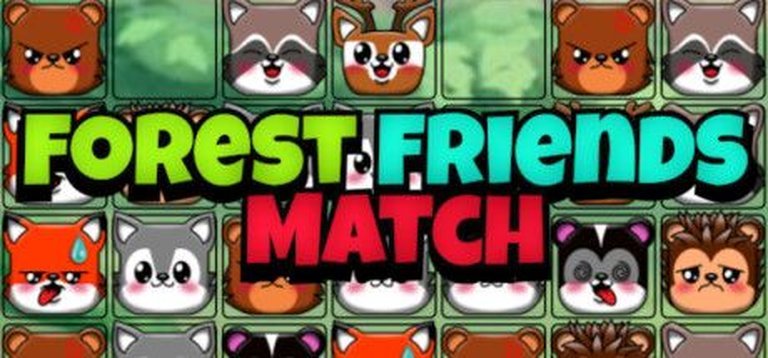
Forest Friends Match is a delightful match-3 puzzle game set in a charming forest environment, featuring adorable woodland creatures. Released in August 2024 by Boogygames Studios, the game offers engaging levels, relaxing gameplay, and simple mouse controls, making it accessible and enjoyable for players of all ages.
Where to Buy Forest Friends Match
PC
Forest Friends Match Cheats & Codes
iOS
Redeem codes for in-game rewards. Codes are redeemable once per server, first-come-first-served.
| Code | Effect |
|---|---|
| SYpXeSFfkvJZ | Redeem for rewards |
| yxnOR1JZTkYW | Redeem for rewards |
| pU9UOLDHPdEw | Redeem for rewards |
| HDJxdSMd7f9x | Redeem for rewards |
| VII26K4o0QH5 | Redeem for rewards |
| imCiYryaZq3e | Redeem for rewards |
Forest Friends Match: Review
Introduction
In an era where hyper-competitive live-service games dominate the industry, Forest Friends Match (2024) carves out a quiet niche as a throwback to the golden age of casual puzzle games. Developed by Boogygames Studios, this charming match-3 title invites players into a saccharine woodland realm populated by anthropomorphic foxes, owls, and raccoons. While its mechanics are familiar, the game distinguishes itself through sheer accessibility and cozy aesthetics. This review argues that Forest Friends Match is a deliberate, if unambitious, love letter to the genre’s roots—ideal for players seeking a stress-free escape but unlikely to revolutionize the field.
Development History & Context
A Studio’s Cozy Vision
Boogygames Studios, a lesser-known indie developer, positioned Forest Friends Match as a deliberate counterpoint to the complexity of modern gaming. Released on August 25, 2024, for Windows via Steam (priced at $1.99), the game eschews microtransactions and aggressive monetization, opting instead for a one-time purchase model. The studio’s focus on simplicity is evident in the game’s minimalist design, which draws clear inspiration from early 2010s mobile hits like Candy Crush Saga and Gardening Mama 2: Forest Friends (2014).
Technological Minimalism
The game’s system requirements are intentionally undemanding—a Pentium 4 processor and 1GB of RAM suffice—making it accessible to players with older hardware. This design choice reflects a broader trend of indie developers targeting underserved audiences who prioritize low-stakes, nostalgic experiences over cutting-edge graphics or performance.
Narrative & Thematic Deep Dive
A Lightweight Ode to Nature
Forest Friends Match forgoes traditional storytelling in favor of environmental ambiance. The game’s “narrative” is conveyed through whimsical visuals: a moss-covered title screen, chirping crickets, and endearing animal sprites that blink and wag their tails. While there’s no plot to speak of, the theme of woodland harmony permeates every level, with each match-3 puzzle framed as a step toward restoring a idyllic forest glade.
The lack of explicit conflict or stakes aligns with the game’s zen philosophy—there are no timers, no predatory monetization countdowns, and no fail states. This thematic consistency reinforces its identity as a digital comfort object rather than a challenge-driven experience.
Gameplay Mechanics & Systems
Match-3 Foundations
At its core, Forest Friends Match adheres to genre conventions: players swap adjacent tiles to create rows or columns of three identical animals. Successful matches clear the board, with later levels introducing obstacles like “thorny vines” (immovable blocks) and “shy hedgehogs” (tiles requiring multiple matches to clear).
Innovation Within Constraints
The game’s standout feature is its relaxation mode, which removes move limits entirely, allowing players to savor the puzzle-solving process without pressure. While this mechanic isn’t revolutionary—similar modes exist in Bejeweled 3 (2010)—its inclusion underscores Boogygames’ commitment to accessibility.
UI/UX: Streamlined but Sterile
The point-and-click interface is intuitive, though the menus feel spartan. A missed opportunity lies in the lack of customization: players cannot adjust music volume or remap controls, a curious oversight given the game’s otherwise player-first ethos.
World-Building, Art & Sound
A Pastoral Canvas
Forest Friends Match shines brightest in its presentation. Each level backdrop is a hand-drawn diorama of sun-dappled clearings, babbling brooks, and hollowed-out tree stumps. The animal sprites exude personality, particularly a bespectacled owl that hoots approvingly during combos.
Audio as Ambiance
The soundtrack, a loop of acoustic guitar and flute melodies, evokes the tranquility of a nature documentary. Sound effects—rustling leaves, gentle “boops” upon matching tiles—are unobtrusive, though repetitive over extended play sessions.
Reception & Legacy
A Quiet Launch
At the time of writing, Forest Friends Match has yet to garner significant critical attention. Metacritic and Kotaku lack reviews, while Steam user discussions remain sparse, save for a single off-topic thread. This muted reception likely stems from the game’s unassuming scope and niche appeal.
Potential for Cult Longevity
While unlikely to achieve mainstream success, Forest Friends Match could carve out a lasting audience among casual players and parents seeking child-friendly titles. Its $1.99 price point and absence of ads make it a budget-friendly alternative to mobile-centric match-3 games.
Conclusion
Forest Friends Match is a competent, if unremarkable, entry in the puzzle genre. It excels as a low-stakes distraction—a digital campfire around which players can unwind—but falters in its reluctance to innovate beyond well-trodden mechanics. For Boogygames Studios, the game represents a promising first step into the casual market, though future titles would benefit from deeper customization and narrative ambition.
In the pantheon of match-3 classics, Forest Friends Match won’t dethrone Tetris or Lumines, but it doesn’t need to. Its legacy lies in proving that even in 2024, there’s still room for games that prioritize charm over chaos.